Light has long been associated with the collective wisdom of a community, serving as a refuge from darkness. In the visual arts, references to light are extensive: from the illuminations in Medieval manuscripts to drawings and paintings which embrace the Enlightenment, among other examples.
This metaphor of light served as inspiration for Midwal, which is a project led by the artists Roderick Camilleri and Katelia Delia and supported by Arts Council Malta and Santa Luċija Local Council. The project is rooted in the village of Santa Luċija, named after its patron saint. Saint Lucy's steadfast refusal to abandon her Christian faith led to her cruel punishment - her eyes were gouged out - yet legend tells that she miraculously retained her sight. Her name, derived from the Italian luce and the Latin lux, meaning "light" recalls the luminous imagery associated with her: a crown of burning candles guiding her path. This symbolism of light and renewal resonates deeply with her feast in December, marking the turning point before the days begin to grow longer. The sun depicted on the coat of arms of the village reflects both the saint's legacy, its chapel which is located very close to the village, and the community's enduring connection to her story. Within this project, Saint Lucy's imagery becomes a metaphor for resilience and illumination, bridging the village's history with contemporary artistic interpretation and reaffirming how collective memory can inspire new forms of expression.
The word Midwal is derived from dawl and its definition is a narrow window to let light in which illuminates the darkness, as defined in the dictionary by Professor Ġużè Aquilina. This word reflects the goals of the project - to encourage and document social cohesion through art. In the Maltese context, the symbol of light served as inspiration for the Għaqda tal-Folklor Malti where they used the symbol of a musbieħ - an oil lamp made of pottery - for their ongoing publication L-Imnara, where it sheds light on Maltese folklore through archival studies while also serving as an archive in itself.
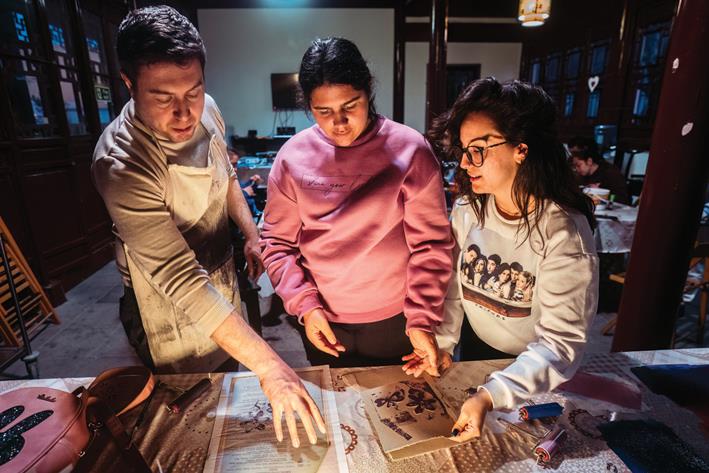
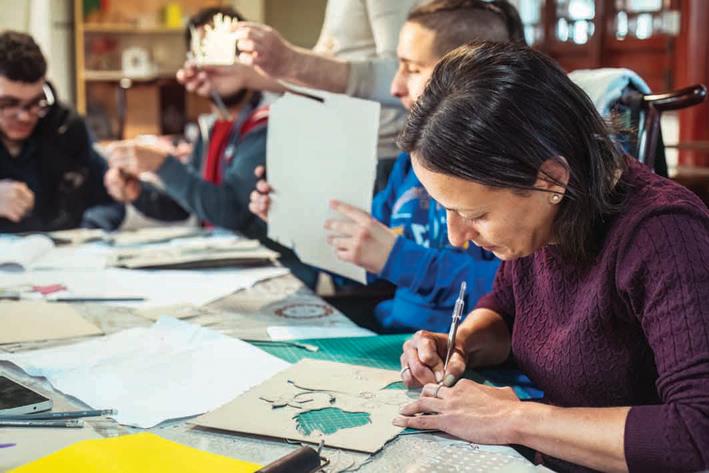
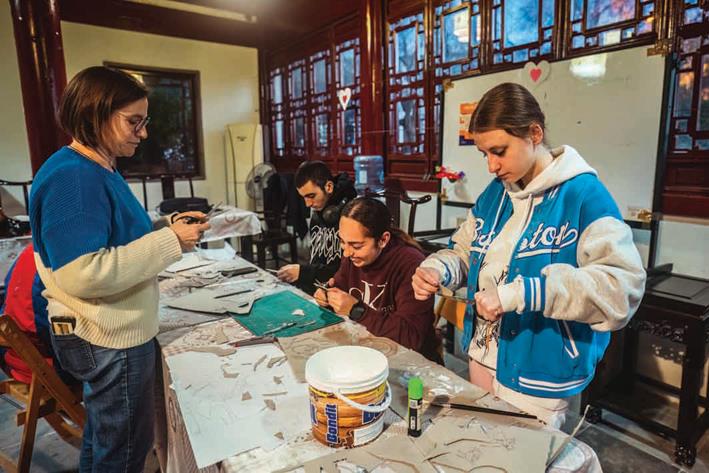
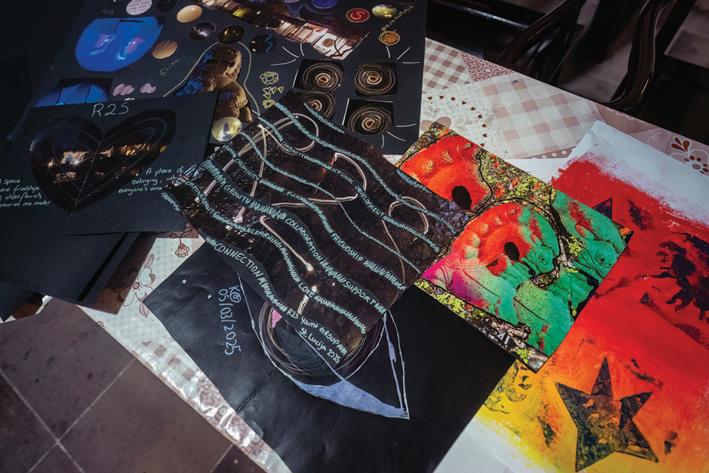
The Midwal project, held in Santa Luċija, is a contemporary artistic initiative that actively involves the community to build a living archive where children, young people and the elderly were invited to take part in workshops led by the artists Camilleri and Delia. This participatory project fosters dialogue and inclusion in society and encourages people to express their thoughts and experiences through multidisciplinary art, including drawing, photography, and print-making, to build a living archive.
Archives housed in institutions such as the National Library of Malta in Valletta and the National Archives in Rabat serve as bridges to the past, as their contents were created by predecessors whose voices continue to engage with researchers through the act of consultation. Despite the passage of time, many human thoughts and emotions remain constant, and sometimes only the date and certain inventions distinguish one era from another. The loss of archives represents the eroding voices of people who lived in the past; therefore, their preservation is important. In this light, the Midwal project contributes to these archives by encouraging the contemporary community to voice their opinions through the arts and form future archives.
The initiative of Camilleri and Delia is notable for intergenerational collaboration, where participants document their memories and experiences through creativity. This project represents hope for unity and peace in society while providing an artistic platform that amplifies the chorus of voices of different generations and solidifies their experiences in a living archive. In an era where time often feels fleeting, such initiatives are invaluable. Beyond fostering artistic engagement, they underscore the importance of dedicating time to relationships - with family, friends, and neighbours. In this sense, Midwal serves as a vessel connecting the trinity of time - the past, present, and future.
This theme of continuity is also reflected in Francis Ebejer's short novel, Il-Ħarsa ta' Rużann, which explores the protective gaze of Rużann watching over her descendants: "Il-ħarsa tagħha kienet qisha ġejja mill-bogħod nett .../Tal-bidu nett .../Daqs dak tal-ġejjieni ..." In parallel to this, Midwal encourages participants to reflect on the past, live in the present, and leave behind artistic testimonies for the future. The project emphasises the concept of an archive as a dynamic, living documentation shaped by the voices of all generations in society and through the community's participation; members become the authors of their own stories.
Folklore is not confined to the past; it encompasses a collection of tales, oral traditions and other traditions in society, including feasts. These elements are present in the artistic process of the Midwal project, which consists of a collection of collaborative activities based on collective memory conducted in the Garden of Serenity, also known as the Chinese Garden. This location is in itself a symbol of unity, as it was gifted by the People's Republic of China as a gesture of diplomatic alliance with Malta.
In the artistic works, light emerges as a central motif both literally and metaphorically since it symbolises wisdom and hope, echoing not only the legacy of Saint Lucy, but also the cultural heritage and artistic legacy of this living community. Through various activities with the local community, artists Camilleri and Delia led initiatives to help participants create a collective, creative collection of artistic texts that document the various layers of this young village. In these turbulent times, the symbol of light is important, especially considering the ongoing conflicts that have persisted throughout the ages. Therefore, the social cohesion and the activism fostered by such projects are essential as a symbol of hope and as a living archive to illuminate even the darkest of times.