Giulia, this exhibition brings together two Maltese artists - Giorgio Preca and Ryan Falzon - who lived in very different times. What made you want to pair them?
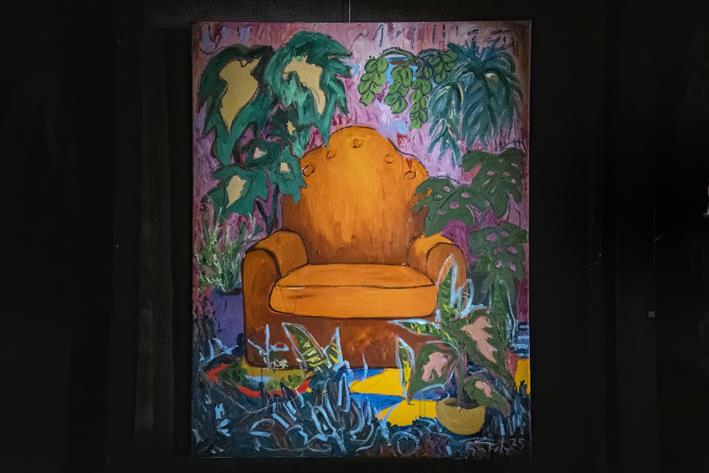
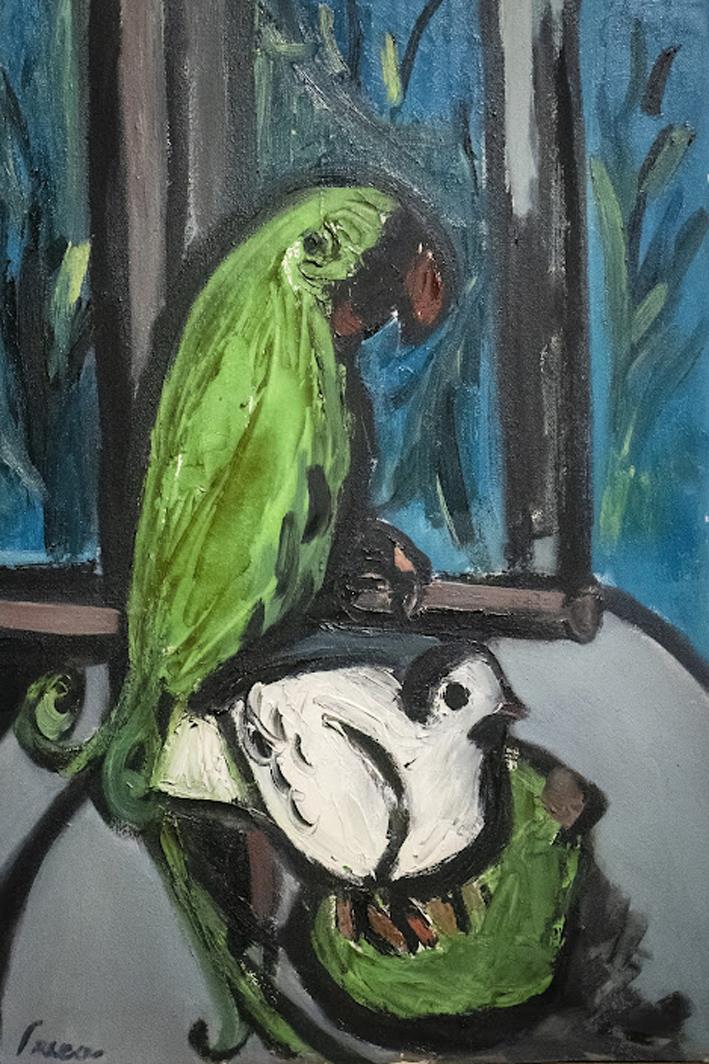
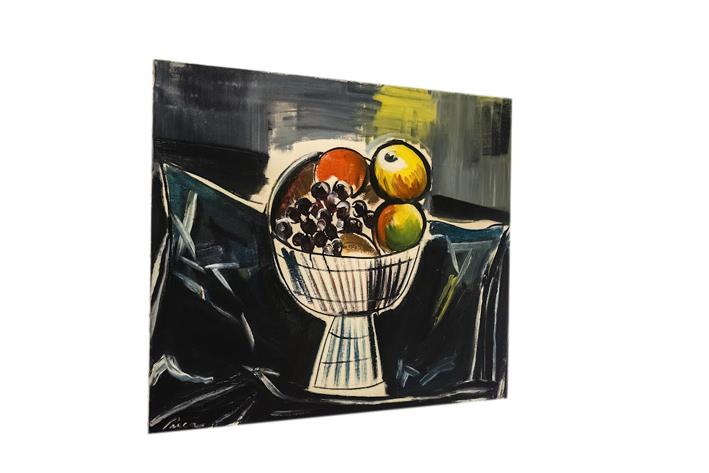
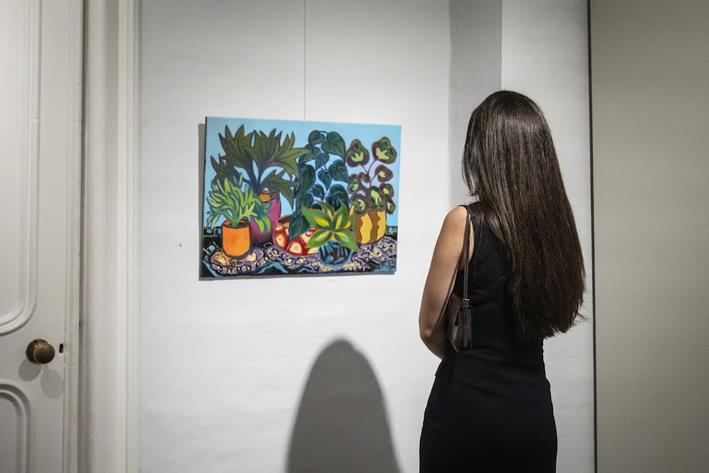
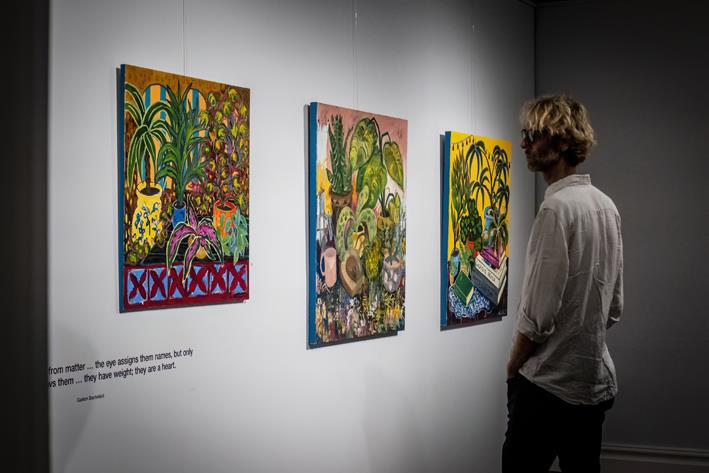
It started with a quiet question: what does it mean to be still? Indeed, what brings us to silence, and what really can be communicated across that silence? For both, dealing and responding to radical change - be it the war, a shift in the living situation, or even a pandemic - was a common factor. But rather than pairing the two personalities (an impossible task!) it is their respective approach I was most interested in. Preca, who passed away in 1984, is considered to be one of the leading voices of the Maltese modernist art movement, with a repertoire that extends over a wide range of genres, and certainly not a stranger to the public eye. Yet, it is his still lifes that uniquely invite us into his ever mysterious and solitary inner world of his studio: of daily objects turned into subjects, into symbols even, and explored through paint. With Ryan, known for his bold and political approach, often teeming with references, particularly to pop culture, I detect a similar shift with his 'plant series' which, as it were, stemmed from the time of the pandemic - his attention turned inward onto a domestic setting germinating with life when all else was pretty much forced into stillness.
That's a bold move - pairing someone long gone with someone very present. Did Ryan respond to Preca's work?
He did, and beautifully. Ryan didn't try to mimic Preca, nor did he ignore his 'voice'. Instead, he listened. His pieces in this exhibition offer responses - sometimes resonating, sometimes challenging. It's not a tribute, but a conversation. And that's what excites me: the idea that still life isn't static. It's alive, evolving, and deeply personal.
The title itself - Still Life, Life Still - feels like a riddle.
Exactly. It plays with the idea that life persists even in stillness; that objects, when truly seen, can reveal an entire world and that silence isn't empty - it's full of meaning and possibility.
You've described the exhibition as a "dialogue in silence." That's a beautiful phrase. What does silence mean in this context?
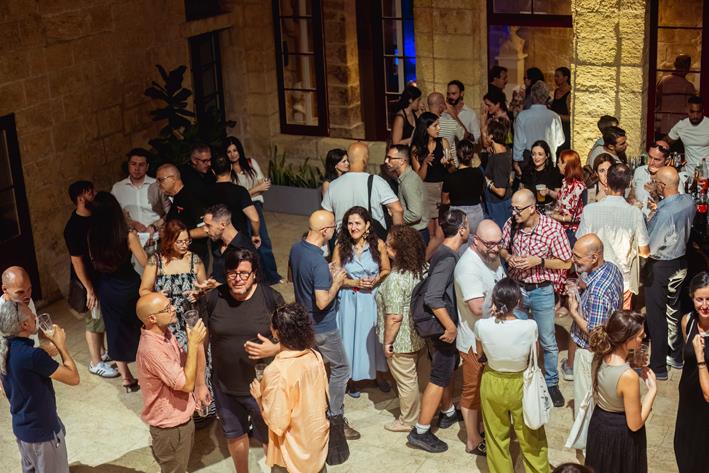
Silence is often misunderstood. It's not the absence of sound, but the presence of attention. It is space. It is the space, for example, where the works of Preca and Falzon meet for the first (and perhaps for the last) time. A conversation is precious precisely because it is book-ended by moments of silence: a searching question at the beginning, and a reflective one at the end. Silence, then, becomes the medium of exchange, explored through creativity and creation.
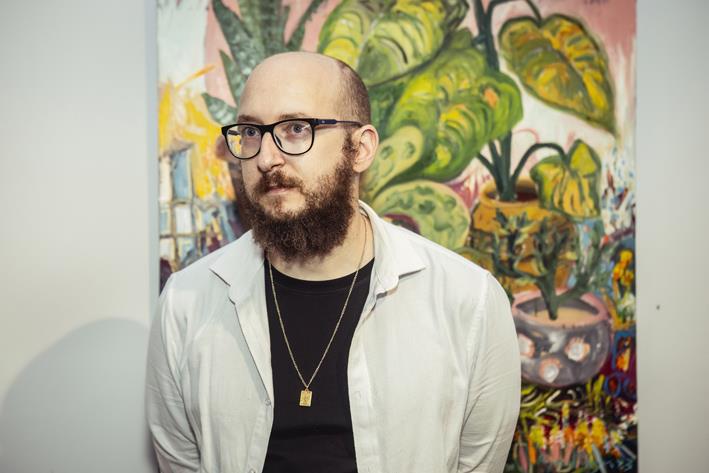
Ryan Falzon: Photos: Elisa Von Brockdorff
And the objects themselves - what role do they play?
They're witnesses. In still life, objects are never just objects. A chair, a bottle, a shadow - they all carry memory, emotion; they carry a view. Preca's repeated objects seem to point towards something other, some kind of synthesis. Falzon's are loaded with meaning: consumer goods, fragments of Maltese life, but also free, almost 'wild' life. When placed side by side, they challenge each other. They ask: what do we value? What do we preserve? What do we dismiss?
That's quite powerful. Did you find any unexpected connections between the two artists?
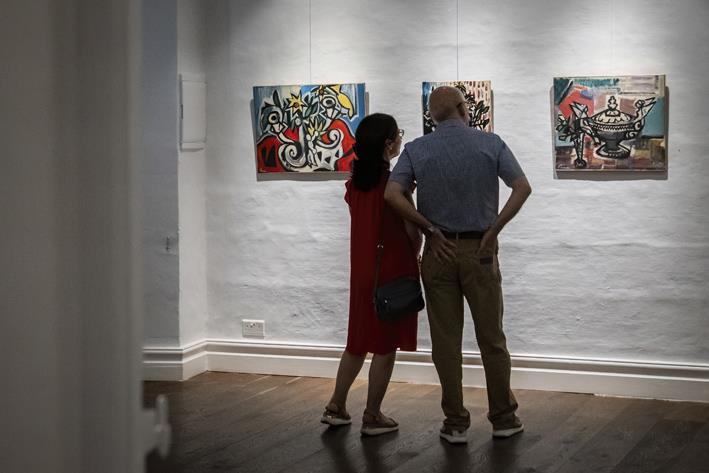
Yes, and that's the joy of curating. You start with a hypothesis, but the works surprise you. For instance, both artists use repetition - not just visually, but conceptually. Preca repeats forms to create rhythm and meditation, synthesis. Falzon repeats and juxtaposes motifs to provoke, to highlight, to turn the attention onto the viewer. It's like they're using the same grammar,but speaking different dialects.
Was there a particular piece that anchored the exhibition for you?
Yes, the chair. When I visited Preca's studio in Rome with Ryan, we noticed several paintings featuring an iconic rocking chair, often depicted with various sitters. In the exhibition, one such image is included, but without the sitters - that space, the climax of the exhibition, is left for the viewer-participants to take up.
Curating this exhibition must have been a deeply personal experience. What did you learn through the process?
I learned to listen more carefully. Curating Still Life, Life Still wasn't about imposing meaning; it was about creating conditions for meaning to emerge. I had to trust silence, trust the viewers, and trust the artists - even when one of them is no longer here to speak.
What do you hope visitors will take away?
I hope it may offer an opportunity for them to slow down. That they allow themselves to be still, even for a moment. In a world that's constantly rushing, there's something radical about pausing. I want people to feel the tension between quiet and noise, between past and present, and to realize that still life isn't just about objects - it's about how we see, how we feel, and ultimately how wTe live.
Still Life, Life Still is more than an exhibition - it's an invitation: to pause; to make associations; to reflect; to witness the quiet conversations that unfold when paintings are allowed to simply be what they are.
This exhibition runs at the Malta Society of Arts in Valletta until 18 September 2025.
