Last Saturday's concert at the Grand Ballroom of the Radisson Blu Resort in St Julian's was a lineup of masterpieces and talent - thankfully so, as getting there was a bit of a saga. I set off early by taxi, though not quite early enough. The driver took a roundabout route, my heart thumping with each unexpected turn. I kept asking why he was taking the long way, but he simply said, "Leave it in my hands." At least he got me there just in time.
This was the Season Opening Concert, and having seen the programme beforehand, I was determined not to miss a note.
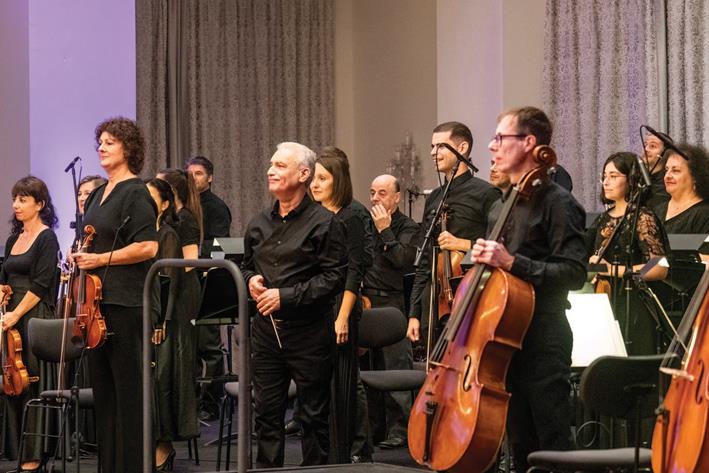
The Malta Philharmonic Orchestra, under the baton of Maestro Michael Laus, opened with Schubert's Symphony No. 8 in B minor, the "Unfinished." I know it well and love it deeply - unfinished, yet somehow complete in its emotional power and possibly his most popular.
Schubert composed the two movements in 1822 and sent them to his friend Anselm Hüttenbrenner as a thank-you for a diploma of honour from the Styrian Music Society. Hüttenbrenner, curiously, never handed it over and kept the manuscript for decades.
Why "Unfinished"? Some scholars suggest Schubert's declining health - he had contracted syphilis around this time - may have halted his progress. Others believe he was simply drawn to other projects. Regardless, the work stands as a poignant testament to Romantic yearning.
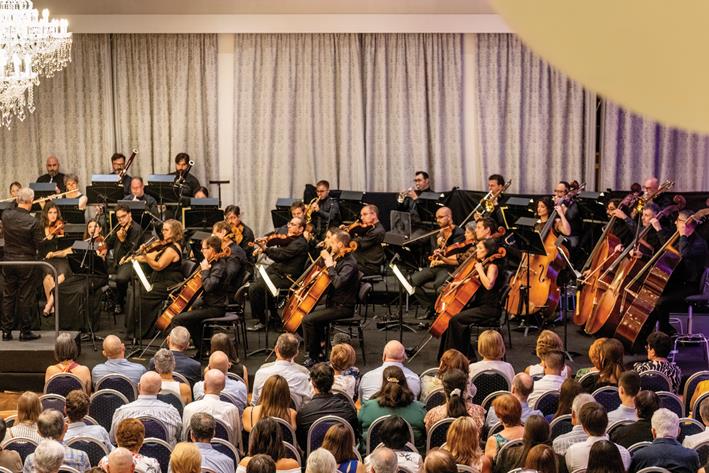
The first movement (Allegro moderato) introduces a lyrical second theme -played by cellos and clarinets - that feels like a sigh suspended in time. Schubert passes this theme between sections of the orchestra like a whispered memory, each repetition revealing new emotional shades. When it moves from clarinet to oboe, or strings to brass, it's as if the same feeling is refracted through different souls. The repetition creates a sense of longing, nostalgia, and unresolved yearning. We were listening to the soul of the piece speaking through its echoes. It kept repeating itself in my mind for many days. It's still there.
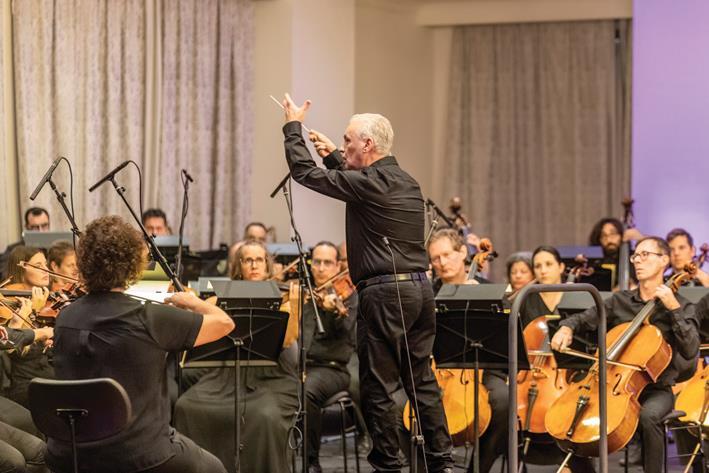
Maestro Laus led the orchestra with warmth and lyricism - these were the keynotes of the performance. His wife, soprano Miriam Gauci was enjoying it all in the front row.
The "Unfinished" was followed by popular soprano Gillian Zammit, who joined the orchestra to perform Mozart's concert aria Bella mia fiamma, addio, K. 528. A lesser-known gem, it's rich in emotional complexity. A friend once shared the following delightful anecdote that reveals Mozart's genius and playful spirit...
In the autumn of 1787, Mozart was in Prague for the premiere of Don Giovanni. During his stay, he was hosted by close friends Franz Xavier Duschek and his wife, soprano Josepha Duschek. Josepha was a formidable singer and had previously inspired Mozart to compose arias tailored to her voice.
According to a charming tale passed down by Mozart's son, Josepha playfully locked Mozart in a garden pavilion and refused to let him out until he composed an aria for her. Mozart obliged - but with a twist. He wrote Bella mia fiamma with such harmonic and emotional complexity that he insisted Josepha sing it at sight before he handed over the score. That's no small feat, considering the aria's dramatic shifts and technical demands.
The text is drawn from a libretto based on the myth of Proserpina. The character Titano, Proserpina's mortal lover, is condemned to death by her mother, the goddess Ceres. In the aria, he pleads with anguish and passion, alternating between despair and tender farewell. Mozart's music captures this emotional turbulence with breathtaking finesse.
It's a piece that demands not just vocal prowess but emotional depth - so hearing Gillian Zammit perform it was a rare treat. Surely she was at her finest.
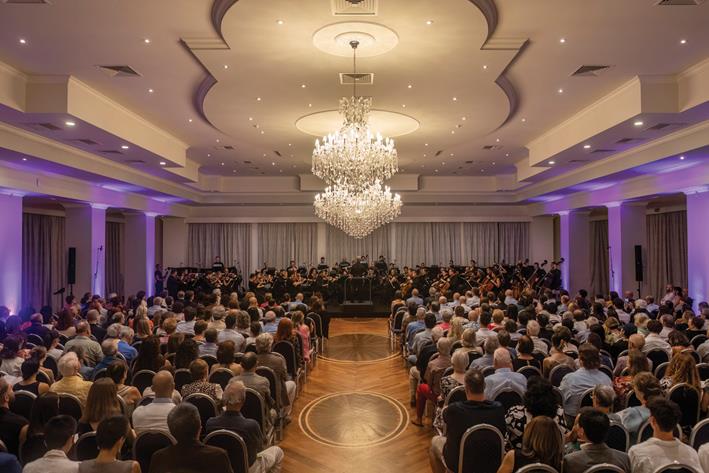
After the interval, the MPO returned to a fully occupied ballroom for Beethoven's Symphony No. 6 in F major, the "Pastoral." Subtitled Recollections of Country Life, it's a love letter to nature - not literal birdsong and brooks, but the emotional resonance of the countryside. Beethoven wrote, "More an expression of feeling than painting."
The fourth movement's storm scene was groundbreaking. Timpani (Marios Mouzakitis), trombones (Roderick Bugeja Calleja, Dennis Camilleri and Jesmond Azzopardi), and other instruments evoked thunder, lightning, and rain with thrilling precision. In the second movement, Beethoven even labels bird calls in the score -nightingale (flute), quail (oboe), and cuckoo (clarinet). It's one of the few times he indulged in such specificity.
Written alongside his fiery Fifth Symphony, the contrast is striking - one is fate knocking at the door, the other is nature opening its arms. As the final notes of Beethoven's Pastoral faded into silence, I felt a quiet fullness - like the hush after a storm, or the stillness of a memory well kept. The evening offered not just music, but a journey through longing, myth, and nature's embrace. I left the ballroom with melodies still echoing, grateful for the artistry that stirred both heart and mind.