We are thrilled at il-Kamra ta' Fuq to be hosting Hedymeles, the debut solo exhibition by Eric Attard, this September, excitedly curated by yours truly.
Eric is not only an exceptionally meticulous artist, as you'll quickly notice when you visit the show, but also a very dear friend, practically part of the furniture at New Life Bar, classically with a glass of red wine in hand.
As always, I'm tempted to begin with the story of how I first met Eric, but that version would likely be censored - either by Eric himself or by the editor - so I'll save it as a bonus for anyone who visits us at il-Kamra ta' Fuq. What I can say is that from the very first night we met, we immediately hit it off, and Eric has since become one of my favourite people on this planet.
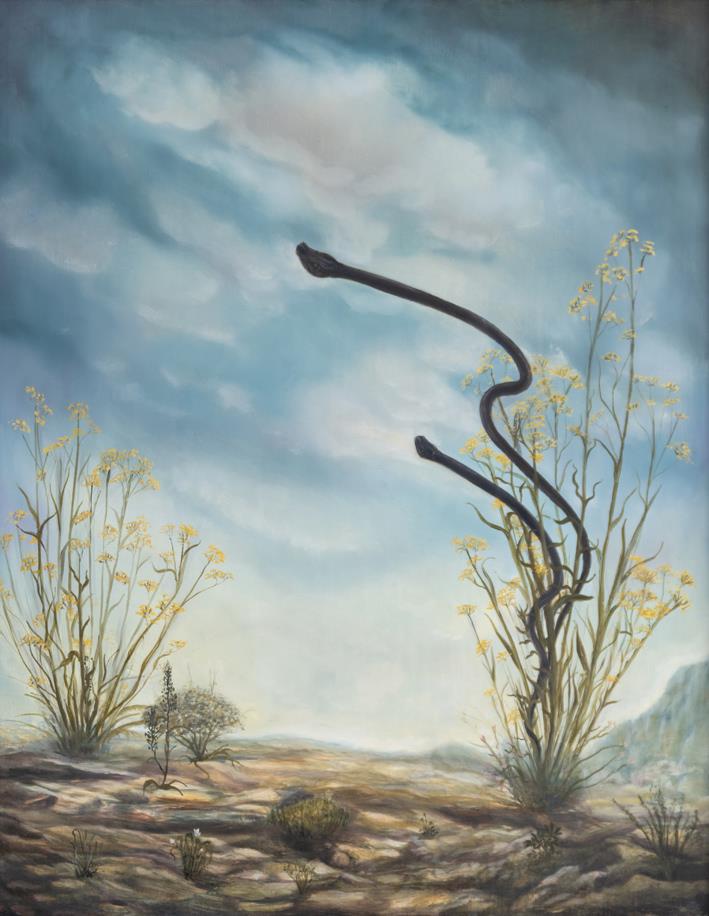
I was even tasked to bring with me a particular white lead oil colour from a specific art shop in Paris, which he insisted must be that specific one from that specific brand, which he then used in these paintings.
Moving on to an uncensored background check: Eric was exposed to philosophy from an early age and later pursued formal studies in the field at the University of Malta, where he deepened his explorations. His artistic journey began in 2008 at the School of Art in Valletta, where he studied fine art as a teenager. In the years that followed, he became largely self-taught. His enduring passion lies in exploring the intersection of philosophy and visual art, often as a form of escape from the mundane or the bleak. Drawing inspiration from philosophical concepts, Renaissance aesthetic sensibilities, and natural phenomena, his work gravitates toward magical realism.
Mythology and fantastical creatures have always been part and parcel of Eric's oeuvre. Some of you might recall his works shown at Kunċett, where he reinterpreted the Tritons from our beloved Tritons' Fountain. And if you've met him in summer shorts, you may also have noticed these same motifs permanently etched on his thighs as tattoos.
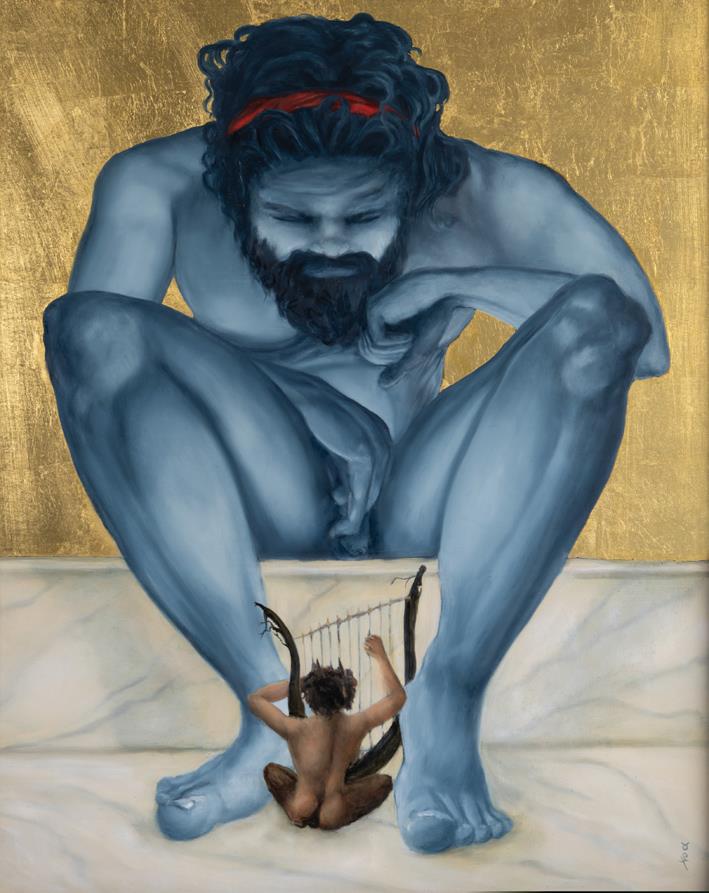
Eric has been working on this exhibition for the past two years. It all began with a short book he wrote, titled Hedymeles. From the start, the plan was to use this book as the narrative thread for his art. Normally, illustrations are created to accompany a story, but in this case Attard insists that, although the story is his own creation, it is not the main focus. The spotlight is on the 13 stunning artworks surrounding the visitor at il-Kamra ta' Fuq. Displayed in sequence and following the narrative, they nonetheless remain wide open to interpretation.
The book itself is also on view, which is another artwork in its own right, hand-bound by the artist. And yes, Eric is really good at many other things: bookbinding, filigree, ceramics, jewellery-making... the list goes on.
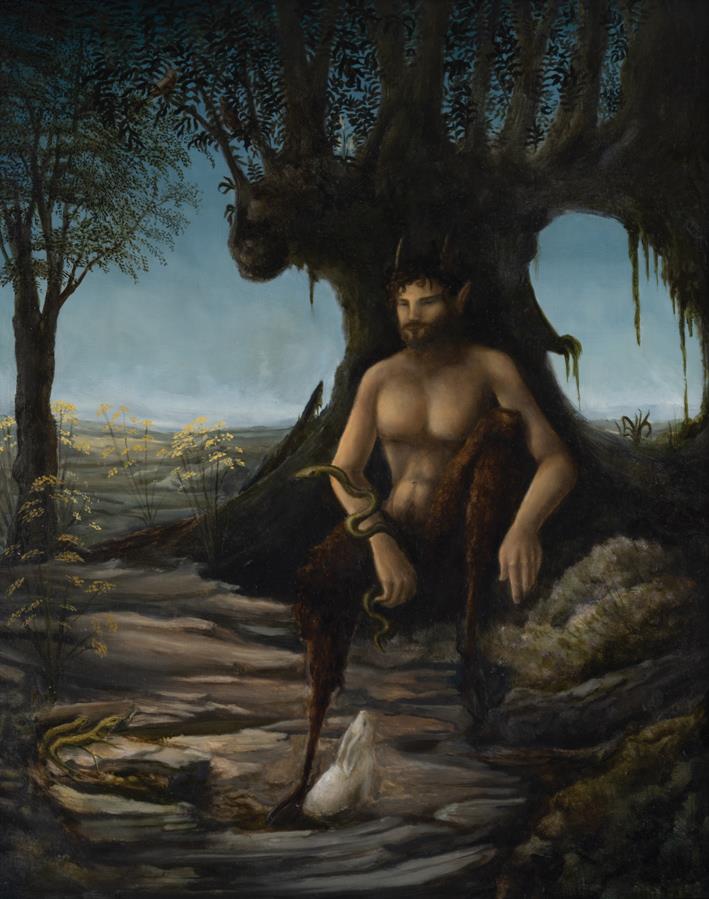
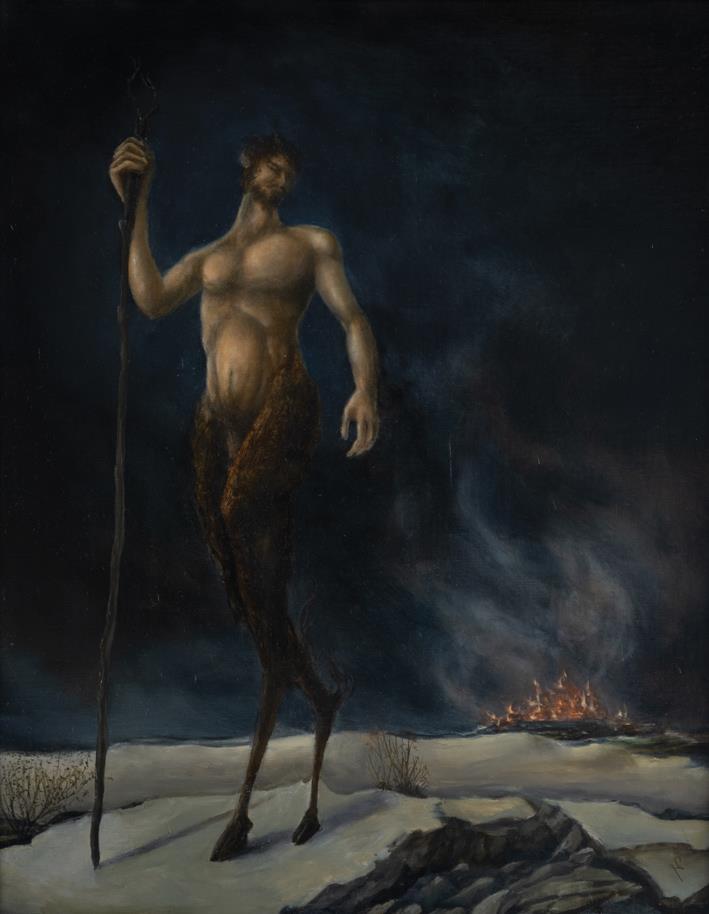
The exhibition shares its title with the book. Hedymeles is the main character, guiding us through life lessons via his fantastical journey in an imaginary land. Fleeing his village due to social injustice, he finds refuge in a forest, where he encounters a host of magical beings. His first meeting is with a talking caper bush, which, after astonishing Hedymeles, offers him wise advice while he searches for a place to sleep. Overnight, Hedymeles is transformed into a satyr, his lower body sporting goat's hooves and covered in a thick layer of auburn hair, as depicted in The Hermit. Talking animals, frivolous giants living atop the clouds, mystical fluid apparitions, menacing harpies, and other creatures populate these chapters of Hedymeles' new life, creating a vivid tapestry of fantasy and wonder.
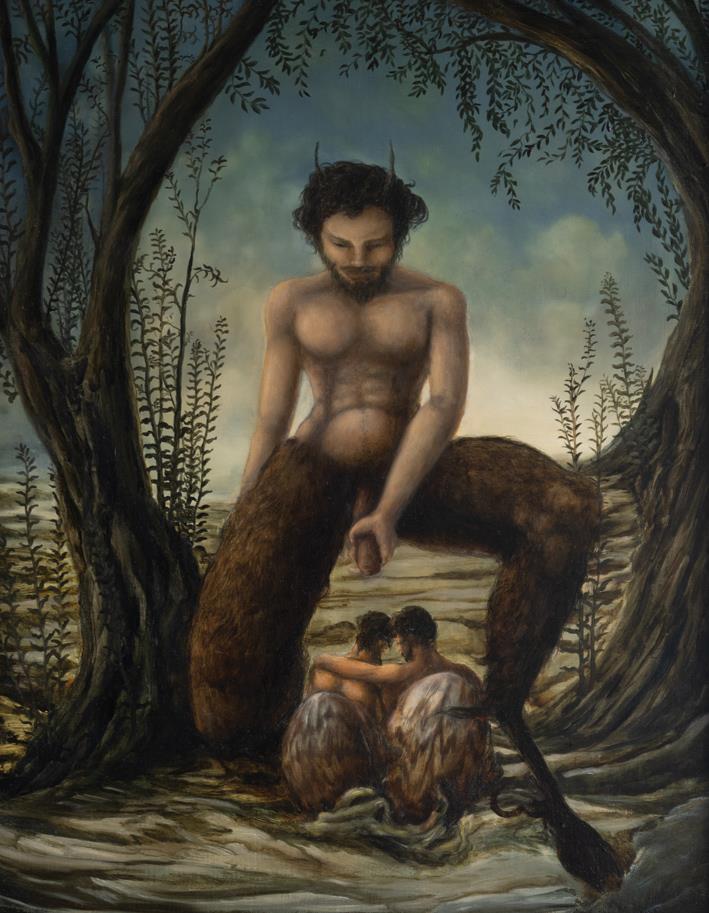
The story, and, of course, the artworks, are peppered with pockets of hard-core eroticism, where sexual acts and gestures almost become Hedymeles' superpower. In The Lovers, for example, he resolves a dispute between two snails in a most... unconventional way, showering them with his semen! Sensuality is further explored from a female perspective in the Harpies' painting, titled Justice, where a "nest" of harpies keeps watch for any passerby. Their facial expressions are menacing, yet their nude, sensuous bodies add an intoxicating allure. According to Attard, their life purpose is to kill as many people as possible, a darkly satirical twist.
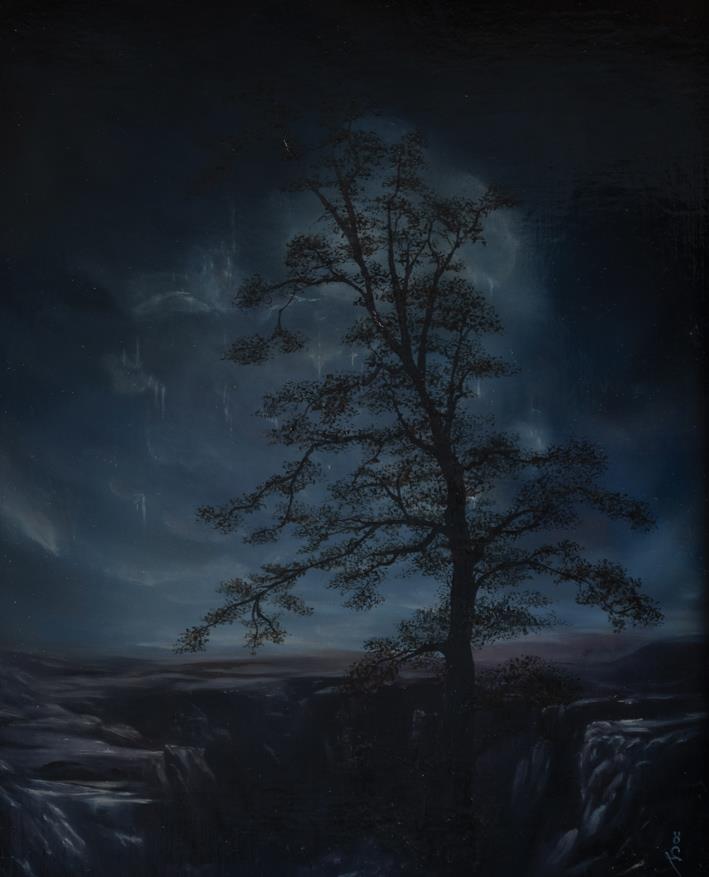
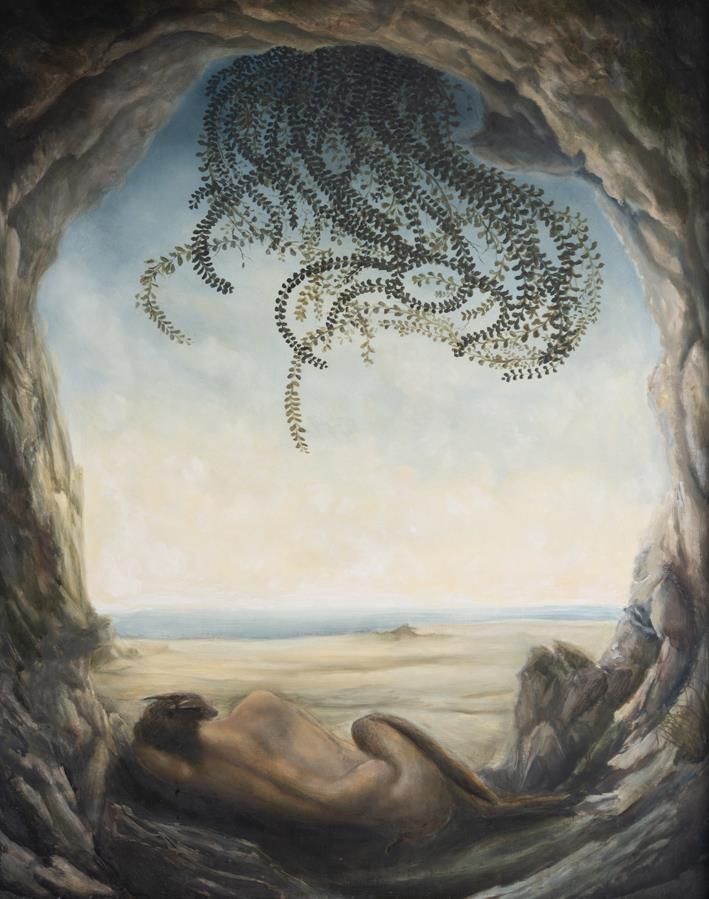
The technique Attard employs is nothing short of magnificent. It immediately brings to mind the works of Leonardo da Vinci, both in execution and palette choice. This connection is especially evident when recalling the landscape backgrounds in Madonna of the Rocks or Madonna and Child with Saint John the Baptist, where the shrubbery resembles some of the greenery in Attard's works, like in The Hermit and Temperance. His works consist of multiple layers, some with as many as 20, painted using walnut oil rather than linseed oil. Attard has an almost obsessive dedication to traditional methods, and there's a reason for this. One of the key messages of the exhibition is a reminder of how we live from reel to reel, consuming images in fleeting glances and immediately scrolling to the next. Each work takes over a month to produce; every leaf in these paintings is meticulously drawn (he told me several times, "Mel, I will never draw another leaf again after this"). This remarkable attention to greenery can be seen in The World, the final painting in the narrative, where - Spoiler Alert - we find the lifeless body of Hedymeles lying peacefully beneath the majestic caper bush.
Another stunning work, best experienced in person, is The High Priestess, depicting a towering tree that served as Hedymeles' refuge from the forest creatures and eventually led him to discover the giants when he climbed above the clouds. Attard chose to portray this tree in a night scene. The palette is superb, evoking an otherworldly aura of peace and solitude that feels almost impossible to find in our hectic daily lives. There's a strange, nostalgic quality, a craving almost, for something long gone.
He worked at his own pace on these paintings, as such works cannot be rushed. Each layer requires time to dry, creating a stark contrast to the rapid consumption of images on social media. For those interested, Attard is more than happy to explain his technique in detail, which I can vouch for; it will be a fascinating account, especially when heard firsthand.
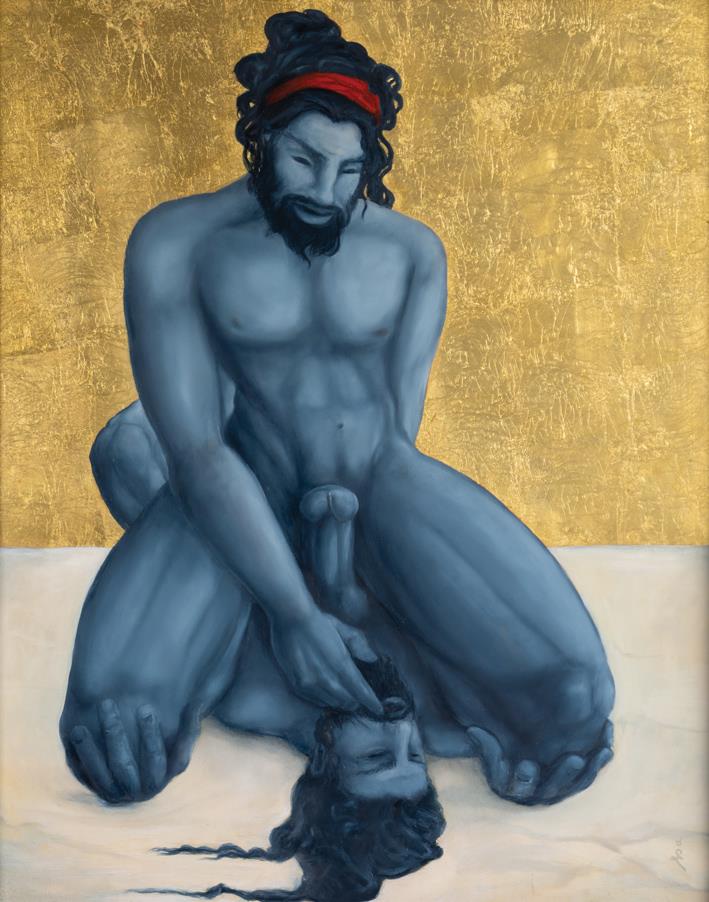
When it comes to the style of certain figures, like the giants engaged in their "sexual fight", in the work titled Yielding, and the work Judgement, we see over-emphasised curves and hypermasculinity reminiscent of the works of Tom of Finland (Touko Valio Laaksonen), the Finnish artist whose stylised erotic art profoundly influenced late 20th century gay culture.
Mythology is used as a vessel to deliver these messages to viewers (and readers). Attard explains: "Mythology serves a primal human function in any society. Storytelling is at the heart of culture, and mythology allows us to explore bigger, more intangible questions. If the players on our stage are only half human, their actions can exist a little freer from consequence or morality, letting us play out comedies and tragedies without feeling too awful, or cruel, sometimes."
Attard hopes the exhibition offers visitors a chance to step out of a rushed reality and into a space of fantasy and possibility. We warmly invite you to visit il-Kamra ta' Fuq and experience it firsthand.
The exhibition runs from 21 September to 5 October.
For more information find us on social media
