In the heart of London, in a former bank whose marble halls once echoed with the quiet authority of capital, a new kind of currency is being exchanged. It's not financial - it's emotional, sensory, cultural. This is AKI, the latest venture by Malta's db Group, and already one of London's most talked-about restaurant openings of the season.
But AKI is not just another fine-dining space. It's a concept that blurs the lines between gastronomy, architecture, and contemporary art - a project years in the making, brought to life through a rare collaboration between db Group CEO ROBERT DEBONO and Dr POLINA SURINA, Artistic Director and Co-Curator of the AKI Collection.
"I've always been fascinated by the dialogue between place and cultural value," says Dr Surina. "For me, AKI was an opportunity to bring all of this together - to create a space where beauty, taste, and culture coexist so naturally that everything simply feels... right."
From restaurant to cultural destination
The vision for AKI was clear from the start: a restaurant that would transcend traditional notions of hospitality and become a cultural destination in its own right.
Building on the legacy established by his father Silvio Debono, Chairman of db Group, Robert Debono and his siblings have carried the family vision forward - and in London, Robert saw an opportunity to redefine the dining experience.
"In a market as competitive as London, I wanted to leave no stone unturned," he explains. "Hospitality is not just about serving food - it's about creating emotion. Art plays a huge role in that. It sets the tone, sparks conversation, and has the power to move and inspire."
The AKI Collection, curated by Surina together with co-curator Virginie Puertolas-Syn, began ambitiously - with a list of nearly a hundred artists from major biennales, institutions, and museum collections. Through months of dialogue and exploration, that list was refined to just nine artists, each chosen for how their work could live within the architecture and philosophy of the restaurant.
"Our goal wasn't to fill the space, but to let it breathe," Surina says. "Each artist was chosen for how their work could converse with the culture of Japan, of Malta, and with the personal identity of the founders. We wanted the art and the space to create each other."
Art as atmosphere
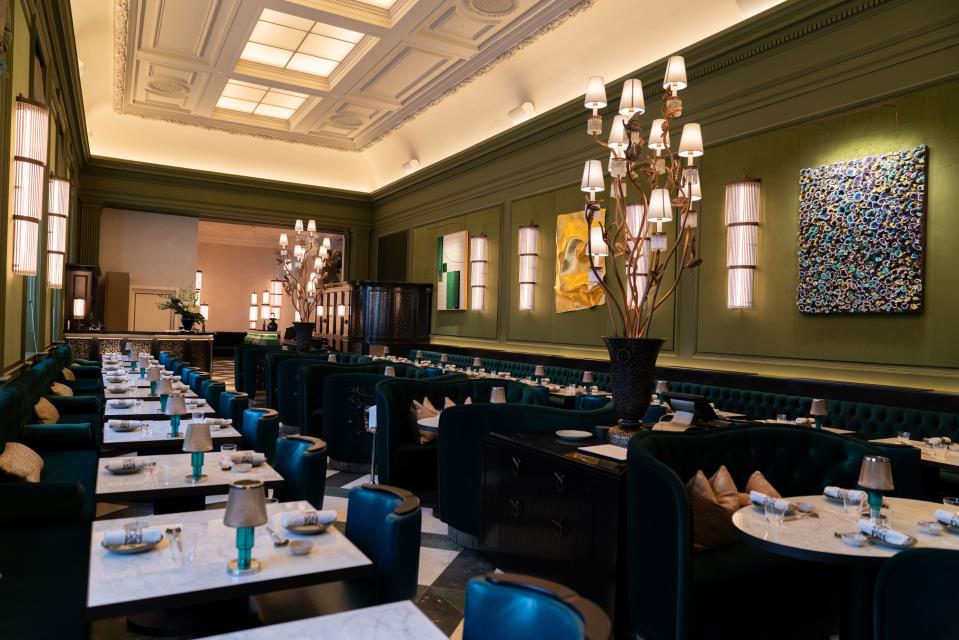
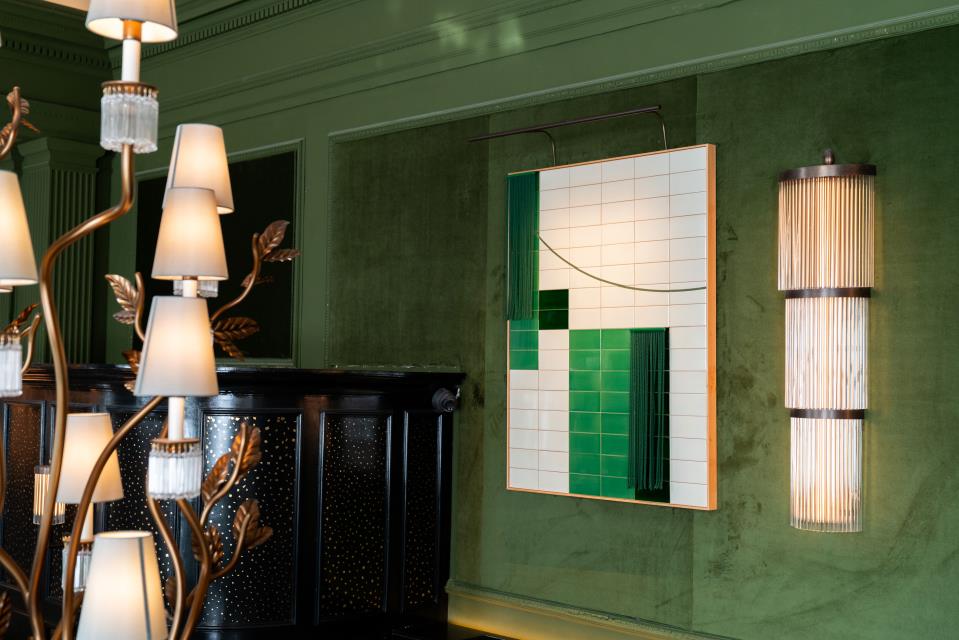
Walking into AKI feels less like entering a restaurant and more like stepping into a living exhibition. The artworks do not merely decorate the walls - they shape the atmosphere, the rhythm of light, even the way guests move through the space.
Surina approached the building - a former bank - as both challenge and muse. Its weight and symmetry offered a counterpoint to the Japanese minimalism that defines AKI's design. "The building had its own gravity and memory," she says. "Japanese aesthetics invite lightness and restraint. My role was to connect strength with silence."
The result is a space that feels balanced between past and present - where power meets poise, and where every detail, from the glassware to the grain of the wall, reflects a quiet reverence for craftsmanship.
A collection of meaning
Each of the nine artists brings their own language of transformation, elegance, and impermanence - values central to both Japanese philosophy and AKI's ethos.
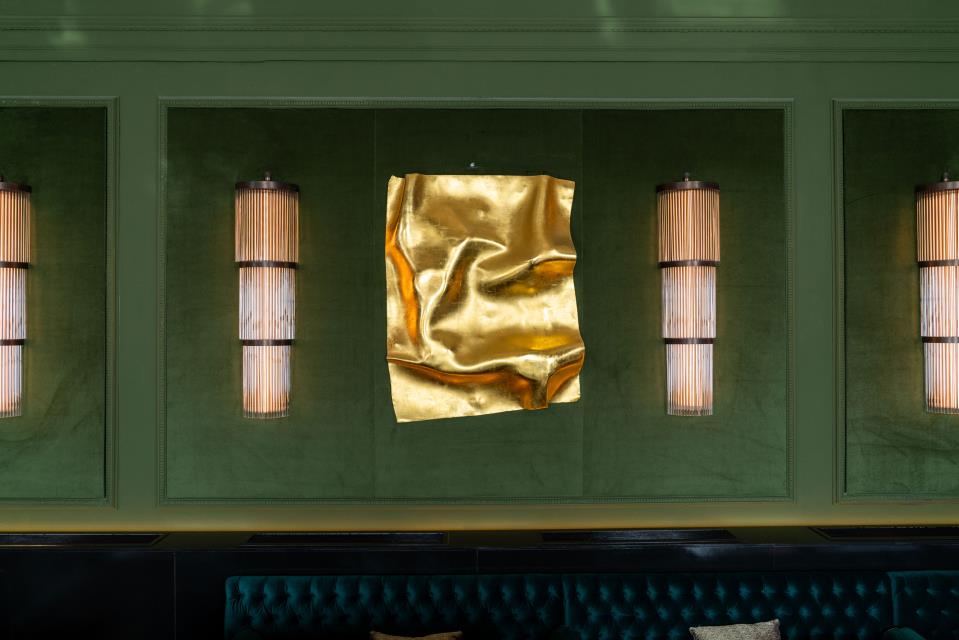
- Daniel Knorr's Gold Flag, cast in radiant stillness, evokes the fragility of wealth - a perfect echo of the building's former life as a bank.
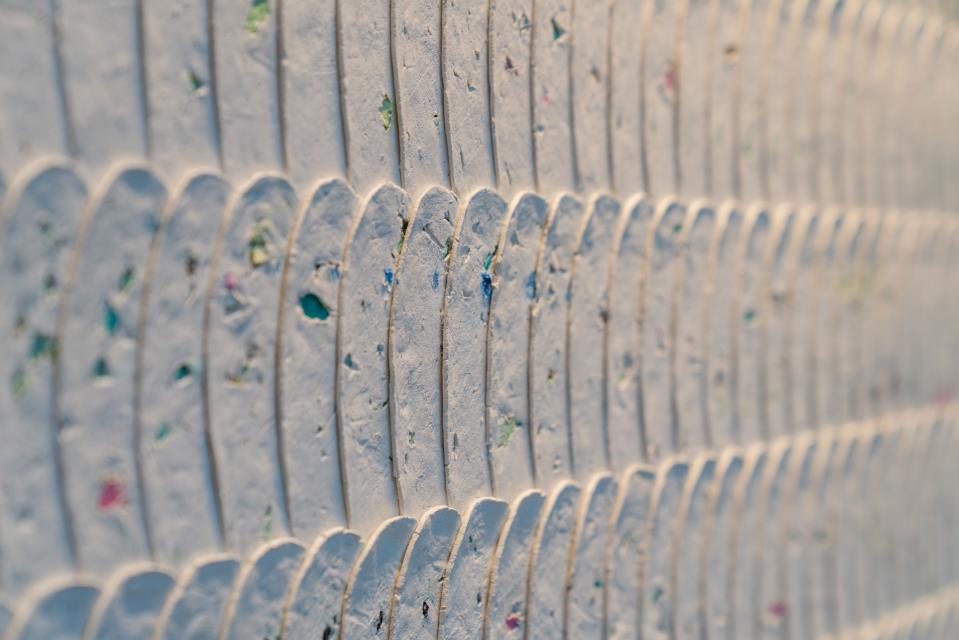
- Albano Hernández, meanwhile, literally built his work from the restaurant itself, collecting materials on-site for White Composition, a meditation on sustainability and presence.
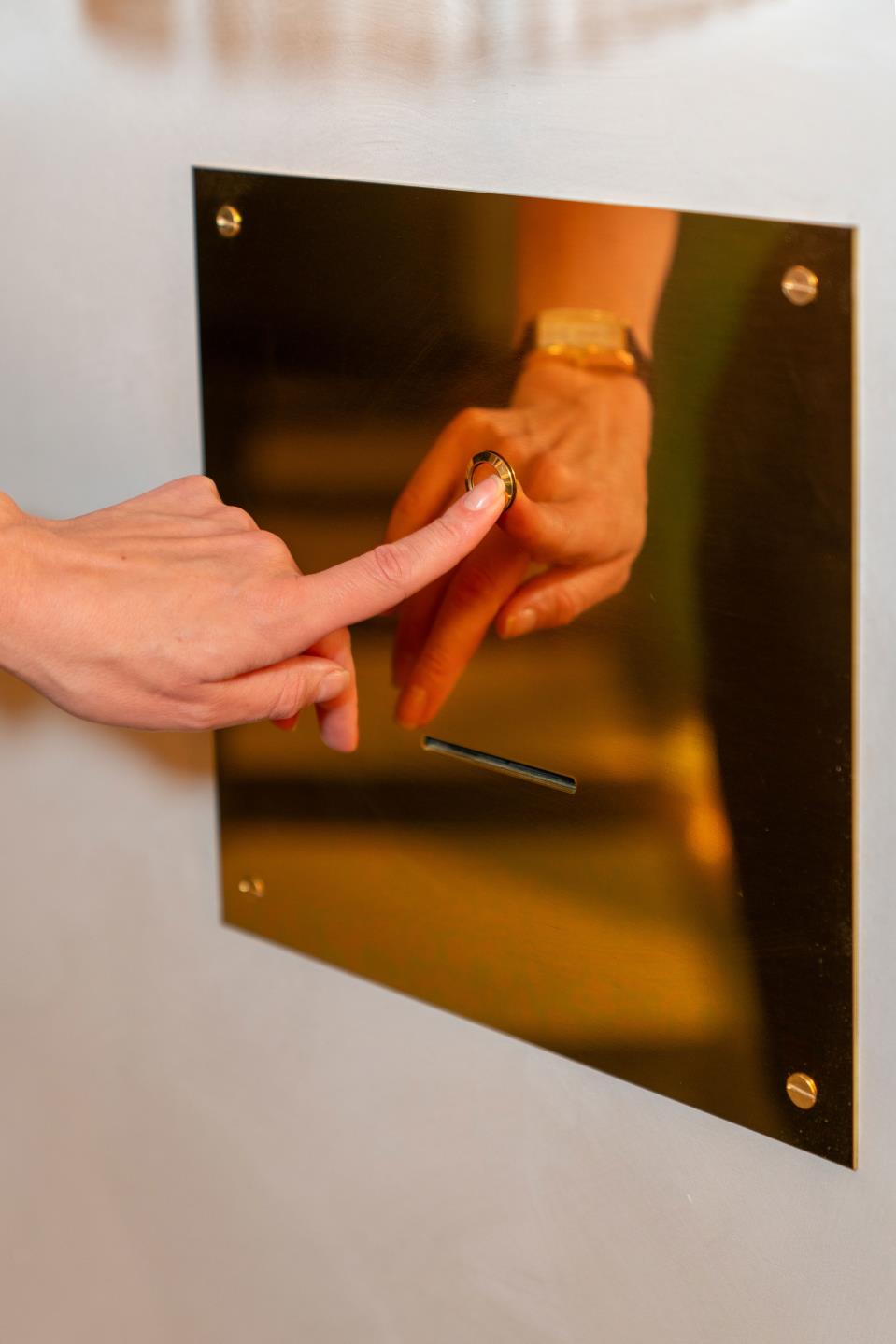
- Ryan Gander's Machine to Send You Somewhere Else invites guests to engage in playful curiosity, spitting out random coordinates - a metaphor for the journeys art can provoke.
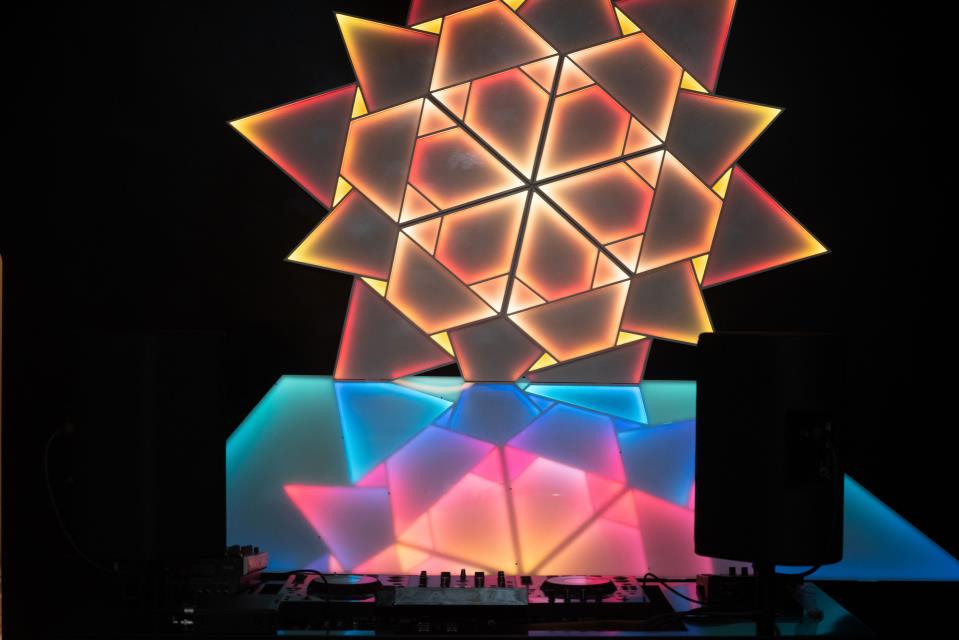
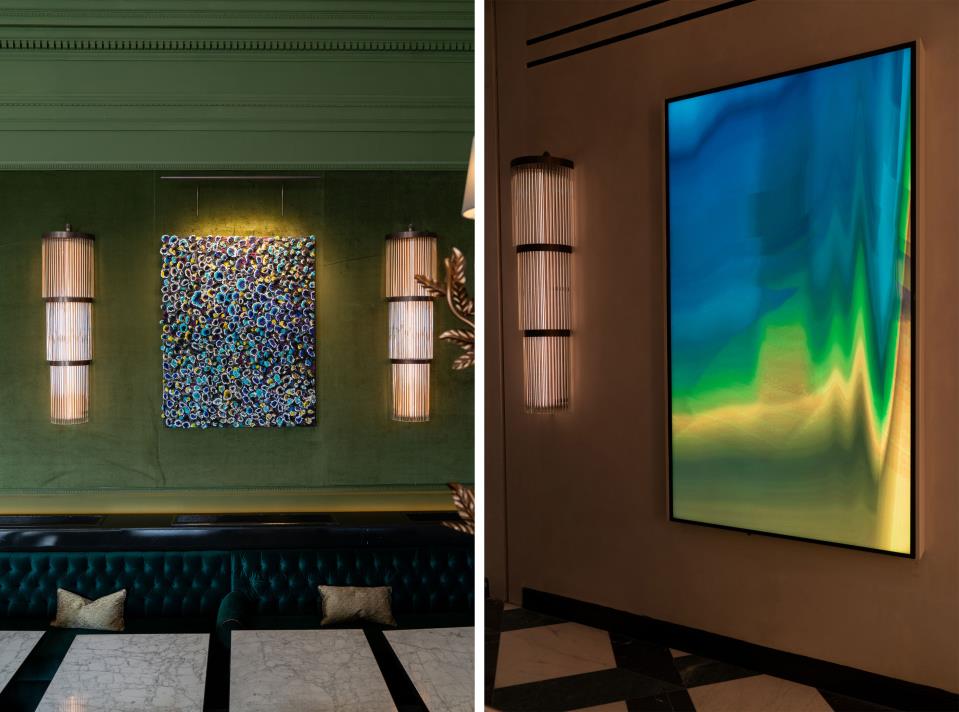
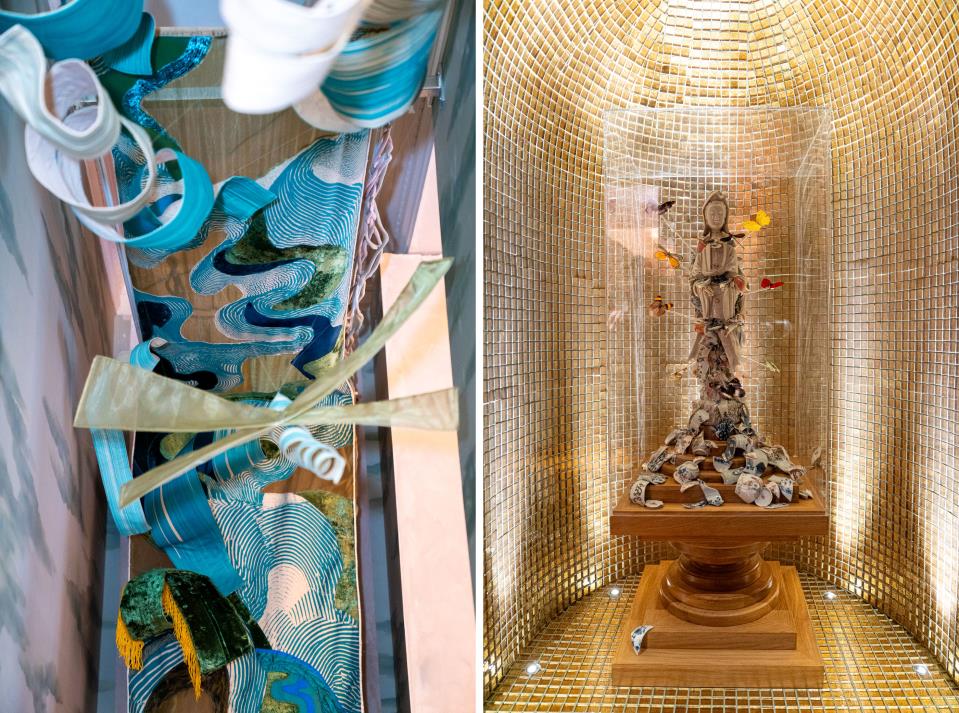
- Yoshirotten's Menhir 2 turns light into colour, merging technology with spiritual rhythm, while Bouke de Vries' porcelain Guan Yin reassembles broken beauty into new wholeness, echoing the Japanese art of repair, kintsugi.
- Works by Kapwani Kiwanga, Aziza Kadyri, Nabil Nahas, and James Clar complete the dialogue - a chorus of global voices speaking through material, memory, and light.
"Impermanence runs through the collection," Surina notes. "Smoke that disappears, suns that rise and set, the memory woven into fragile textiles. These are stories about resilience and transformation - ideas that feel very human, and very contemporary."
A collaboration of vision
For Debono, AKI represents more than a flagship opening - it's a statement of what hospitality can become when creative disciplines truly merge.
"This was a deeply collaborative process," he reflects. "We trusted Polina's artistic instinct but also remained engaged at every step - from lighting and flow to how the art interacts with our guests. AKI proves that commercial and creative excellence can coexist beautifully when there's mutual respect and a shared vision."
Surina agrees. "What touched me most was db Group's reverence for quality - their belief that a space should reflect the energy of its founders. When you work with people who bring excellence in every field, you know you're building something lasting."
The art of experience
Beyond its visual splendour, AKI's ambition lies in how it makes people feel. Surina speaks often of emotion - of harmony, curiosity, and presence. "Many guests describe the experience as elegant, harmonious, even 'delicious' not just in taste but in feeling," she says with a smile.
For Debono, that reaction is the real measure of success. "When guests leave AKI, I hope they feel not only satisfied but uplifted - that they've experienced something meaningful, not just another meal."
A living future
The AKI Collection is not static. Future plans include artist dinners, special exhibitions, and evolving commissions - ensuring that the restaurant remains alive, season after season. "Some works will stay forever," Surina explains, "others will rotate, evolve. The idea is to sustain a continuous cultural dialogue."
In an era when dining has become an art form and art itself increasingly seeks new spaces beyond the gallery, AKI feels like a blueprint for the future - a reminder that culture doesn't just hang on walls; it lives in the experiences we create, share, and remember.
"Art doesn't belong only to museums," Surina reflects. "At AKI, we open those doors. We invite people to experience art naturally - as part of life."
And in doing so, AKI doesn't just serve exquisite dishes; it serves an idea - that beauty, when shared, can nourish more than the palate.