Richard Rees' ongoing exhibition Colours and Memories at The Phoenicia Malta offers a vivid meditation on place, colour, and memory, refracted through the dual lens of architect and artist. Trained and accomplished as an international architect before dedicating himself fully to art, Rees brings to painting an instinctive understanding of spatial order, urban structure, and the monumental language of buildings. Yet his works are never merely descriptive: they are suffused with colour, enlivened by texture, and imbued with a sensibility that seeks to translate lived experience into pictorial form.
Rees' journey to this exhibition is distinctive. A self-taught artist, he began painting at an early age but set aside his practice in his 20s to pursue an international architectural career. Upon retiring in 2012, he returned decisively to art, gravitating towards oil pastel - a medium that fuses drawing and painting, and that offers him a direct, tactile means of expression. His membership of the UK Pastel Society in 2017, and subsequent appointment as president in 2021, testify both to his technical skill and his contribution to the contemporary pastel movement.
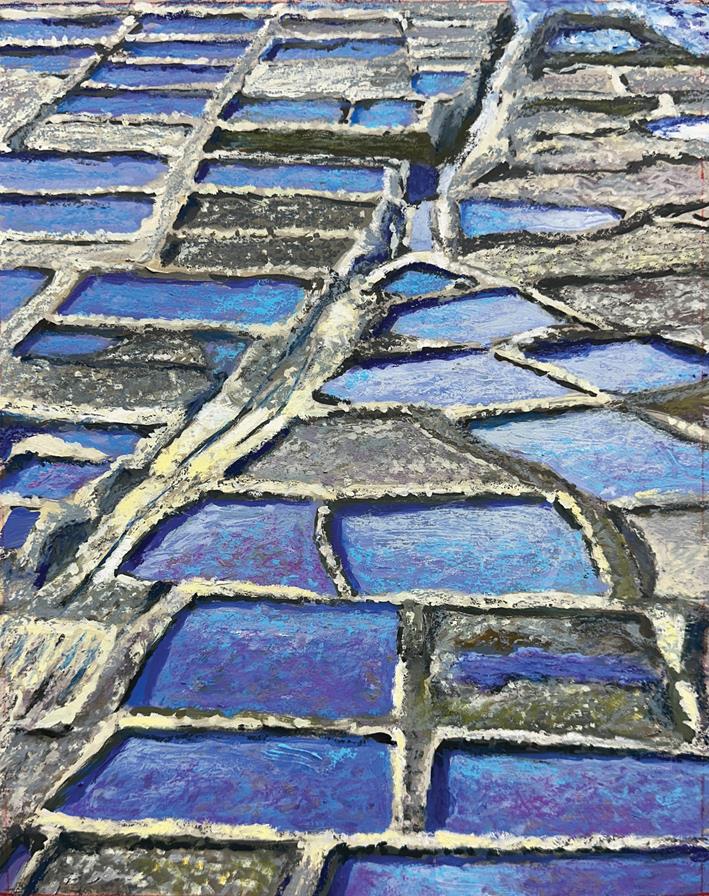
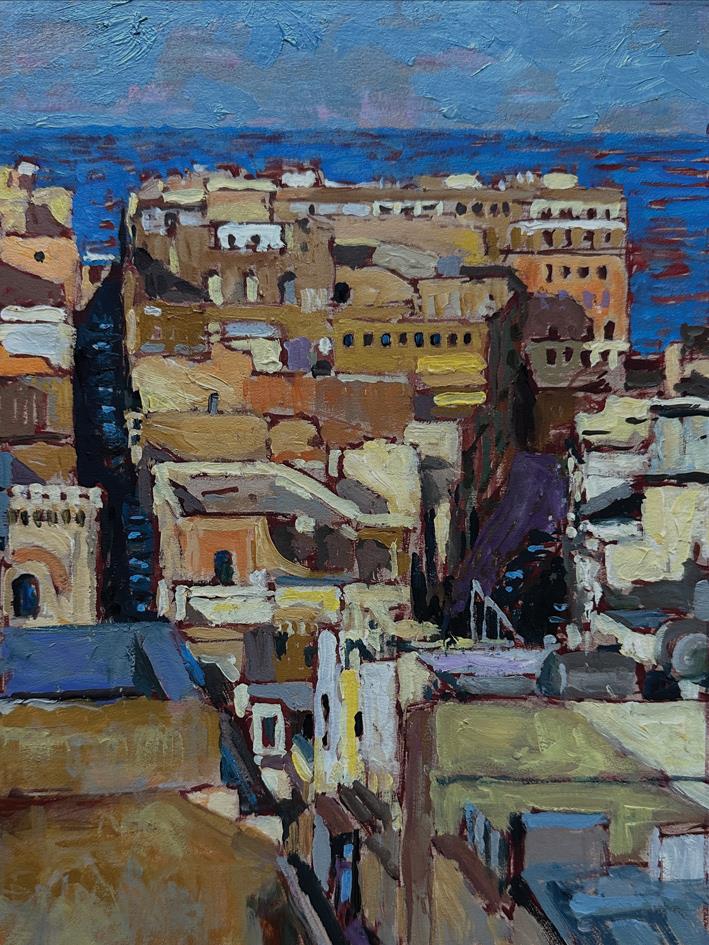
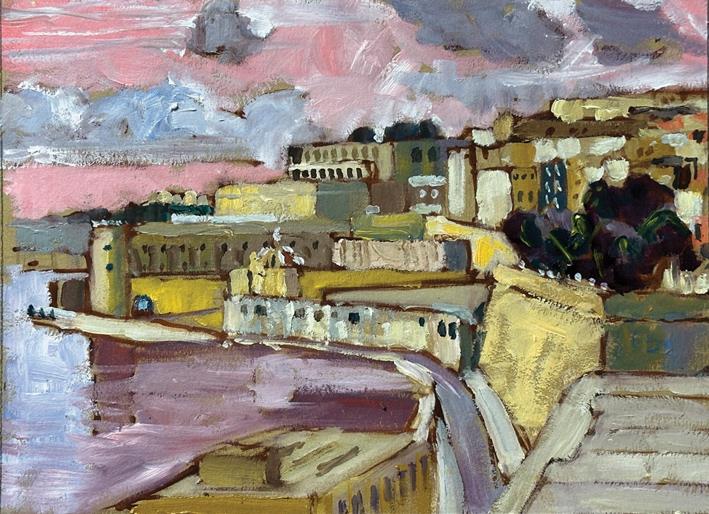
In Rees' hands, oil pastel becomes more than a medium: it is a language of immediacy. Unlike oils, which demand time and layering, pastel allows for swift, tactile engagement - fresh, unmediated marks alive with energy. This situates Rees within a long European tradition of artists, from Degas to Paula Rego, who have embraced the medium for its capacity to balance draughtsmanship with painterly effect. He himself remarks on this quality, observing that pastels possess a directness and freshness that best capture his vision. That vitality is evident in the linear energy of Malta Harbour Crane, the iridescent layering of Mdina Cathedral, and the chromatic shifts animating Valletta Rooftops. The immediacy of pastel seems to echo the fleeting brilliance of Mediterranean light itself.
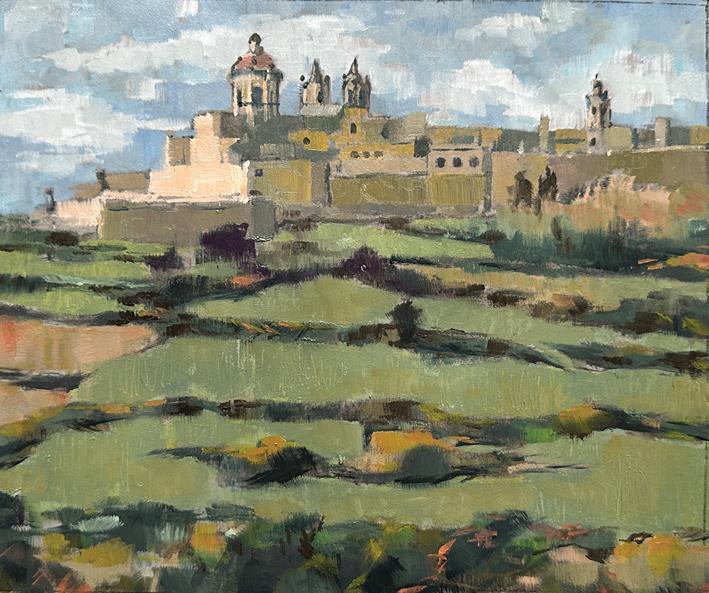
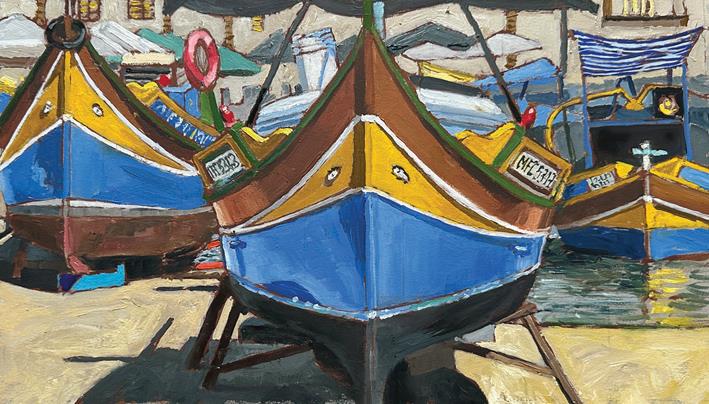
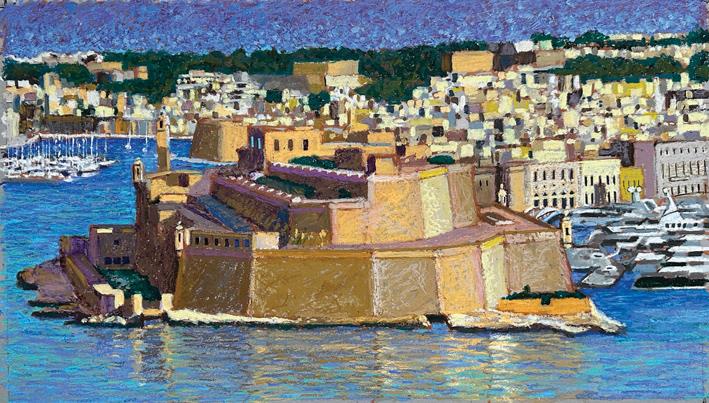
If architecture is Rees' structural backbone, Malta provides him with a palette of possibilities. The island's limestone fortifications, Baroque domes, and harbours recur throughout his works, not as static monuments but as catalysts for invention. In St Angelo's Fort, bastions rise in golden ochres against the azure Grand Harbour, their mass offset by the dappled shimmer of water. Marsaxlokk Boats and Shark Man bring the human scale into view, their iconic luzzu and fishermen embodying traditions rooted in Maltese daily life. The interior of St John's Co-Cathedral reveals his fascination with Baroque splendour: golds, crimsons, and greens vibrate in a field of colour, transmuting architectural grandeur into painterly radiance. Medieval resonance also appears, with Mdina and Wells Cathedral bridging Maltese and European heritage.
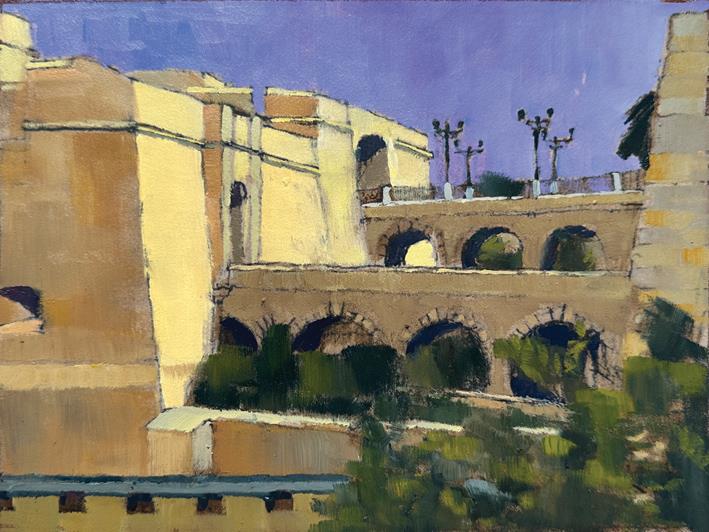
Rees's architectural background comes to the fore in his cityscapes. His early rooftop views of London and other European capitals laid the groundwork for the Maltese works seen here. Valletta Rooftops exemplifies this lineage: the rhythm of streets, the clustering of buildings, and the horizon of sea are distilled into a composition both structural and lyrical. Mdina Gateway situates Baroque architecture within its defensive context, rendered with acute proportion yet animated by chromatic invention. Even when he paints industrial subjects - the crane towering over the Grand Harbour - Rees approaches them as part of a living urban fabric. Context is everything. The monumental and the everyday are entwined.
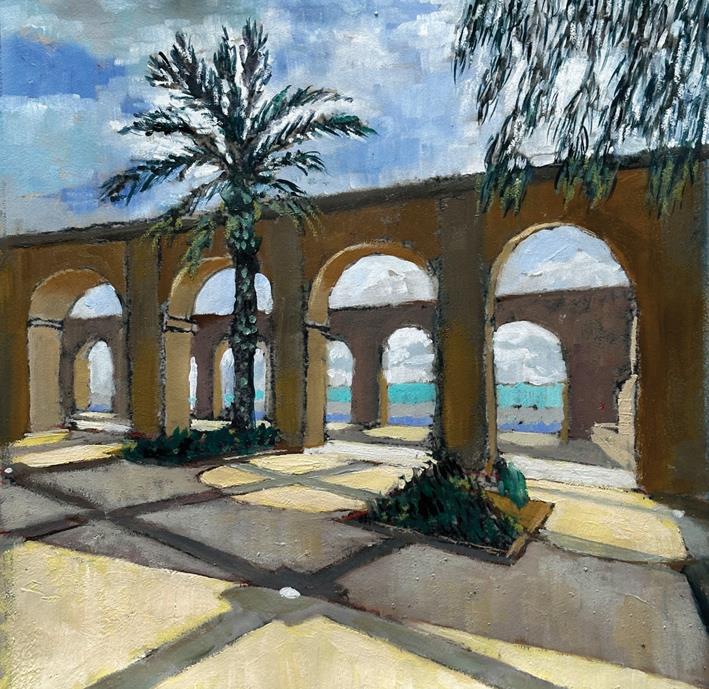
Ultimately, it is both form and colour that animate these works. Rees does not seek naturalistic accuracy but rather a heightened register that translates his subjective response into visual terms. Purples and greens shimmer across the fields before Mdina Cathedral; blues and yellows clash and harmonise in Marsaxlokk Boats; reds and golds ignite the interior of St John's. His palette is Mediterranean in spirit - sun-drenched, luminous, at times exaggerated, always alive.
In this sense, Rees' paintings resist easy categorisation. They are neither purely architectural studies nor impressionistic sketches, but translations: of form into colour, of memory into mark, of place into image. Rees' exhibition also invites reflection on the dialogue between architecture and painting. Where architecture orders space, painting interprets it. Where architecture aspires to permanence, pastel thrives on immediacy. Yet in Rees' practice, these seemingly opposed qualities converge. The precision of line, the attention to proportion, the layering of form - all architectural instincts - are transformed through colour into something fluid, expressive, and personal.
His work reminds us that architecture is not merely about buildings, and painting not merely about representation, but both are ways of seeing and inhabiting the world. Rees' exhibition is thus an invitation to view Malta anew. Its landmarks recharged with colour, its cranes monumentalised, its rooftops re-imagined, its cathedrals illuminated. At the same time, the works connect Malta to a wider European context, situating it within a continuum of cities, skylines, and cultural memory.
For Rees, painting is not about recording, but about experiencing. It is about heightening the ordinary into the extraordinary, and about allowing colour to speak where words might falter. His journey from architect to pastelist, from London to Malta, from structure to sensation, finds its fullest expression in this exhibition: a testament to the enduring power of art to transform the way we see the places we think we know.
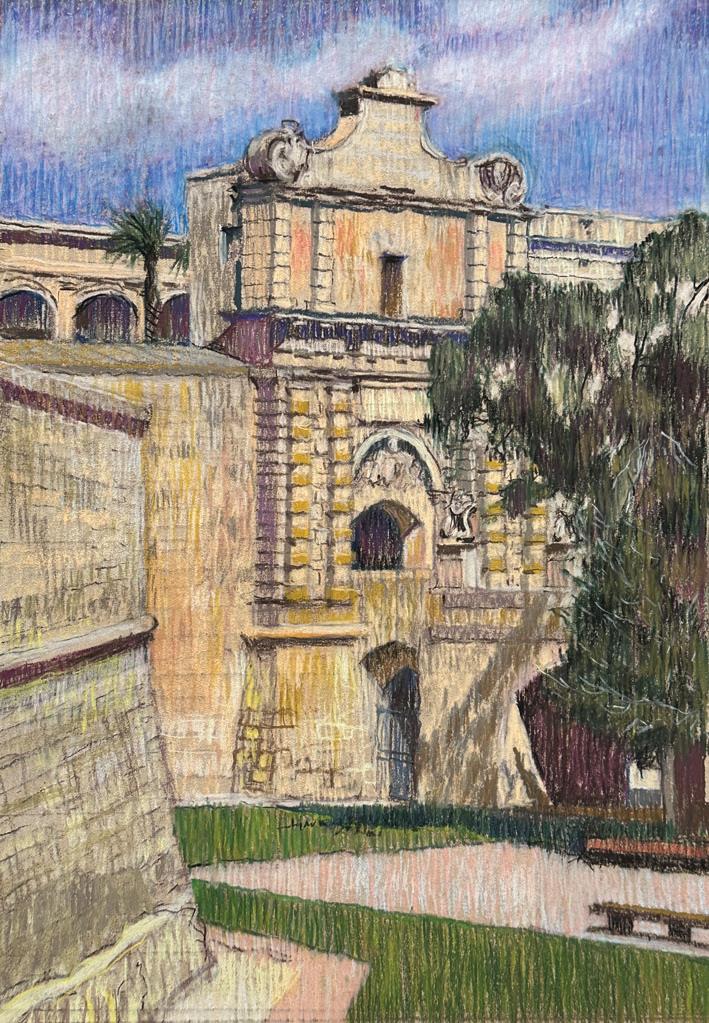
The exhibition Colours and Memories, curated by Prof. Charlene Vella, is open at the Palm Court Lounge, The Phoenicia Malta, until 30 October.