There are places we think we know - until we discover that in fact we don't or not really. I have visited the French residence many times over the years for dinner and other events. I have even wandered the gardens several times, especially on 14 juillet, almost always under the hush of evening, during enjoyable al fresco summer dinners when shadows stretch long and jasmine leans into the dusk. But on Heritage Day, the present ambassador of France in Malta, HE Sandrine Lelong-Motta opened the discrete front door to approximately 100 visitors and I stepped into a different memory.
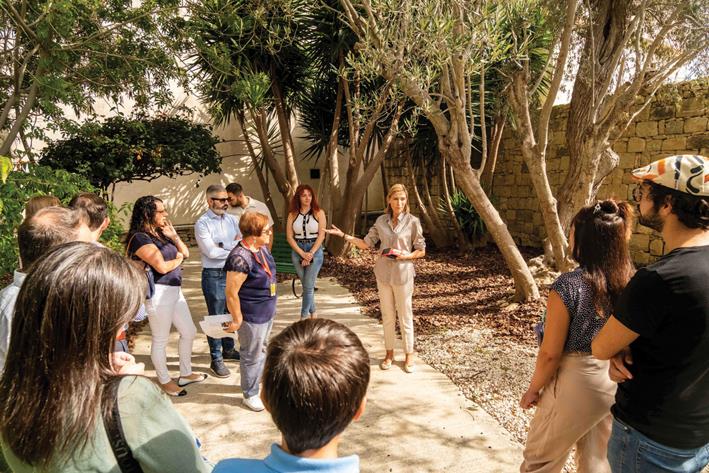
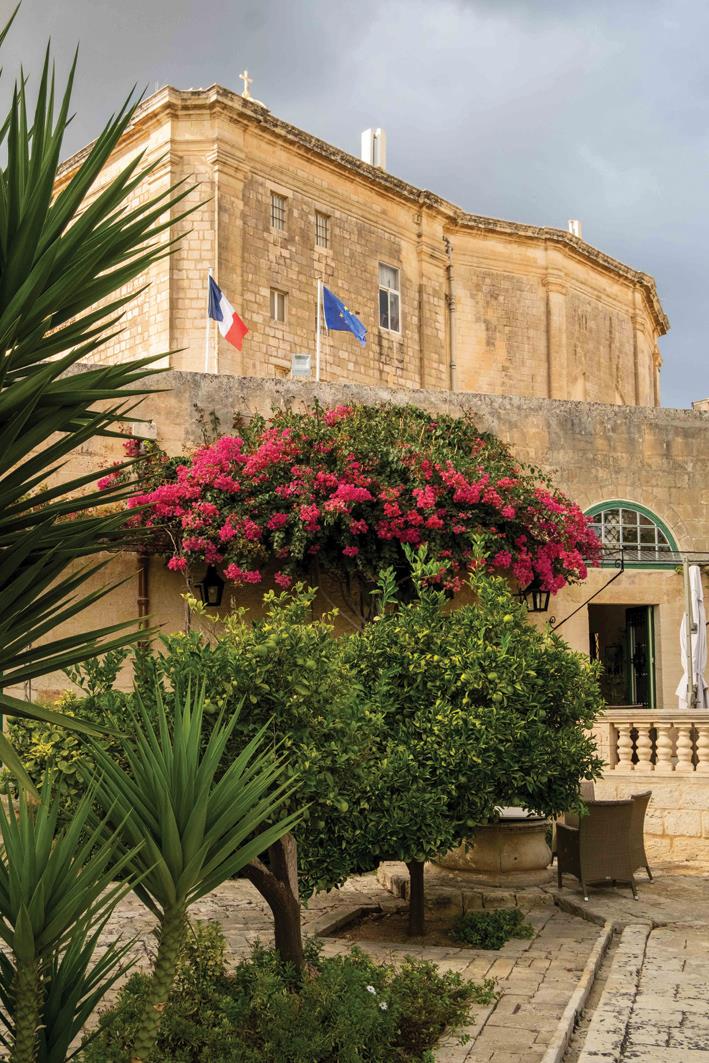
This time, I walked not as a guest returning, but as a seeker of what had been hidden by night: the full geometry of terraces, the citrus trees in their golden blaze, the bougainvilla named after the 18th century explorer, Louis-Antoine de Bougainville who had discovered it in Brazil. He had also visited Mauritius, so I am very familiar with his name. Our guide Mary Josephine Zammit gave us a great tour of the gardens and the general history of the property. She conducted all the tours and did it with grace.
This for me, on a Sunday afternoon, was not just a visit - it was a rediscovery, a quiet unfolding of a place that has always held its secrets close, now disclosed by the generosity of daylight.
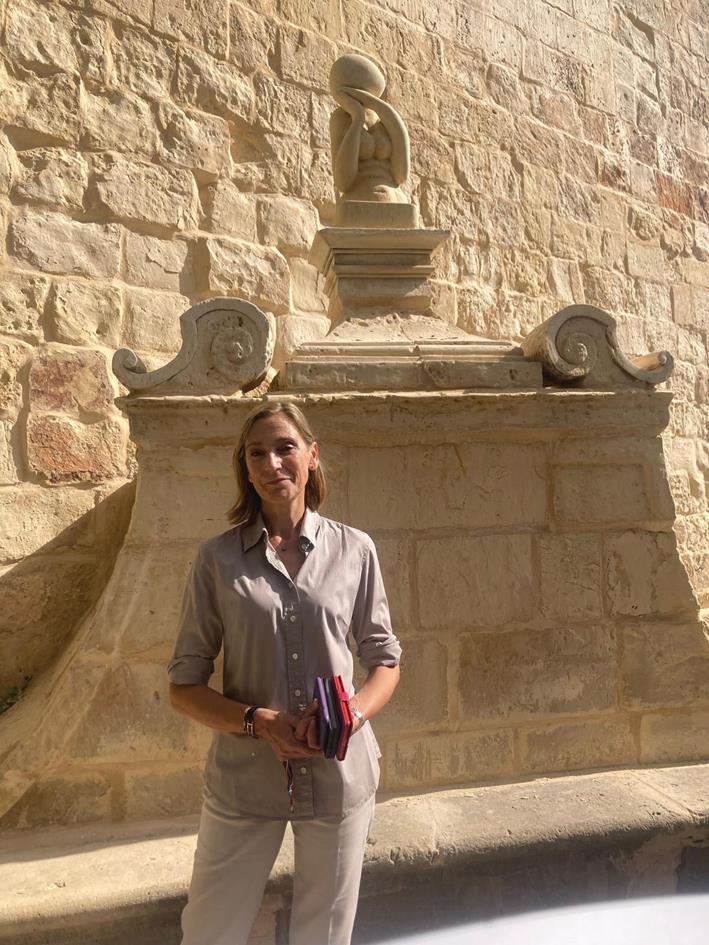
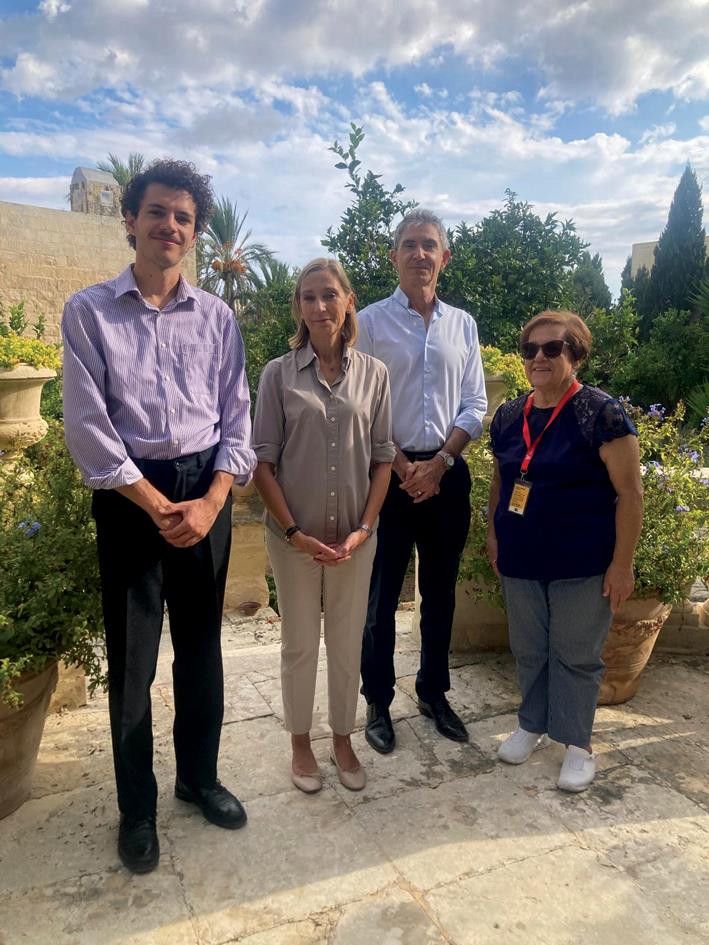
I had met Her Excellency a couple of times before but not the Cultural and Scientific Counsellor M. Renaud Lallement. Both were present throughout each of the 10 tours of 30 minutes each starting at 10am to 1pm. and 2pm to 4pm. Here's a quote from M. Lallement: « Quelle chance pour nous de pouvoir occuper cet endroit, tellement maltais, au cœur de l'île, et qui porte les traces des liens historiques entre Malte et la France. » Indeed, no other residence I know of in Malta, embassy residence I mean, have a home which is so historical.
Throughout the tour Her Excellency and M. Lallement occasionally intervened with interesting comments.
The following notes are based on notes in French originally written by a former ambassador, Patrick Chrismant, who, I remember him telling me, had had a Maltese nanny in Morocco I believe, where his father was posted with the diplomatic corps for some years... he spoke some Maltese as a result.
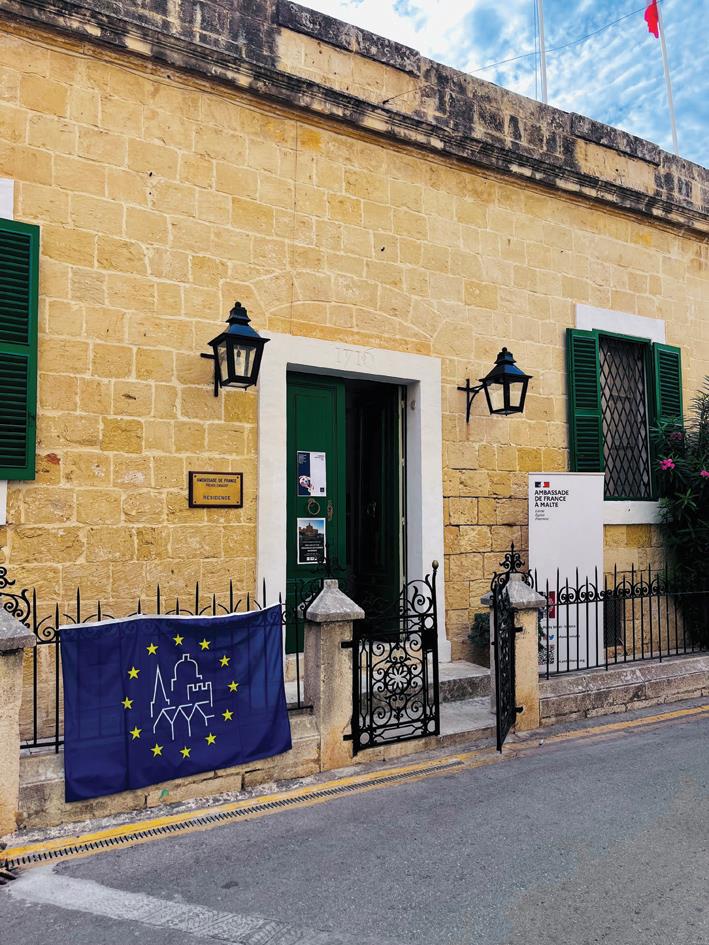
The Manduca Palace, in one of Malta's most historic inland towns, has been deeply entwined with the island's political and cultural life for nearly 300 years. Since 1997, it has served as the official residence of the French Ambassador to Malta.
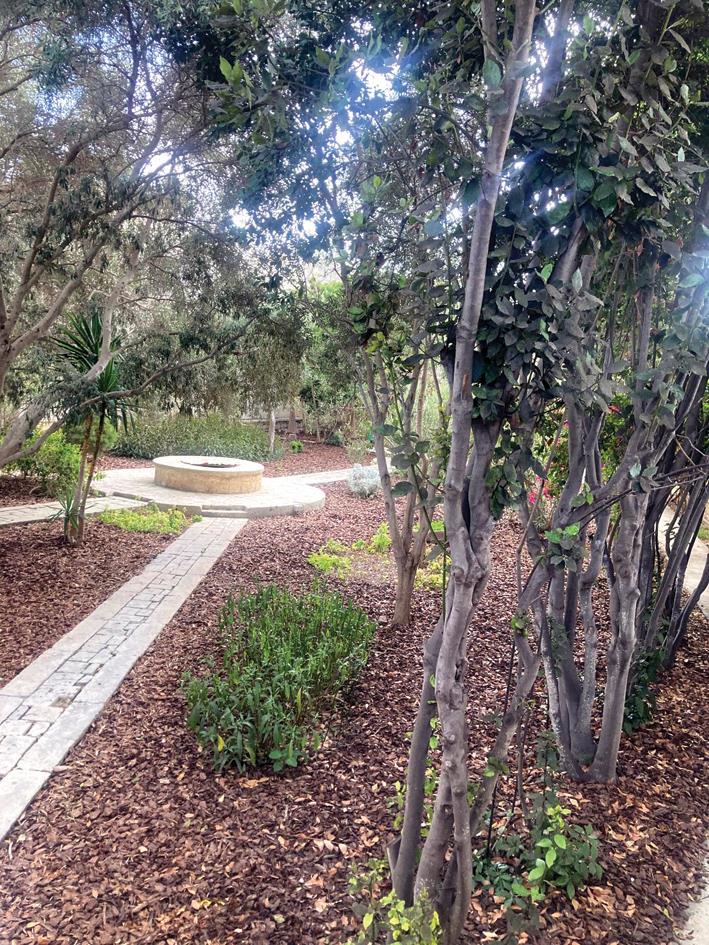
Built in 1716 by the noble Manduca family, the palace was cleverly designed to make use of fragmented plots surrounded by church lands. Its austere street façade hides lush terraced gardens, citrus groves, and a pool surrounded by bougainvillea and century-old olive trees.
The palace (I would call it a palazzino myself) stands just behind the baroque church of Saint Philip of Agira, associated with architects Gerolamo and Vittorio Cassar.
The Manduca family had ties to France as early as the 16th century, with one member serving as a royal physician to Henri IV.
In the 18th century, the palace became a hub of social and political life, hosting bishops, Grand Masters, and artists like Antoine de Favray and Francesco Zahra.
It later passed to the Pullicino family, becoming a centre for secular Maltese baroque music, thanks to composer Pietro Paolo Pullicino and his wife Marianna Schembri, a student of Francesco Azzopardi. During the French occupation (1798-1800), the palace was a centre of resistance led by Judge Arcangelo Pullicino and Mgr. Caruana. It played a role in anti-colonial movements under British rule, with Pullicino and his descendants advocating for liberal reforms and Maltese autonomy.
In the 20th century, it echoed with political tensions between Nationalists and Labourites especially during the Mintoff-Gonzi era.
After serving religious and political functions, the palace was acquired by France in 1997.
It now symbolizes the peaceful and trusting relationship between France and Malta.
I've always wanted to know more about this palazzino, having been there so often. At last. I now have the facts. Merci M. Christmant!
Gauthier Pages, the 'new' Attachée Cultural et Communication, who is always so helpful, told me: "This day was officially registered on the European Heritage Days platform, in collaboration with the Superintendence of Cultural Heritage of Malta who worked with us on this event."
The team of the Embassy was present to welcome the attendees. They put up a truly good show. I am so glad I went. I was, at one time, much closer to the French embassy but age changes many things. My fault not theirs.
A most pleasant and instructive afternoon. To think, they only have one gardener who is not even from this part of the world.