Your brushwork feels deeply intuitive and emotionally charged. Can you share what guides your hand when you begin a painting?
Before starting a painting l always work on a few preparatory sketches. The looseness and freedom of these sketches help with the energy and excitement of beginning a work in oil paint, which requires a more lengthy process.
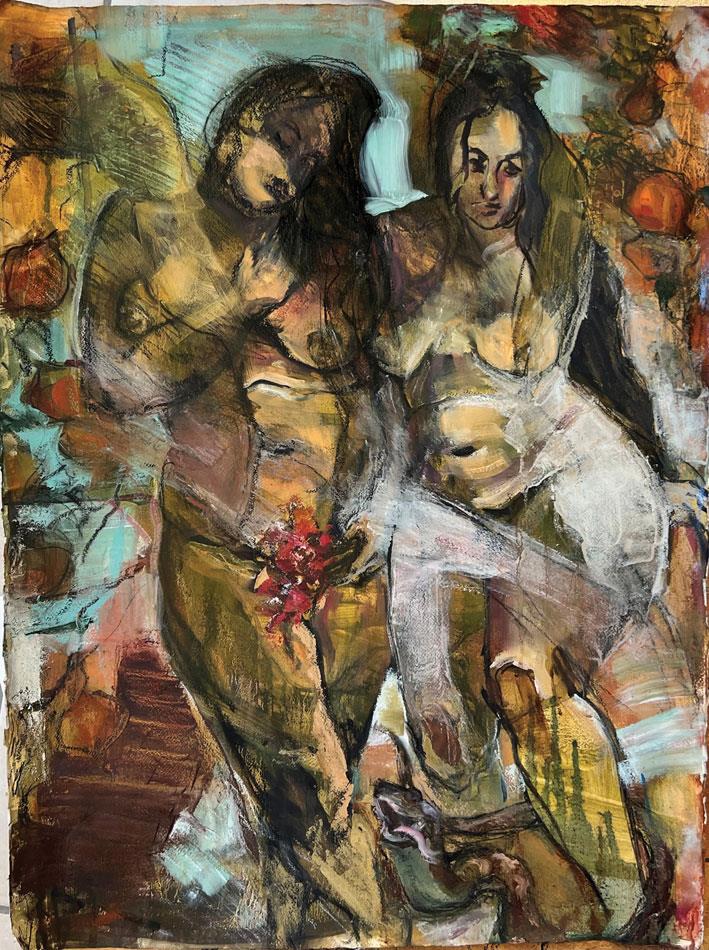
Do you paint from memory, imagination or live observation - or do these sources blend together in your practice?
I think all three come into play - memory, imagination and observation - and they always blend together in varying degrees, depending on what I'm portraying. An outdoor painting will be finished off in the studio, forcing memory and imagination into play, while an imaginative work will feed off the colour and form around me.
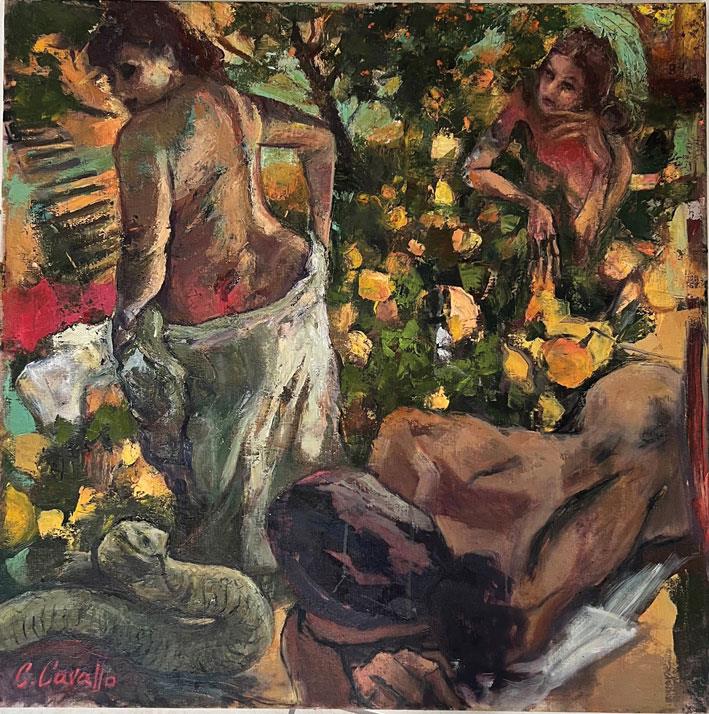
What role does music, poetry or literature play in your creative process, if any?
Music and literature often accompany my process. Music is my constant companion while painting, and literature help surprise my mind with new ideas, inspired by a sentence, turn of phrase, or concept. When starting to prepare for this exhibition I was reading Hope, Pope Francis' autobiography, and l would take a thought of his and turn it into a painting. Or let the words direct me towards new ideas. In the eternal cycle of creation and destruction, hope shines eternal.
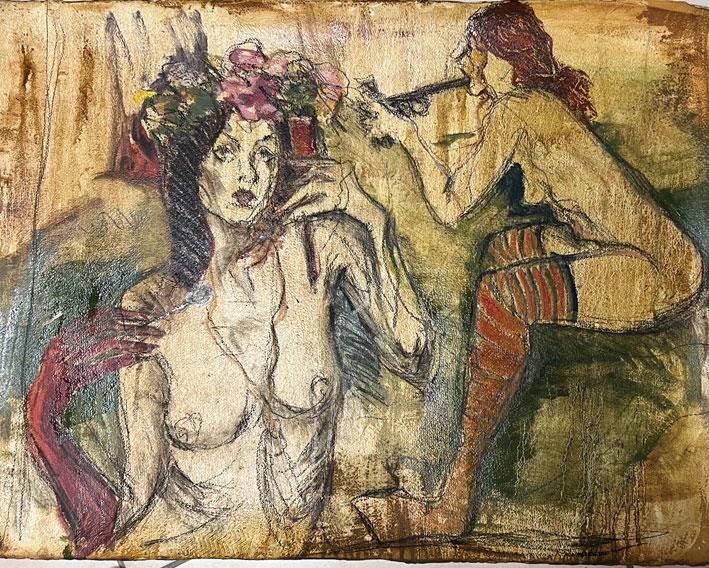
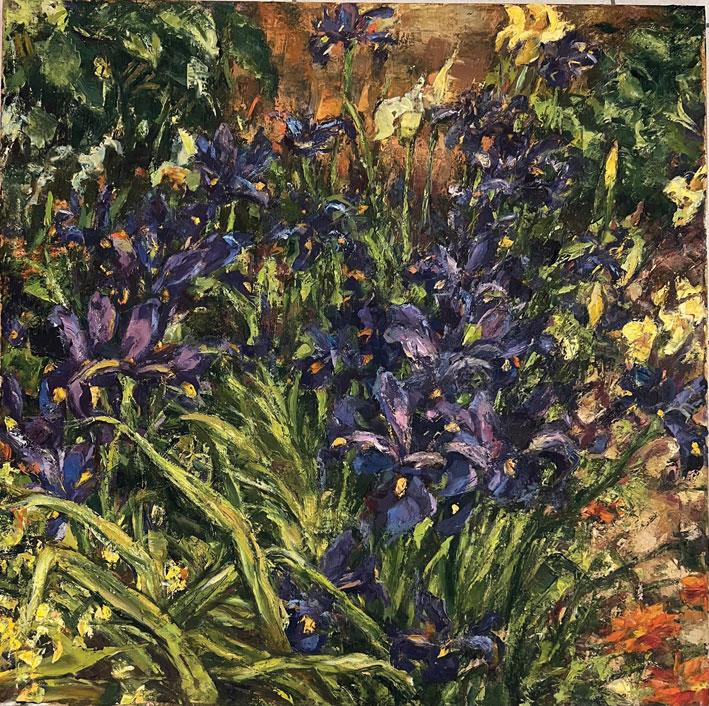
In your garden scenes the irises seem to bloom with personality. Do flowers carry a symbolic meaning for you?
Nature speaks volumes, and the irises were particularly verbal to me standing tall and proud, yet enthusiastic and child-like, as living creatures with souls. I painted multiple versions of them. I also did this with the fruit trees, and used their symbolism throughout many of my figurative works. I see nature as the exemplary way to lead our lives.
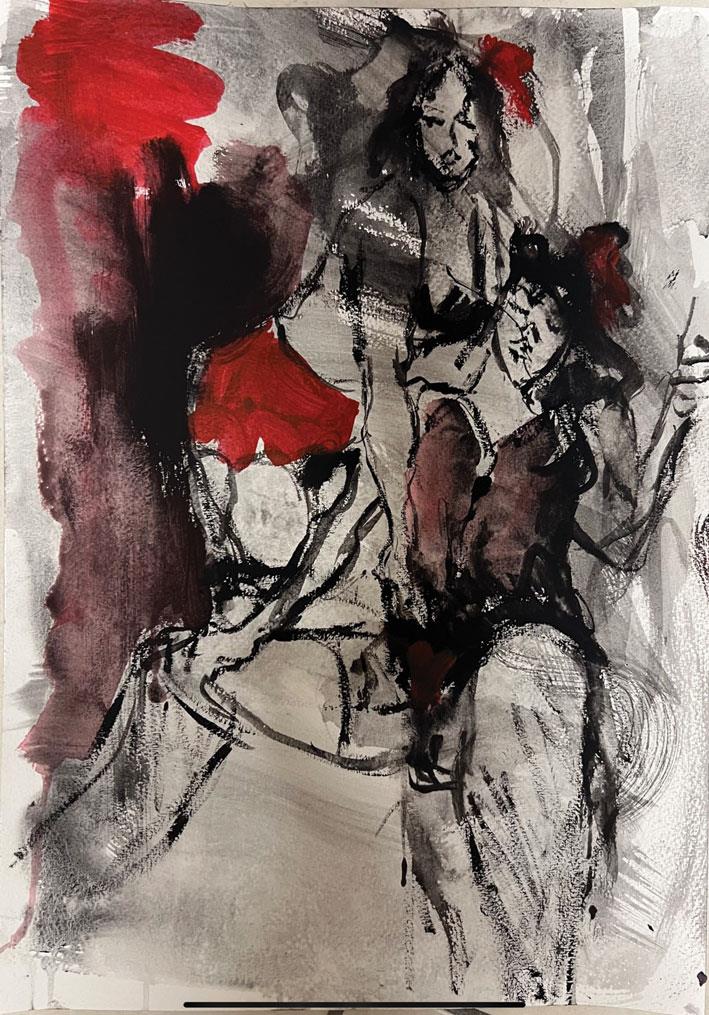
The figures in your work often evoke vulnerability, intimacy and strength. What emotions or stories are you exploring through them?
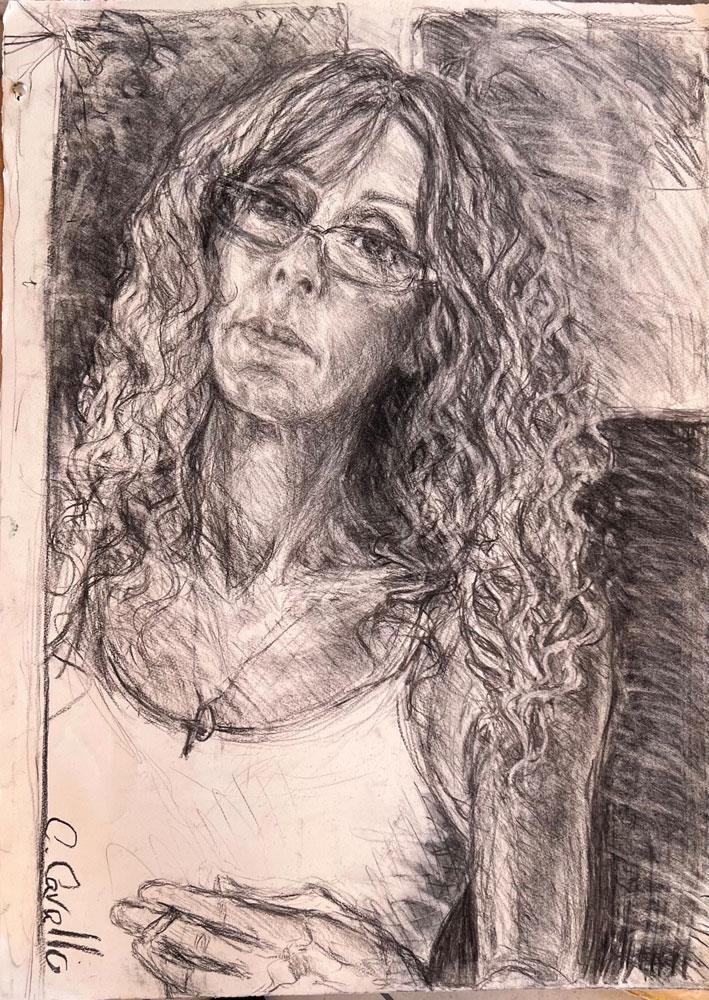
Those adjectives describe very well what l strive to portray in my figurative works. I instinctively veer towards wanting to express the woman's constant battle in a world ruled and ruined by men. There's an underlying indignation throughout and a yearning for something better.
Red appears in one painting almost like a wound or a flame - do you use colour to express inner states or narratives? Your style dances between realism and abstraction. How did you arrive at this expressive language?
Red has popped up recurringly in some figurative works, almost instinctively, probably as a representation of the turmoil in our lives. I find a theme needs to be accompanied by a thematic colour.
Playing around with mixed mediums has led me to abstracting my use of form and colour. I have always been pulled by the beauty of realism and the power of Expressionism, so this has been a conscious step into a different approach where l have had to surrender control and allow things to happen.
Do you ever revisit older works to rework or reinterpret them?
There are certain themes that have been recurring throughout my career, and some more recent ones that also seem to have a grip on me. In these cases there is no limit on how many interpretations I give. As long as it calls me, I will paint it.
How do you decide when a painting is finished?
An oil painting is never really finished; it one day gets put aside to make way or to be revisited, or leaves the house for a new home. Or I simply run out of time. These things usually mark the end of a work.
What has painting taught you about yourself over the years?
I see how selfish I can be when it comes to my work, as I tend to block out the rest of the world. That said, painting requires a lot of soul searching, and I have learned to try to be more accountable. Hope and accountability are two important factors I find myself focusing on these days.
Is there a particular painting that feels closer to your heart, or one that marked a turning point?
There have been paintings I have been deeply attached to over the years, but this is an ever-changing and constant occurrence. The excitement of creating a new body of work also creates a feeling of attachment as the pieces evolve. I like to think that turning points present themselves occasionally.
How do you hope viewers feel when they stand before your work?
My garden is tended to with love, dedication, energy and enthusiasm and I hope the viewer will feel this. It's a very seasonal garden where flowers burst forth, give joy, then make way for others in the rotation of nature, the eternal cycle of life.
You are preparing for your forthcoming exhibition at Gallery 23 in Balzan. Can you tell us something about it?
In attempting to portray the eternal cycle of creation and destruction, I have a literal garden theme going on which l have allowed to merge into my figurative works, and here the garden theme becomes metaphorical. There is death and rejuvenation of nature and also of people, in the literal sense and also the spiritual sense; in that we die and are born again to eternal life.
Any themes you're eager to explore, or collaborations on the horizon?
While preparing this body of work, my mind has found clarity on where I want to go from here, which is often how the process goes, a piece of work or an idea leads to another.
If you could whisper one message into the ear of every visitor to your forthcoming exhibition, what would it be?
I would ask for them to keep in mind "the Yin and Yang of life, which is the dualistic nature of the universe, and to acknowledge beauty in chaos, chaos in beauty, good in evil and evil in good".
As Cavallo prepares to unveil her new body of work at Gallery 23, Balzan, she leaves us with a whisper - a call to embrace the Yin and Yang of existence. In her garden of painted truths, beauty and chaos entwine, and hope, like a perennial bloom, refuses to fade.
Catherine Cavallo in a few words
Catherine Cavallo was formally trained at The City and Guilds of London Art School, where she attended a four-year course in Fine Art/Oil Painting between 1981-1985, graduating with a 1st Class Hons. Dip. This was followed by a fellowship to study Textile Conservation at Hampton Court, offered by UNESCO.
Catherine lived in London for nine years where her palette and choice of subject matter were strongly influenced by the moods and sombre hues of the city. This was followed by three years in Tuscany and it was here that her palette gave way to the brilliant hues of the Tuscan landscape.
Her works in mixed medium are where she allows herself to experiment more freely; merging different genres of her works together, and letting the unexpected emerge. Her love for nature is ever present, lately often in the form of fruit-bearing trees, which can often be found weaving in and out of her figurative works. Trees are a regular source of inspiration, from a much loved, time-weary, 100-year-old orange tree, to a young pomegranate tree bristling with the joy of youth.