As most Maltese will be spending Christmas at sea level, 31-year-old Maltese rock climber and mountaineer Rita Saliba will be attempting to climb Mount Aconcagua in Argentina, the highest peak in South America, to raise funds in aid of the Association for Abandoned Animals (AAA).
Saliba's expedition will begin on 21 December of this year, with the summit push planned for early January, depending on weather conditions.
At nearly 7,000 metres, Aconcagua, part of the Andes mountain range and second highest after Everest, is notorious for its altitude, fierce winds, and freezing temperatures that can drop below -20°C, making it one of the toughest non-technical climbs in the world.
For Saliba, this challenge is also a step forward towards her dream of completing the Seven Summits Challenge, to climb the highest mountains on each of the seven continents, and a mission to raise funds and awareness for an animal shelter close to her heart.
From Kilimanjaro to Elbrus, and now Aconcagua
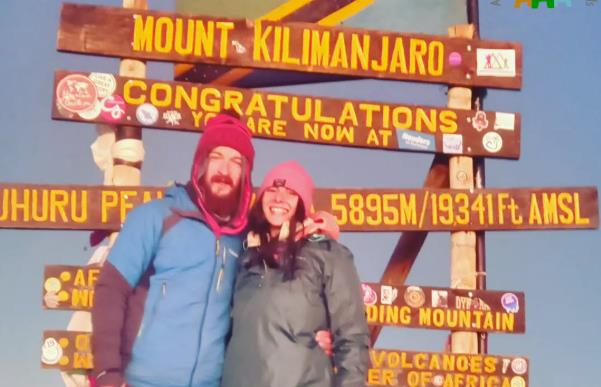
Over the past two years, Saliba has summited Mount Kilimanjaro in Tanzania (2023) and Mount Elbrus in Russia (2024), steadily working her way through the Seven Summits list.
Earlier this year, she also climbed a grade 7c sport route, making her the strongest female rock climber currently based in Malta.
"Kilimanjaro and Elbrus are also part of the Seven Summits, and Aconcagua is the one in South America, the second highest mountain after Mount Everest," Saliba said.
The full Seven Summits list includes Mount Everest (Asia, 8,848m), Aconcagua (South America, 6,962m), Denali (North America, 6,194m), Kilimanjaro (Africa, 5,895m), Mount Elbrus (Europe, 5,642m), Vinson Massif (Antarctica, 4,892m), and either Carstensz Pyramid (Oceania, 4,884m) or Mount Kosciuszko (Australia, 2,228m).
Saliba said she is taking on the challenge gradually, according to difficulty.
"Kilimanjaro is the easiest, while Mount Elbrus is harder as it has a similar altitude but is more technical," she said.
"Aconcagua, however, is a big leap in height. It's 6,962 metres tall, and in terms of difficulty, it falls in the most difficult category, not because it's very technical, but because of its extreme altitude, unpredictable winds, and temperatures that can drop below -20°C, making it a serious physical and mental challenge even without technical climbing," Saliba said.
She added that other peaks like Denali and Vinson are highly technical, though not as tall, while Everest, being the highest, will of course be a challenge of its own.
"What motivated me is my dream of completing the Seven Summits. I have always been adventurous. I also rock climb on weekends and twice during the week. For me, climbing and mountaineering are the main goals I have always wanted to achieve, and the Seven Summits is one of them," Saliba said.
Preparing for the climb of a lifetime
Aconcagua's challenges lie in its extreme altitude, long summit days, and thin air, so for Saliba, preparation is as much mental as it is physical.
"Physically, it includes lots of training, especially strength training for the legs, because I will have six-to 12-hour hikes every day. There are some rest days in between, but the legs will be doing most of the work," Saliba said.
To prepare, she trains in Gozo, where she currently lives, hiking all around the island with a 20kg backpack to simulate the load she will carry during the expedition.
"Something we do not have here is mountains, so I focus on long runs and make sure I can keep my heart rate at around 100 to 150 beats per minute for a prolonged period of time," she said.
As part of her acclimatisation plan, Saliba has already spent a week training in the mountains, and just three weeks before her expedition, she will spend two weeks at 2,000 metres, climbing up to 3,000 or 4,000 metres every two days.
"It is to start acclimatising my body in preparation for the climb," she explained.
Mentally, Saliba said that her experiences on Kilimanjaro and Elbrus helped her understand the kind of situations she will face on Aconcagua.
"The fact that I am physically able to carry a 20kg backpack on my back will help me mentally too," she said.
"The climb takes up to a maximum of 21 days, including spare days for weather. Sometimes it is back-to-back hiking and climbing, so you're extremely tired. I'm also training for those conditions, with less sleep. If I get just three hours instead of eight, I still go for my run or for training. It is about teaching my body to perform even when tired," Saliba said.
Still, she admitted that fear is part of the process.
"Everyone gets scared. Even when climbing, there are days when I feel like I can do anything, and others when I suddenly feel like I cannot. There is always the unknown, so I am mentally preparing as much as I can," Saliba said.
Climbing for a cause
Saliba will be using her expedition to give back and has dedicated her climb to raising awareness and funds for AAA, one of Malta's most active animal welfare organisations.
"I chose AAA because I am an animal lover and a nature lover. I have rescue animals at home, and I lost my dog two years ago, so I feel a big connection with dogs. The association only gets funds from the public, so this will help them with their costs and all the work they do," Saliba said.
AAA focuses primarily on caring for abandoned and abused dogs, relying almost entirely on public donations.
To support them, Saliba is aiming to raise €6,962 - one euro for every metre of Aconcagua's height, with her adding that there has already been interest from people who want to contribute.
"I am also personally looking for sponsors to help with the climb and to donate to AAA. There's already some interest from companies," she said.
Asked what she hopes the Maltese public will do to support her; she said every little bit counts.
"People do not have to donate a massive amount. The amount of work AAA does, the care for the animals, it is a lot. We are helping someone who does not have a voice, and that is something I would really encourage people to support," Saliba said.
Breaking barriers for women in adventure sports
Saliba's accomplishments in both rock climbing and mountaineering are rare in Malta, and even rarer for women.
Her recent 7c climb - a benchmark of elite strength and technical skill - marked her as the strongest female rock climber based in Malta.
She was asked if she sees herself as a role model for Maltese women in extreme sports.
"I think climbing and mountaineering are still very male-dominated, and there needs to be more exposure. I am actually trying to do some talks, especially to get women more interested, because there is still a stigma that women cannot do this, but in reality, they can," Saliba said, adding that she hoped her journey will help change that perception.
"Yes, I do wish to become a role model for others. My name is not well known yet, but hopefully my journey and everything I do will help others achieve what they want to do as well," Saliba said.
In November, she will begin giving talks to promote her fundraising campaign but also to raise awareness about women in sport, especially in extreme disciplines, and about nutrition and health for women athletes.
"While you train, especially in rock climbing, there is this saying that if you are lighter, you are better. However, it is not true, if you are stronger, you are better," Saliba said.
Completing Aconcagua would bring Saliba one step closer to achieving her Seven Summits goal, and she already has her eyes on her next challenge: Denali in North America.
"I am already thinking about climbing Denali, which will be the next one after Aconcagua," she said.
"Aconcagua has to be done in December because it's their summer, whereas Denali has to be done in our summer. I am not sure if I will do it six months after Aconcagua or within a year-and-a-half - that is usually how I like to space them," Saliba said.
If she secures sponsorships to make future climbs possible, she hopes to continue climbing in aid of AAA.
"In the meantime, I am focusing on my nutrition and staying healthy. Even on the mountain, I will make sure to eat well to sustain myself," Saliba said.
Members of the public are encouraged to donate to Saliba's Climb for a Cause; Aconcagua Expedition in aid of the AAA via Revolut to +356 9924 0889, via payments through www.aaamalta.com, via bank transfer to APS IBAN MT34APSB77013000000042920110013 or via SMS donation, adding "RITA" or "ACONCAGUA" as the reference with your donation.
Visit Malta, Eeetwell and Daniels Antiques and Collectibles are sponsoring Rita.