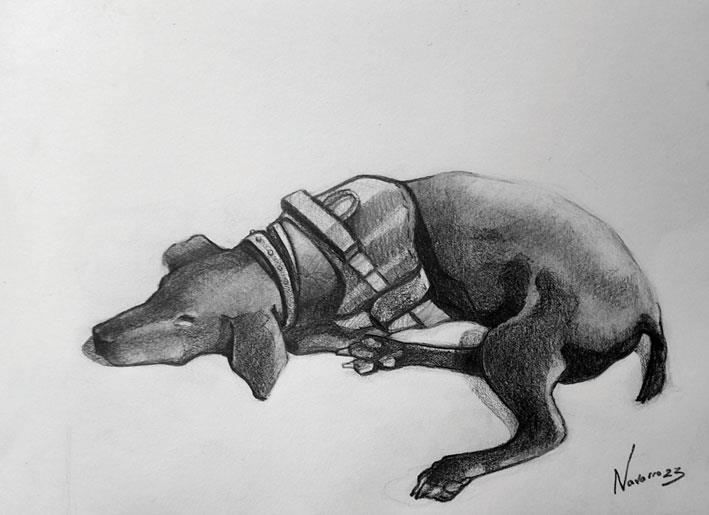
There is a strange comfort in madness, a kind of rhythm that pulses beneath distortion. Franco Navarro's art does not ask to be understood, it demands to be felt. These are not paintings to decode, they are flames to stand near, to recoil from and return to. Each figure, every unsettling contour and expression, exists in a liminal space between torment and transcendence.
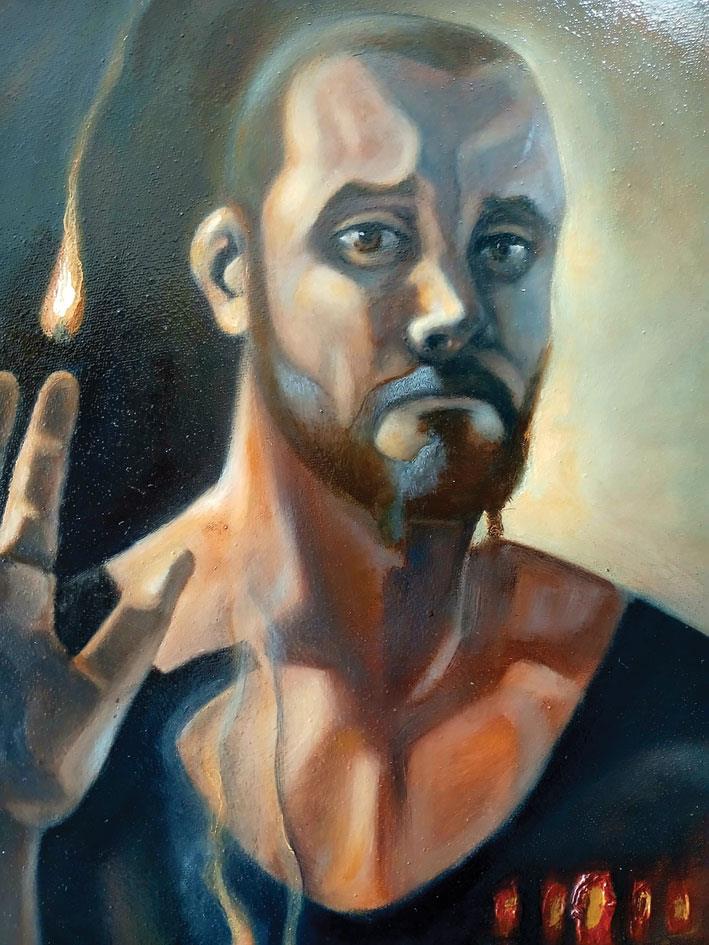
The bodies are misshapen, often exaggerated or incomplete, not to provoke disgust, but to confess truth. Navarro's subjects are us, caught in the act of becoming or unravelling. In their tension, we meet ourselves, the frightened, the exposed, the absurd. But as the viewer moves through these canvases, saturated with reds, blacks, and bruised flesh tones, a kind of peace begins to whisper beneath the chaos.
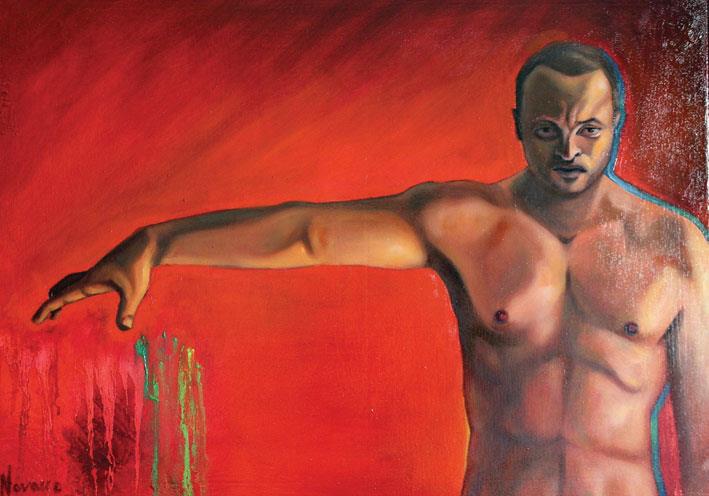
There is so much madness here that it's hard to appreciate the beautiful. But the beautiful is always present. Look past the contorted torsos and haunting stares, and you will discover a dog depicted with gentle tenderness, or a still life radiating a quiet, humble glow. A notebook, a lemon, plums, mundane things made sacred through simplicity. A calm eye peers into the abyss, not with fear, but with quiet understanding.
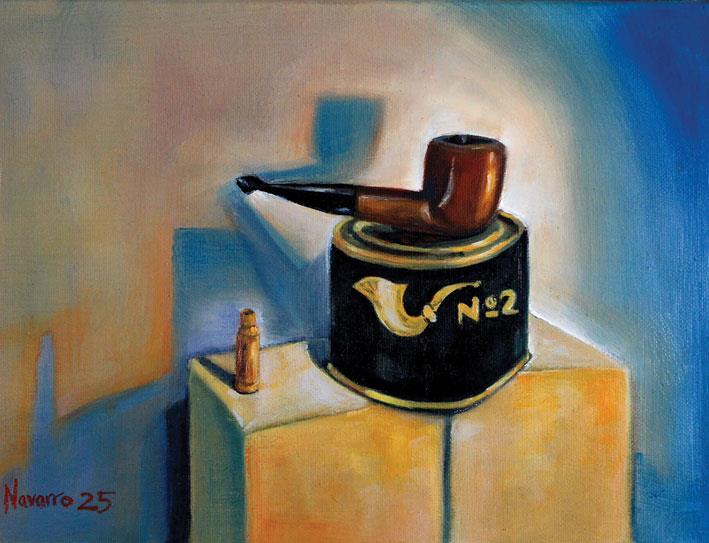
This is the other side of Navarro's art. Its tenderness. There is no hierarchy here between the grotesque and the gentle. They are two limbs of the same body. His work understands that in a world where everything bleeds into everything else, horror and beauty do not stand in contrast. They lean on each other.
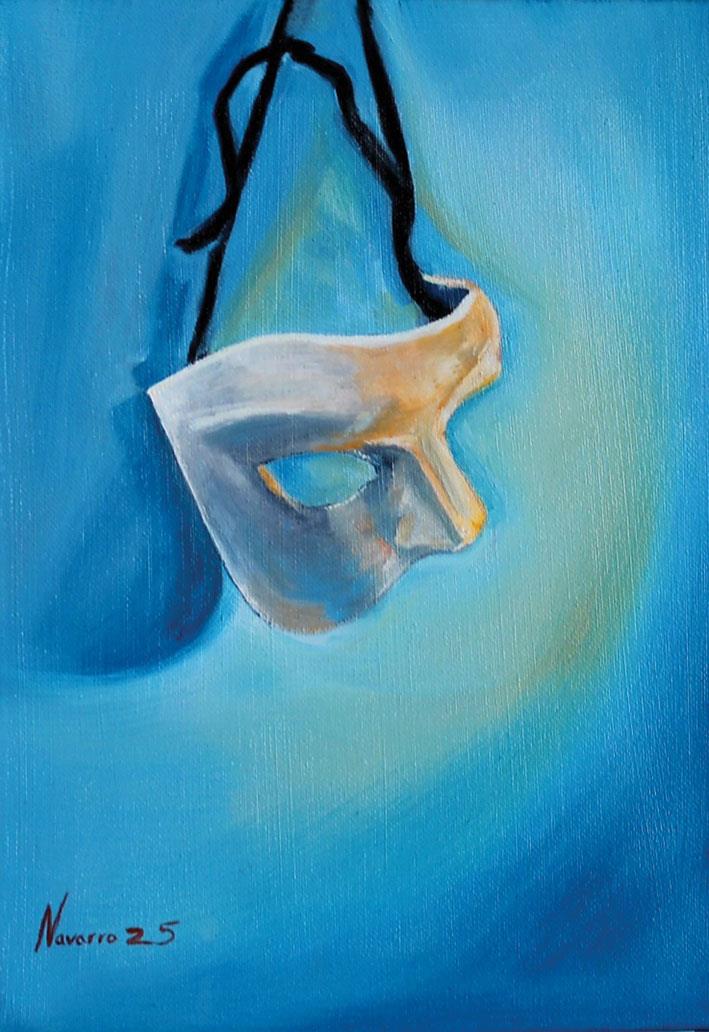
The dog is not just a dog; he is a witness. The still life is not mere fruit and object, it is meditation. In a world fraying at the edges, these pieces remind us that stillness is a form of resistance, and softness a kind of truth. They ground the madness, not by fighting it, but by standing beside it without fear.
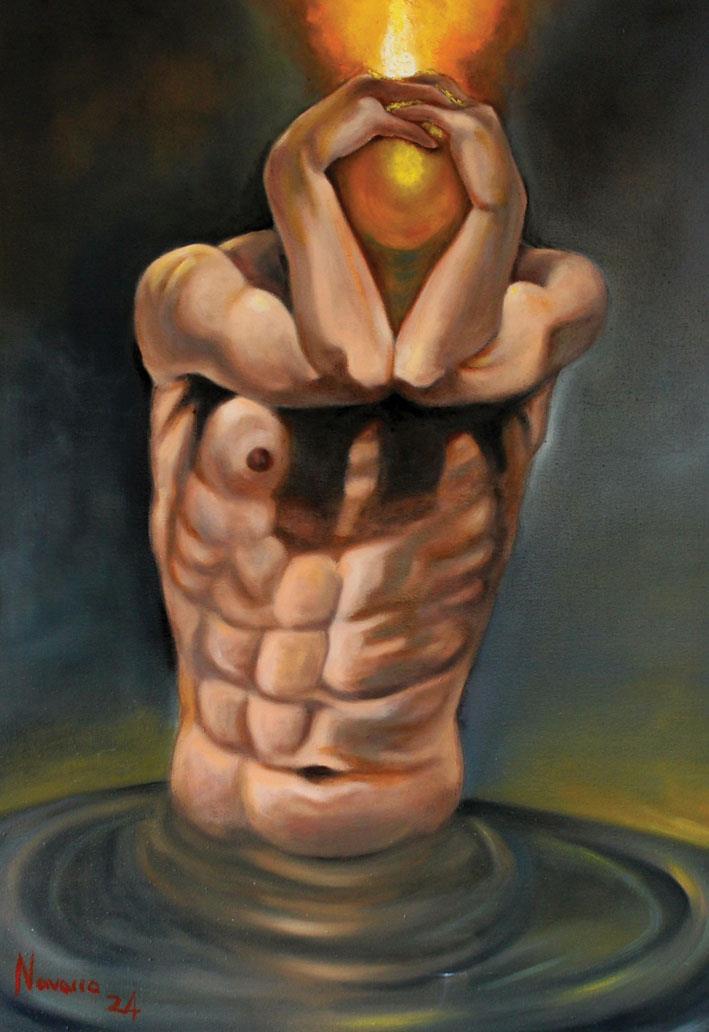
Navarro's brush does not judge. It observes. His figures wear their wounds on the outside; their madness is made visible, as though inviting us to finally drop our own masks. And yet, there is never ridicule. Even the most exaggerated form retains its dignity. There is, oddly, a kind of holiness in their pain, something reminiscent of ancient martyrdoms, reimagined through a surreal lens.
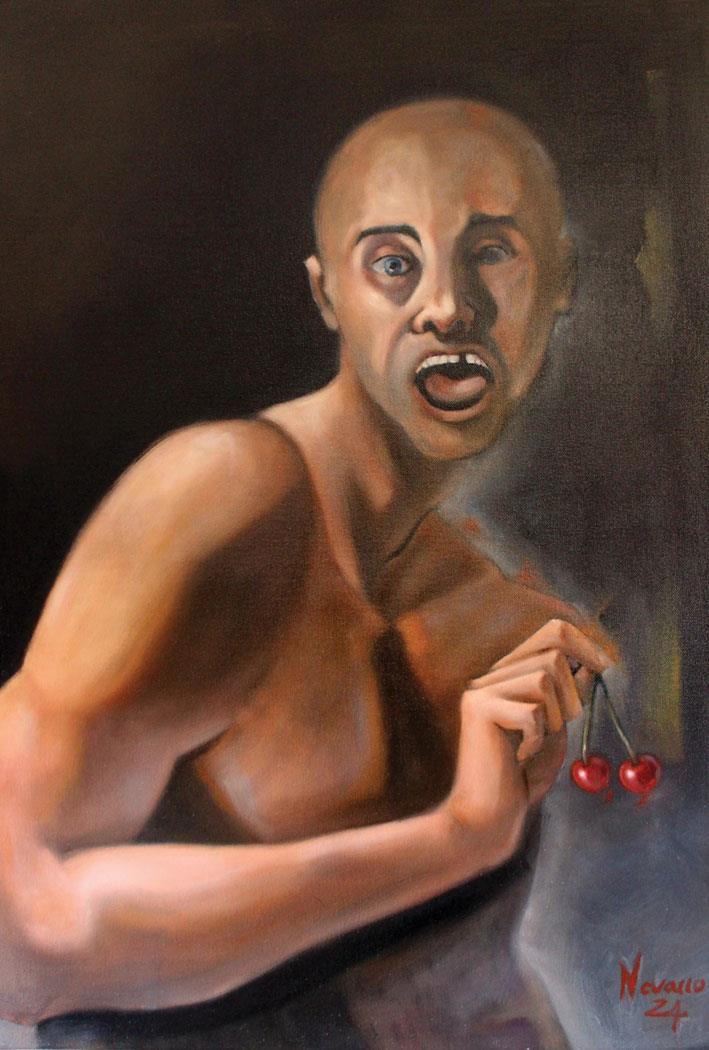
This collection is not a descent. It is a cycle, a meditation on the tension between rupture and radiance. The fire is warm, but the silence warmer. And through it all, a thread of beauty persists - not in perfection, but in presence. In witnessing.
The exhibition, curated by Justin Nicholas Micallef, will be held between 28 November and 12 December at Art by the Seaside Gallery at 65, Triq Il-Mina Tax-Xatt, Senglea.