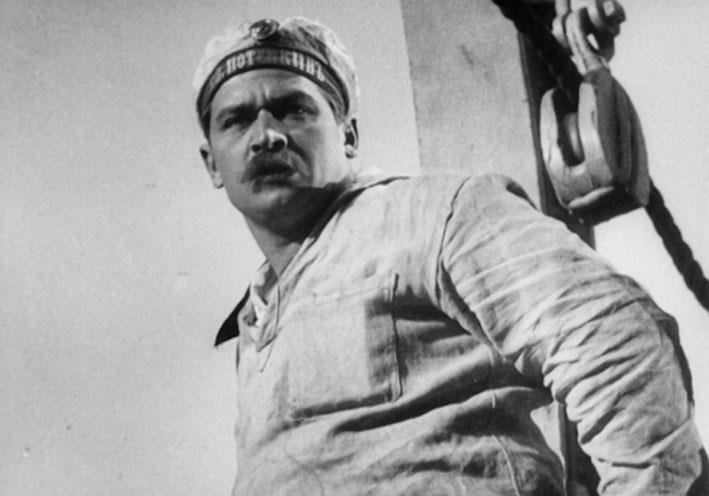
On Wednesday, 26 November at 8.30pm, the Malta International Organ Festival leaves the church loft and steps into the cinema pit as Eden Cinemas hosts a rare event: the screening of Sergei Eisenstein's 1925 silent masterpiece Battleship Potemkin with a live score by Chris Jarrett, joined by Maltese percussionist Joseph Camilleri.
Part of the festival's 12th edition, which runs until 7 December across Malta and Gozo, the evening forms the most overtly cinematic strand in a programme that explores the organ's extraordinary range - from baroque sacred music to experimental soundscapes.

A landmark of cinema, reborn in sound
Released in 1925, Battleship Potemkin is widely regarded as one of the most influential films in cinema history. Eisenstein's portrayal of the 1905 mutiny aboard a Russian battleship, and the subsequent repression in Odessa, revolutionised film language through its daring use of montage - rapid editing, abrupt juxtapositions and rhythmic cutting that create emotional and political shock.
Because it is a silent film, Potemkin has always depended on live or newly-created music. Over the past century it has inspired a succession of scores, from Edmund Meisel's original 1926 accompaniment to later reinventions for orchestra, electronic ensemble and more. Eisenstein himself believed that each generation should refashion the score anew, so that the film's impact would remain alive and urgent.
The Malta performance sits firmly within that tradition of renewal.
Chris Jarrett's live score
The film's live soundtrack at Eden Cinemas is entrusted to Chris Jarrett, a German-based American composer, organist and pianist, renowned for his work with this silent film, his striking solo piano and organ concerts, and his compositions for chamber ensembles. Since creating his own full-length score for Battleship Potemkin in the 1980s, Jarrett has continually revisited it in performance, treating it not as a fixed museum piece but as a living organism that responds afresh every time the film is projected.
For the Malta International Organ Festival, Jarrett will perform on organ and piano, weaving between the two instruments to shape colour, rhythm and atmosphere. Alongside him, Joseph Camilleri provides a vivid percussive layer - from the softest brush of tension to the explosive shock of gunfire and crowd scenes. The result is a real-time dialogue between image and sound, where every cut, close-up and silent scream finds an immediate echo in music.
Rather than simply "illustrating" the action, Jarrett's score amplifies the emotional undercurrents of the film: the claustrophobia of life below deck, the mounting indignation of the sailors, the terror on the Odessa Steps, and the final, breath-holding standoff between the Potemkin and the approaching squadron. The organ's breadth - from whispered harmonics to overwhelming full sonorities - is uniquely suited to this journey from intimate human drama to revolutionary storm.
From church loft to cinema pit
For festival audiences used to hearing the organ in baroque churches, the move to a cinema screen is more than a change of venue: it is an invitation to rethink what the instrument can do. In Battleship Potemkin, the organ becomes part orchestra, part noise machine, part psychological narrator. Its sustained sonorities can stretch a moment of suspense to breaking point; its rhythmic energy can drive a montage sequence like an engine.
By pairing the film with live organ, piano and percussion, the Malta International Organ Festival continues its mission to present the "king of instruments" as a flexible, contemporary medium - equally at home in sacred ritual, chamber dialogue and multimedia experiment.
A one-off cinematic experience
Unlike a fixed recorded soundtrack, this performance will only happen once in exactly this form. Because Jarrett's approach is deeply rooted in improvisation, each cue, crescendo and silence will be shaped in the moment, in response to the audience, the acoustic and the flicker of the film itself.
For those who love cinema, this is a chance to encounter a 20th century classic in the way its first audiences would have experienced it: as a fusion of moving image and live, unrepeatable music. For organ enthusiasts, it is an opportunity to hear the instrument liberated from the church balcony and plunged into the heart of revolutionary cinema.
Tickets are available from Eden Cinema website https://www.edencinemas.com.mt/battleship-potemkin or booking office