On a quiet street in Malta, far from the bustle of Valletta, the sound of metal and chisel echoes softly through a studio that feels more like a temple than a workshop. Here, surrounded by bronze casts and the faint scent of wax, Azerbaijani sculptor Eldaniz Gurbanov, also known artistically as Denis Gur, breathes life into matter. His figures, suspended between the real and the imagined, between gravity and air, seem to defy the boundaries of stone and time.
Gur's presence in Malta is a kind of artistic surprise. In an island accustomed to the sculptural grace of Anton Agius and other local sculptors or the devotional statuary that adorns its churches, Gur's monumental yet poetic sculptures introduce a new sculptural language, one rooted in the discipline of Soviet realism yet flowering into the freedom of contemporary abstraction.
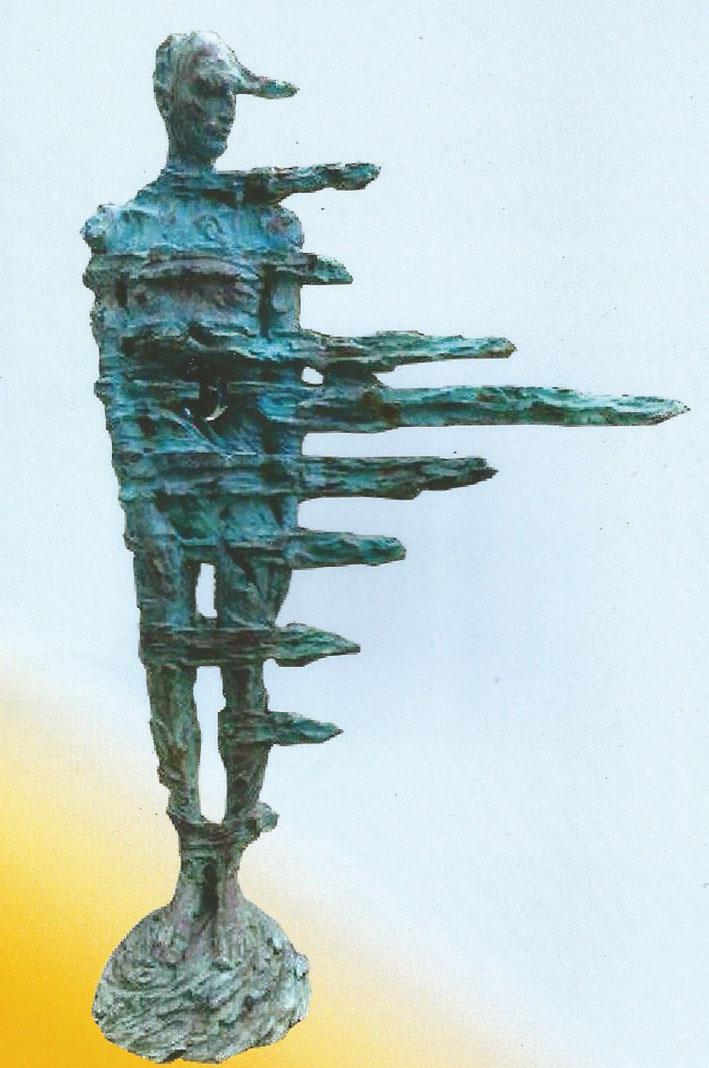
Early life and formation
Born on 6 January 1975 in Nakhchevan, a region rich in both ancient myth and rugged natural beauty, Gurbanov grew up surrounded by the stark landscapes and architectural remains that have inspired Azerbaijani art for centuries. This early exposure to form, texture, and endurance shaped his fascination with sculpture as both a record of time and a vessel of spirit.
His formal artistic education began in Ukraine, at The State Academy of Design and Arts in Kharkiv, one of the oldest and most prestigious academies in Eastern Europe. It was here that Gur honed the foundations of his art: anatomy, proportion, monumentality, within the rigorous framework of Russian socialist-realist sculpture. The Academy's teaching tradition, steeped in the monumental ethos of Soviet public art, taught him discipline, precision, and above all, respect for material. Yet even in those years, Gur's instinct pushed beyond ideology. Beneath the heroic postures and civic narratives required of students, he sought the inner tension of form, the moment when matter begins to transcend itself.
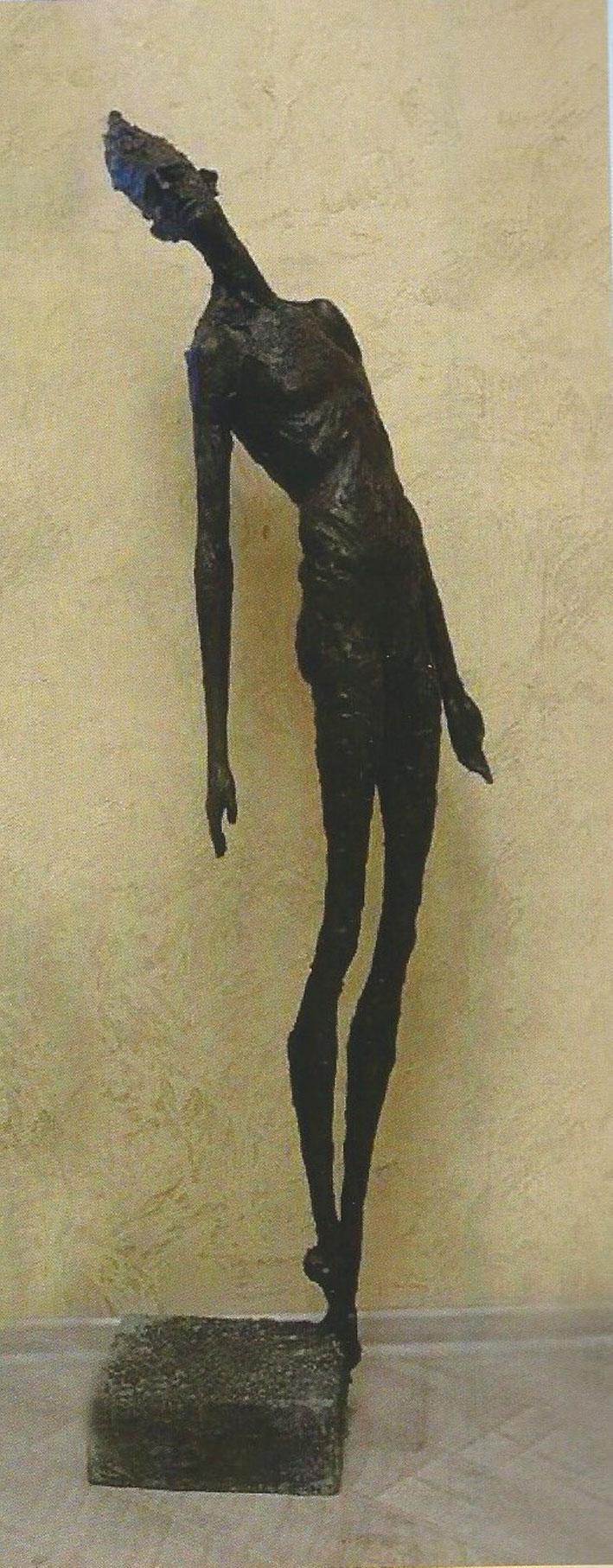
Between weight and breath
Gur's early sculptures bear the unmistakable mark of socialist realism: muscular bodies, taut gestures, faces resolute in purpose. But where Soviet sculpture celebrated the collective, Gur's figures quietly express the individual, the inner life that persists beneath systems and slogans. His command of mass and anatomy is formidable, yet he uses it to explore fragility rather than strength. Over time, Gur's work began to loosen its classical grip. His figures became lighter, surfaces more fractured, voids more meaningful. Bronze and marble gave way to combinations of materials; density became a conversation with emptiness. The sculptor once concerned with external power began to sculpt the invisible: emotion, memory, breath. In his studio today, one finds pieces that still carry the weight of tradition but pulse with a new sensibility. Forms twist and unfold like gestures half-remembered, suggesting motion rather than stasis. These are not monuments to heroes but meditations on being itself.
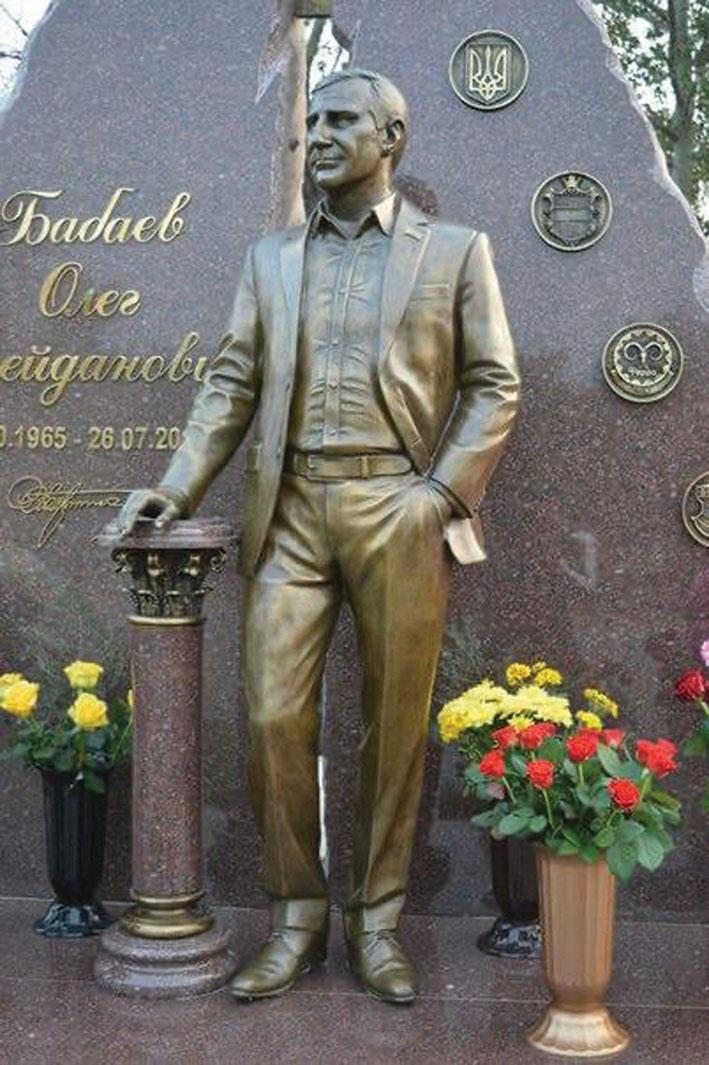
A new life in Malta
When Gurbanov relocated to Malta, a decision born of opportunity and, perhaps, destiny, he encountered a landscape utterly unlike his homeland. The island's golden limestone, crystalline light, and maritime horizon transformed his perception of sculpture. "Malta has its own rhythm," Gur explains. "The stone breathes differently here. The light moves across the surface in ways I never saw before."
It was here that he was discovered by Maltese sculptor and marble expert Giuseppe Delfiore, who immediately recognised the extraordinary technical mastery and emotional depth in Gur's work. Delfiore's keen eye and long-standing experience in stone and marble sculpture positioned him to see what few others had noticed, that Gur's art represented a rare synthesis of Eastern precision and contemporary expressiveness. Their encounter marked a turning point, helping Gur gain visibility within Malta's small but vibrant community of sculptors and art collectors.
From his Maltese studio, operating under the name Skulptra, Gur now produces commissions and personal works that blend Azerbaijani craftsmanship with Mediterranean sensibility. His portfolio includes monuments, fountains, interior sculptures, and large-scale bronze commissions, each marked by precision and poetic restraint. What distinguishes him most, however, is the emotional intellect of his forms. While other sculptors might chase beauty or perfection, Gur seeks resonance, that moment when form begins to echo the human psyche. His works often seem to breathe, to wait, to listen. They invite not admiration but dialogue.
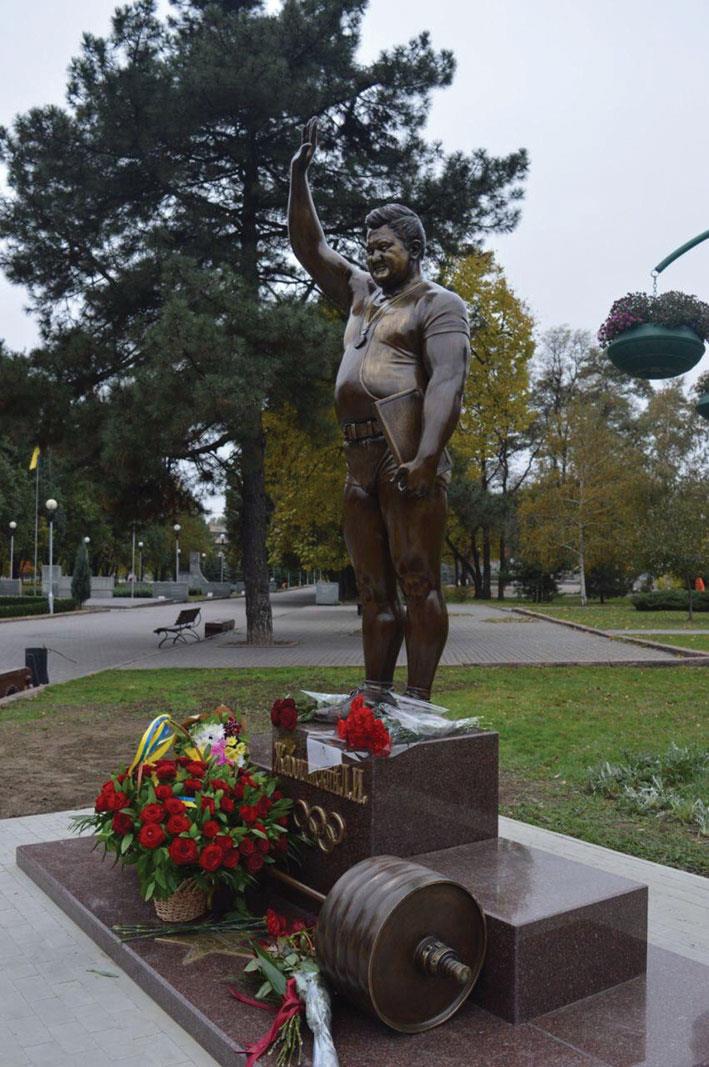
From Socialist Realism to contemporary expression
Gur's artistic evolution mirrors a broader historical shift: the journey from ideological realism to existential expressionism. Having mastered the techniques of monumentality, he began dismantling them, not in rebellion, but in search of authenticity. His newer works reject the certainty of narrative and embrace the ambiguity of modern existence. The result is a sculptural language that bridges two worlds: the technical mastery of Eastern European academism and the intuitive openness of Western contemporary art. Where once he sought to depict collective ideals, he now engages with universal emotions, solitude, longing, transcendence.
This dual heritage makes his work particularly compelling in Malta, a nation whose own identity has long balanced between East and West, tradition and innovation. Gur's sculptures, in this sense, become metaphors for Malta itself: grounded yet open, ancient yet experimental.
Technique and craftsmanship
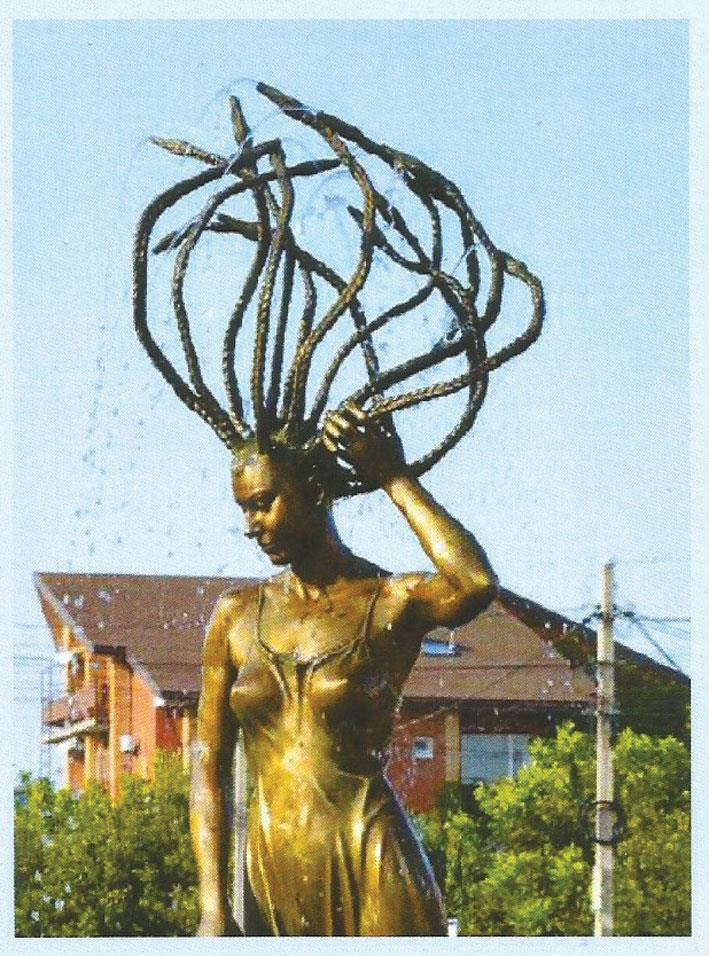
A visit to Gur's studio reveals both classical discipline and technical innovation. He begins each work in clay and then in wax, often sculpting directly with his hands rather than tools. From there, he proceeds through plaster moulding and casting, employing bronze, marble or composite materials depending on the commission. His approach is both methodical and intuitive "a conversation with material", as he describes it.
Gur's surfaces are particularly striking. Some are polished to a mirror sheen, others rough and textural, almost geological. The alternation between smooth and broken surfaces gives his works a living pulse, as though the material were still becoming.
While he respects the weight of stone and bronze, he also plays with negative space, allowing light and shadow to sculpt alongside his hand. In this, one senses the influence of Western modernists such as Henry Moore and Barbara Hepworth or Giacometti, yet Gur's forms remain distinctly his own, more grounded, more soulful, perhaps more Eastern in temperament.
A sculptor like no other in Malta
Malta's sculptural tradition, rooted in religious devotion and civic commemoration, has long celebrated craftsmanship and figuration. Yet few sculptors on the island engage sculpture as a contemporary language, as an evolving dialogue between form, spirit, and environment. Gur's arrival quietly alters that landscape.
His art, though still anchored in realism, carries a philosophical depth rarely encountered in Maltese public art. He challenges the notion that sculpture must simply adorn or commemorate. Instead, his works provoke reflection: What does it mean to inhabit a body? To endure time? To be shaped, and yet remain free?
In this sense, Gur's presence in Malta is not just an addition to the local art scene but a redefinition of it. He brings with him a lineage of monumental discipline fused with contemporary risk, a rare combination in today's art world.
Looking ahead
Gur continues to create both private commissions and original works, many of which explore the human figure as an evolving landscape rather than a static icon. His future ambitions include larger public sculptures that could engage directly with Malta's urban and natural environments, works that would integrate with light, sea, and space.
He also speaks of wanting to mentor younger artists, sharing the techniques and philosophies inherited from his years of study in Kharkiv. "Sculpture," he says, "is not only about form. It is about seeing, truly seeing, how matter holds memory."
An artist between worlds
In Gur, Malta has found an artist of uncommon depth and integrity, one who carries the gravitas of Eastern European sculpture and transforms it into something luminous and contemporary. His work resists easy categorisation: at once classical and experimental, monumental yet intimate, disciplined yet deeply human.
Standing before one of his bronzes, one feels the quiet power of a man who has learned to let matter speak. It is as though the sculptor himself has become an instrument through which stone and bronze recall their ancient dream of becoming flesh. And in that silent exchange, between artist and material, between East and West, between weight and breath, Malta witnesses something rare: the rebirth of sculpture as poetry.
It is now time for Malta's art institutions, museums, and cultural authorities to take notice. Gur's work deserves greater exposure, not only because of its technical excellence but because it expands the very language of sculpture in Malta. Exhibiting his art would not merely honour a remarkable talent; it would enrich the nation's dialogue with contemporary form and affirm Malta's openness to international artistic exchange.
Professor Louis Laganà PhD (Lough) is an academic, curator and practising artist