Very recently, I was invited to curate a collective exhibition with a fascinating past (and, hopefully, an even more exciting future). Ceramic Forms presents a dialogue between two islands, Malta and Cyprus, through the medium of ceramics, featuring eight artists from each country. The exhibition is kindly hosted upstairs at the Mdina Local Council.
Let's start with a bit of background. This collaboration between Malta and Cyprus might ring a bell for some. In fact, these exhibitions used to alternate between the two islands for around ten years! Then came a 12-year pause (yes, twelve!), and just like that, the collaboration has magically resurfaced.
It all began with one of the participating artists, Sina Farrugia Micallef, who met a group of Cypriot artists during an exhibition in France. What followed was a wonderful decade-long tradition of annual ceramic exhibitions between the two countries. Eventually, the project came to a halt, not due to a lack of passion, but because it grew so large that it became impossible to manage at the time (now they have me on board, so no excuses!).
As more and more artists wanted to join, the initiative became overwhelming, but the spirit behind it never truly faded. The idea of restarting these yearly exchanges resurfaced when a group of Maltese ceramic artists attended a workshop in Cyprus. As they reminisced about the great memories and creative exchanges from the earlier editions, the spark reignited.
And here we are, picking up the thread once again.
The exhibition comes with no strict theme, allowing each artist to bring their own voice to the table. On the Maltese side, most of the participating artists come from the original group that launched this project years ago, coordinated by Charles Sammut, who is also exhibiting. The Cypriot artists were selected by Vassos Demetriou, the main coordinator from the Cyprus end (and yes, also exhibiting).
What unfolds is a wonderfully varied celebration of ceramic practice. The exhibition brings together a wide spectrum of techniques and artistic attitudes: earthenware, stoneware, raku, smoke and wood firing, glazes, oxides, and porcelain, hand-built forms and wheel-thrown ones. The result is an eclectic journey through the many ways ceramics can be understood, shaped, and transformed.
Although no theme was imposed, an intriguing contrast emerged between the two groups. Maltese artists seemed to gravitate more towards figurative or semi-figurative approaches, with only one artist embracing complete abstraction. In contrast, the Cypriot selection takes almost the opposite direction, with only one artist going for figurative work, while the rest dive boldly into abstract and semi-abstract forms, leaving interpretation deliciously open. Some artists remain faithful to their signature style, while others test new waters, contributing to a dynamic and surprising constellation of works.
And just in case anyone is curious: we unintentionally ended up with 8 female artists and 8 male artists. Pure coincidence... but a satisfying one.
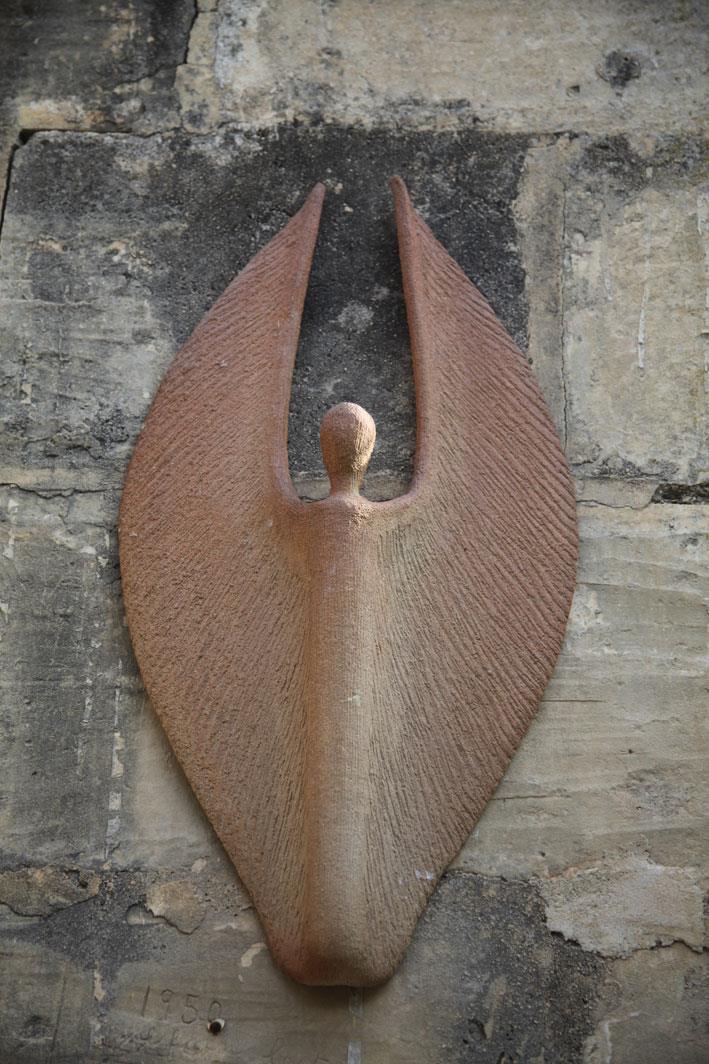
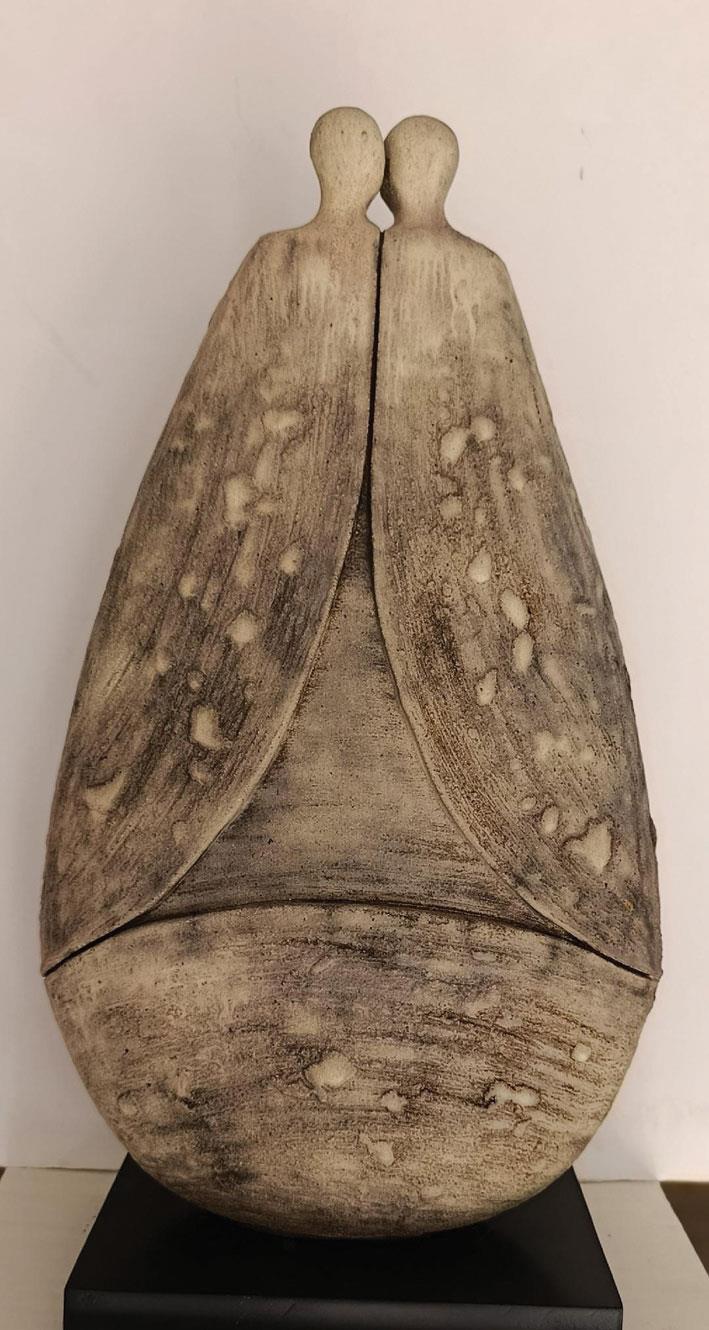
Time to mention some of the works. Mario Sammut presents three stoneware pieces in his minimal, semi-abstract signature style. Of particular note is Eternal Embrace, where two entwined figures almost unfold into a pair of wings. In a similar vein, we encounter Angels, a series by Charles Sammut, in which three angels are portrayed as minimally and as stylised as possible, yet still captured in all their ethereal glory.
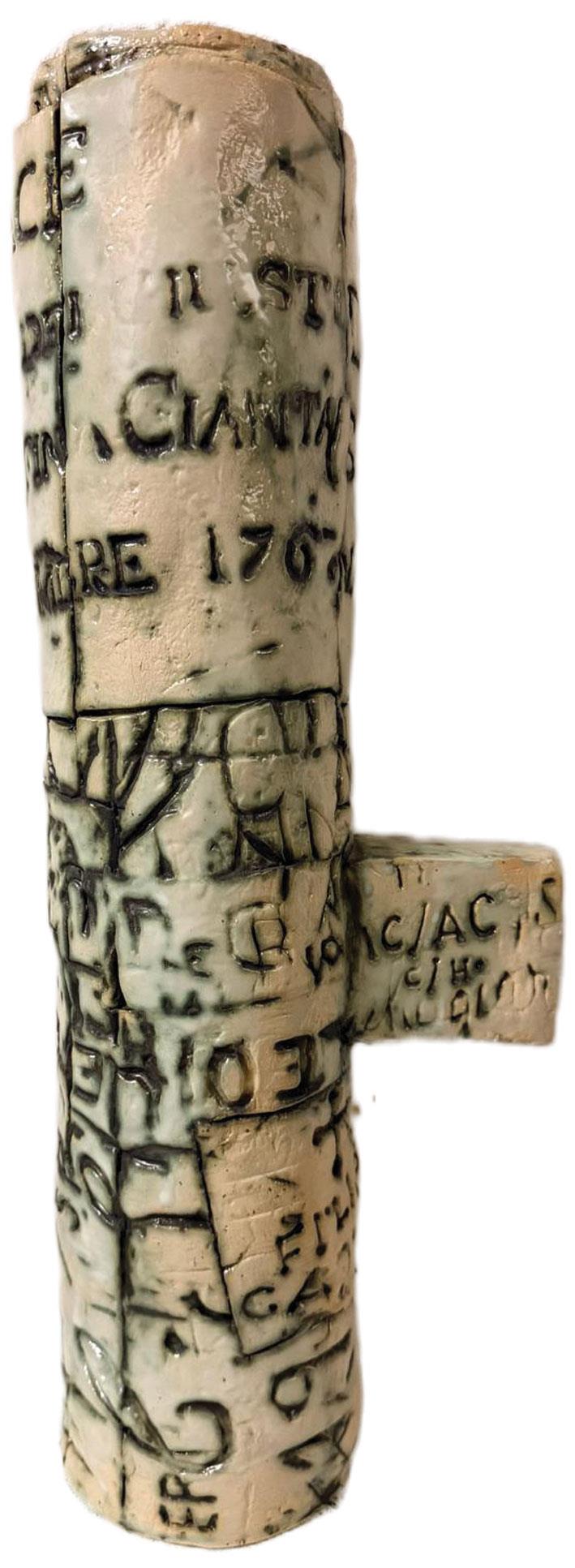
Joseph Agius, on the other hand, is currently experimenting with integrating text into his ceramics. One work offers a playful, figurative interpretation of the idea of a Footnote. The other leans more towards the political, titled Political Spin: a text-covered scroll equipped with a small lever inviting the viewer to literally "spin" it, a neat little pun in ceramic form.
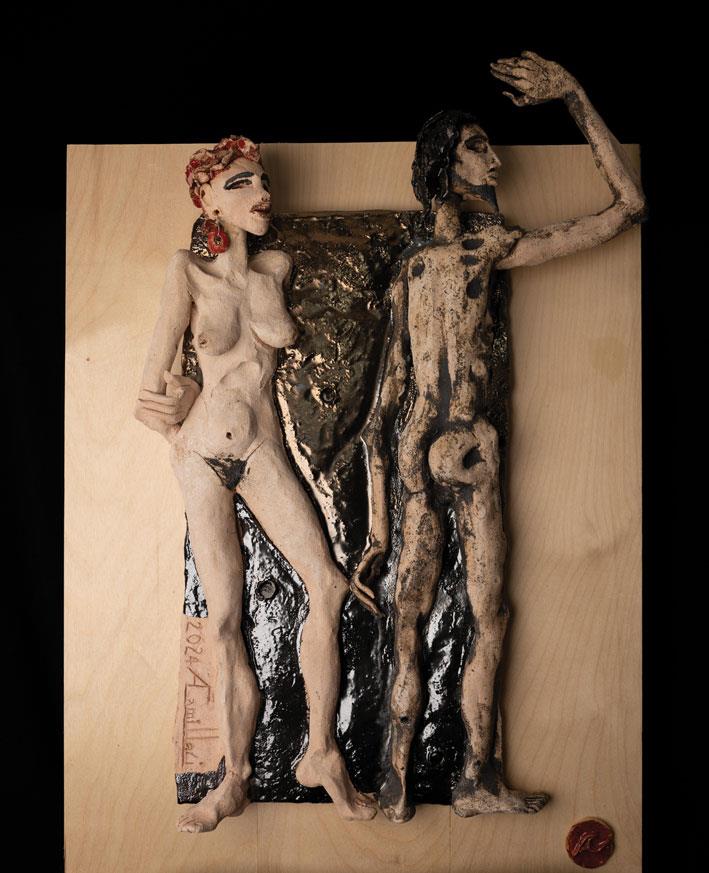
Antoine Paul Camilleri presents three works portraying nudes in his signature style of elongated bodies. Two figures recline on a bed, while the hanging sculpture offers what could be a contemporary take on Adam & Eve, "Eve" sporting a pair of chunky red earrings and nothing else, striking a pose to tempt a not-very-interested Adam, who quite literally gives her his back.
Ruben Formosa also exhibits three works in his unmistakable style, continuing the evolution seen in his debut solo exhibition, Organic Forms. Here we see him pushing into more complex shapes and bolder scales.
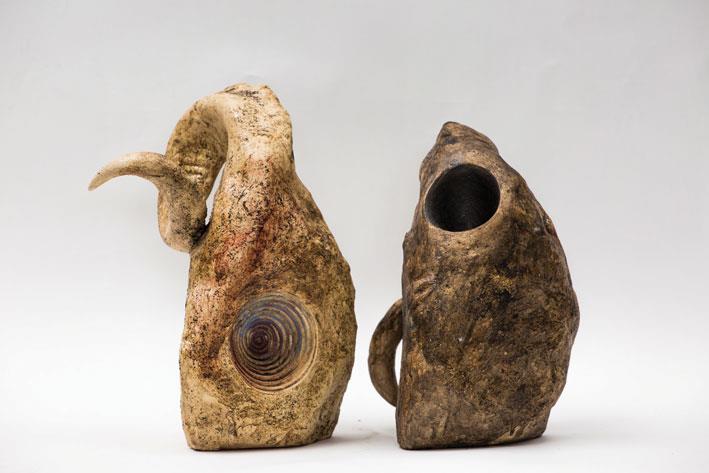
More abstract organic forms appear in the works of Vassos Demetriou, in his duo titled Forms. These pieces are perhaps inspired by his fascination with Cypriot soils and stones, evoking ancient carved talismans, primordial rocks, or even fossilised remnants of extinct creatures.
Maria Theodorou's work, A study in glazed stoneware exploring the interplay of geometric form, surface, and texture, features a fragmented composition that almost resembles an architectural structure, an echo of her background in architecture.
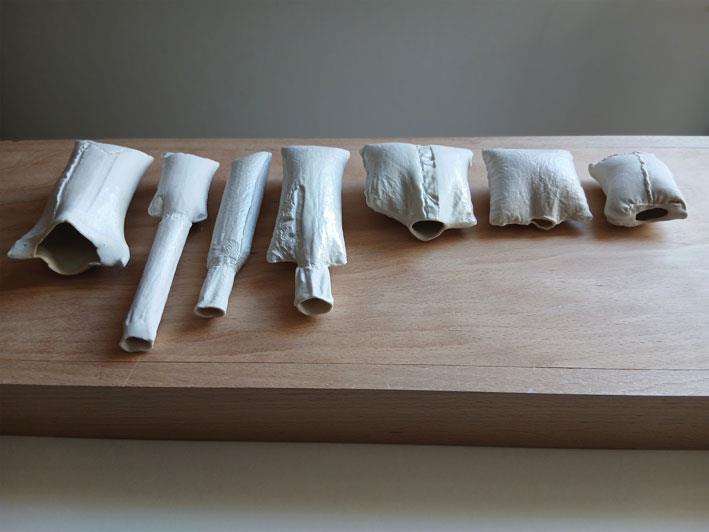
Christina Karekla's work, Untitled, presents seven small elements neatly arranged on a board, almost like pieces from a quiet, meditative game. They seem to invite us to connect them, rearrange them, or imagine the narrative formed by their relationship.
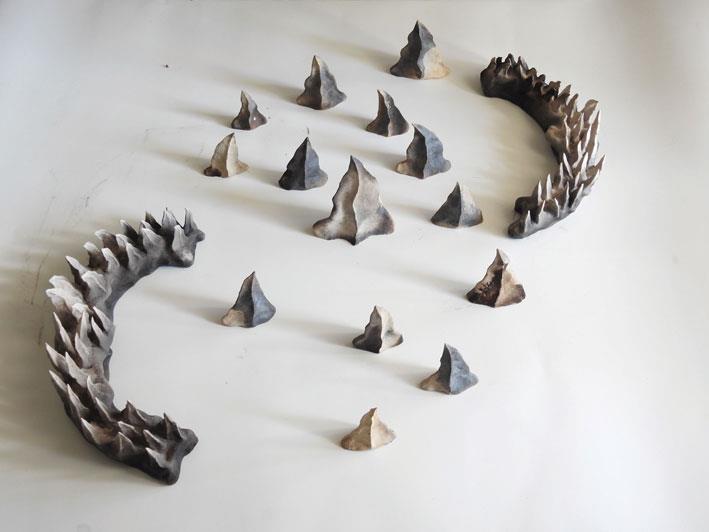
In Sharp Edges, Evie Michaelidou gives us what feels like a bird's-eye view of a miniature, faraway land, or perhaps fragments of a story slowly fading with time, intriguing and bursting with narratives waiting to be uncovered.
Two equally captivating works come from Eleftheria Phili. I admit that, at the time of writing this article, her pieces are still in Cyprus, and I genuinely cannot wait to experience them in person. The works present a playful yet striking combination of geometry and spikes, all neatly contained within block-like forms. It's as though sharp tears have opened within these solid structures, leaving behind pointed residues fiercely protecting the rest of the sculpture.
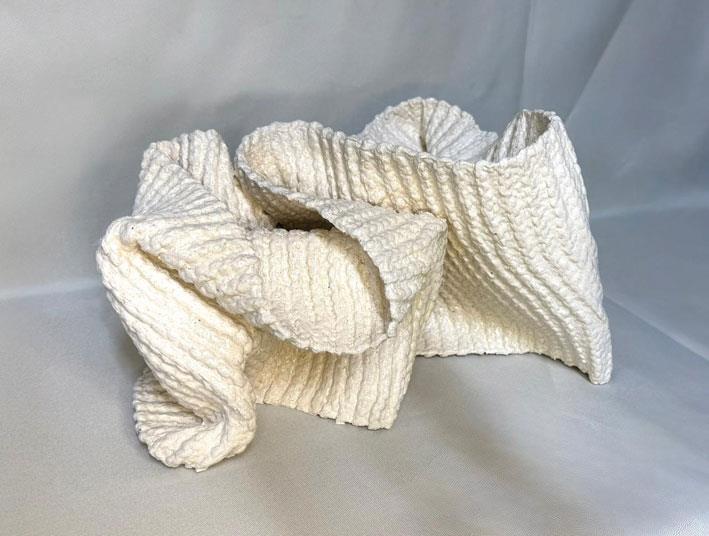
Katerina Paparadamanthous' works are the most figurative among the Cypriot artists. Pillows of Memory presents a striking trompe l'oeil: a pile of soft, delicate cushions, except, they are not soft. And just today, before I started writing this article, I received images of a new work that will also be included. I think I'll have to wait to see it in person before saying much more, because it's hard to believe that what looks like a piece of intricately crumpled fabric is actually ceramic. Spectacular bravura.
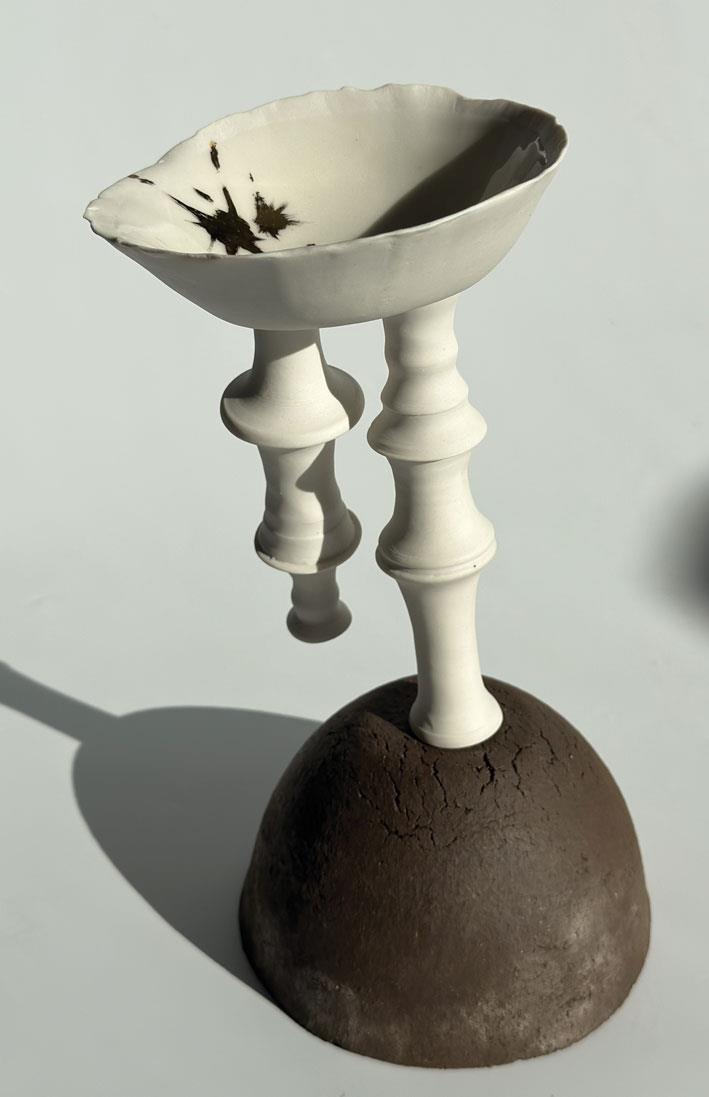
Another work, still figurative, yet also wonderfully ambiguous and even a touch surreal, is Lapithos Legacy by Mümine Özdemirağ Yağlı. The piece presents what could be read as a ceremonial bowl supported by two stands: one clearly functional, connected to a semi-spherical base, and the other seemingly decorative, or perhaps a kind of handle. The work feels steeped in memory, identity, and cultural heritage, all themes the artist often explores.
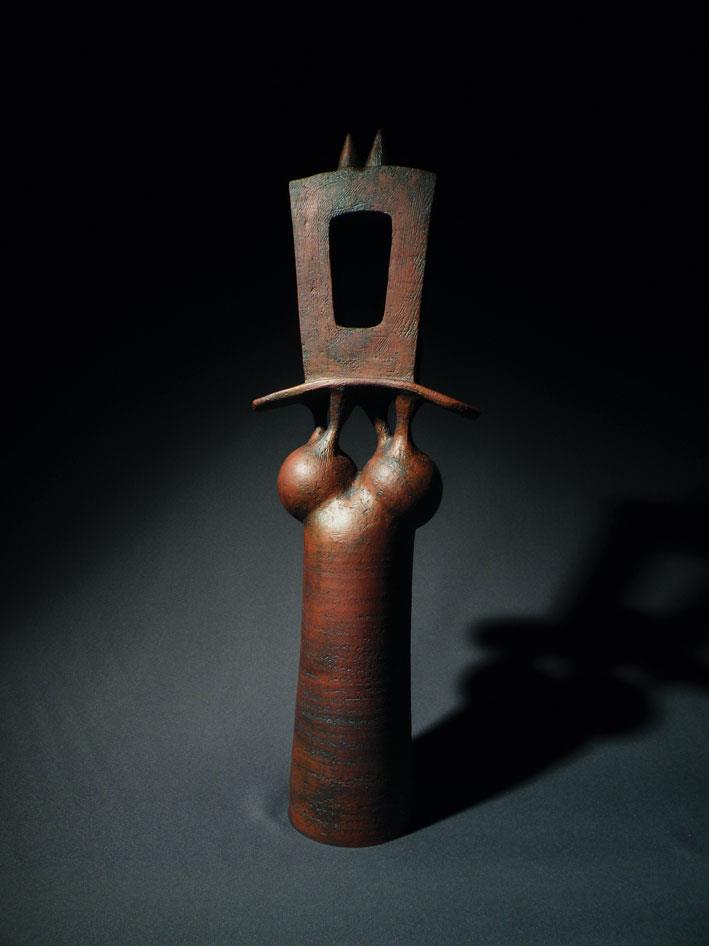
Two other works subtly reference ceremonial artefacts or ancient statues. Dharma and Amun, by Kenneth Grima, are dark, semi-abstract compositions made up of multiple interlocking components that form these tall, freestanding sculptures, both executed in earthenware.
A work in raku titled Cosmic Remains by Eva Papavassiliou presents an abstract composition: one half of a circular form remains intact, while the other appears fractured or "destroyed," scattered with remnants of cosmic debris, perhaps a reflection of life itself, when everything goes according to plan... until it doesn't.
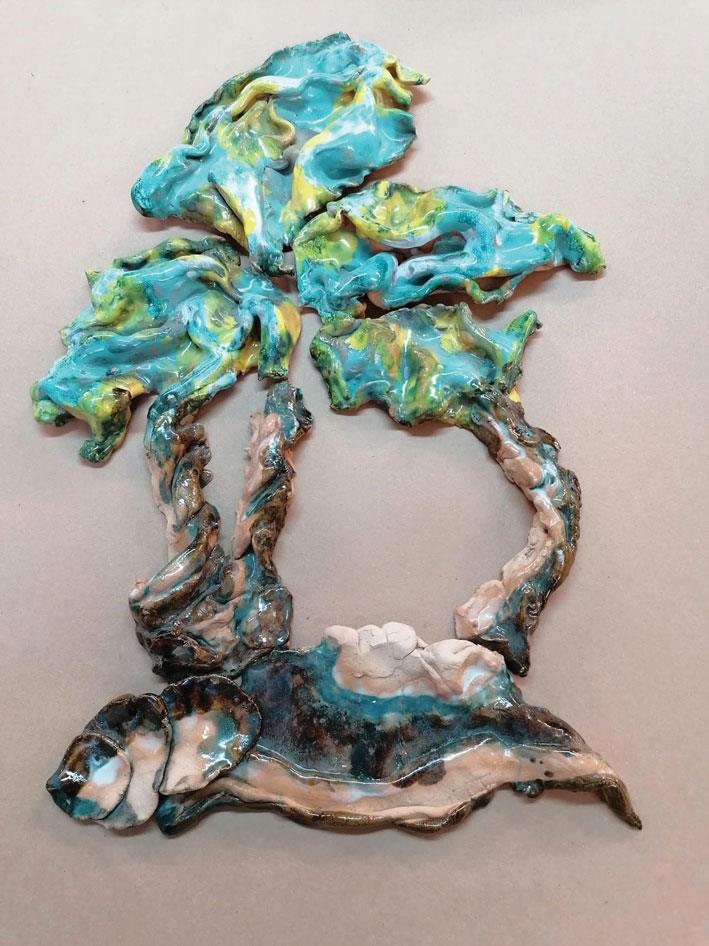
Sina Farrugia Micallef's works sit between the figurative and the semi-abstract. The piece that intrigues me most is Three Trees, a relief capturing a shoreline where foamy waves meet the beach, framed by three trees. The work beautifully reveals the "memory" of the artist's hand working the clay, brought to life through delicate glazes.
And last, but certainly not least, Paul Haber's works are the most abstract among the Maltese artists. His two pieces feature tall, textured, elongated towers that feel as though an internal force is pushing outward, a compelling play between the strength of the outer shell and the energy trying to burst from within.
Whether this exhibition sparks a renewed cycle of exchanges remains to be seen; it will depend on responses from viewers and participants alike. But let's just say... an idea for the next one is already brewing.
The exhibition is coordinated by Charles Sammut, Vassos Demetriou, and Andrew E. Zarb, and runs until 14 December at the Mdina Local Council. Opening hours: Monday-Friday 10am to 4pm, Saturday & Sunday 10am to 1pm.