There is a quiet magic in holding a vintage photograph. It is a feeling almost like holding a breath from another time. Long after the voices in the picture have faded and the places have transformed beyond recognition, the image remains: persistent, patient, and undeniably present. It asks nothing of us except to look, to wonder, and to remember that the world was living and vibrant long before we arrived. Each photograph invites us to explore, reflect, and attempt to unravel the hidden stories that time has threatened to erase.
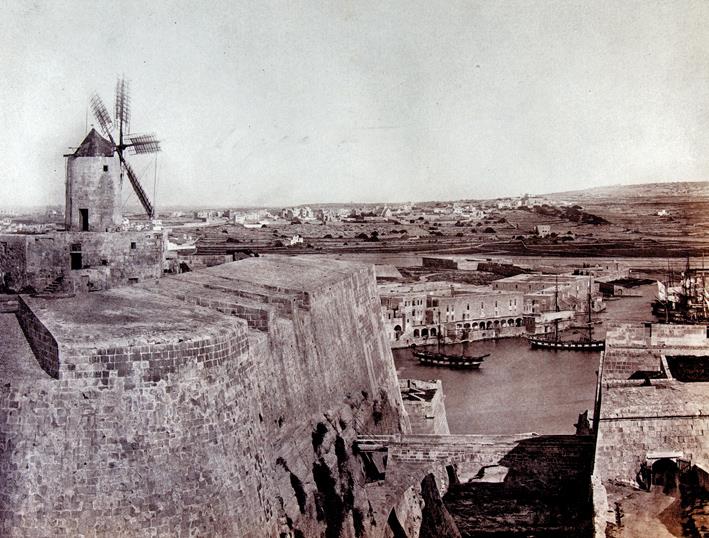
A well-composed scene showing Quarantine Harbour in the background and one of the now vanished windmills in Valletta; circa mid-1860s. Courtesy Jack Cator.
Vintage photographs have a way of slowing us down. In their soft edges, sepia tones, and unposed sincerity, they remind us that life once moved differently. A dusty street, a horse-drawn carriage, a child gripping a wooden toy, or a group of boys kicking a football down on a near empty road. Each detail becomes a thread leading us deeper into the past. These are not merely pictures; they are moments that refused to disappear. They offer nostalgia, yes, but also reminders of hardship, resilience, and the shared experiences that shape communities and individuals alike.
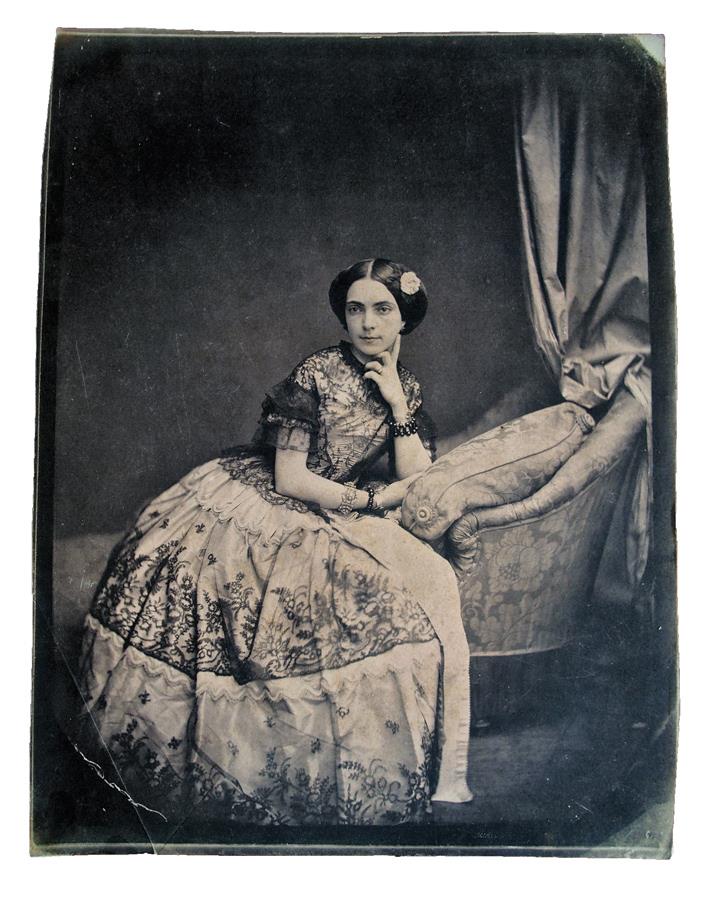
A beautiful early study by Leandro Preziosi. Courtesy of Louis Camilleri Preziosi collection.
To collect old photographs is to engage in an act far more meaningful than accumulating objects. It is to rescue fragments of forgotten stories. Collectors become caretakers of lives they never knew: strangers whose joys, sorrows, and aspirations mirror our own in unexpectedly intimate ways. The expressions captured on their faces, candid and unguarded, collapse the distance between "then" and "now." They remind us that human emotion is timeless, and that the people who came before us loved, struggled, hoped, and dreamed just as we do.
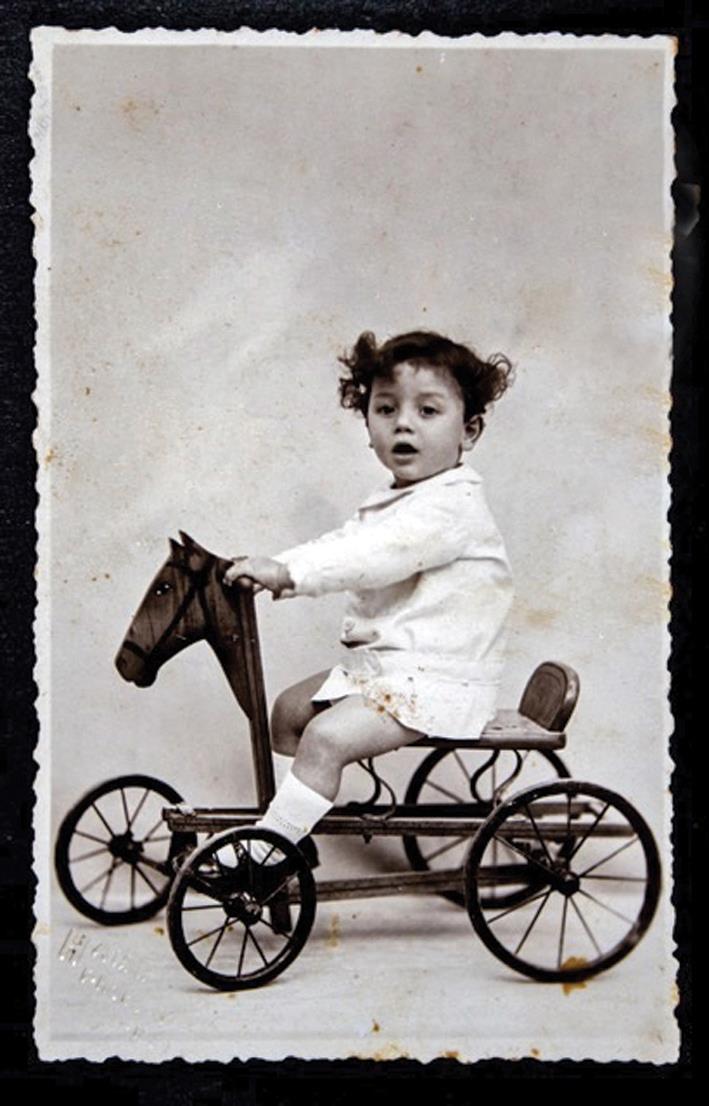
Children have always been favourites for photographs. This boy on a tricycle is taken at the studio of Hammet in Valletta. Kevin Casha Image Archive.
There is a tenderness in the imperfections of these images: a crease where someone once folded a picture into a pocket, a fingerprint left by an anxious hand, a handwritten name that has faded almost beyond recognition. These marks are traces of touch, of affection, of a connection that once mattered deeply to someone. Modern images-crisp, infinite, and disposable-rarely carry such weight.
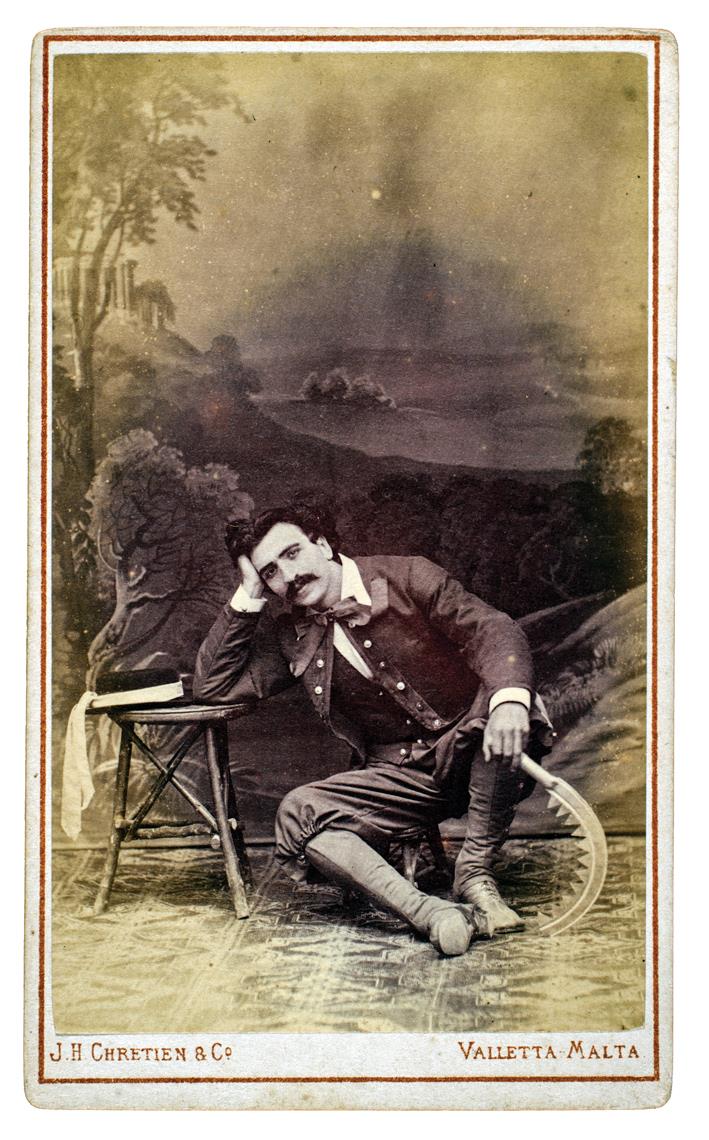
What seems to be an actor or artist posing with a very curious tool or weapon in the in the studio of J.H. Chretien & Co. of Valletta. The tool is most probably a scythe. Why he posed with it is another mystery. Courtesy of Arthur Taliana.
In a world saturated with digital ephemera, where millions of images pass before our eyes as quickly as we can swipe, vintage photographs feel grounded. They exist in a form that asks to be held, protected, and contemplated. Their rarity gives them significance; their silence gives them power; their physical handling increases the experience.
Yet their greatest value lies in what they contribute to society. Vintage photographs preserve the subtleties that written history often overlooks: the appearance of a street corner before a century of reconstruction, the rituals of family life, the fashions and gestures that defined an era, the way sunlight fell on a face long before we were born. They affirm that everyday life is worth documenting, and that ordinary people leave extraordinary traces.
For historians, genealogists, museums, architects, filmmakers, and researchers of all kinds, vintage photographs are essential primary sources. They provide evidence for studies of urban planning, architecture, social and economic conditions, clothing and design, migration patterns, and genealogy. Collectors, through their private archives, often fill gaps in public records, preserving images that would otherwise have vanished forever.
To collect and nurture these images is to participate in a quiet act of cultural memory. It ensures that the stories of the unknown and the unnamed are not swallowed by time. It allows future generations to understand where they came from-not just through monumental events, but through the intimate, beautiful details of daily existence.
For the collector, the joy is profound. It begins in the moment of discovery, well before the photograph is safely in hand. A spark of recognition that awakens curiosity. Here is something with a story. One leans closer, studying the faces, the setting, the small details once considered ordinary but now cherished as treasure. Collectors often speak of a kind of emotional resonance: the way a certain expression, landscape, or handwritten message can feel strangely familiar, as though bridging a century in an instant. It is as if the photograph has been waiting to be noticed, patiently occupying its place in history until the right person rediscovered it. Perhaps the greatest joy of all is knowing that each addition to a collection is not merely an object, but a story reclaimed-a life briefly illuminated, a moment saved from disappearing.
In the end, vintage photographs remind us that the past is not as distant as it seems. It lingers in smiles captured on brittle paper, in the shadows of old streets, in the postures of people who lived and dreamed as we do. To collect them is to honour that continuity and to hold a small piece of humanity in our hands, feeling it quietly pulsing with life.
Kevin Casha is a photographer, writer, and collector of vintage imagery