At Il-Ħaġar Museum in Victoria, Gozo, artist Victor Agius presents Earth, Light and Silence, an exhibition that revisits the Nativity not as a nostalgic biblical subject but as a living concept embedded in matter, landscape, and the primordial forces that shape human existence. Running until 11 January 2026, the exhibition marks a significant moment in Agius's artistic journey, reconnecting threads he began weaving three decades ago.
The Nativity as an Oeuvre-Defining Concept
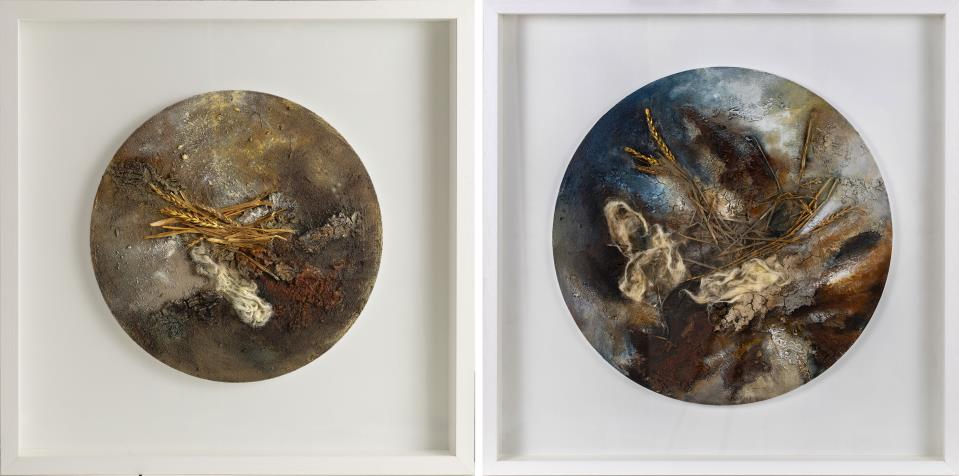
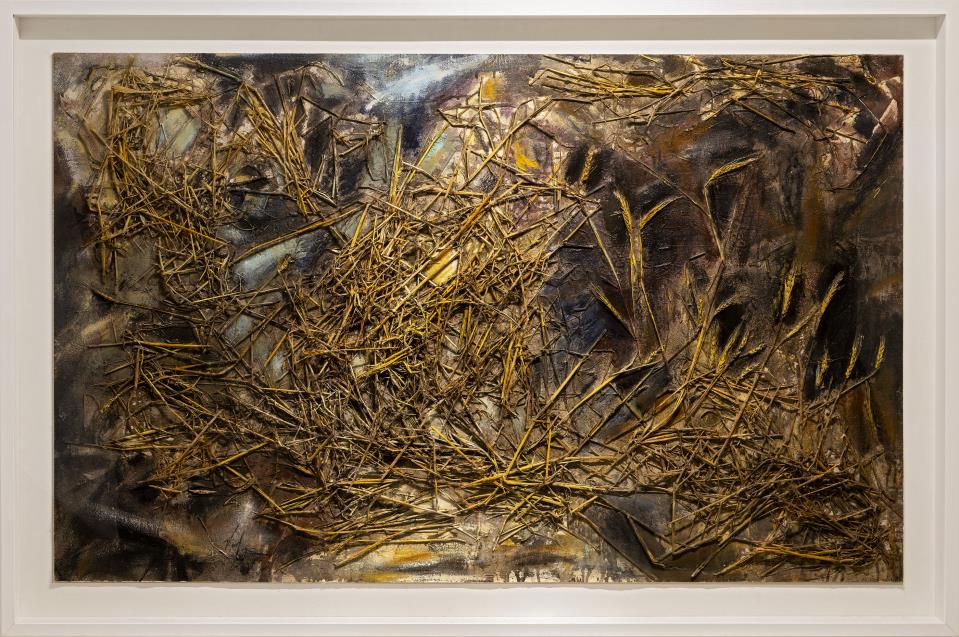
The Nativity has long been a central conceptual focus in Agius's work. While many artists approach it as a subject of devotional illustration, he transforms it into a deeper philosophical inquiry. In his early 2000s practice and notably in the 2005 exhibition Nativitas, Agius turned away from representational scenes and instead engaged the Nativity through matter. Earth, hay, sheep's wool, clay, shrubs: these materials became metaphors for the Incarnation, for the ancient idea that the divine enters the world through humility, vulnerability, and the physicality of nature.
It is no coincidence that these materials reflect the Gozitan landscape that shaped the artist's youth. For Agius, the Nativity is not an imported image but an ancestral memory, emerging from the soil, caves, and rural ritual traditions that have formed the visual commons of the island. In this sense, the Nativity for Agius is not a seasonal motif but the core of his concern with birth, regeneration, and humanity's place within the earth.
Primitivism and the Artist's Early Years
Agius's early fascination with organic materials speaks to an instinctive form of primitivism not in the colonial or exoticised sense, but in a return to origins. As a young artist in the early 2000s, he was drawn to prehistoric Maltese forms, ritual objects, and the tactile language of ancient craftsmanship. This research fed into his studio practice, giving rise to surfaces layered with earth, clay, and natural fibre, and a way of working that prioritised touch, weight, and texture.
Before encountering the work of Anselm Kiefer or the ceramics of Lucio Fontana, Agius was already experimenting with the raw matter of his environment. Like the artists of Arte Povera, he sought meaning in the poor materials of daily life, not as symbols of scarcity, but as carriers of memory and spirit. His works from this period reveal an artist searching for a language that speaks from the ground upward, from the earliest strata of culture.
Earth, Light and Silence - A Contemporary Expression of the Ancient
The present exhibition draws together these longstanding concerns into a contemplative experience.
Earth is present not only in the literal soil and terrarossa embedded in canvases but in the artist's belief that spiritual truths can be articulated through physical matter. Light appears as glimmers of gold, radiant surfaces, and gentle contrasts that evoke the divine glow associated with the Nativity, a light that breaks into darkness without spectacle. Then, Silence permeates the work through restraint, spaciousness, and pauses within composition, recalling the quiet moments of the biblical narrative: the Annunciation, the shepherds' contemplation, the fragile stillness surrounding birth. Together, these elements form a contemporary visual theology, one grounded not in illustration but in the metaphysics of matter.
A Quiet Dialogue with Maltese Masters
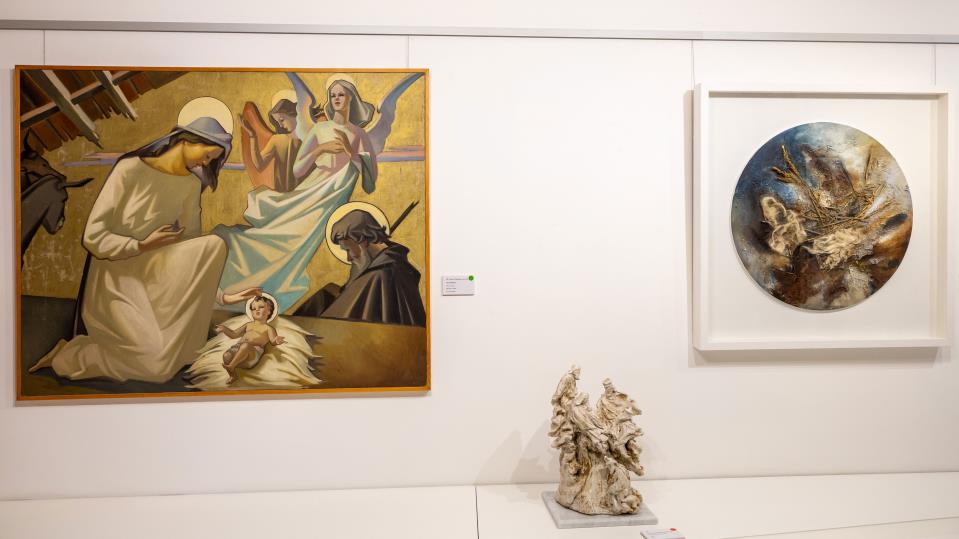
One of the exhibition's compelling features is the way Agius's works enter a silent dialogue with Maltese artists who have treated the Nativity across the centuries. The show juxtaposes modern and historical sensibilities, allowing Agius's abstract materiality to resonate alongside iconic depictions by Harry Alden, whose Annunciation radiates lyrical modernism; Stefano Erardi, with his Baroque tenderness in the Madonna and Child; Anton Inglott's dramatic chiaroscuro in The Adoration of the Shepherds; Emvin Cremona, who distilled the Nativity into modernist geometry and colour; Mario Caffaro Rore, whose studies of the Holy Family bring an intimate, reflective sensibility, and Caesar Attard, who reconceptualised sacred themes through expressionistic distorted figures.
Stylistically, these artists span centuries and movements, Baroque piety, modernist experimentation and contemporary conceptualism. Yet Agius's contribution stands apart: whereas past artists interpreted the Nativity through the visual codes of their time, Agius interprets it through the material of creation itself. His earth, straw, wool, and clay speak not merely of the manger but of the elemental origins of life and the cosmic humility of incarnation.
A Young Artist with a Deep Past
Although still considered a young artist in Malta's contemporary art scene, Agius has built a remarkably coherent and reflective body of work. His explorations of matter, ritual, and landscape have led to a recognisable visual language, one that remains rooted in Gozo while engaging broader artistic discourses on materiality, spirituality, and the sublime.
The inclusion of Praesepium, shortlisted for the Florence Biennale in 2009, reaffirms how early in his career he was already wrestling with abstraction, myth, and the metaphysical resonance of materials. Today, Earth, Light and Silence consolidates two decades of research and experimentation, offering a mature yet open-ended reflection on the Nativity as both a historical theme and a living source of artistic inquiry.
A Nativity for the Present
In a cultural moment marked by noise, haste, and overstimulation, Agius invites viewers to return to the elemental: to earth, to light, to silence. His exhibition offers not a festive image but a contemplative space, one in which creation, humility, and mystery are encountered again through the raw materials that have shaped both land and legend. Earth, Light and Silence is a reminder that the Nativity, for the artist, is not a story of the past but a continuing meditation on what it means to be human, grounded, and connected to the larger rhythms of the earth.
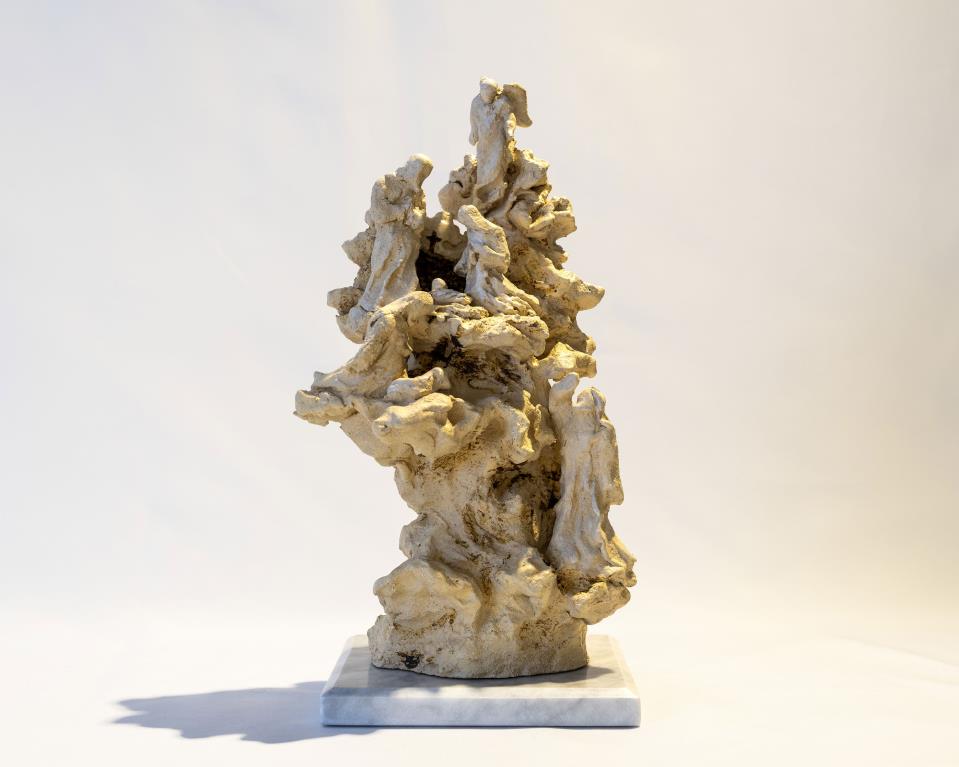
A good part of the exhibits in Agius' collection are a series of glazed stoneware ceramic pieces depicting the themes of the Mother and Child and the Nativity. These sculptures, stand out as a powerful synthesis of the artist's longstanding engagement with matter, process, and primordial form. At first glance, these sculptures appear almost geological, a rugged, ascending formation that evokes coral, eroded limestone, or a naturally weathered outcrop. Yet, emerging from the raw masses are subtle figurative presences, small, almost spectral shapes that recall the figures of the Holy Family and those who surround the Nativity.
This tension between formlessness and figure lies at the heart of Agius's approach to the theme. Unlike traditional Maltese depictions of the Nativity, such as the elegant linearity of Harry Alden, the Baroque clarity of Stefano Erardi, or the expressive modelling of Anton Inglott, Agius works from the earth upward. His process does not start with the iconographic scene but with the material that hosts it, allowing the image to emerge organically from clay, gesture, and fire.
The glazed stoneware in these works are deliberately irregular. Their surfaces retain fingerprints of formation, traces of compression, and the stratified textures of kiln transformation. This aligns Agius more closely with Arte Povera's material truthfulness and with a broader primitivist impulse to return to origins, where art and ritual share a common ancestry. The sculpture appears not made but unearthed, as though it has always existed and the artist simply revealed it.
The Nativity here is not narrated; it is embedded. The figures emerge like memories held within the rock itself, quiet, humble, and intimately bound to the material of creation. This approach echoes Agius's belief that spirituality resides in matter and that the narrative of Incarnation is inherently geological and cosmic: divinity entering the physical world not in splendour but in the density of earth.
Placed within the context of Maltese art history, these works offer a striking counterpoint to the works of Emvin Cremona, Caesar Attard, and Mario Caffaro Rore, each of whom translated the Nativity through the visual language of their moment, from modernist symbol to conceptual abstraction to introspective drawing. Agius, however, contributes a different voice: one that speaks through mass, tactility, and the archaeology of form, positioning the Nativity not as a picturesque tableau but as a primordial encounter.
In the Nativity exhibition, clay and other material used by Victor Agius become theology. The sculptures and reliefs are at once contemporary and archaic, spiritual yet resolutely physical objects that invite contemplation of the Nativity not only as a religious subject, but as an elemental truth hidden within the earth.
Professor Louis Laganà PhD (Lough) is an academic, curator and practising artist