"Anecdotes? My Uncle Anton Caruana Galizia was killed by enemy action on 15 February 1942 and my parents went to identify the body. My mother said she never forgot the sight of all those bodies. The day of his funeral Anne (aged 7) saw my father coming downstairs in his mourning outfit and said "Papa how black your tie is!" and he replied: "Not nearly as black as my heart." The story goes that Anton had a dream two or three nights before he died. He said that Strada Merkanti was lined with people and was not sure why. The day of his funeral the street was lined with people - he was very much loved and respected in Valletta, particularly amongst the market workers. The shock of his death reverberated forever in our family - especially amongst his siblings and of course his mother.
Gorg* tal-Coca Cola used to give my father live lobsters. I came very late one night with a boyfriend and as I was unlocking the door I felt something claw my ankles - a live lobster. When he launched Coca Cola we were sent a crate of the stuff - I have never drunk it since. At the launch, at the Imperial Hotel in Sliema, Gorg made a speech and at one point he was supposed to pick up a bottle and display it to the wondering diners. He was reading the speech and came to that bit and he continued with the instruction: "Here show the bottle" but did not realise he was supposed to follow that instruction and did not lift the bottle to display it to the audience.
Amongst other clients/cum friends/acquaintances who used to visit were the artist, Edward Caruana Dingli (1876-1950)* with his mistress Olga Galea Naudi. It was never really explained to us who she was in relation to him and we never questioned it, though we knew she was not his wife. She had coloured auburn hair, a very round white face and rosy cheeks. She was quite a rounded person who would just sit and talk. She used to call him "Dward!" in a loud shouty voice and used to bring my mother some concoction she called jelly cream which we thought disgusting. Then she would bring us pasti "min ghand "tal London" the popular Floriana confectioner, at the time. She used to phone my mother and call her "MY" (her name was May) and say: "I saw the Admiral this morning..." and this kind of thing. Somehow she used to manage to invite all important people to her soirées. She particularly loved my sister Mary Clare and used to say: "Il Mary Clare, meta tizzewweg se naghtija is-sala tal fidda, jew tad-deheb." ("When Mary Clare gets married I am going to give her either the gold or silver drawing room."
I was a very ordinary looking child with glasses and as I grew older she used to say "Helen qed tirranga" meaning Helen's looks are improving, even if a little doubtfully. I still have a heavy silver spoon she gave me when I married.
Other assorted clients used to come to see my father and wait in the hall - then when they went into his office and he shut the door we used to try on their smelly hats and throw them around. We always had liqueurs as well as spirits in the bureau of the drawing room and these old ladies would visit and sit and be offered crème de menthe or cherry brandy or whatever. My mother would get bored and after a bit go off and wash their glasses hoping they would go away.
People smelt more in those days - I don't think everyone showered every day - and we used to put the cushions outside on the verandah to air.
Archbishop Gonzi came more than once (my father had a degree in Canon Law.) I wonder what he would have to say today about some of the goings on we hear and read about). One day when we were much older one of my cousins who had stayed the night dared me to streak across the hall when the Archbishop was sitting in the hall. I don't know whether he looked up but it was all over in a flash as I ran across the top of the stairs and he could only have seen me very briefly through the arches.
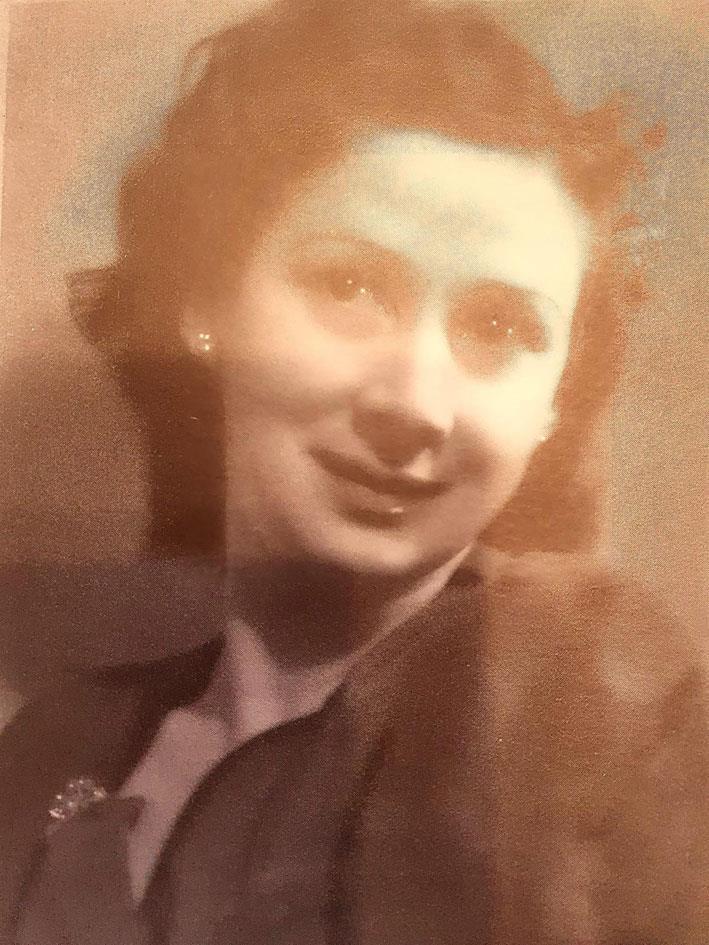
There was a wellknown character in Rudoph Street called Osanna* - well known because she was one of the few people we knew who rode a bicycle. (She always had rosy cheeks and lots of lipstick. I can't imagine why we were never encouraged to wear red lipstick, still less to play tennis."
***
Some words from Anne who lives in Australia.
"Helen, my sister, has asked me to write memories of Alhambra. I love remembering those days.
The first thing I thought of was the garden. It was large by Malta standards, with a paved pathway in the middle, and the rest divided into segments with narrower pathways. Four orange trees were planted as one came down the stairs. I remember the gardener used to put small jars of chemicals in the branches to stop any insect brave enough to come near. One of the trees was a sweet orange - and the fruit from this was given to my paternal grandmother. It so happened that no one else was very fond of it.
There were stone benches - which were good spots for having a photo taken. The portrait that Edward Caruana Dingli painted of my sister Mary Clare (RIP) and myself began on just one of those benches.
The pathway in the middle was a safe spot for riding scooters; not that I ever became adept at this.
At the farthest corner was a set of cages where the chickens and turkeys that came as payment to my father were housed in, waiting for a very sharp knife of execution. My mother insisted on a rule that one should never scald the bird to remove the feathers, but do it all very quickly while the bird was warm. This called for more than one pair of hands."
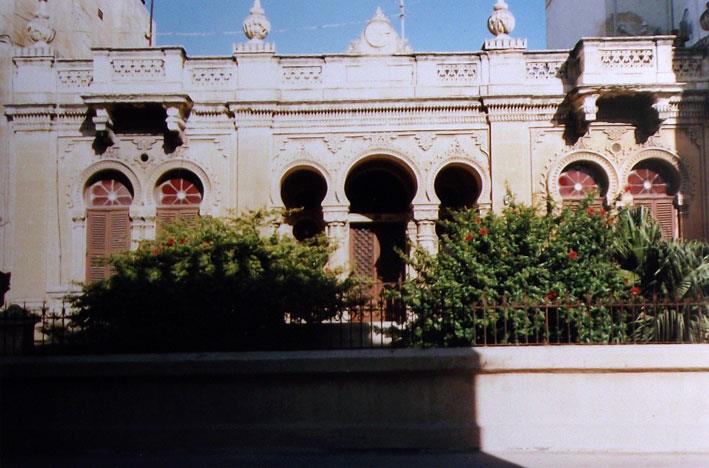
Alhambra may have changed hands and purpose, but through these stories it remains what it always was - a house held together not only by stone and ornament, but by the people who filled it with life.
As the final memories settle, Alhambra stands less as a relic and more as a reminder: that homes endure not through preservation orders alone, but through the voices that keep their stories breathing. May the new owners also accumulate happy memories of this unique house and home they are privileged to be living in.
* The Coca-Cola factory in Malta was first established in 1952 by George Spiteri, who opened the first bottling plant in Qormi. The business was later acquired by the Mizzi family in 1970, who have held the Coca-Cola franchise for Malta ever since.
** Edward Caruana Dingli was a fashionable society portrait painter.
*** Osanna Pia was Austrian, from a prominent and wealthy Jewish family. She was born in Pula in 1909. When in Malta she was baptised at the age of 16. She was married twice, her first husband was Maltese, Frank Hugh Ellul. They had a baby who died after just 17 days. She then married Denis Langtry Bell. 85, Rudolph Street was left to the Salesians who eventually bought the house next door. It is now being used to shelter men of all ages who need a home. (I am indebted to Fr Eric Cachia for information about Osanna Pia).