I don't know what it is but mention Piazzolla and I want to be there. My mother was no great pianist but she enjoyed tinkling on our upright while waiting for my father to return from work so the seven of us could have tea together. Those were the days of 'The family who prays together, stays together.' Papa liked quoting it. He made sure we prayed together. During holidays there were long sessions of rosary and additional prayers some in Latin which we did not understand but could recite by heart. If you sneezed or worse, giggled, then we would have to start all over again. But how many families pray together these days?
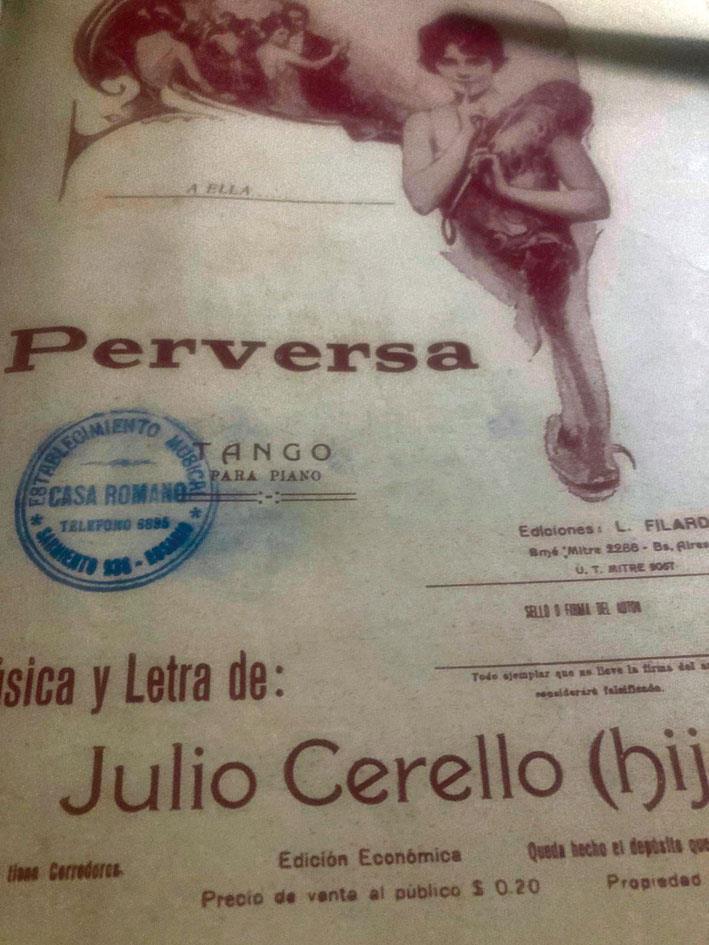
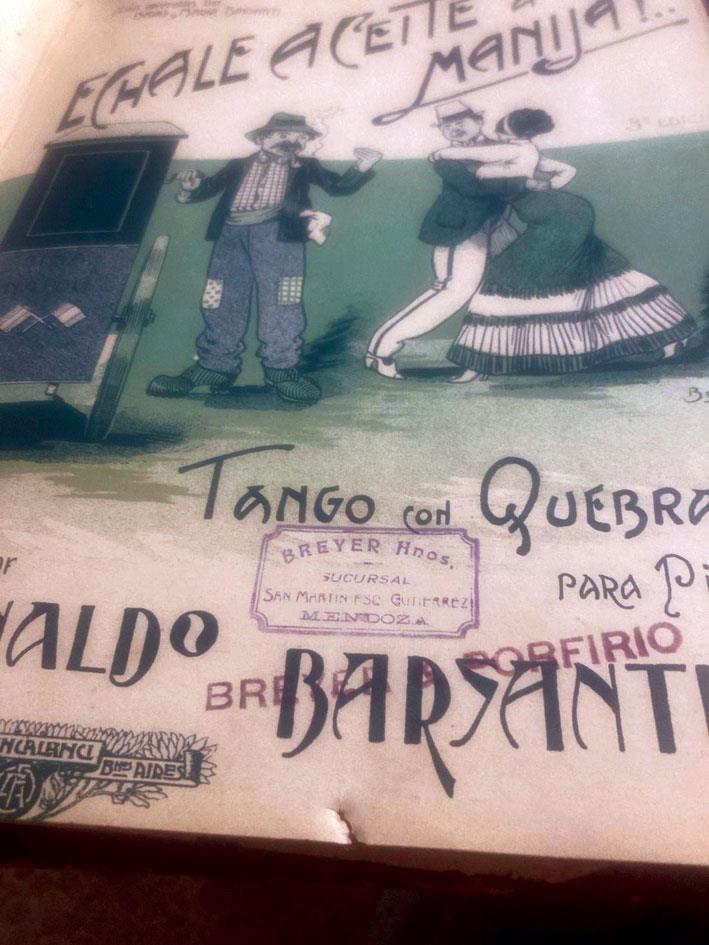
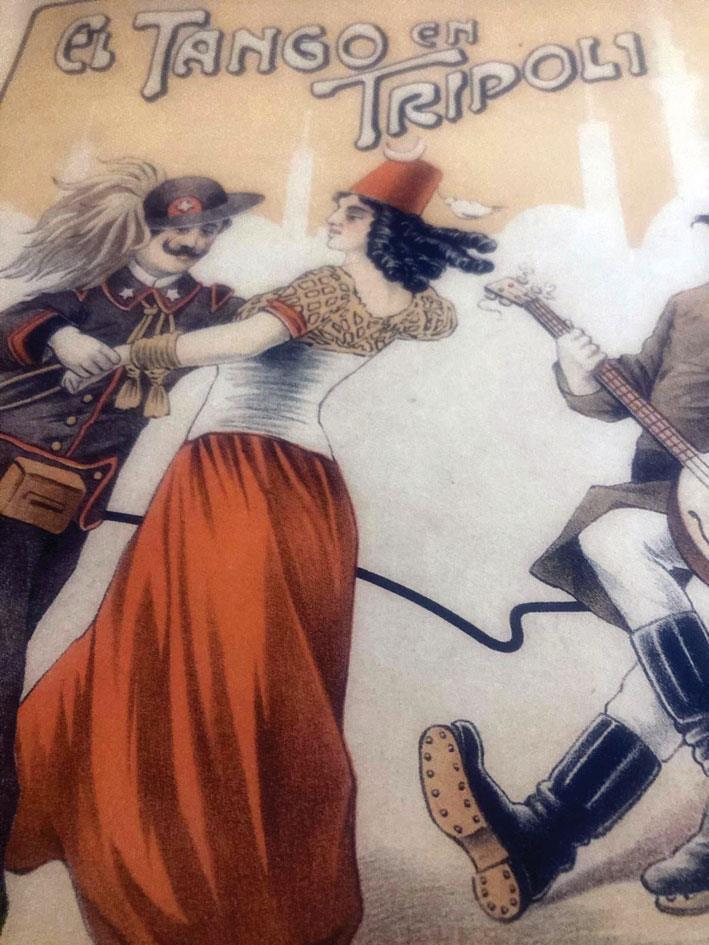
Yes, while tinkling away my mother also played tangoes. It seems my father's brother had brought many pieces of music for the piano and guitar after a trip, or maybe trips, to South America. My father had them all bound so they are well preserved. I believe my love for the tango stems from those days; of looking at the covers which I found so exotic, and listening to my mother playing them.
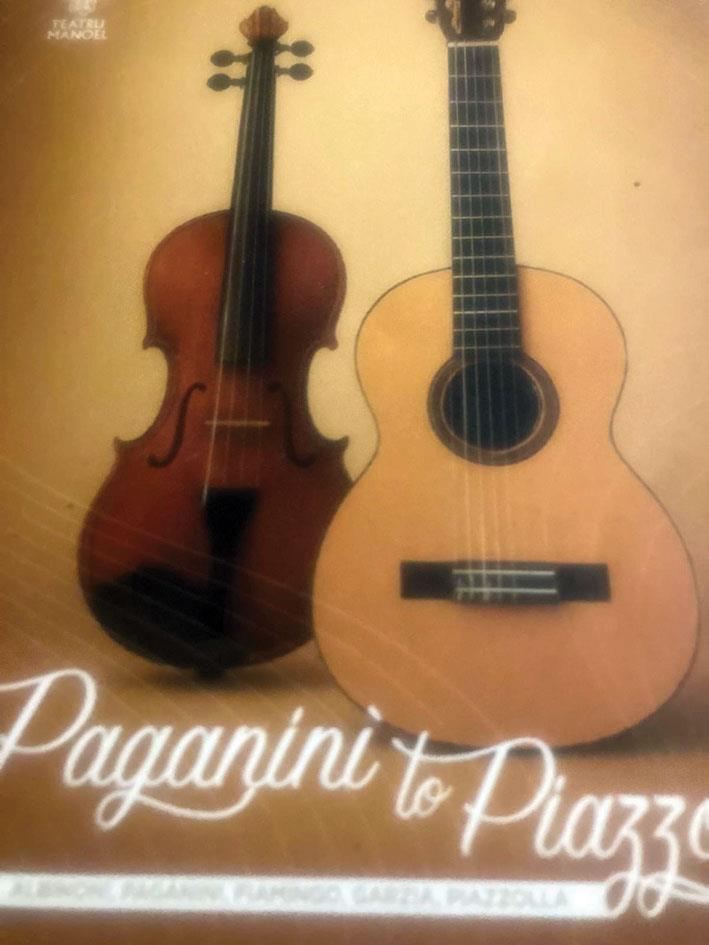
So, off to the Paganini to Piazzolla concert at Teatru Manoel I went on 29 October. The duo Hafdar were going to play the violin and guitar that evening.
This was a beautiful little programme - intimate, eclectic, and full of colour.
While Samuel Cutajar played the violin Kolja Gibbs, a German/Austrian, played classical guitarist.
A journey across centuries and continents, this programme brought together Baroque sonatas, Romantic virtuosity, Maltese contemporary composition, Brazilian lyricism, and the irresistible pulse of tango. Several works were performed in special arrangements crafted by the musicians themselves, highlighting the expressive possibilities of the violin-guitar pairing.
There are concerts that feel like encounters - not only with music, but with time, memory, and the quiet pulse of human connection. Paganini to Piazzolla was one of those evenings.
In the hands of Duo Hafdar, violinist Samuel Cutajar and guitarist Kolja Gibbs, this dialogue became a journey across centuries and continents. From the poised architecture of Albinoni to the fiery virtuosity of Paganini, from the Maltese contemporary voice of Albert Garzia to the sun‑drenched rhythms of Brazil, and finally to the smoky, sinuous world of Piazzolla's tango, the programme unfolded. Each piece was a doorway into a different landscape.
What united these worlds was the duo's shared sensibility - a blend of precision and spontaneity, respect for tradition and a willingness to reshape it. Several works were performed in special arrangements crafted by the musicians themselves, allowing the violin and guitar to inhabit music not originally written for them.
The hall settled into a soft hush as the lights dimmed, the kind of anticipatory quiet that feels almost like a collective breath. The stage was simple - two chairs, two music stands, and the warm glow of spotlights. that seemed to carve a small, intimate world out of the larger room. When Samuel and Kolja stepped into that circle of light, there was a sense of ease between them, the kind that comes from long collaboration: a shared glance, a small nod, the unspoken understanding that the evening was about to begin. What struck me above all is how relaxed they were and how young.
The first notes of Albinoni's Violin Sonata in A Minor emerged with a kind of poised clarity.
The four movements moved like a sequence of small paintings: a thoughtful opening, a more animated middle, a reflective turn, and a final movement that carried a subtle, dancing energy. It was a graceful beginning.
With Paganini's Violin Sonata in A Major, the atmosphere shifted. Paganini's writing is famously flamboyant, but in this duo setting it took on a different character - less showmanship for its own sake, more a playful, intimate exchange. Samuel's violin darted and sparkled, full of quicksilver runs and sudden bursts of colour, while Kolja's guitar provided a rhythmic anchor that kept the music grounded without ever restraining its flight.
Paganini can sometimes feel like a display case of technical feats, but here it felt like chamber music - alive, responsive, and full of personality.
Carlo Fiamingo's Souvenir of Great Britain, Op. 14, brought a shift in tone - a piece that blends charm with a touch of nostalgia.
There was a sense of travel in the music, as though the composer were sketching impressions gathered from a journey: a landscape glimpsed from a train window, a melody overheard in a distant room.
When the first notes of Albert Garzia's Rumanz sounded, the atmosphere shifted again - this time toward something unmistakably contemporary, yet deeply rooted in Mediterranean sensibility.
There was pride in the room - the quiet pride of hearing a Maltese composer's voice woven into an international programme. Samuel and Kolja played it with conviction.
The Brazilian set - Faustino Rodríguez Vale's preludes followed by João Pernambuco's Sons de Carrilhões - brought a burst of rhythmic vitality. These pieces are full of sunlight, syncopation, and the irresistible sway of dance, and the duo embraced that energy wholeheartedly.
Tico Tico sparkled with quick, playful exchanges; Batique carried a more grounded, earthy pulse; Ao pé da fogueira (what does it mean?) glowed with warmth, like embers in the evening. Kolja's guitar came to the forefront here, its rhythmic clarity and tonal richness shaping the character of each prelude. Samuel's violin responded - sometimes singing, sometimes dancing, sometimes whispering but always relaxed.
When they moved into Sons de Carrilhões, the hall seemed to brighten. The piece's lilting rhythm and gentle lyricism created a sense of ease, a moment of pure musical pleasure. It was one of those performances that felt effortless, though of course it was anything but.
The evening culminated in Astor Piazzolla's Histoire du Tango, a work that traces the evolution of tango from its early, raw beginnings to its modern, concert-hall incarnation. The duo performed two movements: Bordel 1900 and Concert d'aujourd'hui.
Bordel 1900 was full of smoky charm - a world of crowded rooms, laughter, flirtation, and the slightly dangerous thrill of dance. The violin's lines slid and sighed, while the guitar pulsed with the heartbeat of the tango. There was sensuality in the phrasing, but also a kind of wistful nostalgia, as though the music were remembering a world that no longer exists.
And so to Concert d'aujourd'hui. Here the duo's precision shone: every accent, every breath, every sudden turn was executed with clarity and intention. When the last notes faded, there was a moment of stillness - that rare, precious silence that follows a performance that has truly held an audience. Then the applause rose, warm and sustained. The duo bowed with the same quiet grace that had marked their playing, acknowledging not only the audience but each other.
It was an evening shaped by contrast and continuity, by the interplay of two instruments and two musical personalities. What lingered afterward was not only the memory of individual pieces, but the sense of a journey shared - across eras, across cultures, across the intimate space between violin and guitar.
As the audience filtered out into the night, there was a sense of having travelled - not in distance, but in texture, colour, and emotion. Paganini to Piazzolla was more than a sequence of works; it was a conversation across eras, shaped by two musicians who listen as deeply as they play. Several of the works heard during the evening were performed in special arrangements created by the musicians themselves - a reminder that interpretation is not only about playing the notes, but about shaping the music so it can speak anew.