Yang Tang's exhibition Jiangnan Garden: A Place of Return, currently housed in the stone vaults of the Malta Society of Arts, remains open until 29 January. The artist spends her days in the basement, reading Dante's Divine Comedy in Chinese - she has just finished Inferno - and welcoming visitors with chocolate, lemon cake, hot drinks and a quiet attentiveness that has become part of the exhibition's atmosphere.
She likes to employ her time profitably and not waste it. She volunteers on the MSA Archive project.
She believes: "Language is not the barrier. What matters is opening your heart, then you can see an open world."
Last week, three visitors shared their impressions of the exhibition. Today, two more offer their reflections - and alongside them, the artist's own diary entries, written day by day in the basement vaults. Together, they form a portrait of an exhibition that is not only seen, but lived.
VISITORS' REFLECTIONS
Anonymous visitor:
"I was in Valletta when chance quietly rewrote my plans.
I had met a friend who mentioned, almost in passing, a photography exhibition at the Palazzo De La Salle, now better known as The Malta Society of Art. Later that day, between commitments and with only a little time to spare, curiosity led me there. I intended nothing more than a quick visit - a brief pause before moving on.
Just moments before entering, however, something caught my attention. On the ground floor, another exhibition was taking place. The visitors were mostly Asian, their composed, almost meditative presence standing in striking contrast to the vibrant colours radiating from the paintings on the walls. That visual and human contrast pulled me in immediately, even before I fully understood why.
I proceeded upstairs to see the photography exhibition, attended largely by a European audience. It was thoughtful and well-curated, yet my mind kept drifting back to what I had glimpsed below. As soon as I finished, I returned to the ground floor, drawn by an unspoken magnetism.
I did not know the artist's name. I did not know the context. But the moment I stepped inside, I felt transported elsewhere. The only thing that remained of my beloved Malta were the ancient stone walls enclosing the space. Everything else dissolved.
The paintings felt like windows opening onto another world - one that appeared calm and restrained on the surface, yet vibrated with emotion, energy, and an intimate connection to nature and everyday life. It was a culture distant from my own, unfamiliar, yet immediately resonant. There was a quiet intensity in the work, a sense of balance between discipline and feeling.
Equally captivating were the techniques on display: the precision of the brushwork, the elegance of calligraphic gestures, and the artist's sketchbooks - methodical, almost meditative in their structure, yet alive with colour and movement. They revealed a process rooted in patience and observation, where art grows slowly, deliberately, like a living organism.
One series in particular stopped me in my tracks: Autumn in Old Town. Its layered tones and subtle emotional depth held me longer than I expected. Without hesitation - and to my own surprise, as this rarely happens - I asked if it was possible to purchase the works.
The exhibition was titled A Place of Return, by artist Yang Tang. Only later did I realize how fitting that title was. Some exhibitions you visit; others linger. This one felt less like a destination and more like a quiet homecoming - to a place I had never been, yet somehow recognized."
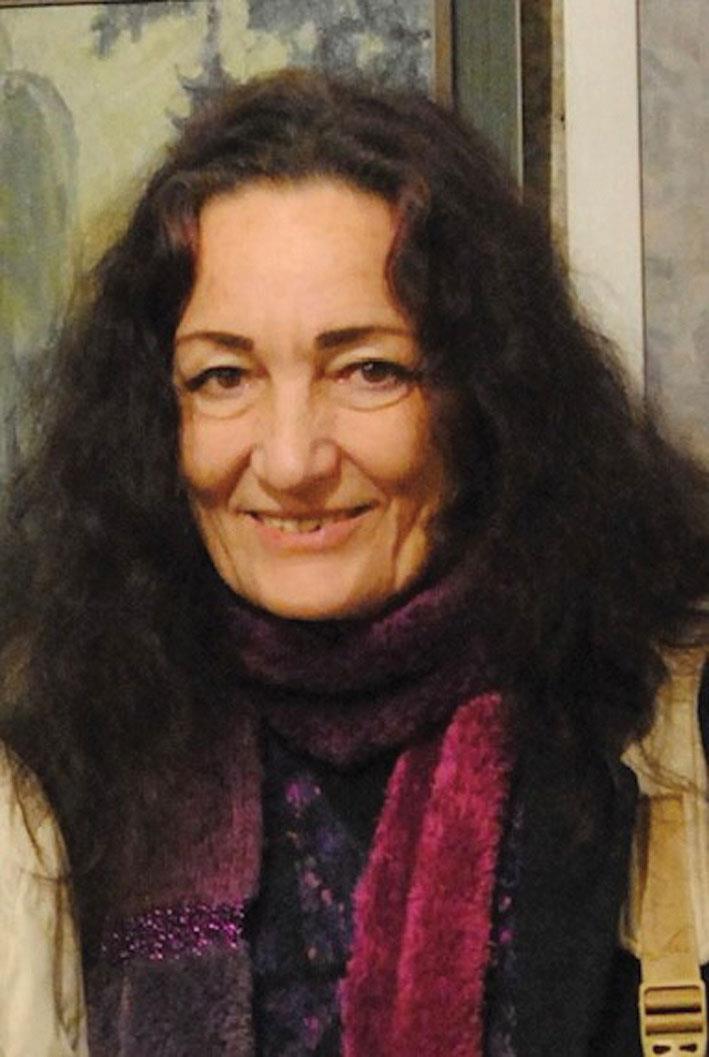
ALEXANDRA STAMATOPOULOU BONNICI writes:
"Every return begins with a threshold. Stepping into the hushed stone vault of Yang Tang's exhibition, I felt it immediately. A Place of Return begins here.
Her paintings are quiet worlds unto themselves - bridges arching over still waters, courtyards where light lingers like a gentle sigh, scholar's rocks balanced with infinite patience, and the edges of water towns where life seems paused just long enough to catch your breath. These are not postcards or tourist scenes; they are landscapes of the mind, invitations to slow down, to notice, to return.
As a dear friend of Yang, I felt a special privilege: we were able to purchase one of her paintings even before the exhibition opened. And yet, out of respect for the intricately orchestrated flow of her exhibition, we left it there, a quiet promise to take it home only after the last visitor had passed through. Holding that fragment of her inner world in our hearts, I felt her search for stillness -her delicate brush capturing clarity and calm in a city that rarely stops.
Walking through the exhibition was like following a gentle, unfolding path: from the red gate at the threshold, into pools and stones, through gardens and village edges, and finally into the small room of scrolls and quiet encounters, where Tang's hand seemed to whisper that stillness is always possible, even amidst the rush of life.
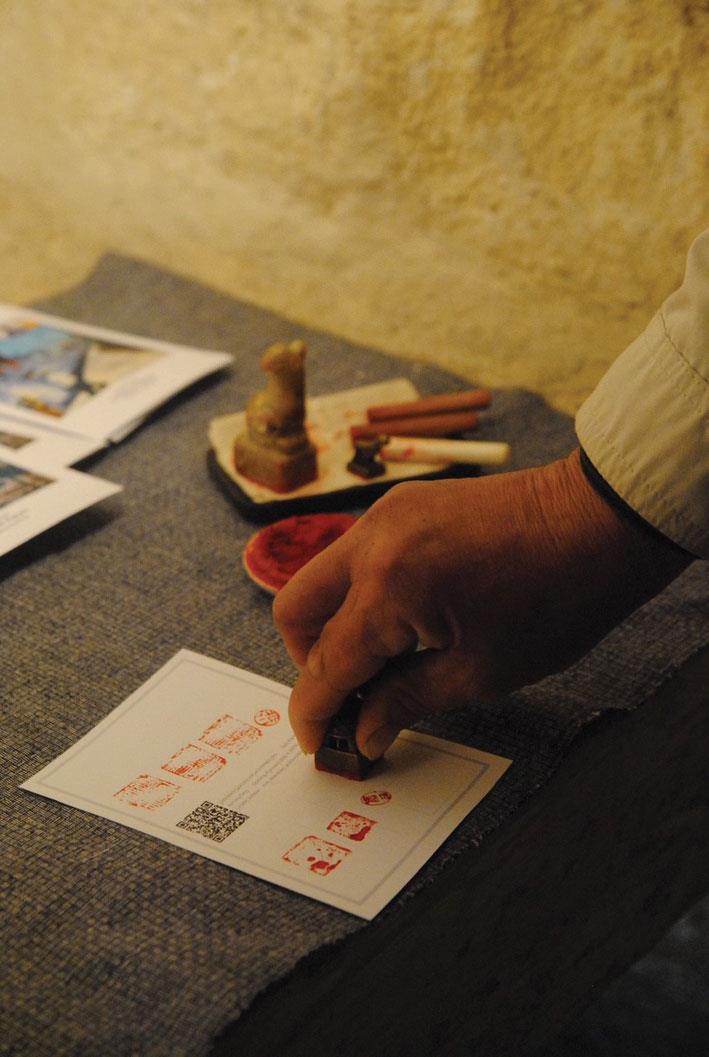
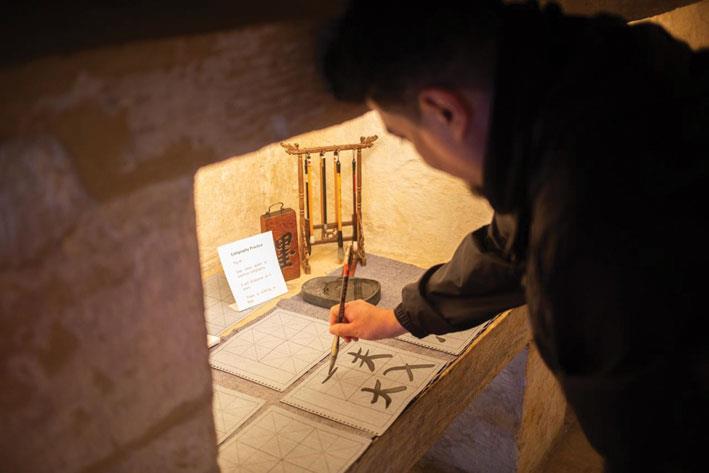
The hands-on corner was a delight: water-brush calligraphy, stamping postcards with traditional seals, and exploring objects, beautiful scrolls, from a Jiangnan scholar's desk. As someone studying Mandarin, it made the exhibition alive in my hands as much as in my eyes, adding another layer of intimate connection to Tang's world.
By the end, I left with a sense of calm and gratitude. Jiangnan Garden is not simply an exhibition - it is a threshold, a pause, and a gentle journey inward."
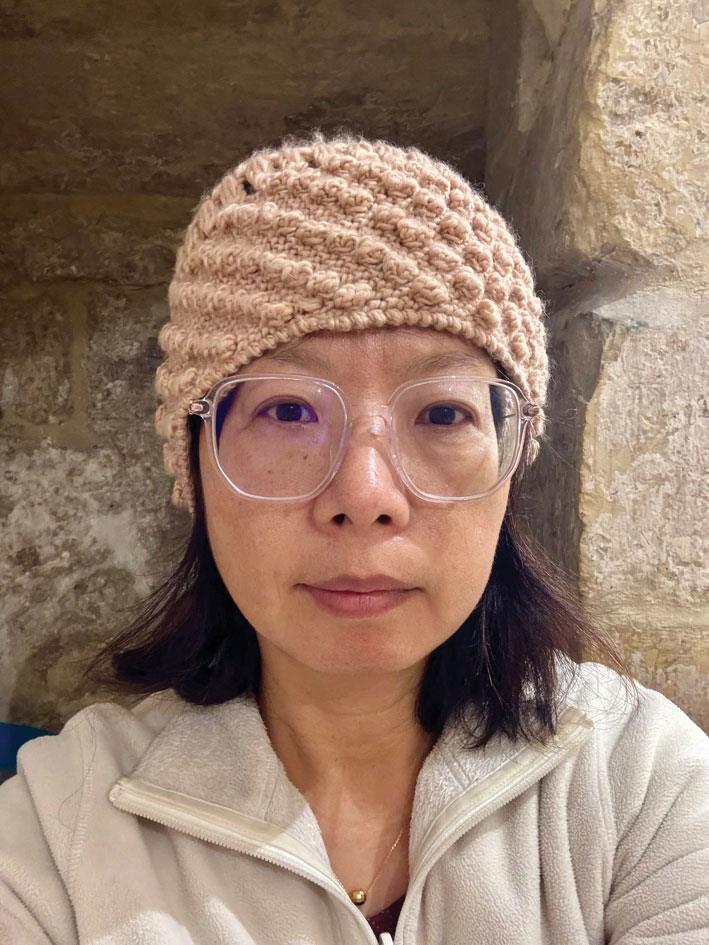
TIME FRAGMENTS FROM THE BASEMENT
Yang Tang has written thousands of words during the days of the exhibition and will write thousands more. Here is just a taste of her diary.
Day 1
At 6:30, Lao Cui asked if we could close early. I said no.
Three groups arrived immediately.
A man rushed in, asked if it was free, stayed three minutes, left.
Another came from a concert next door, surprised by the beauty of the basement.
A woman stayed ten minutes in the inner room. I let her be.
Day 2
Strong wind outside. Windows rattling. Something blown over.
I sat in a bright corner, watching fragments of people pass by - sleeves, skirts, footsteps.
From the inner room, the Goldberg Variations looped endlessly.
Day 3
Rain. Wet stone streets. Fast‑moving clouds.
Coldest days in Malta: 10-13 degrees.
I brought an electric kettle, tea, cups, chocolate.
Wrote "FREE" on the sandwich board so people would feel safe to enter.
Day 4
Cold evening. I read The Divine Comedy with a hot water bottle.
A woman arrived. I gave her chocolate.
She asked, "What is Jiangnan?"
She had lived in Shanghai but never heard the word - only Jing'an.
The paintings made her miss home.
She left Shanghai for her son's education and her faith.
She is from South Africa.
She has no home to return to.
I felt helpless, but the paintings comforted her.
Day 7
An old gentleman discovered the basement for the first time.
He loved the interactive corner.
He told me the basement once stored wine - the grooves in the slope were for barrels.
A PLACE WHERE ENCOUNTERS GATHER
Together, the visitors' reflections and the artist's diary reveal the same truth: the exhibition is not only a place of return, but a place of meeting - between cultures, between strangers, between inner and outer worlds.
The exhibition remains open until next Thursday, 29th January. Apart from Monday and Tuesday (4-7 pm), it will be open from 1-7 pm. These are the final seven days.