What first drew you to explore desire as the central thread of your artistic practice?
Desire & Its Excess is the natural continuation of my 2017 exhibition, Sacred & Profane, where I explored the alterity underlying my relationship with the female subject. In this later project, desire itself becomes the focus - that mental state rooted in Otherness, shaped by presence, and inherently relational. In my experience as an artist, this state is catalysed by the female subject, whose corporeal and psychic presence opens a space for exploration. Desire, here, is not static; it circulates, unsettles, and persists, guiding both the creation of artworks and the affective dynamics that extend to viewers.
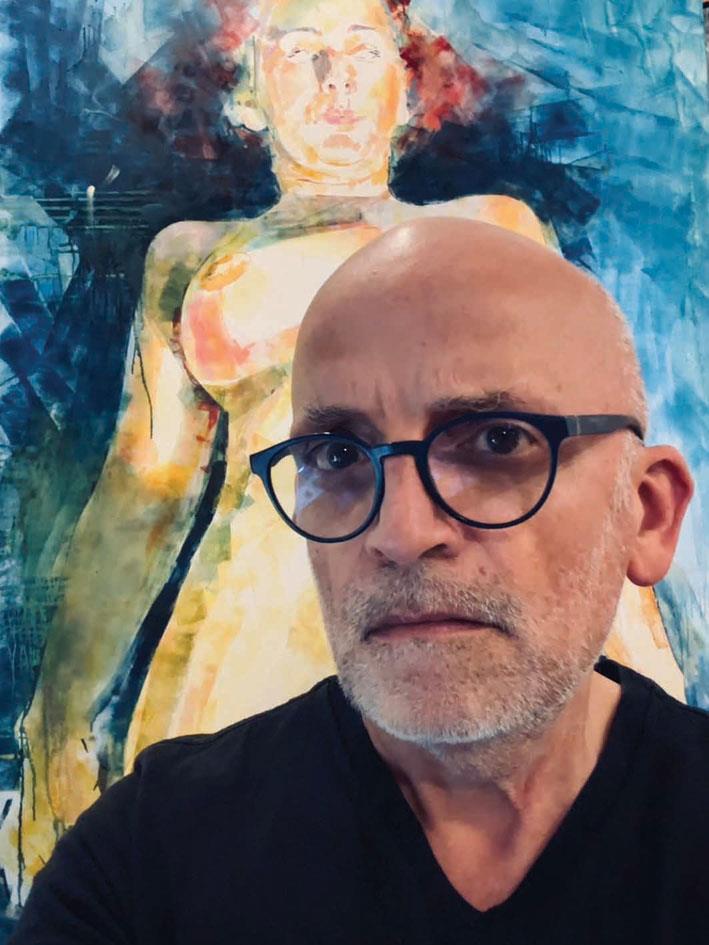
Your work spans painting, box-assemblage, and film. How do these mediums speak to different aspects of desire and embodiment in your practice?
Each medium articulates a different dimension of desire and corporeality; however, always within the encounter between me and the female subject as Other.
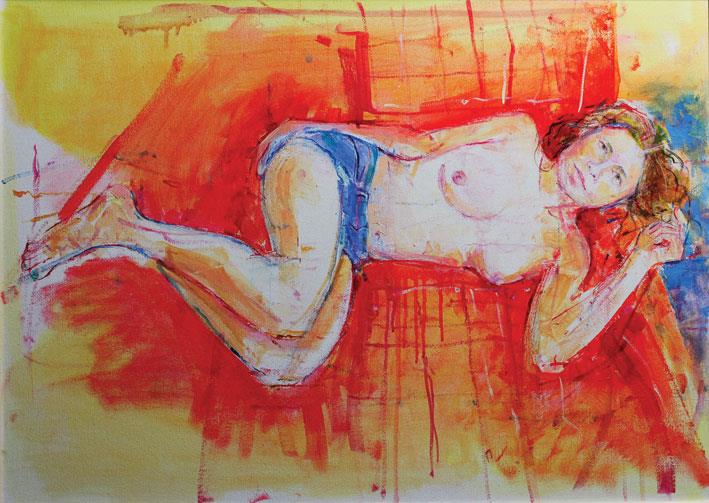
Painting manifests desire immediately and sensuously through tactile mark-making, registration of flesh, and the pursuit of likeness. Yet the painted figure remains deliberately incomplete, suspended between materiality and fantasy, sustaining longing rather than resolving it, in line with Lacanian ideas of desire as structurally unfulfilled.
Box-assemblages materialize desire spatially, inviting proximity, handling, and therefore engagement. The fragmented, gazing figure evokes impulses to preserve or fetishise, yet resists closure. Drawing on Sartre, Butler, and Lévinas, these artefacts render visible the tension of alterity: the Other is present yet irreducible.
Film introduces temporality and duration, allowing desire to unfold through movement, delay, and anticipation. Movement complicates the viewer's control, foregrounding ethical dimensions, and fantasy supplements absence as much as presence.
Together, these media articulate desire's different modalities: seeing, touching, waiting, and persisting.
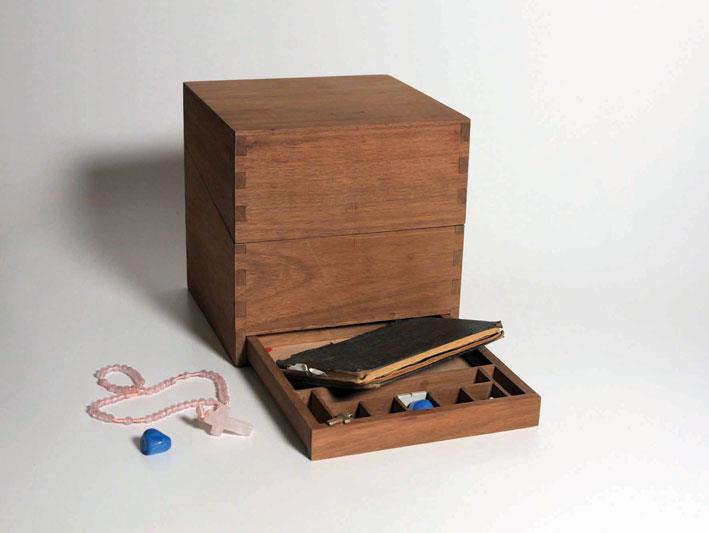
Could you describe the evolution of your box-assemblages - how did they emerge from your architectural and research background?
My architectural training and research-oriented approach shaped the development of the box-assemblage. Architecture taught me to consider enclosure, framing, and spatial logic - structures perception, movement, and meaning. The box functions as a miniature room, organising vision, proximity, and access while intensifying relational and ethical dynamics.
The box-assemblages are sites of inquiry rather than purely expressive objects. Material choices, scale, and iconography are informed by philosophical and psychoanalytic research. Over time, the works evolved from formal, structural objects into more complex erotic and affective spaces, where the body actively engages, presses against boundaries, or gazes back. The box mediates relationships: inside and outside, visibility and concealment, proximity and distance, and the circulation of desire between studio, artwork, and viewer.
What led you to incorporate film into your exploration of desire? How does movement shift the dynamic of looking and being looked at?
Film emerged as a natural extension of my investigation into desire. Unlike painting or box-assemblage, film introduces movement, temporality, and duration - qualities that mirror the lived experience of desire.
Desire unfolds through anticipation, delay, and repetition; movement intensifies the instability of the gaze, transforming looking into a reciprocal, time-based exchange. The subject modulates presence, withholding and returning the look, complicating power relations and highlighting ethical tension. Film also accommodates fantasy, where imagination compensates for physical absence. Through these dynamics, desire is experienced as ongoing, deferred, and relational, reflecting its structural unfulfillment and the impossibility of complete mastery.
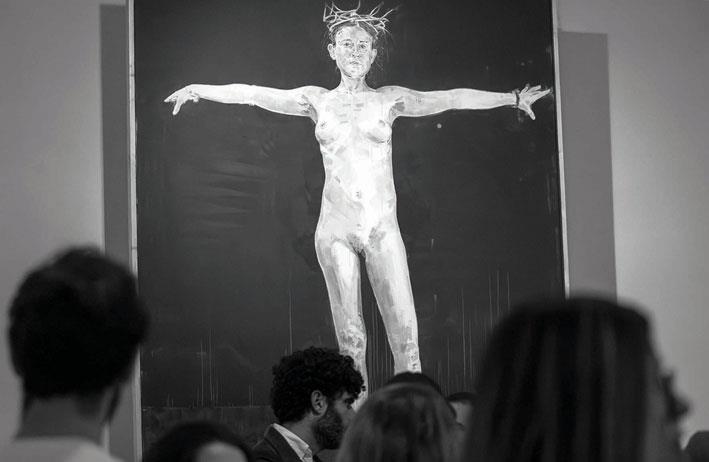
Desire & Its Excess engages deeply with feminist theory and psychoanalysis. How did these frameworks shape your approach to the female nude and the gaze?
Feminist theory and psychoanalysis allow me to approach the female nude not as a passive object but as a site of relational, ethical, and psychic complexity. Psychoanalysis reveals that desire is unresolved; the nude cannot function as a site of mastery. The female body in my work remains suspended between presence and absence, materiality and fantasy.
Feminist theory, especially Butler and Irigaray, foregrounds the ethics of the gaze. The nude returns the gaze, withdraws, or exceeds the frame, creating a shared, embodied encounter rather than a unilateral act of control. Lévinas's concept of alterity reinforces the idea that the female subject demands ethical recognition. Erotic looking is acknowledged but complicated, producing artworks where desire circulates ethically and relationally.
Lacan's idea that "Desire is the desire of the Other" is central to the exhibition. How do you interpret this in relation to your own work and the studio encounter?
In the studio, desire arises through encounter. The female model is never an object to possess but an Other whose difference attracts, resists, and de-centres my subjectivity. Desire is mediated by her gaze, presence, and imagined recognition. Fantasy supplements the unknowable aspects of her desire.
Artworks materialise the tension between desire and inaccessibility. Figures in paintings, box-assemblages, or film return the gaze or exceed the frame, implicating viewers as desiring subjects. Desire circulates between artist, subject, artwork, and observer, never fully settling, reflecting its relational, ethical, and ongoing nature.
How do you navigate the tension between eroticism and ethics in representing the female body?
Eroticism and ethics are inseparable. Erotic desire arises from looking, proximity, and imagination, but is ethically mediated through trust, consent, and dialogue. The female subject is approached as an Other whose difference cannot be assimilated. She withholds, gazes back, or exceeds the frame, ensuring that looking becomes a negotiated encounter rather than unilateral control. Ethics begins in the studio relationship and extends into the artwork, allowing eroticism to be shared and acknowledged. Desire remains unstable, the body both attractive and with its own agency, resists objectification while engaging affectively.
The curatorial note speaks of vision as a "shared field." How do you choreograph this reciprocity between artist, subject, and viewer?
I see the studio as a space where vision is inherently relational. Reciprocity emerges through sustained attention to the ways in which the artist and the model mutually perceive, respond to, and affect each other. I choreograph this exchange by fostering trust, consent, and dialogue, allowing gestures, glances, and bodily presence to circulate freely. The model is an active participant, shaping the ways she appears, and how she withholds or returns the gaze. This shared attention transforms the act of seeing into a co-created experience, in which the boundaries between observer and observed blur.
The artworks themselves extend this choreography to the viewer. Viewers are implicated in the field of vision, invited to navigate, linger, and adjust their own gaze. In this sense, the shared field is not only between artist and subject but also expanded outward, creating a triadic exchange where desire, ethics, and embodiment circulate continuously.
Do you see the gaze in your work as tactile, as the press release (published in last Sunday's paper) suggests? How do you invite viewers into that sensorial exchange?
Yes, I understand the gaze as tactile, drawing on Merleau-Ponty's idea of vision as "flesh," where seeing becomes a form of contact that binds the observer and observed. In the studio, the gaze is reciprocal: the model and I are intertwined in perception, and looking is already embodied and affective.
In the artworks, this tactile quality is enacted in different ways. Box-assemblages invite proximity and movement around the object, making vision spatial and bodily. Painting evokes touch through surface, mark, and brushstroke, tracing the body's gestures and inviting the eye to graze as though across skin. Film adds temporal tactility, requiring the viewer to follow movement, rhythm, and duration, producing a time-based form of touch.
Across all media, the gaze is never unilateral. Figures return attention, modulate presence, and unsettle the viewer's position. Seeing feels like touching; being seen feels unavoidable. This invites viewers into an embodied, sensorial exchange where desire circulates between image, object, and observer, echoing the relational and ethical dynamics established in the studio.
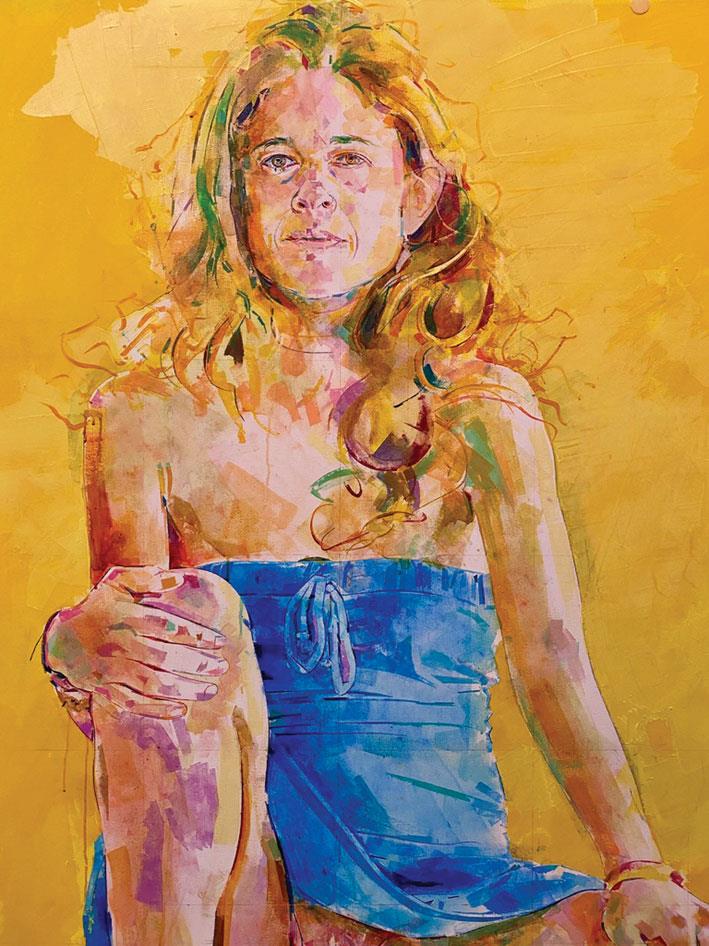
What kind of relationship did you cultivate with your model? How did trust and proximity shape the works? Were there moments of resistance or revelation during your sessions that shifted your understanding of desire?
Trust and proximity are central. The model is an active collaborator, shaping gestures, glances, and responses. Hesitation, withdrawal, or assertion of autonomy reveal that desire is never unilateral or fully controllable. Revelatory moments, when presence felt intimate yet untouchable, makes tangible the Lacanian principle that desire is the desire of the Other. Both artist and model are transformed, and artworks become vessels for relational, multi-dimensional desire, combining erotic, ethical, and affective dynamics.
Your PhD research focused on womanhood and alterity. How has your thinking evolved since then, especially in light of contemporary debates on gender and representation?
Since my PhD, engagement with feminist, queer, and intersectional theory has expanded my understanding of gender beyond fixed categories. The female subject remains central but embodies multiplicity, fluidity, and difference. My work now emphasises ethical negotiation, alterity, and the circulation of desire, responding to contemporary debates around representation, power, and non-binary or posthuman perspectives.
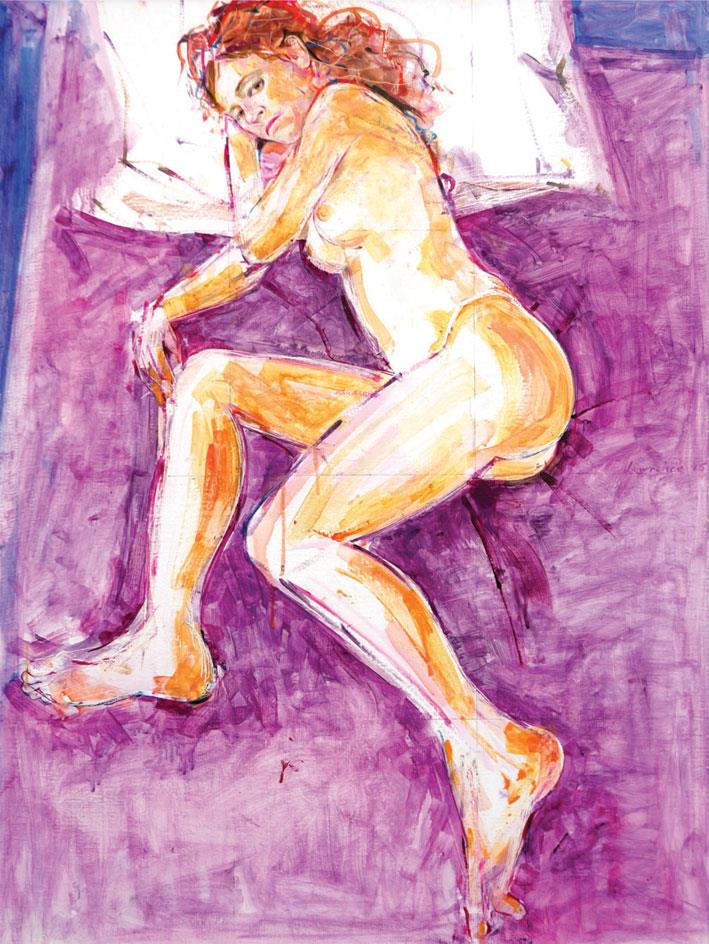
How do you reconcile the spiritual and the sensual in your assemblages, particularly in relation to the feminine and the divine?
Spirituality and sensuality coexist in the box-assemblages. Tactile materials evoke the body, while framing, iconography, and spatial resonance introduce transcendent qualities. The feminine is both immanent and exalted - rooted in flesh yet suggestive of ideals, archetypes, or divine otherness. Desire operates at this intersection, bodily and affective yet gesturing toward the intangible, ethically significant, and reverent, reflecting tension between body and spirit, proximity and transcendence.
What do you hope visitors carry with them after experiencing Desire & Its Excess? Is there a particular emotional or intellectual response you're hoping to provoke?
I hope visitors leave with awareness of desire as relational, unsettled, and ethically charged. Emotionally, I want them to feel the tension of looking and being looked at, attraction, hesitation, and intimacy. Intellectually, I hope they reflect on how desire circulates ethically and relationally, and on the interplay of eroticism and alterity. Visitors should recognise that desire is never singular, always mediated, and generative.
How do you see this exhibition contributing to broader conversations on visual culture and gender in Malta and beyond?
The exhibition foregrounds ethical and relational dynamics of representing the female body. Locally, it engages debates on gender and visual culture; internationally, it dialogues with global discourses on the gaze, alterity, and ethical representation. By combining painting, box-assemblage, and film, it highlights multiple approaches to desire, embodiment, and power, situating Maltese practice within wider conversations on representation, ethics, and relationality.
What do you hope stays with viewers after experiencing this exhibition?"
The exhibition encourages reflection on the circulation of desire, reciprocity, and alterity in bodies, spaces, and images. Viewers should feel and think about how looking implicates them, challenging assumptions of possession, mastery, or unilateral control, while leaving a lasting impression of the ethical and affective dimensions of desire.
In the end, the exhibition leaves us with a lingering awareness of desire as a relational force: felt, negotiated, and never fully resolved. It is this tension that continues to resonate long after the encounter ends.
'Desire & Its Excess' is being held at Spazju Kreattiv, Valletta until 1 March. Opening hours: Mondays closed; Tuesdays and Fridays from 9am to 9pm and Saturdays and Sundays from 10am to 9pm.