The International Holocaust Remembrance Day came and went, and I shall be writing about it soon. It was beautifully organised, and we had the pleasure of listening to Sir Bernard Eder QC, whose grandparents were very well known in Malta because of their businesses.
I often think of Shelley, but especially on this day. For years she organised a dinner in one of the hotels, inviting people from several religions and usually also the Prime Minister and the President.
I also remember an anniversary dinner on 14 October 2005 at Villa Arrigo, held to remember Daniel Pearl, the Jewish American foreign correspondent of The Wall Street Journal who was kidnapped and beheaded in Pakistan.
I was always invited, and she was always pleased when I wrote about the event and published a page of photographs.
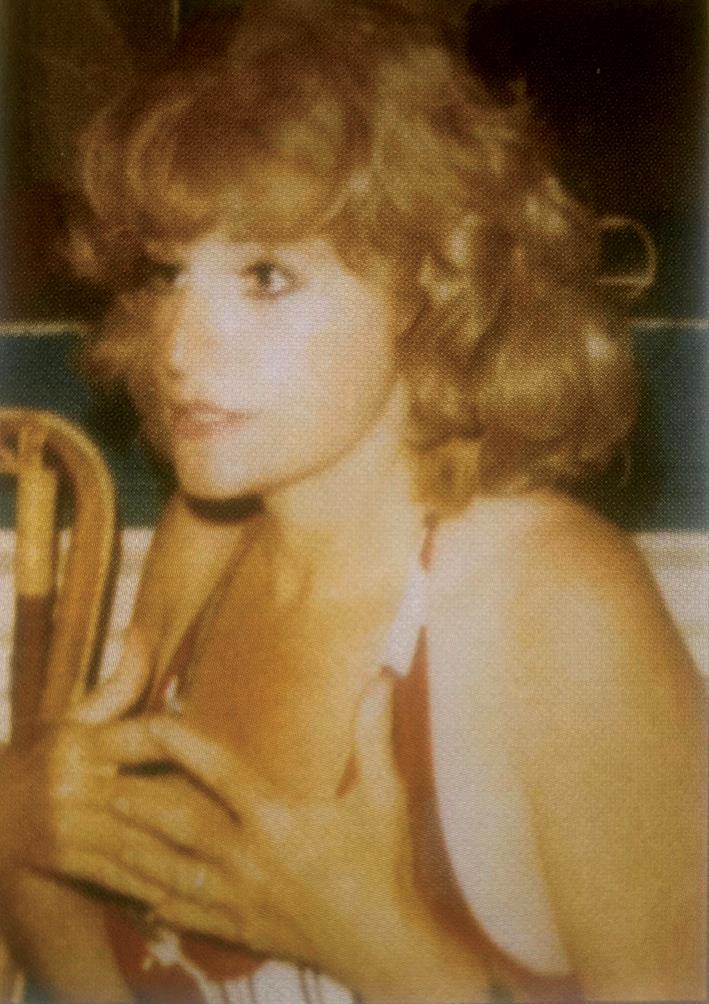
Shelley was indefatigable in spite of several ailments in her later years. She never grumbled but got on with life in her home, Tayara, in Kappara.
She had married her sister Gita's widower, George. I remember George and Gita coming home with avocados and mangoes whenever they returned from Israel. Little did I know then that many years later, in Mauritius, I would be kicking them in our garden, they were so abundant. But when George and Gita brought us this exquisite present from Israel, we were always delighted and felt very privileged.
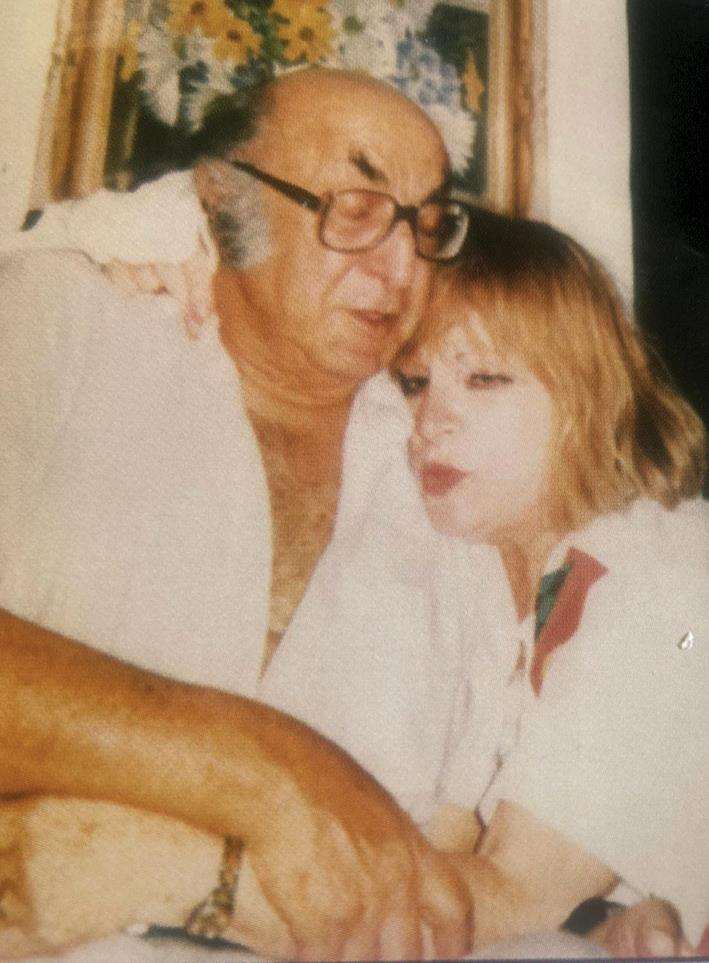
My father and George were friends, and George came round occasionally to visit him. I have no idea how they became friends or indeed what they discussed.
My father had many visitors. He never went out of the house except with my mother and his children. The postman often came up to his office, sometimes even tal-ħut could be found there. Then my father would call one of us to make them a cup of tea. We brought up tots of whisky or whatever else his friends preferred.
The Tayars are the oldest family continuously living in Malta. Rabbi Joseph Tayar died in 1863. According to Alan Keighley in An Account of Malta's Jewish Community since 1800: "There are Maltese surnames which have evolved from Jewish origins but today no longer signify a member of the Jewish faith: Abela, Amato, Attard, Azzopardi, Bonavita, Castillo, Ciantar, Degiorgio, Enriquez, Ellul, Micallef, Mizzi are perhaps the best known."
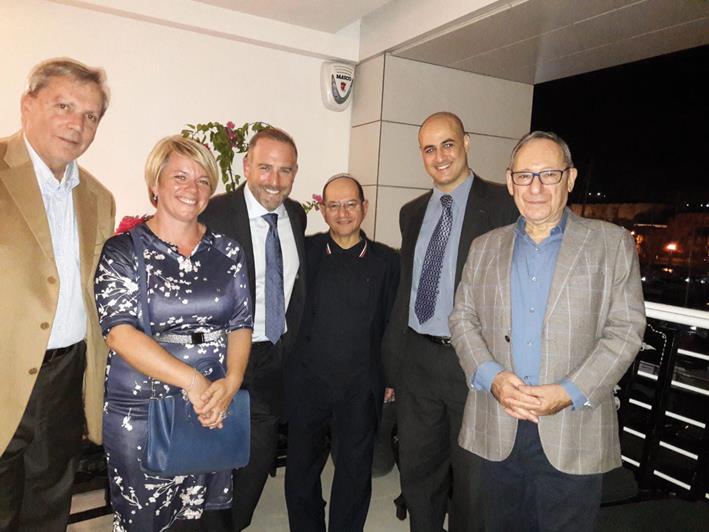
Shelley was a practising Jew. She had been a journalist in America, where she was married. Her husband fell ill and she became the breadwinner. She had two sons. In an article entitled Arabs and Jews in Malta, following an opinion poll by the Sunday Times of Malta showing that "the majority of the Maltese were intolerant towards people of other races, including Arabs and Jews," she was not going to let them get away with it. She wrote:
"I do not think it is fair to ask people whether they would mind having a Jewish neighbour (Maltese, English or Israeli) - many do not know, or have even met a single Jew, since there are fewer than 100 of us living on the island. One should ask those who actually live next to people of the Jewish faith whether they like it... Let me add that my late husband George Tayar was a President of the Jewish Community and he never felt any anti-Semitism in Malta, neither did his father Achille. In fact a street was named after George Tayar; he was just another wonderful Maltese."
In an article entitled Peace on Earth - Amen! which is undated, she writes:
"In this season of peace on earth to all men of good will, we are faced with two nations, Palestine and Israel, standing on the brink of a whirlpool of violence. Escalating it means war and annihilation. Not escalating it means daily human sacrifice on both sides and tomorrow there will be more victims; though the traumatic war ended 27 years ago nothing seems to have changed."
Yes, dear Shelley. It has changed - for the worse.
From time to time she would say: "Let me find you a rich Jew. I know several."
I would reply: "Thank you, Shelley. It isn't money I want, it is emotions."
One day she called me: "Marie, I had two men in my bedroom last night."
I asked her who the lucky gentlemen were. She explained that she had left the ladder outside her bedroom window, which she left open. So what had she done about the two men in her bedroom? They asked her where she kept her jewels. She told them they had already been stolen. "I explained where I kept a few bottles of spirits and asked them to go and get a drink for themselves and bring me up one as I needed it."
Another time she called and asked me to put an advert in the paper saying that someone had stolen her car. "It has violets growing in it as I have not used it for a long time. Please ask them to return it as I feel insecure without it outside."
She often said that her only talent was to make people smile. She did make me smile often, but it was certainly not her only talent. I wish I had spent more time with her, asked her more questions. She was so lovable, Shelley.
In remembering Shelley, I find myself remembering not only her actions but her essence - that rare blend of courage, humour, and unwavering conviction. She lived her life with a kind of luminous stubbornness, refusing to be bowed by illness, prejudice, or the small cruelties of circumstance. She believed in dialogue, in dignity, in the simple decency of bringing people together around a table. She believed in speaking up when silence would have been easier. And she believed, above all, in kindness - the kind that disarms, the kind that endures.
Her stories still make me smile, but they also make me ache a little for the conversations I did not have, the afternoons I did not spend with her, the questions I never thought to ask. Yet perhaps that is the mark of a life well lived: that it leaves us wanting more of the person, not less.
Shelley moved through the world with a generosity of spirit that asked for nothing in return. She made people laugh, she made them think, and she made them feel seen
I miss her. I honour her. And I carry her with me, not as a figure of the past, but as a reminder of what one determined, loving human being can do.