There are many ways to measure devotion to the arts, but directing half a Baroque Festival when having just battled pneumonia surely deserves its own saintly order. Yet there was Kenneth Zammit Tabona, pale but unbowed, presiding over an evening of Vivaldian fireworks as if fever were merely an inconvenient subplot. And perhaps that's why the music felt particularly alive: a roomful of musicians and listeners conspiring, knowingly or not, in an act of cultural defiance - because if Vivaldi teaches us anything, it's that exuberance can outplay exhaustion every single time.
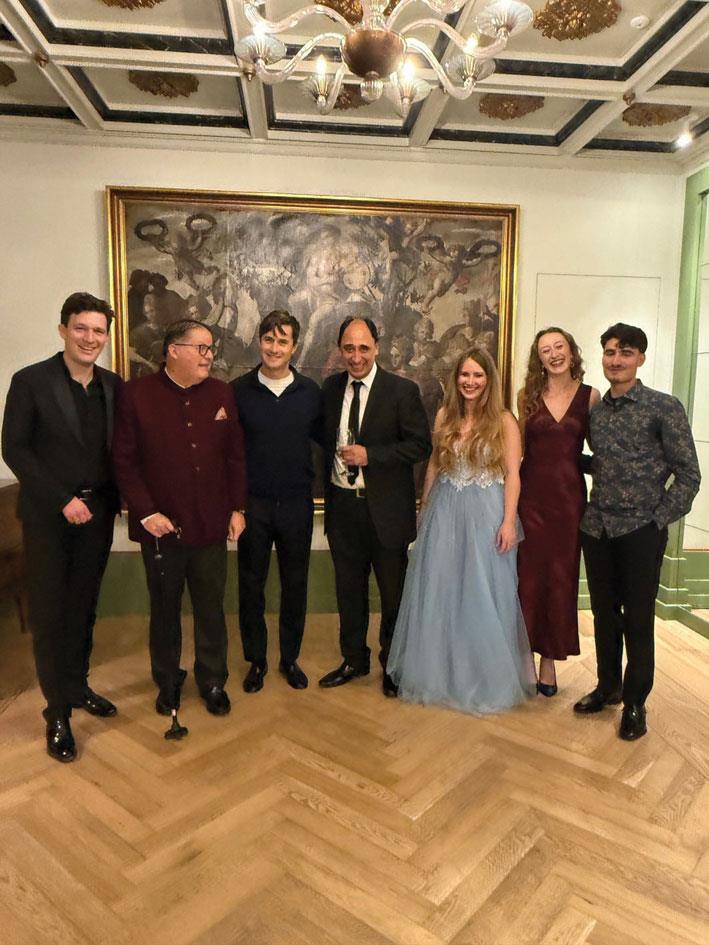
Kenneth told me: "I just made it... If I hadn't I'd still be weeping and gnashing my teeth." It was Kenneth who introduced Charlie Siem to Carmine Lauri "and these concerts were conceived at my dinner table... next year Charlie will be performing the Four Seasons with a saxophone quartet...I love mix and match."
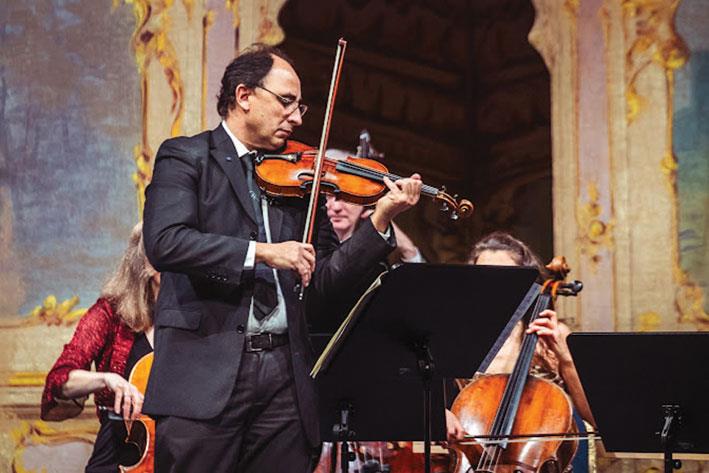
The All‑Vivaldi concert, part of this year's Baroque Festival, was not merely a parade of concertos. It was a reminder that Malta, small as it is, has an appetite for artistic intensity that would make even the Red Priest himself raise an eyebrow. The programme was a marathon of strings - three violins, four violins, solo violins, solo cellos, tutti, the whole glittering arsenal. It unfolded like a series of increasingly daring conversations between musicians who seemed to relish the challenge of out‑sparkling one another.
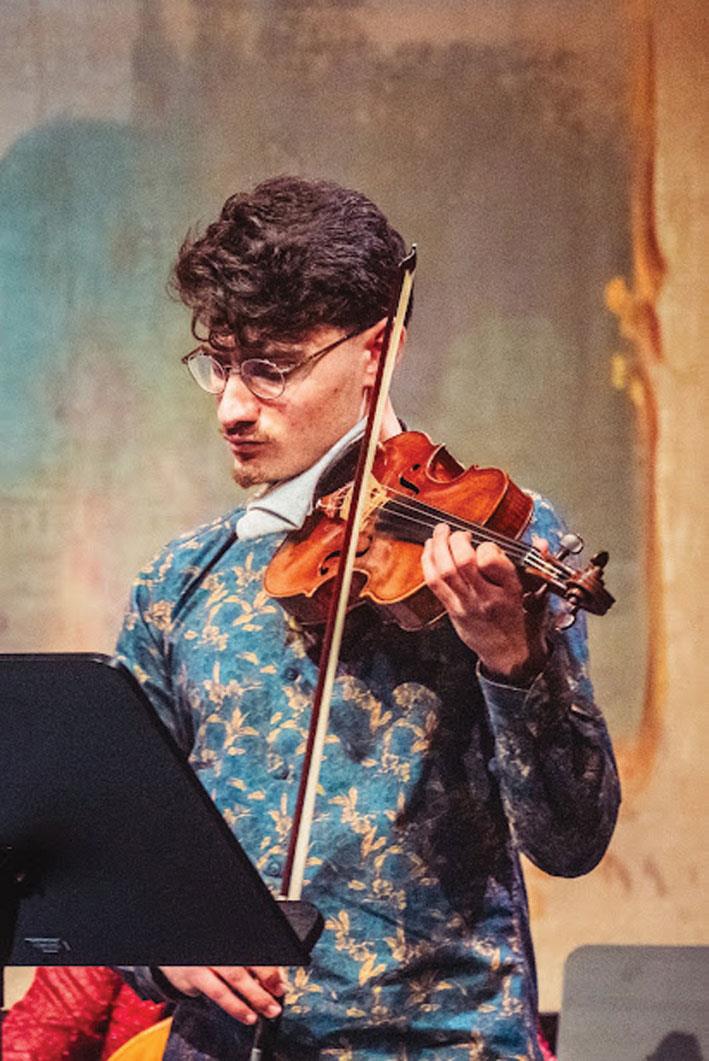
The first of these dialogues came in the Concerto for Three Violins in F major, with Carmine Lauri, Charlie Siem, and Anna Kosinska stepping forward like three characters in a play who know each other's lines by heart but still enjoy the thrill of improvisation. There was a kind of conspiratorial joy between them - the sideways glances, the shared breath before an entry, the tiny smiles that flickered when a phrase landed just right. It was chamber music dressed as a concerto, intimate despite its bravura.
Then came Maximilian Hornung, whose cello tone could probably melt the limestone off Valletta's bastions if he played long enough. (Please leave those bastions alone. They have only recently been restored). His A minor concerto (RV 419) was all velvet and steel - the kind of performance that makes you forget the cello is a physical object and not some extension of the human voice. Hornung doesn't so much play as inhabit the music, and the orchestra, sensitive to every nuance, wrapped itself around him like a silk scarf.
By the time the glamorous Charlie Siem returned for the D major "Grosso Mogul" concerto, the audience had settled into that delicious state where anticipation and satisfaction coexist. Siem, ever the elegant showman, easy on the eye and the ear, delivered Vivaldi with a kind of aristocratic swagger - not flashy, but assured, as though he were conversing with the composer across three centuries. The cadenza, that notorious tightrope walk, was dispatched with a smile that suggested he rather enjoyed the danger.
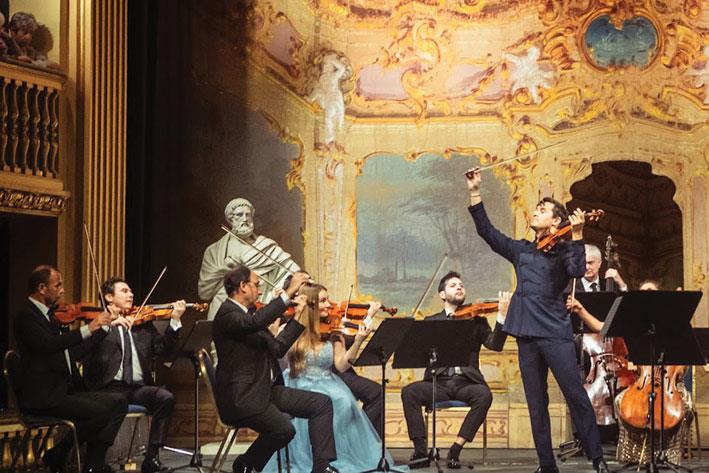
And then, as if determined to prove that Vivaldi had an inexhaustible supply of A minor cello concertos, Hornung reappeared for RV 420. If the first concerto was velvet and steel, this one was silk and fire. The slow movement - a glowing Adagio - felt like a collective exhale.
The harpsichord was played with luminous delicacy by Carmine's daughter, Francesca.
Carmine Lauri's turn in the D major concerto "per la Santissima Assunzione di Maria Vergine" brought a different kind of radiance. Carmine plays with the authority of someone who has lived inside this music for decades, yet with the freshness of someone discovering it anew each time. His sound has a clarity that cuts through the ensemble without ever dominating it.
But the evening's pièce de résistance was the Concerto for Four Violins and Cello in B minor - a work that, in lesser hands, can feel like a logistical exercise. Here, it became a celebration of musical camaraderie. Siem, Kosinska, Cutajar, and Lauri wove their lines together with the ease of old friends finishing each other's sentences. The Largo‑Larghetto‑Adagio sequence was a tapestry of sighs and murmurs, each voice distinct yet inseparable from the whole. And when the final Allegro burst forth, it felt like a collective sprint toward joy.
The La Valette Chamber Orchestra, under Carmine Lauri's direction, deserves its own applause. They played with a suppleness that made the music breathe - crisp when needed, tender when invited, and always alert to the soloists' slightest inflection. There was no sense of hierarchy, only collaboration. Even the harpsichord, often relegated to polite background duty, was given space to sparkle.
What struck me most, however, was not the virtuosity - though there was plenty of that - but the atmosphere. There was a sense of gratitude in the room, a quiet recognition that live music is still a kind of miracle. (No it is not the same as listening to your Cd's or You tube at home. Perhaps it was the January chill outside, making the warmth of the hall feel like a refuge although it could have been slightly warmer, in my view. Perhaps it was simply Vivaldi, whose music refuses to be anything less than alive.
As I left the hall, I noticed Kenneth standing quietly to one side, accepting greetings with his usual grace. He too, is always well turned out. This cannot be said of quite a few both in the orchestra and in the audience. Trousers which should have been pensioned off, dusty shoes or worse...
And I thought: this is what cultural stewardship looks like. Not grand speeches or glossy brochures, but showing up - even when it hurts - because the music deserves it, and so do we.
Vivaldi would have approved. After all, he knew a thing or two about perseverance. He wrote hundreds of concertos, many of them in the same key, with the same structure, for the same instruments - and yet each one contains a spark of something irrepressible. Something that refuses to fade.
I am not particuarly fond of Baroque music however, I am gradually getting converted thanks to evenings like this.
Last night, that spark burned brightly in Valletta. And for a couple of hours, even the tired, the overworked, the unwell - and yes, even this tired old woman writing these words - felt a little more alive.
[email protected]
Photography by Lisa von Brockdorff