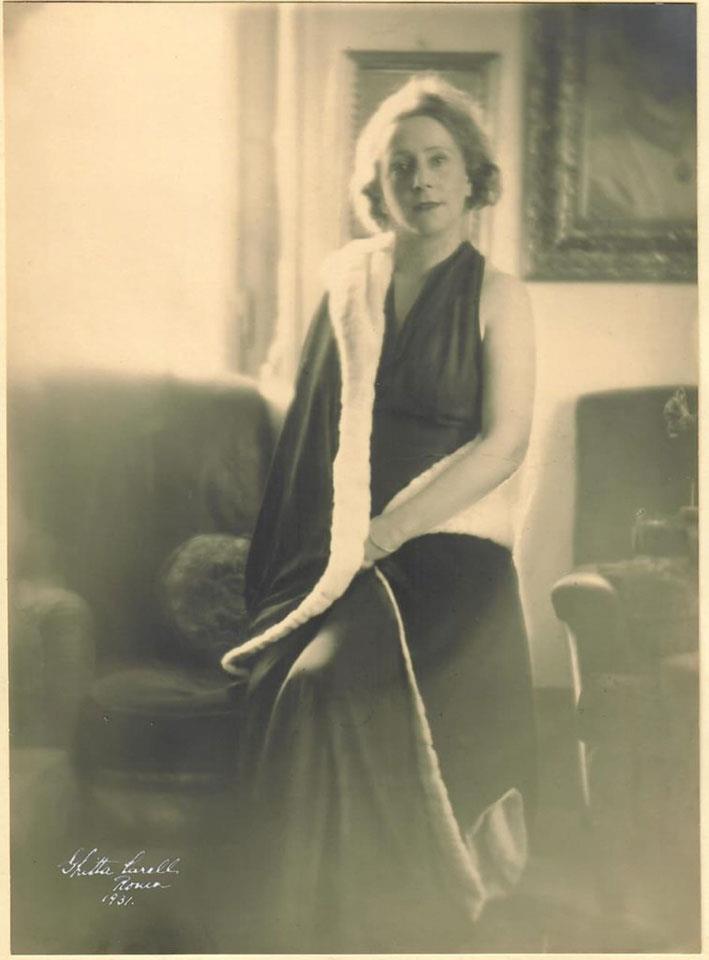
In the glittering salons of 1920s Rome, amid the marble busts, gilt mirrors, and scent of expensive cigars, one woman's laughter often rose above the din of Italy's political elite. Margherita Sarfatti, art critic, journalist, Jewish intellectual, and for nearly two decades, the mistress and confidante of Benito Mussolini, was the unlikely architect of Fascism's cultural image. She helped craft not just the myth of Il Duce, but the aesthetic and emotional vocabulary of a new authoritarian Italy.
A Venetian beginning
Born Margherita Grassini in 1880 to a wealthy Jewish family in Venice, she was raised among art, literature, and debate. Her father, a successful lawyer and businessman, believed in education and culture; her mother encouraged her to read voraciously. By her late teens, Margherita had already begun writing art criticism and immersing herself in the avant-garde circles of northern Italy.
At 18, Grassini married Cesare Sarfatti, a socialist lawyer some 15 years her senior, and moved to Milan, then the nerve centre of Italy's modern intellectual life. The marriage marked a discreet rebellion against her upbringing in a wealthy, conservative Jewish family in Venice. Cesare descended from an assimilated Sephardic Jewish lineage, rooted in families that migrated from the Iberian Peninsula through southern France into northern Italy, shaped by secular, republican, and socialist traditions.
Before Mussolini, Margherita Sarfatti was already embedded in Milan's aristocracy of socialism. Alongside Filippo Turati and Anna Kuliscioff, she debated emancipation and revolution in salons insulated by wealth, fur coats, and Parisian excess. This was socialism performed, not lived: class struggle theorised at a safe distance from deprivation. The proletariat existed as an abstraction, while privilege softened every radical claim.
Sarfatti recognised early that this brand of socialism lacked gravity - its ideals were loudly proclaimed, its sacrifices absent. It was a politics of words rather than consequence, and she would ultimately seek power elsewhere.
The meeting that changed history
In 1911, Margherita met a fiery young socialist journalist in Milan named Benito Mussolini. He was poor, brash, and driven, the very opposite of her cultivated refinement. Yet something electric passed between them: she saw in him the raw material of greatness; he saw in her a mind that could polish his ambition into ideology.
Their affair soon became both passionate and political. Sarfatti began editing his speeches, advising him on style and substance, introducing him to Milan's intellectual elite. "You must not only speak to the masses," she once told him, "You must seduce them!"
When Benito Mussolini broke with orthodox socialism in 1914 and embraced interventionist nationalism, Margherita followed him both intellectually and politically. She shared his conviction that Italy required not merely political reform but a profound cultural regeneration "an aesthetic of order, discipline, and virility capable of overcoming decades of liberal disillusionment and social fragmentation". From their sustained dialogue, shared ambitions, and close collaboration during and after the First World War emerged the gradual construction of the myth of Il Duce: Mussolini as a modern Caesar, embodying authority, masculine discipline, and national renewal.
Italy emerged from the war formally victorious yet economically weakened, socially fractured, and politically destabilised, haunted by what nationalist discourse soon termed a "mutilated victory" (vittoria mutilata). Demobilised veterans, particularly among the Arditi, elite assault troops brutalised by trench warfare often found civilian life alienating and dishonourable. In fascist rhetoric, parliamentary socialism, pacifism, and liberal compromise were increasingly portrayed as effeminate and decadent, incapable of restoring national dignity or social order.
Within this climate of crisis, sections of Italy's economic elite, including industrialists, landowners, and financiers, among them Cesare Sarfatti began to invest materially and politically in the emerging fascist movement. For these groups, Mussolini represented a bulwark against socialist revolution, labour unrest, and perceived national decline. Fascism was thus not solely a street-based phenomenon driven by violence and spectacle, but a movement increasingly sustained by elite patronage from those who feared social collapse more than authoritarian rule.
The art of power
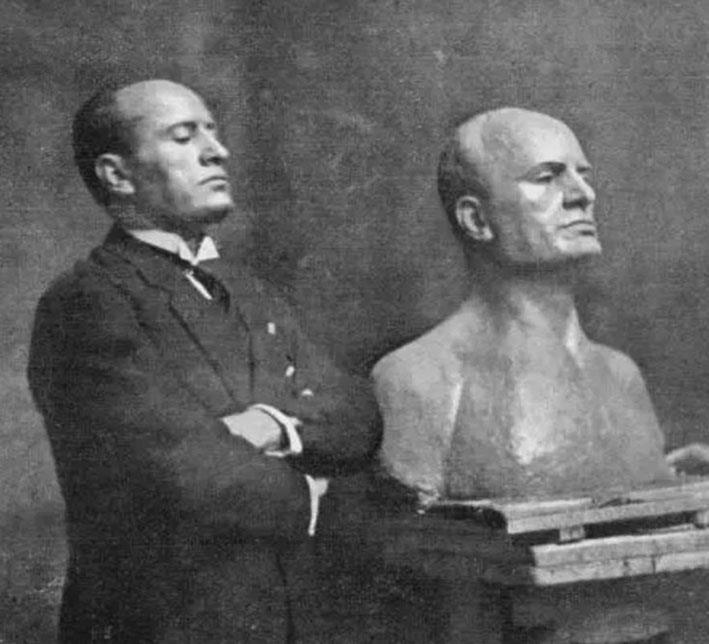
If Mussolini was the voice of Fascism, Sarfatti was its stylist. She understood that power needed beauty, that aesthetics could make ideology irresistible. In her essays and art criticism, she promoted the concept of Novecento Italiano, a movement that sought to revive classical harmony within modern art, aligning artistic renewal with national destiny.
In 1926, Sarfatti organised the Mostra del Novecento Italiano in Milan, presenting an art of strength, order, and national genius. This was not cultural policy but propaganda at its most sophisticated. Under her guidance, Fascism adopted the language of marble, monumentality, and disciplined masculine form - an aesthetic that transformed political myth into visual authority.
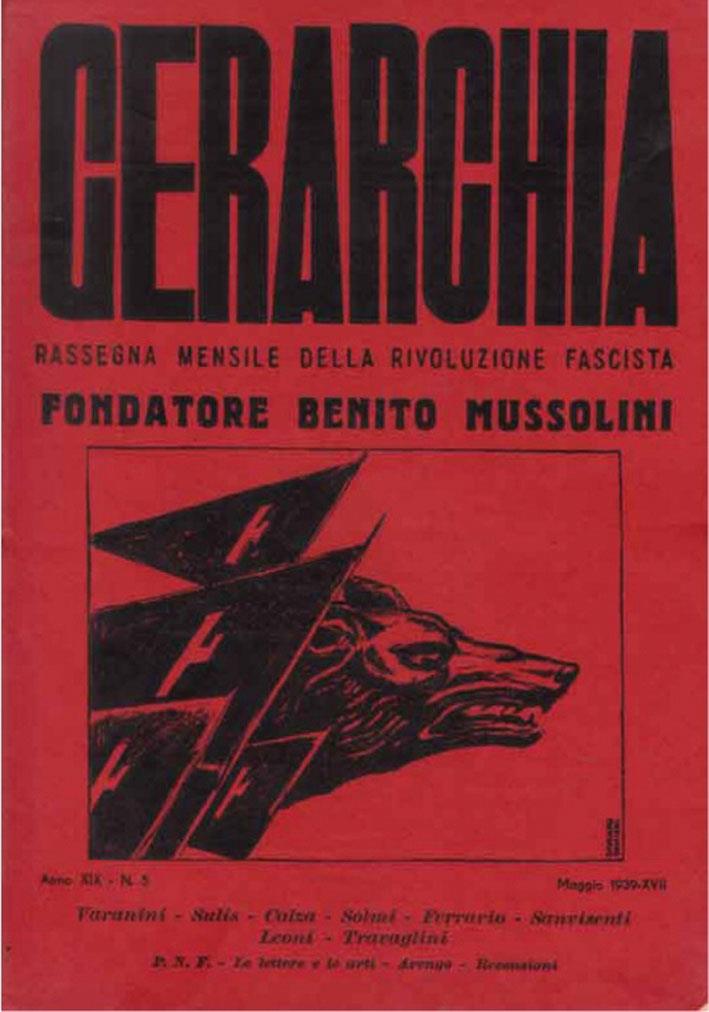
Even earlier, while Fascism was still in flux, Sarfatti worked closely with Mussolini in shaping its intellectual platforms. She was associated with Utopia, the journal Mussolini founded before the war to address revolutionary and interventionist currents, and later became a central figure around Gerarchia, established in 1922 as Fascism's principal ideological review. Through these publications, she helped translate violence and ambition into doctrine, giving the movement cultural coherence before it fully possessed political power.
Her book, Dux (1925), was a biography of Mussolini so flattering it became a bestseller across Europe and was translated into 18 languages. It portrayed him as the embodiment of Renaissance willpower and modern efficiency - the bridge between Caesar and Nietzsche's Übermensch. The world saw Mussolini through her words long before it saw him on the balcony at Piazza Venezia, selling across Europe and the United States, transforming Mussolini into a global political icon years before Hitler's name carried meaning beyond Germany's borders.
"It was, in many ways, a love affair between a woman and the idea of power itself."
The last illusion
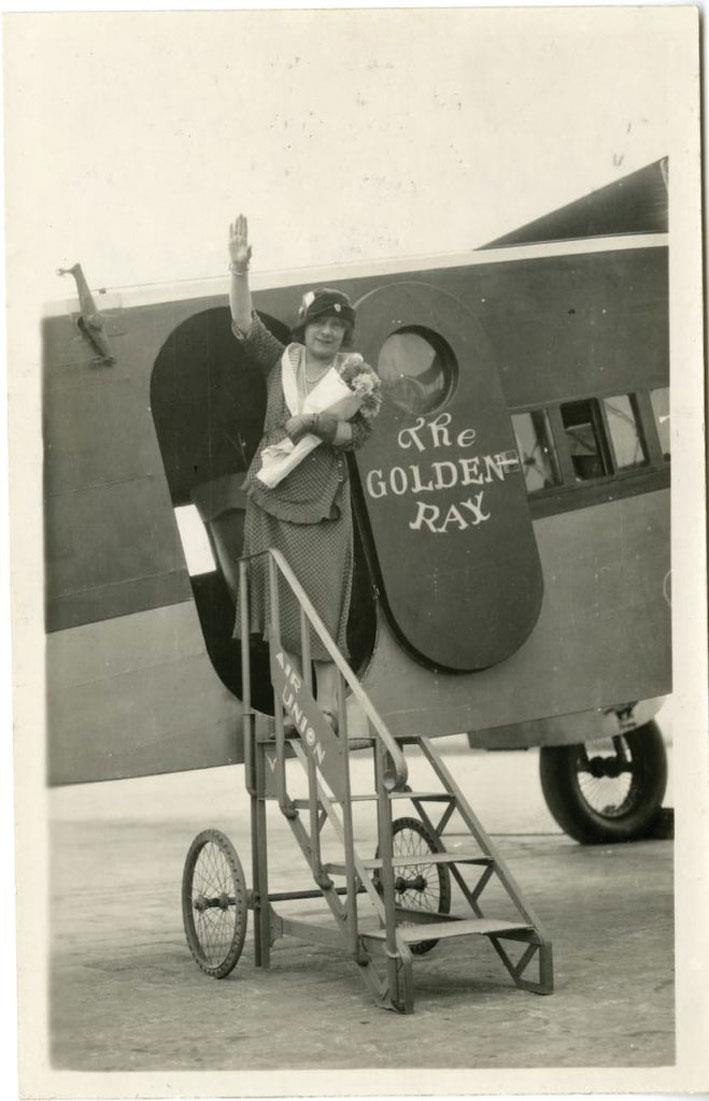
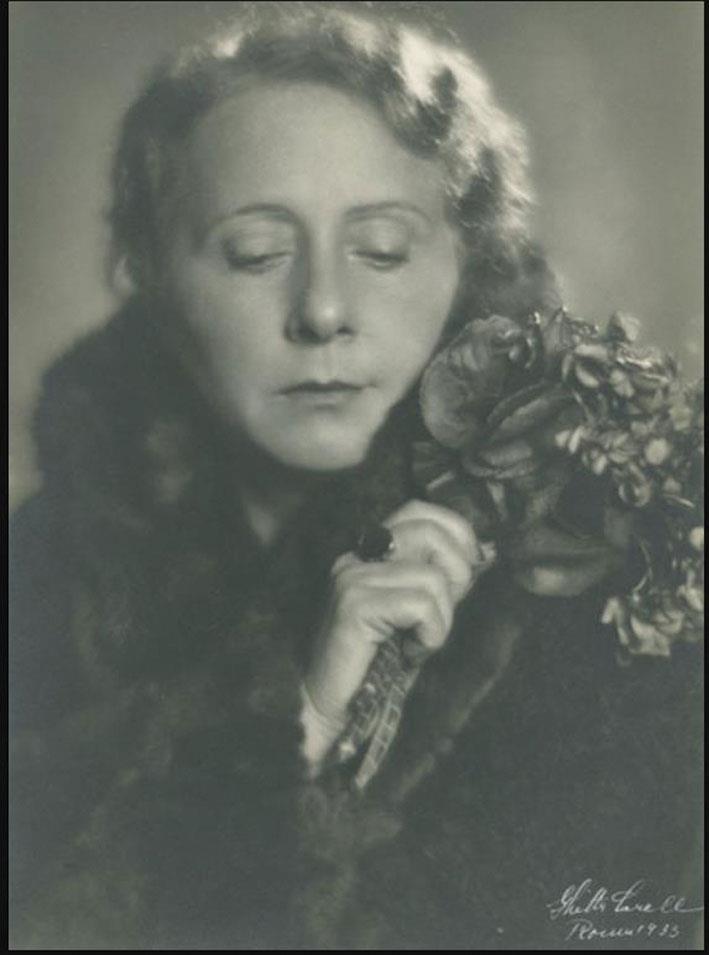
In the spring of 1934, Margherita once Mussolini's closest intellectual confidante and cultural strategist undertook a high‑profile tour of the United States with the dual aim of promoting Italian art and attempting to "reassert her relevance as an intermediary between Fascist Italy and the democratic West". By then her influence in Rome had been waning; she had been removed from key positions and was increasingly sidelined within the regime. Her US itinerary, filled with lectures, radio appearances, and high‑society receptions, sought to showcase Italy's cultural achievements and to encourage dialogue with American elites, implicitly positioning herself as a bridge between Mussolini and President Franklin D. Roosevelt.
Sarfatti was received at the White House for an informal hour with Roosevelt and Eleanor Roosevelt, during which they discussed culture, leadership, and national renewal rather than formal policy. Although she hoped this engagement might persuade Mussolini of the value of closer ties with the United States, on her return she found his interest elsewhere; Mussolini famously dismissed America's significance in hard power terms, and Sarfatti's effort did not restore her standing. The tour, though socially celebrated, failed to achieve its political purpose, revealing the limits of cultural diplomacy and signalling the end of her direct influence in Italian political life.
The woman who saw too much
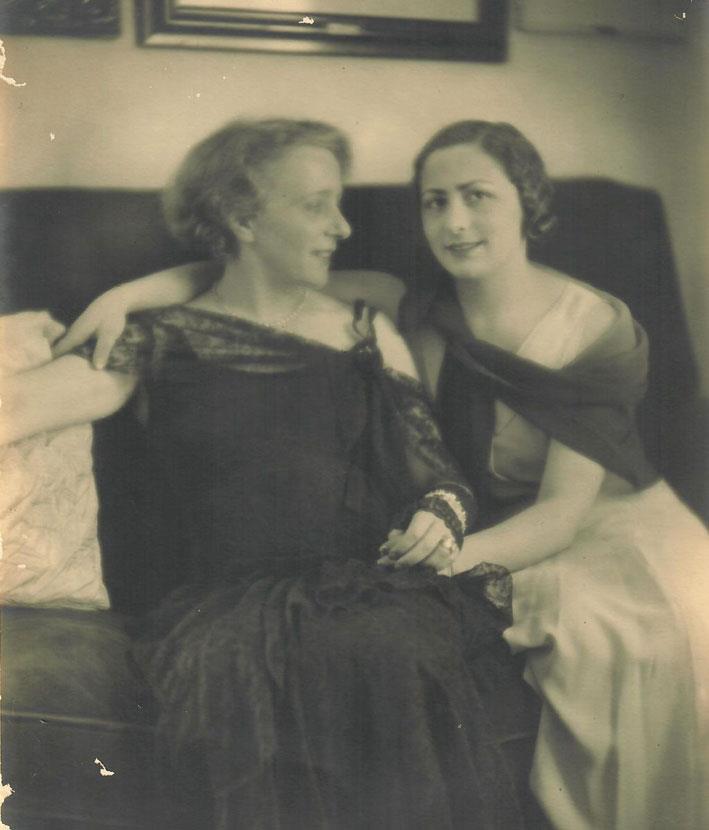
Margherita fled Italy in 1939, forced into exile by the racial laws that targeted Jews, even those who had once shaped the regime's image. She settled in Frances and later South America, spending time in Uruguay and Argentina, and continued to write on art, preserving the intellectual rigour that had always defined her life.
Mussolini was absent from her world, her husband Cesare had died, and the salons and networks that once amplified her influence had vanished. Her sister, by contrast, perished in the concentration camps, a cruel reminder of the world she had tried to navigate and manipulate. In later years, she converted to Catholicism, leaving her Jewish identity behind, marking yet another reinvention in a life defined by ambition and transformation.
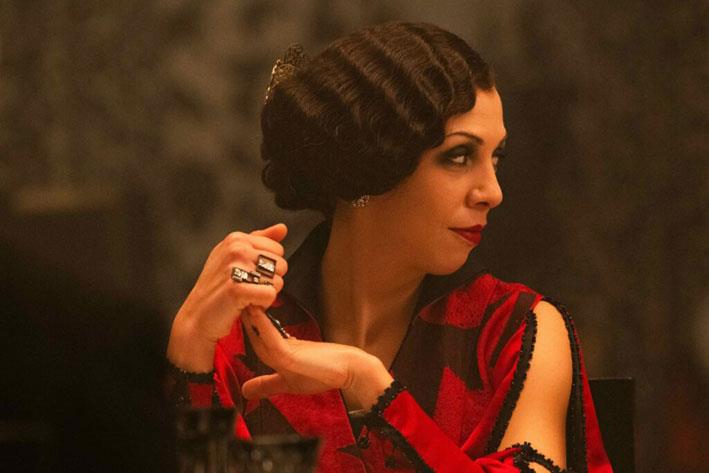
At the 2024 Venice Film Festival, a drama inspired by Arturo Scurrati's The Son of the Century drew attention for its portrayal of Mussolini's ascent, ambition, relationships, and political strategy. At the heart of the film is Barbara Chichiarelli's mesmerising portrayal of Margherita Sarfatti, bringing both elegance and iron-willed authority to the screen.
Draped in black, Chichiarelli conveys intellect, power, and subtle, dangerous allure, capturing Sarfatti's complex influence over Mussolini. The film balances historical fidelity with dramatic flair, portraying the tension, seduction, and ambition that shaped one of the 20th century's most formidable strongman, "Savior to those craving order, villain to those fearing power unchecked". Critics have praised both Wright's direction and Chichiarelli's performance for illuminating the shadowy interplay of love, politics, and power.
She was politically and sexually entwined with Mussolini, polishing his rough edges, scripting his image, and turning a provincial socialist agitator into the myth of Il Duce.
Yet Sarfatti was a mother who endured the devastating loss of her only son at Caporetto, a wound that sharpened her ambition and hunger for intensity. As an art critic, intellectual, and salonnière, she transformed culture into leverage, influence into power. She turned salons into incubators for the Fascist aesthetic and Mussolini into both symbol and vessel. The film captures her duality: muse and architect, grief-stricken mother and calculating strategist, a woman whose intellect, desire, and vision shaped history itself. Even behind the strongest men, Sarfatti proves extraordinary women leave marks that time cannot erase and sometimes, those marks are lethal in their brilliance, soft power in practice long before it was theorised.
When she died in 1961, newspapers remembered her, if at all, as "the Jewish mistress of Mussolini". It was a cruel reduction of a complex, visionary, and ultimately tragic life.