The Holocaust Remembrance event this year unfolded with a quiet gravity, each speaker adding a different layer of meaning to the evening. The keynote speech, so beautifully delivered by Sir Bernard Eder QC, is published in full on pages 28 & 29. It is not to be missed. He is the grandson of the well known owners of HARO shops in Sliema and Valletta, Hans and Hega Eder. The remaining three contributions by Minister Ian Borg, Julius Nehorai, Chairman of the Tayar Foundation, and historian Nathaniel Calleja Gera, formed a powerful triptych of memory, responsibility, and historical insight.
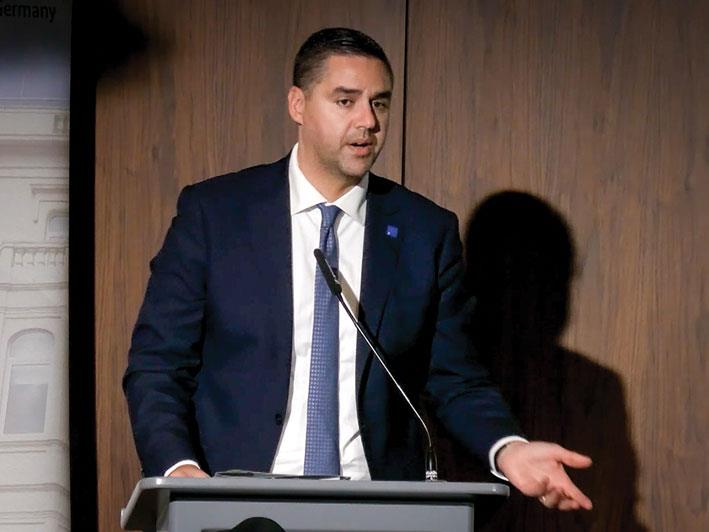
After a prayer by Rabbi Chaim Segal, Minister Ian Borg opened with a solemn reminder of the human cost at the heart of the commemoration: "six million Jewish men, women and children, and the millions of other innocent victims... whose lives were tragically taken during the Holocaust." He emphasised that remembrance is not a ritual of the past but a moral obligation for the present. The Holocaust, he noted, "did not begin with death camps, but with words, with exclusion, and with the gradual erosion of human dignity."
His speech framed remembrance as a shared civic duty, especially as the voices of survivors fade. He stressed that Malta's role during the Second World War - as a place of refuge for some Jews fleeing persecution - forms part of this responsibility. Today, he argued, Malta's commitment is expressed through concrete national policies: the National Action Plan Against Racism, the adoption of the IHRA definition of antisemitism, specialised training for authorities, and structured dialogue with the Jewish community.
He also highlighted the establishment of the Chabad Jewish Centre in Sliema, which he described as essential to "fostering Jewish life in Malta today" and ensuring that remembrance is not only about honouring the past but safeguarding dignity in the present. His closing words echoed the universal pledge of the evening: "never again."
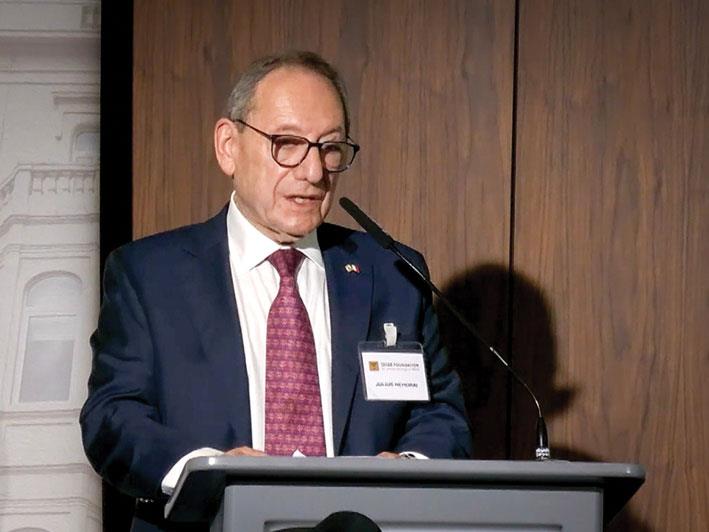
Julius Nehorai's speech was both gracious and deeply reflective. He welcomed the audience (it was full house) on behalf of the Tayar Foundation and the partnering embassies, The Federal Republic of Germany Embassy and the Embassy of the State of Israel, thanking Minister Borg for his support. He reminded the audience that this year marks the 81st anniversary of the liberation of Auschwitz-Birkenau, and that as time distances us from those events, "the duty to remember does not fade. It intensifies."
For Nehorai, remembrance is not passive. The Holocaust, he insisted, "was not an accident of history" but the result of prejudice left unchallenged and indifference allowed to grow. His words framed memory as an active stance - a choice to notice, to question, and to defend.
He then turned to the work of the Tayar Foundation, founded to honour Shelley and George Tayar, whose belief was that even small Jewish communities deserve dignity and historical protection. He described the Foundation's mission to preserve Malta's Jewish heritage, especially its cemeteries, which he called "witnesses to centuries of Jewish presence."
He placed Malta's Jewish history within a long arc, recalling the expulsion of 1492 and the centuries of resilience that followed. Education, he said, is central to the Foundation's work - from exhibitions to public lectures, including the 2024 event on Giuseppe Coen and the layered history of Jewish cemeteries.
Nehorai also addressed the troubling rise of antisemitism across Europe, noting that many Jews once again feel uneasy expressing their identity. Holocaust remembrance, he warned, is therefore not only about the past but about recognising danger in the present.
His acknowledgements were heartfelt, thanking the Government of Malta, the German and Israeli embassies, the hosts at The Imperial, the speakers, and the Foundation's own team. He ended with a poignant reflection: survivors after the war often asked not for food or clothing, but "to be believed." Malta, he said, has long been a place of refuge and moral clarity - a legacy that must be protected.
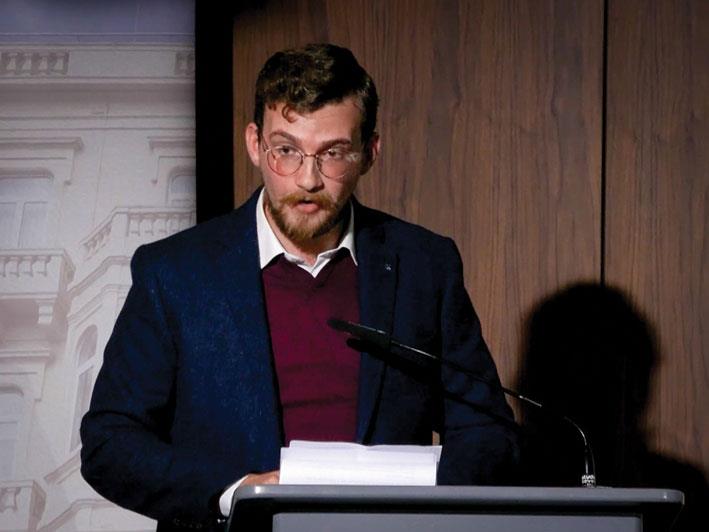
Nathaniel Calleja Gera's illustrated talk offered a historical narrative that connected Malta's wartime experience with the plight of Jews fleeing persecution. He began by recalling how the Holocaust exposed the depths to which society can fall when hatred is normalised. Echoing Sir Bernard Eder's earlier remarks, he reminded the audience that persecution began not with camps but with laws, exclusions, and the sudden loss of rights - as in the Anschluss of 1938.
His theme - Two Nations Besieged - drew a parallel between Jews besieged by hatred and Malta besieged militarily. Their stories intersected when Jewish refugees sought safety on the island, sometimes finding refuge, sometimes being turned away.
He traced the long Jewish presence in Malta, from late Roman catacombs marked with menorahs to the medieval community of around 500 people. He described centuries of fluctuating tolerance, including the Jewish slave cemetery in Kalkara, "a silent and little-known reminder of a community denied both freedom in life and dignity in death."
Calleja Gera then turned to wartime Malta: isolated, bombarded, and dependent on perilous convoys. During the height of the siege, around 80 Jews lived on the island. Some refugees, like Bela Lowinger, were granted entry; others were refused due to economic or bureaucratic concerns. Those who arrived often faced hostility and, inevitably, internment.
He recounted the stories of internees such as Issi Bielawski and F. Rokotnitz, whose fates diverged - one released to work, the other deported. He also described the efforts of Jewish internees to maintain their faith, including Eric Maitland Woolfe's petition for prayer rights in prison, which was granted and even set a precedent.
After the war, the Jewish population in Malta briefly rose to around 100 people. The Jewish Community Committee played a vital role in supporting displaced Jews, including providing food and clothing to refugees aboard the SS Margerita.
Calleja Gera concluded by returning to his central theme: two peoples shaped by siege, meeting at a moment of crisis. For some Jews, Malta became not only a refuge but a place where life continued and was rebuilt. Their legacy endures in cemeteries, in family stories, and in the moral obligation to remember "not only suffering, but courage, refuge, and moral choice."
Patricia Salomone played a pivotal role throughout the evening with introductions, intelligent comments, an elegant presence and at the end organising a question and answer session so that the audience could participate. Thank you Pat.
Guests were invited to stay on for a lively reception.
This was certainly the most successful Holocaust evening I can remember.
Lest we forget.
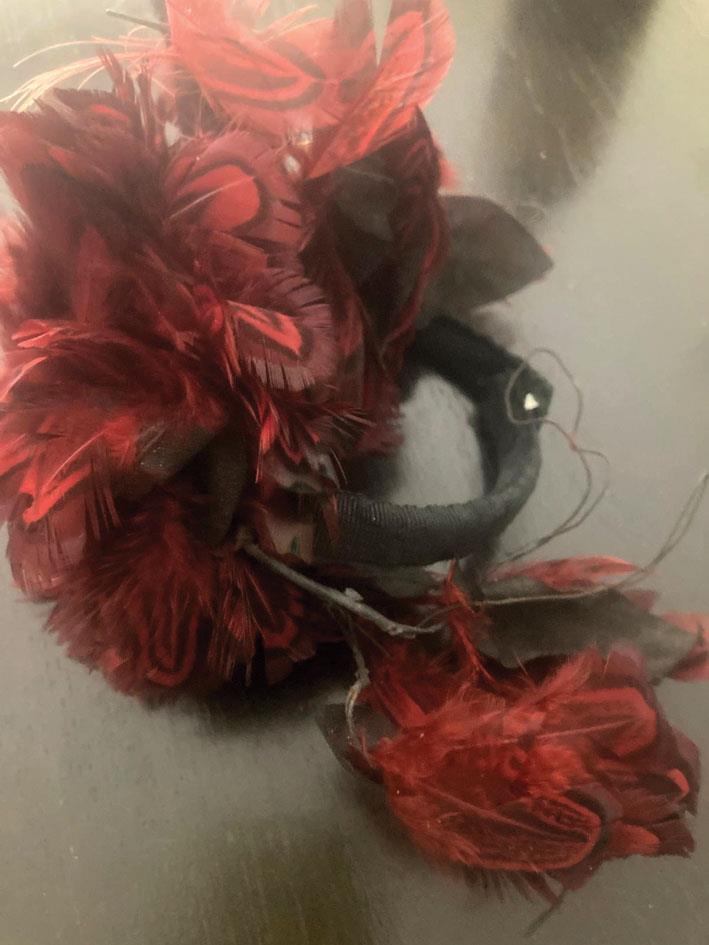
My beloved mother’s feathery concoction bought from HARO for the marriage of one of my sisters. She never wore it again as she passed away