Introspection belongs to the present, yet it is always shaped by what came before. Memory persists, quietly informing how we see, feel, and recognise meaning as it takes shape. Whose experience is being articulated here: the individual's, society's, or both?
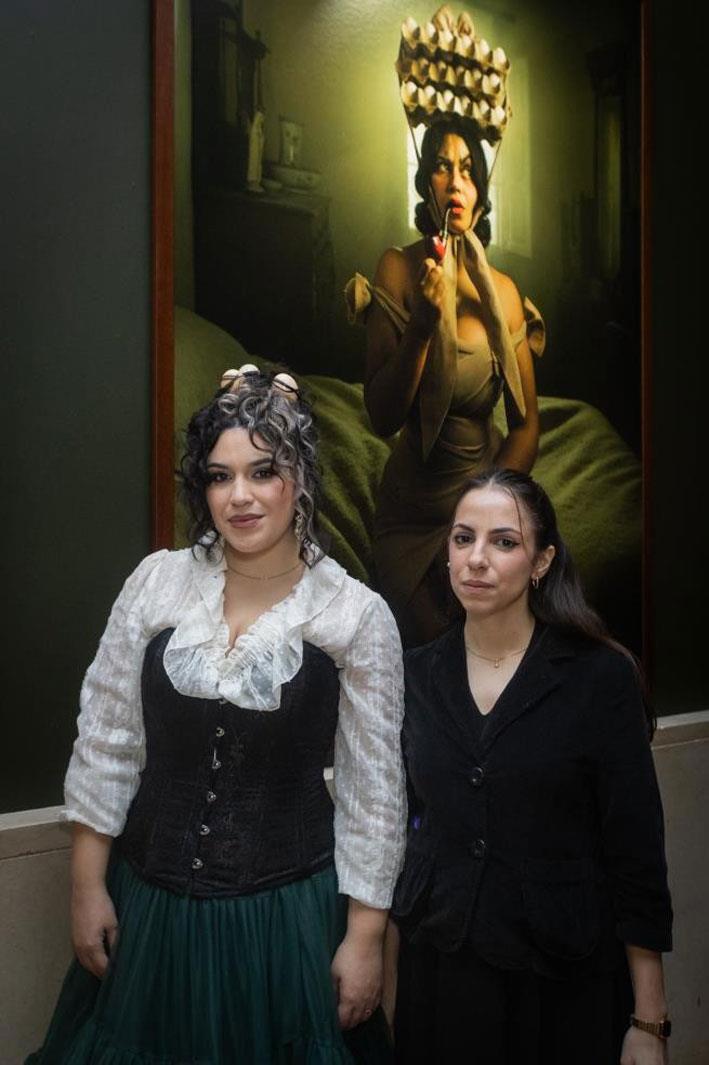
Twenty-seven-year-old photographer Lorella Castillo has just made her solo exhibition debut with 11 new photographic works. It has been curated by Rachelle Bezzina and is being held as part of Spazju Kreattiv's 25-year anniversary programme. Developed over the last two years, the exhibition emerges from a sustained dialogue between artist and curator, grounded in an ongoing exchange that shaped both the works and the exhibition's conceptual framework. Photography here is not an end in itself but Castillo's chosen artistic language, through which she constructs images that operate conceptually, emotionally, and materially as works of art.
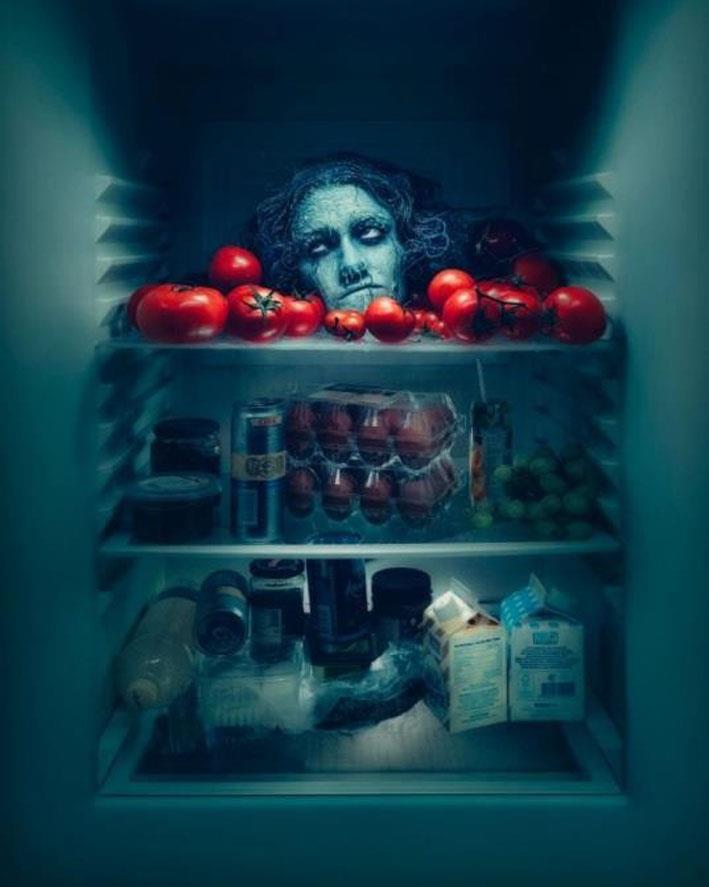
Fil-friġġ wara t-tadam (In the fridge behind the tomatoes) takes its name from a tongue-in-cheek response to the repeated question of where the artist finds her ideas or inspiration, and for the recipe of her creativity. In this exhibition, Castillo draws on Maltese oral traditions, giving these phrases a visual body through a distinctly personal lens. Moving between expression and image-making, the works operate in the space between documentation and invention. To encounter oneself in these images, one must look beyond the obvious and uncover what is embedded in the language and expressions we inherit.
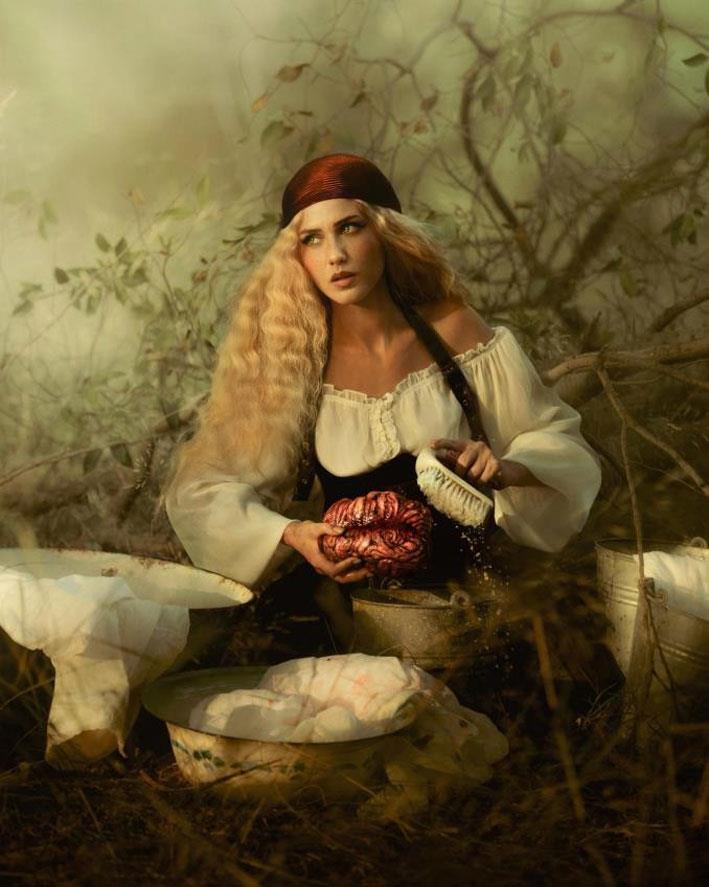
Moments of frustration create a dichotomy with her humour, a tension that shapes her artistic process. Even Castillo does not always fully understand what develops, yet this struggle is inseparable from the art itself. It is through this process that her visual language takes shape and embraces surrealism not as a gimmick but as an essential part of her expression. She insists that her surreal elements are not added afterwards or generated artificially, reflecting her commitment to the authenticity of the photographic medium, as she expresses: "Qatt ma spjegajt lili nnifsi daqs kemm spjegajt lili nnifsi bil-fotografija" (I have never explained myself as much as I have expressed myself with photography).
This concern with authenticity extends to the material conditions through which her images are encountered. Castillo is attentive to what her photographs are printed on, ranging from high-quality canvas, which situates the works within the language of fine art, and ChromaLuxe, which produces a heightened, almost suspended visual presence. In this way, materiality becomes part of the work's meaning, shaping not only how the images are seen, but how they are felt.
The works give form to Castillo's emotional states, with multiple points of departure stemming from the visuals or the expression she wants to convey. For Ħuta barra mill-ilma (Fish out of water), a reflection of how she has always felt, the process was chaotic and visceral: six fish stank up her car in a summer heatwave, flies swarmed, and reviewing the footage left her so excited that she ended up in the hospital. The ordeal reflects the raw, immersive nature of her process. Baħbaħ moħħok/Twammar il-moħħ (Brainwashing) originated from the desire to visualise trauma itself.
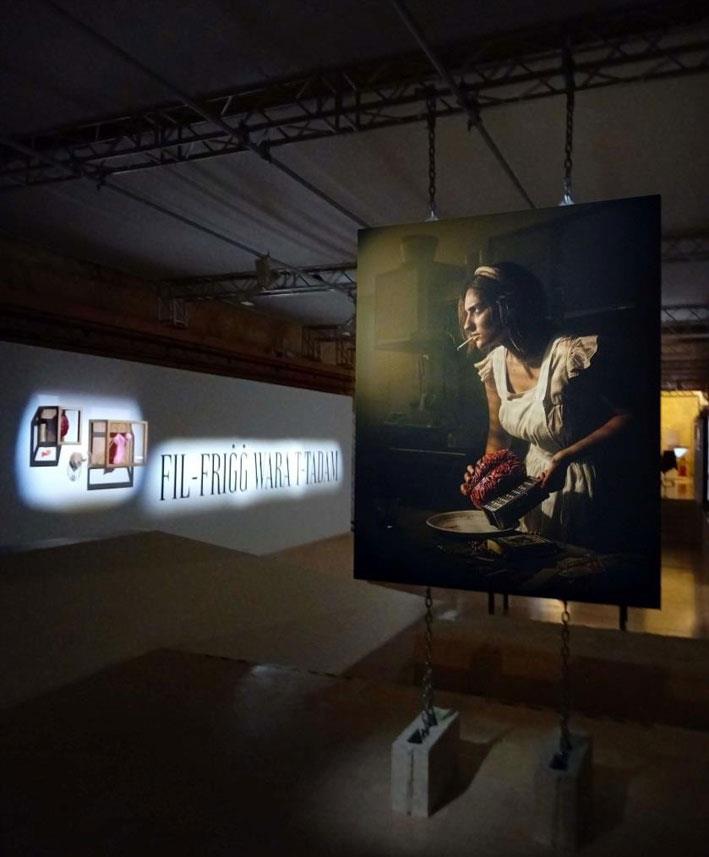
Paired with Meta l-moħħ jitqal (When the mind grows heavy), the works extend beyond the exhibition space, suspended by chains and weighed down with bricks, a physical enactment of emotional heaviness. Bezzina coined a new word specifically for the title, ironically inventing a new saying in the process, reflecting on Castillo's method of turning trauma into something transformative: "Qeda trawwam, tuża trawma biex tnawwar."
Given the nature of Castillo's works, Bezzina had to constantly negotiate between the artist's individual perspective and the collective subconscious, asking questions about the physical, social, psychological, and cultural relationships in play. She also needed to account for an international audience unfamiliar with Maltese ways of thinking, showing why Castillo, as a woman in this society, creates these works and what they reveal about broader social dynamics, helping to move beyond the nation's usual insularity. To achieve this, the exhibition foregrounds the written word within its dark, ambient space. Captions are illuminated and positioned slightly apart from the photographs, allowing viewers the space to sit and engage with the image. In this way, the captions guide understanding and prompt reflection on why we think and interpret as we do. Complementing this, sculptural elements extend the works from the two-dimensional surface and foreground the relationship between perception and presence.
Careful observation allows connections to emerge, forming narratives that reveal the experiences of the individual more so than society as a whole. Ultimately, each work becomes an interpretation of how life is affecting that person in that precise moment. As Bezzina reflects on the curation, "Tgħidlek dak li inti għandek bżonn tkun taf bħalissa f'ħajtek għax qed tgħidu lilek innifsek" (it tells you what you need to know right now in your life because you are telling yourself). Castillo echoes this sentiment: "Jekk bniedem ħass dak li kellu jħoss għaliex għaddej minn dak li għaddej, ix-xogħol xorta wasal għandlu...il-fatt li l-bniedem kellu ċans jaħseb fuqu u ħalla dik il-marka fuqu inħoss li hija ta' valur dik il-marka...hi x'inhi" (If a person felt what they had to feel because they are going through what they are going through, the work still came to them... the fact that the person had a chance to think about it and left that mark on them makes me feel that that is of value... whatever it is).
'Fil-friġġ wara t-tadam' is open to the public until 8 March at Spazju Kreattiv, Space A.