Paul Vella Critien (b.1960) has long occupied a singular position within the trajectory of Maltese contemporary art. Working primarily in ceramics, yet constantly pushing the medium beyond its traditional associations with craft - he has developed a sculptural language that is at once intimate and monumental, tactile, and symbolic. Essence of Dreams, the forthcoming exhibition of ceramic sculpture at BNF Bank, Pjazza San Nikola, Siġġiewi, opening on Friday, 27 February at 7pm, presents a rare opportunity to engage closely with this visual language. The selected ceramic plaques and sculptural forms distil decades of sustained experimentation into a compelling and intimate display. At a time when ceramics in Malta were largely confined to functional ware or decorative studio production, Vella Critien insisted on its legitimacy as a vehicle for contemporary sculptural thought. His practice engages clay not as a passive material but as a responsive, almost corporeal substance, capable of registering gesture, pressure, incision, fracture, and glaze as expressive events. In this sense, his work participates in an international post-war revaluation of ceramics as sculpture, yet remains deeply rooted in Mediterranean sensibility: earth, heat, salt, and light are not merely environmental conditions but conceptual agents.
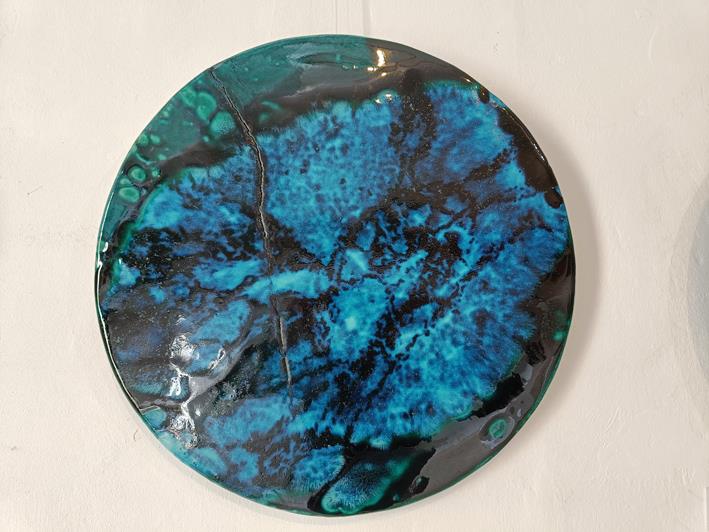
The ceramic plaques included in this exhibition exemplify his painterly approach to glaze. Rather than functioning as surface ornament, glaze becomes a field of transformation, pooling, erupting, crystallising, and bleeding across the clay body. The chromatic tensions between deep cobalt, turquoise, and volcanic black evoke submarine landscapes or aerial views of geological formations. One is reminded that clay, once fired, retains the memory of heat: the plaques appear almost tectonic, as though shaped by internal pressures rather than by the hand alone. Their circular format reinforces this reading, suggesting planetary discs, cells under magnification, or ritual shields. The viewer oscillates between microcosm and macrocosm, between the intimate scale of touch and the vast temporality of natural processes.
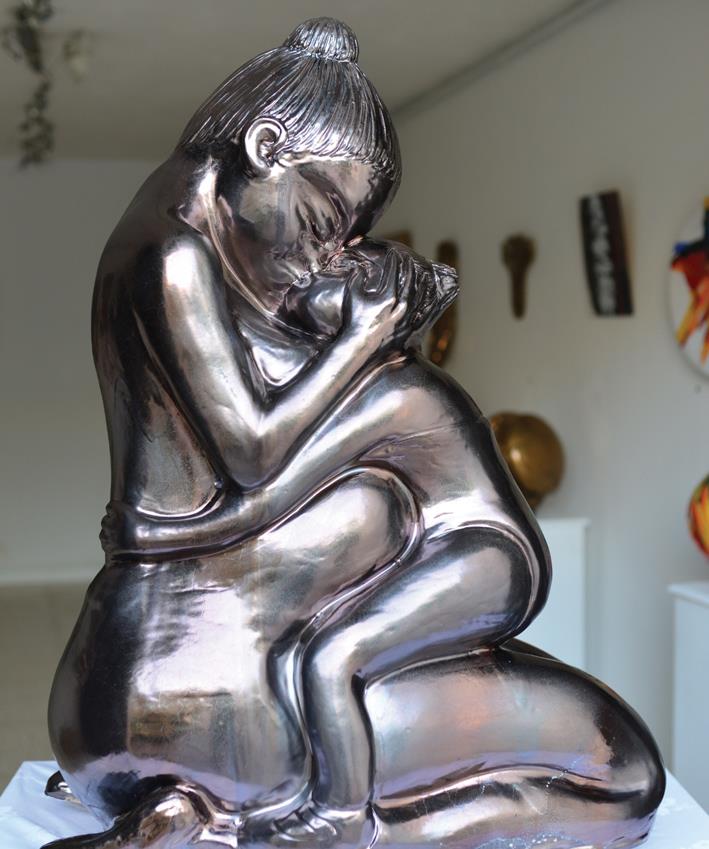
Yet Vella Critien's oeuvre is not limited to abstraction. His figurative ceramic sculpture reveals a profound sensitivity to the human condition, often articulated through simplified, rounded volumes that recall both prehistoric fertility forms and modernist reduction. The polished, darkened surfaces of certain pieces confer a bronze-like gravitas while preserving the essential softness of clay. The maternal groupings, for instance, convey tenderness without sentimentality: the figures merge into each other, their contours flowing as if shaped by an internal rhythm rather than anatomical description. This fusion of bodies may be read symbolically as continuity, protection, and the primordial bond.
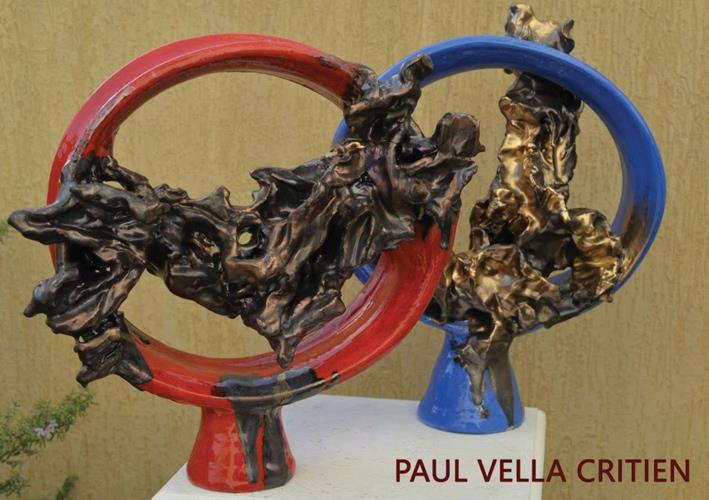
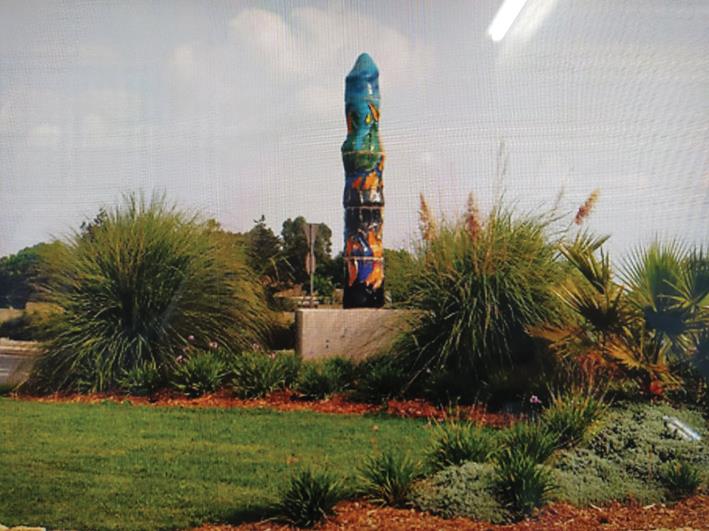
Such concerns resonate with the artist's monumental public works. The Colonna Mediterranea at the Luqa roundabout, though controversial in its reception, exemplifies his ambition to position ceramics within the civic landscape. Public resistance to this work revealed less about the sculpture itself than about the challenges faced by contemporary art in shared space. Monumentality in ceramics is still an unfamiliar proposition for many viewers, conditioned to associate durability and public commemoration with stone or metal. Vella Critien's intervention therefore operates not only formally but culturally: it expands the very definition of what a monument can be, proposing clay, earth transformed by fire, as a material of collective memory.
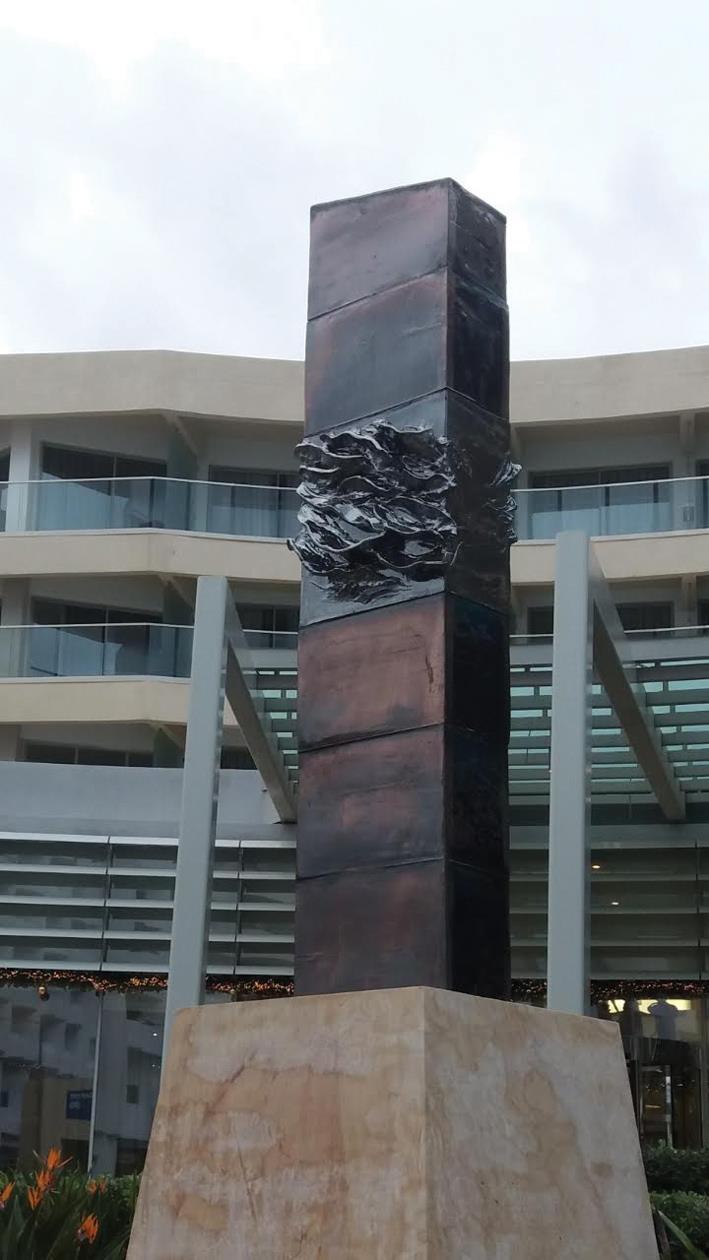
Similarly, his contributions to architectural settings, including works installed at the Hilton, demonstrate an understanding of ceramics as spatial practice. These are not autonomous objects placed within a space but surfaces that activate walls, modulate light, and establish rhythmic relationships with their surroundings. The present exhibition, though more modest in scale, retains this spatial awareness. The plaques function almost as portals: their luminous interiors draw the gaze inward, while their material density anchors them firmly to the wall.
The uniqueness of Vella Critien's position in Malta lies precisely in this dual commitment to material research and symbolic form. He bridges the archaic and the contemporary, recalling the island's prehistoric ceramic heritage while engaging in a modern sculptural discourse. In doing so, he challenges the persistent hierarchy that privileges painting and stone sculpture over clay. His work reminds us that ceramics, historically associated with domesticity and utility, can articulate complex metaphysical and social narratives.
This exhibition at BNF Bank is therefore more than a display of objects; it is an invitation to reconsider the expressive potential of a medium that is literally grounded in the Maltese soil. The bank's space in Siġġiewi, itself embedded within a locality marked by layers of history and craft traditions, provides an appropriate context for this encounter. The viewer is encouraged to approach the works slowly, to register their surfaces as records of transformation, and to reflect on the dialogue they establish between body, earth, and fire.
In an artistic landscape that often gravitates toward the ephemeral, Vella Critien's ceramics affirm the value of permanence, not as static immobility but as the enduring trace of process. They are objects that have passed through heat and time, bearing witness to both. The forthcoming exhibition offers a concentrated vision of this journey and confirms Paul Vella Critien as one of the most significant exponents of ceramic sculpture in Malta today.
Professor Louis Laganà PhD (Lough) is an academic, curator and practising artist