Next up, and one I am genuinely so excited about, is an exhibition by Luca Indraccolo. It is experimental, and we're fairly certain it will spark some interesting conversations. States of Matter will be held at il-Kamra ta' Fuq till the 15th of March.
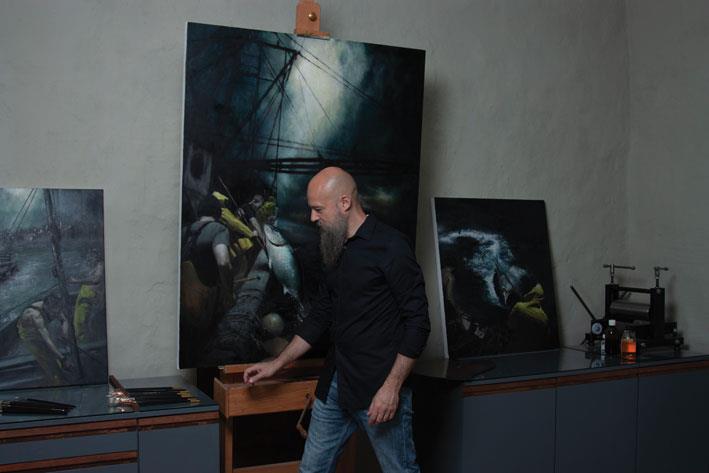
First things first: let's begin with the mandatory background check. For the five people who faithfully read my articles, the name will surely ring a bell. Luca has already been part of a collective exhibition I curated at il-Kamra ta' Fuq, The Rabbit Hole Collective. But of course, there is so much more to Luca's artistic journey.
Hailing from Naples and now based in Gozo, Indraccolo is known for his skilful and highly realistic oil paintings, specialising in figurative and narrative art. After working for fifteen years as an Art Director for major advertising agencies across different countries, Luca made the decisive move to pursue a fine art career as a painter. He first moved to New York to study artistic anatomy for a year, then to Florence to study drawing and painting at the Florence Academy of Art, and finally to London, where he completed his training at the London Atelier of Representational Art.
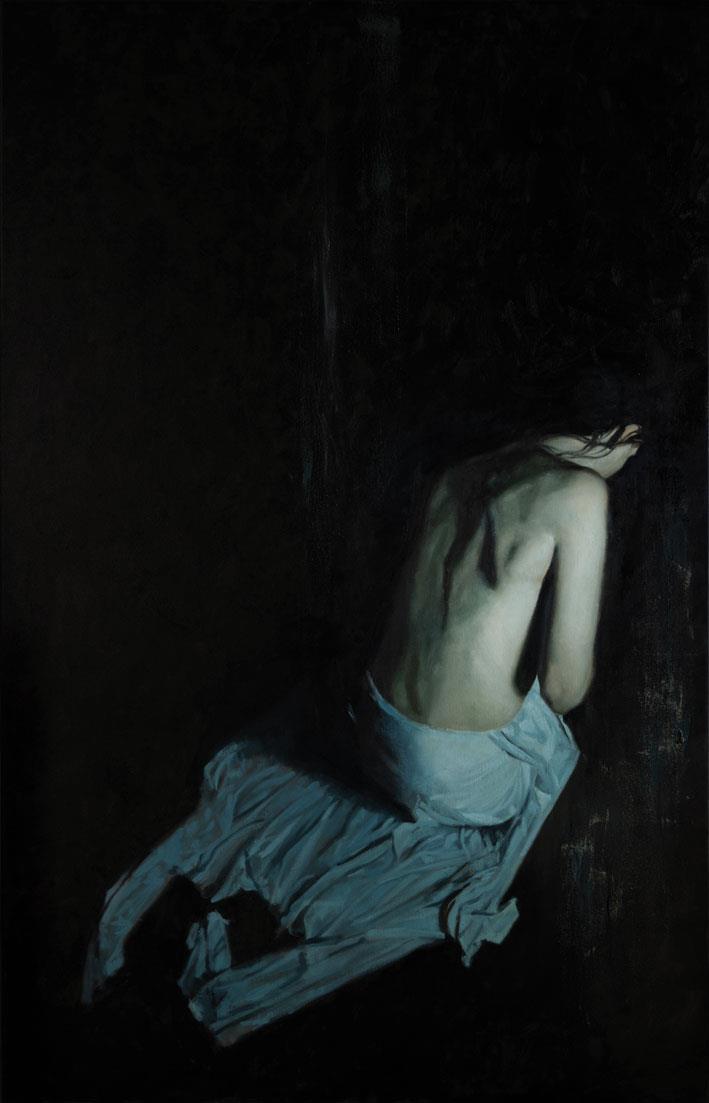
I had the opportunity to visit Luca's studio last year and I might say that the immaculate space, (not even one pencil out of place), very much reflects his technique and bravura in striving for (and often achieving) perfection.
So, what are we to expect in this exhibition? I would say: a series of experiments (all successful).
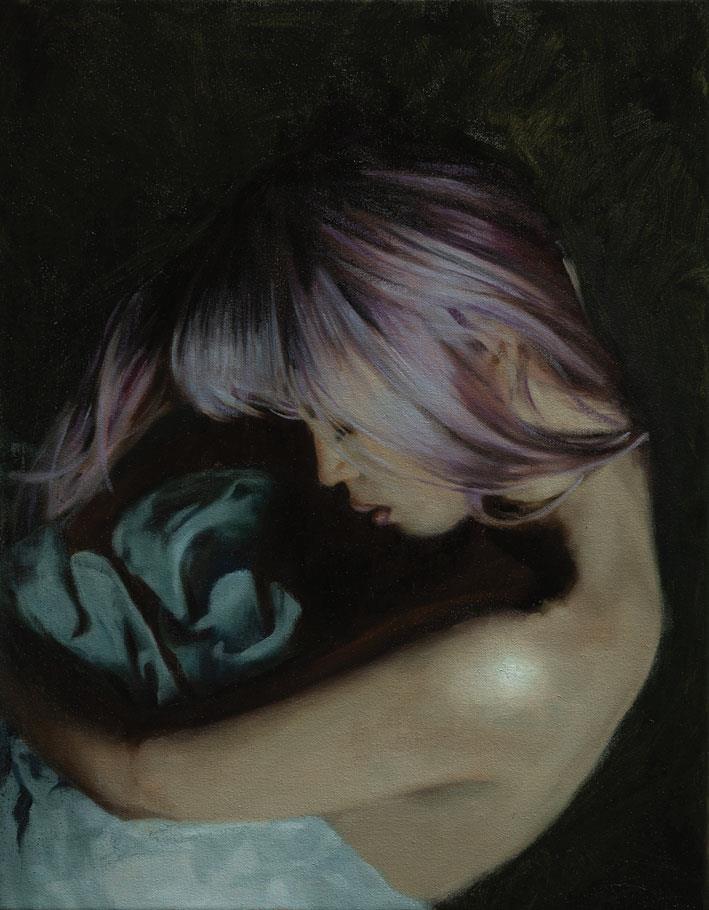
States of Matter brings together a selection of recent figurative works by Indraccolo that explore how an image evolves through repeated interpretation. The title reflects his interest in transformation and how an image can move through different forms, materials, and moods while remaining anchored to a single underlying subject.
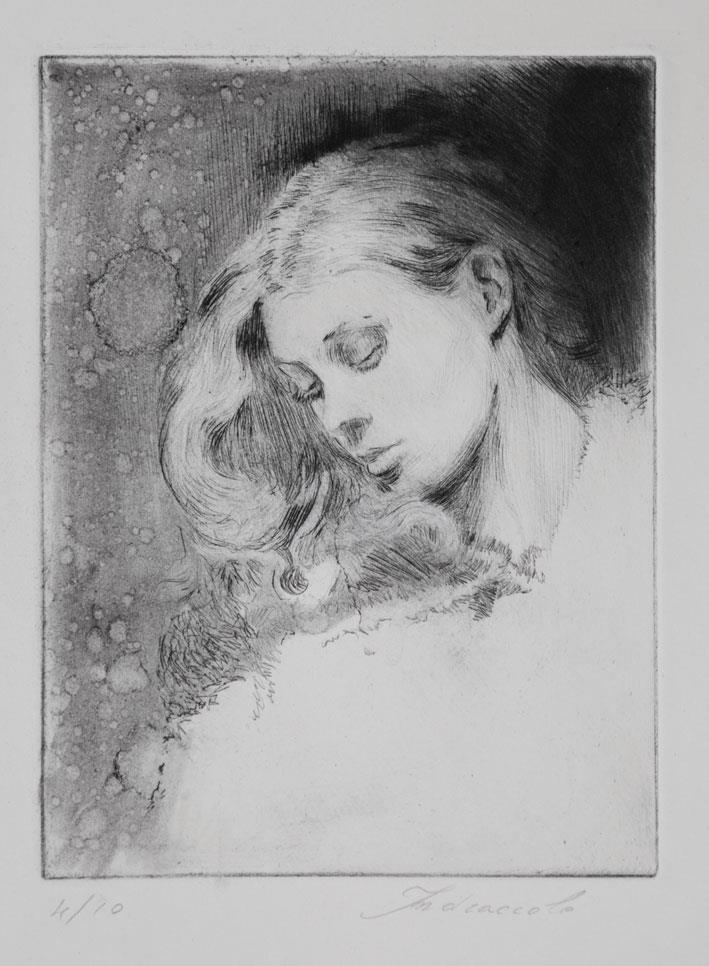
Featured are oil paintings, drawings, and drypoint intaglios that return to the same motifs while shifting medium, scale, format, and use of colour. Rather than depicting literal physical transformation, these variations suggest changing emotional and psychological states, revealing how subtle formal decisions can alter the tone, structure, and meaning of a figure.
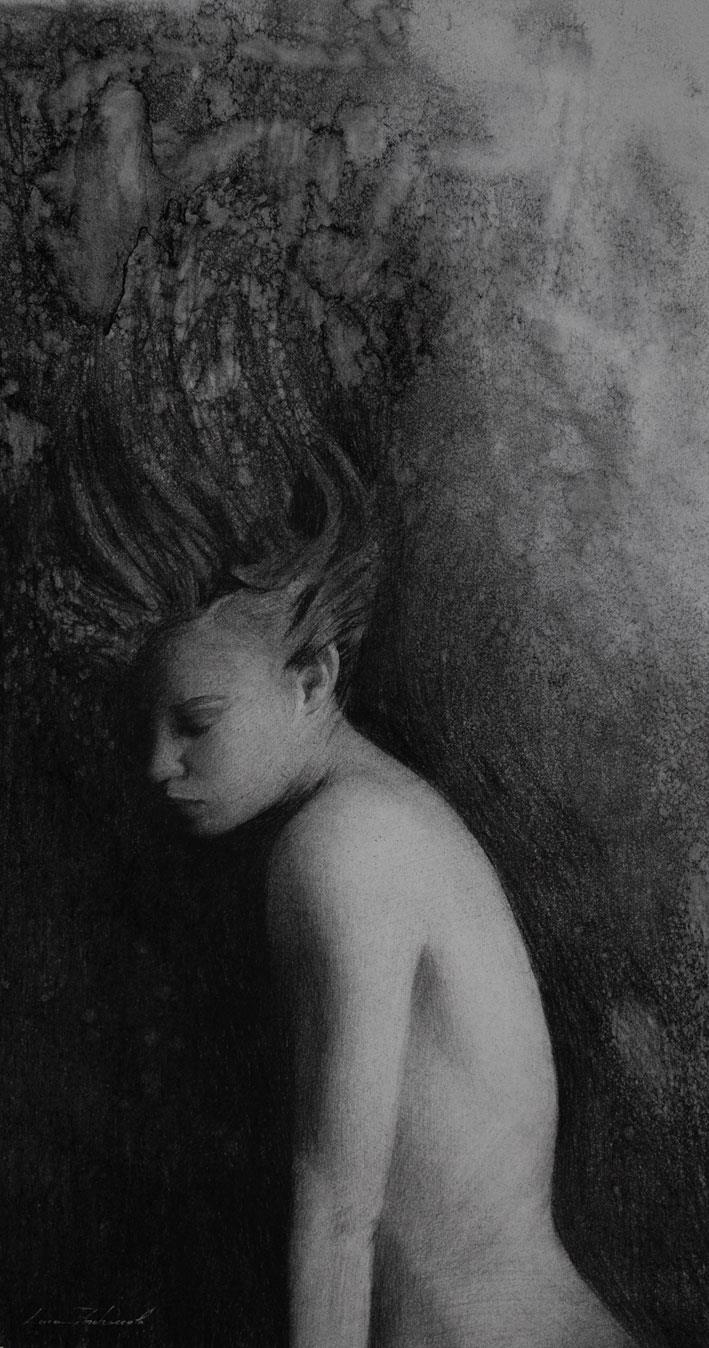
The exhibition grows directly out of Luca's working process, which often begins with a small thumbnail sketch and unfolds through multiple stages before arriving at what might traditionally be called a "final" painting. Yet nothing here feels strictly linear. Many of the preparatory studies possess a clarity and presence entirely their own.
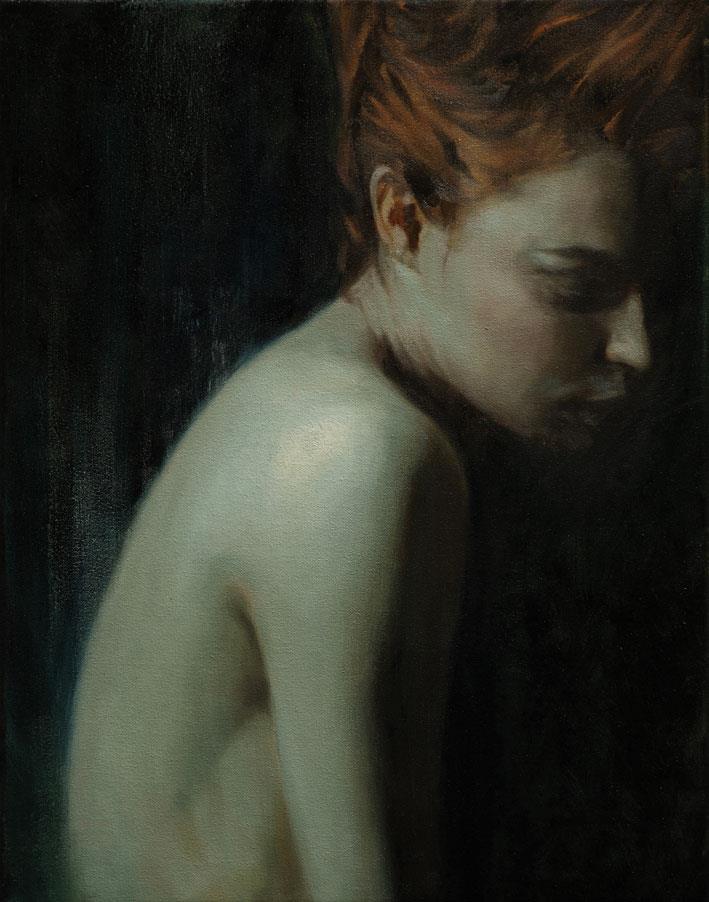
These works are not presented as transitional steps but as autonomous images, each carrying its own visual and emotional weight. In fact, it becomes almost impossible to determine which artwork came first: the drawing, the charcoal study, or the oil painting. Each is resolved, each is mastered, and each composition seems to exist across multiple states simultaneously.
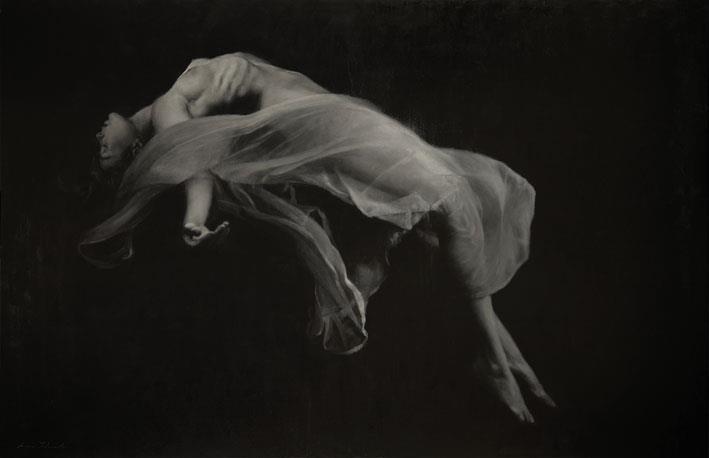
Rather than placing identical compositions side by side in different media, we opted for a more playful exhibition narrative. Works are loosely grouped by medium, inviting visitors to spot connections themselves, to match the model, the pose, the gesture. It becomes a quiet game of observation, a subtle "match-the-artwork" experience that encourages viewers to look more closely and consider how material shifts recalibrate meaning.
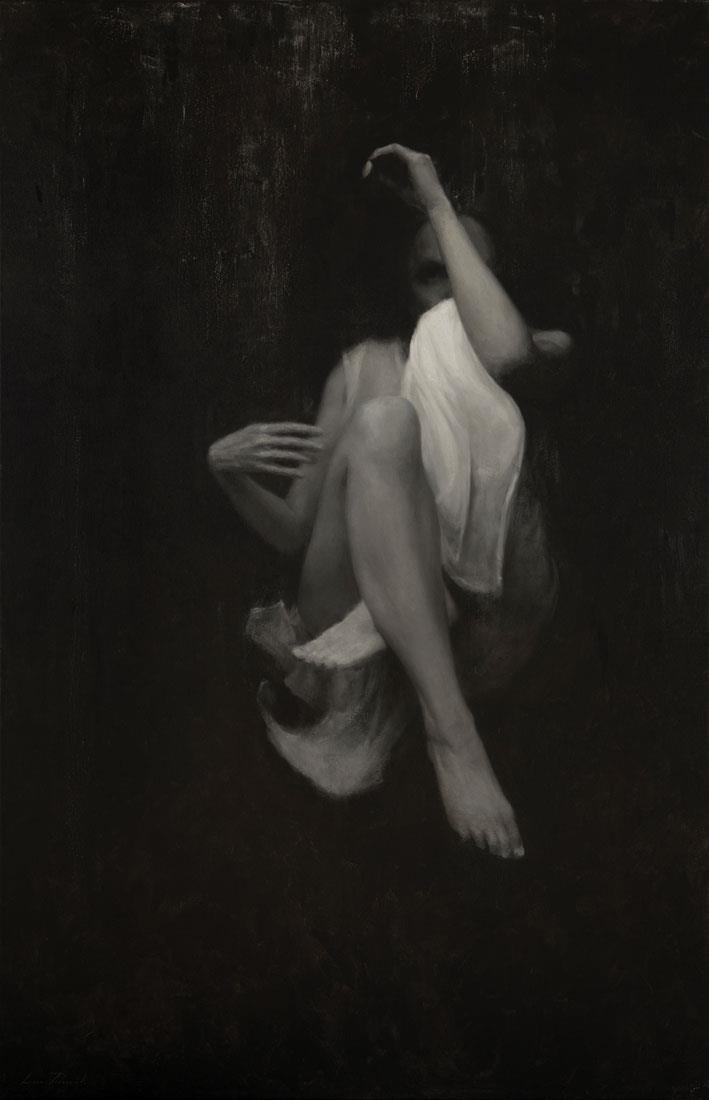
It is fascinating how a simple change of medium can completely alter the emotional temperature of an image. There is, of course, a long tradition of artists, like James McNeill Whistler and Gustav Klimt who revisited the same subject across different media, not as repetition, but as reinterpretation.
The exhibition ultimately examines how a medium can act as a filter, altering the emotional temperature of an image. A figure rendered in oil may feel suspended and immersive, while the same subject in drypoint becomes more intimate and immediate, the marks fresher, almost alla prima in their urgency.
This is particularly evident in the three drypoint etchings presented in the exhibition. SMF•6•88 depicts a male torso with raised arms, the face submerged in dark ink, creating a powerful sense of anonymity and tension. In contrast, SMF•4•22 and SMF•11•26 present two shy female faces, their eyes cast downward, executed in light, delicate strokes that feel almost fleeting.
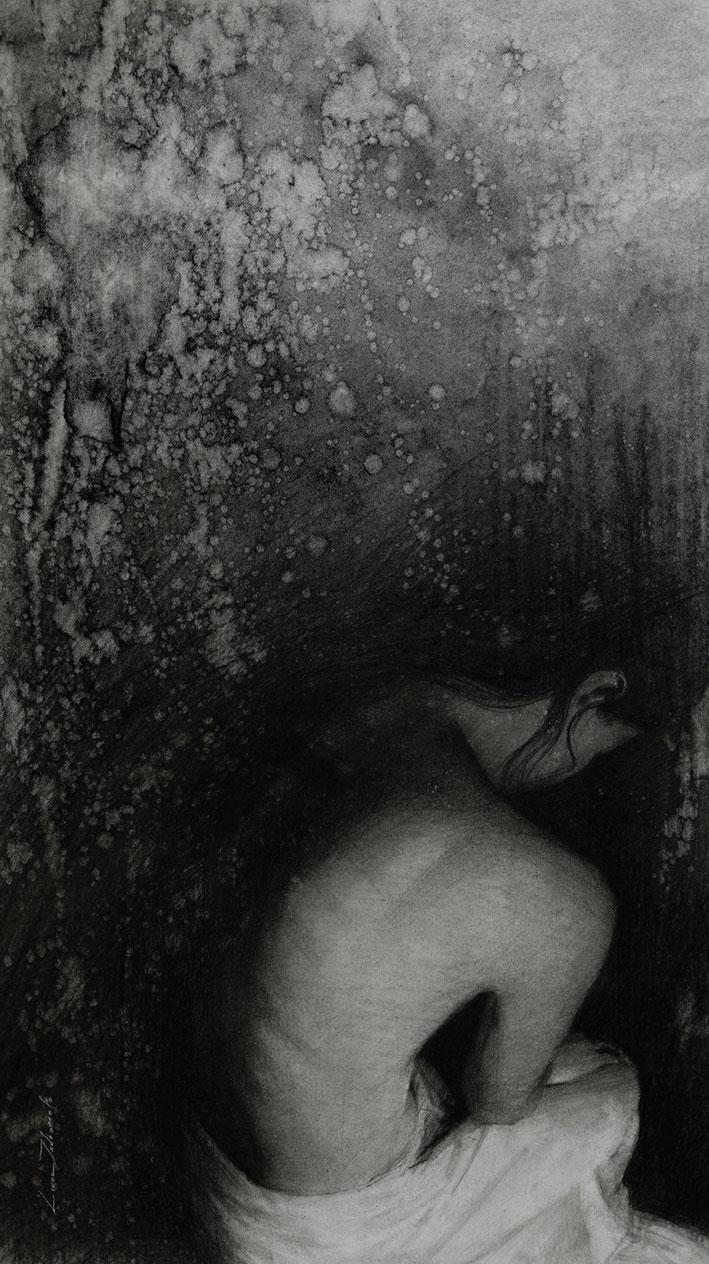
The charcoal work SMF•6•21•46•49 shows a crouching figure enveloped in a dark, almost 'bubble-patterned' background, evoking a sense of inner turmoil or damnation. Its majestic counterpart, the large-scale SMF•6•21•46•49•63, introduces colour and a luminous skin tone bathed in light from an unknown source. Hung just next to the small window at il-Kamra ta' Fuq, the effect is almost spiritual, a contemplative figure touched by what feels like a divine ray.
Further experimentation involves mirror imaging, as seen in the oil-on-canvas SMF•11•26•44•69. Here, a red-headed female with eyes closed faces to the right. In the charcoal-on-paper version, SMF•11•26•44, the figure is reimagined in black and white, elongated, with her hair fanning upward to form a patterned background. The same subject, yet the mood shifts entirely through orientation, scale, and line.
Indraccolo also experiments with cropping, removing parts of the figure to create new sensations of space and focus. This is particularly evident in SMF•52•1•16•67•69 and SMF•52•1•16. In the first, a majestic female floats draped in billowing white sheer, like a nymph suspended in time and space. In the smaller mixed-media work, attention shifts to her extended right arm, as if she is inviting the viewer to step into her otherworldly realm. The compositions show how subtle adjustments, such as inversion, elongation, or cropping, can completely alter the emotional and spatial experience of a figure.
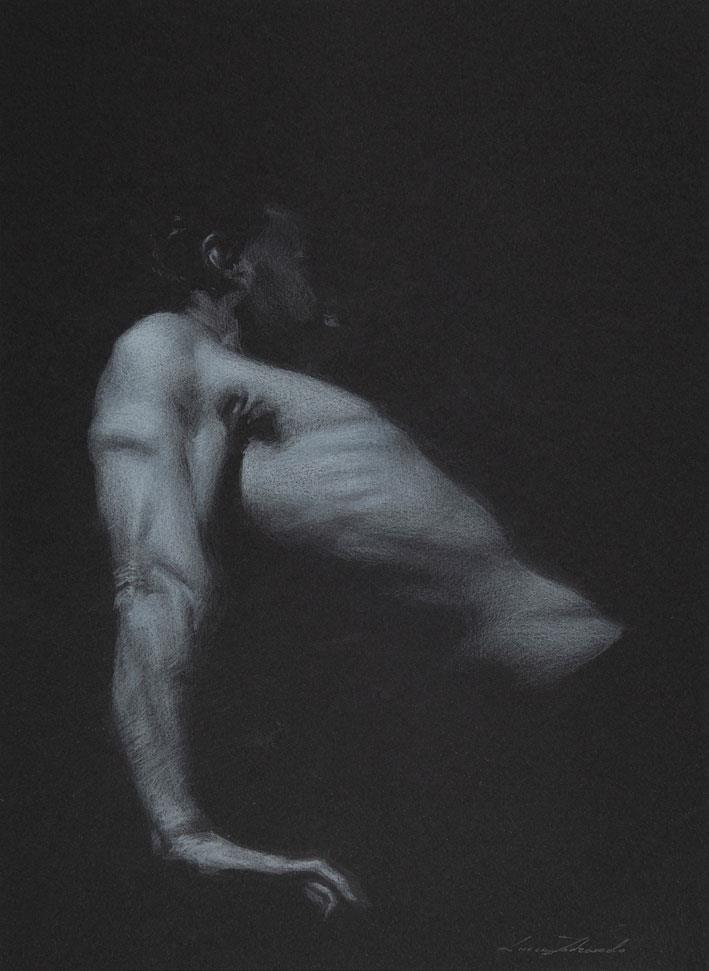
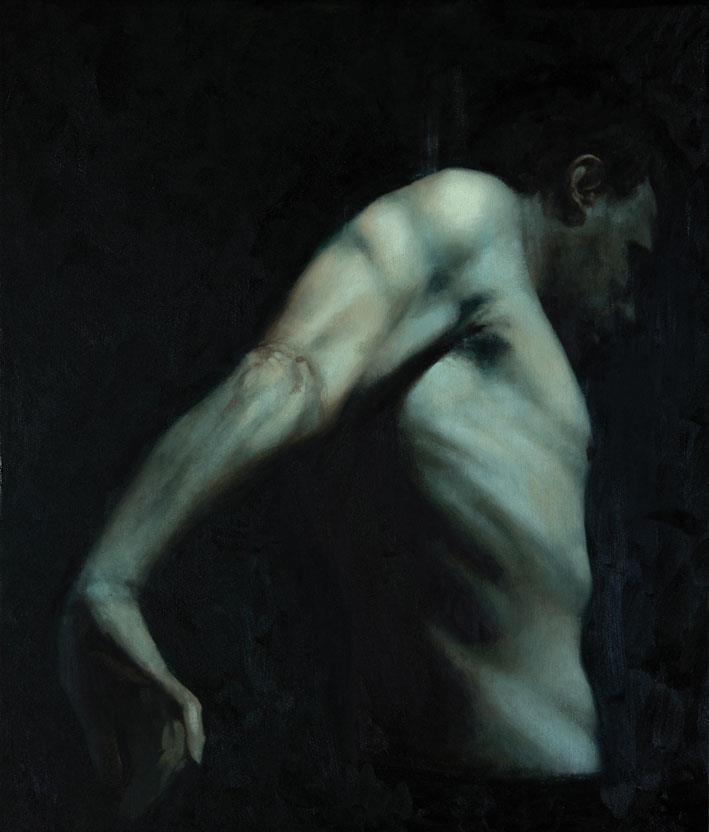
In SMF•83•50•32, rendered in white and grey pencils on black paper, and its counterpart SMF•5•14•68•79, executed in oil, both depict a male figure with his arm extended behind him. Between the two works, Indraccolo rotates the figure by 90 degrees, creating a peculiar sense of déjà vu. You catch yourself looking again and again, trying to grasp the difference (at least, that was certainly my experience).
Of course, you may have noticed the intriguingly ambiguous titles of the works. Each piece is compelling on its own, but Indraccolo adds another layer of intrigue through his titles, which draw directly from his Neapolitan roots.
The numbers in Luca's titles come from La Smorfia Napoletana, a traditional Neapolitan system that assigns numbers, from 1 to 90, to images, symbols, situations, and even dreams. Historically, it's tied to providing numbers to play for the lottery. The term "Smorfia" nods to Morpheus, the Greek god of dreams, highlighting its role in translating the symbolic world. But beyond luck or gambling, it's really about turning lived or imagined experience into coded imagery where everyday moments become symbols, private dreams become a shared, almost secret language.
In the context of Indraccolo's works, all this becomes another playful layer, inviting viewers to decode meaning while remaining immersed in the emotional and visual language of the exhibition.
Of course, I couldn't resist trying to decipher one of the titles! Let's take SMF•83•50•32•90•28:
● 83 - Il maltempo → Bad weather
● 50 - 'O pane → Bread
● 32 - 'O capitone → The eel (also linked to transformation and sinuous movement)
● 90 - 'A paura → Fear
● 28 - 'E zizze → Breasts
Read symbolically, the sequence is surprisingly evocative: storm / sustenance / eel (transformation) / fear / femininity. It's like a tiny narrative, a coded emotional arc that mirrors the shifting moods and material states of the works themselves. And, not going to lie, trying to unpack it made me look at the paintings in a whole new way.
Indraccolo's paintings have been exhibited internationally, including in the United Kingdom, the United States, and Malta. Indraccolo's work has also been featured in publications such as 40 Portrait Masters and Artists & Illustrators magazine, among others. In addition to his practice, he teaches masterclasses in painting across different countries.
For more information about the exhibition, follow il‑Kamra ta' Fuq on social media.