I arrived at the Malta Society of Arts on a cold, windy March evening. I am no friend of heat but I cannot wait to have back a good stretch of sunshine. The hall was already almost full up, a gentle hum of conversation rising from clusters of familiar faces and new ones. There was a sense of occasion in the air, not grand or formal, but warm - the kind of warmth that comes when a small community gathers to celebrate something meaningful. The Maltese-Bulgarian Circle had organised the concert to mark Bulgaria's National Day on 3 March and they had organised it almost perfectly.
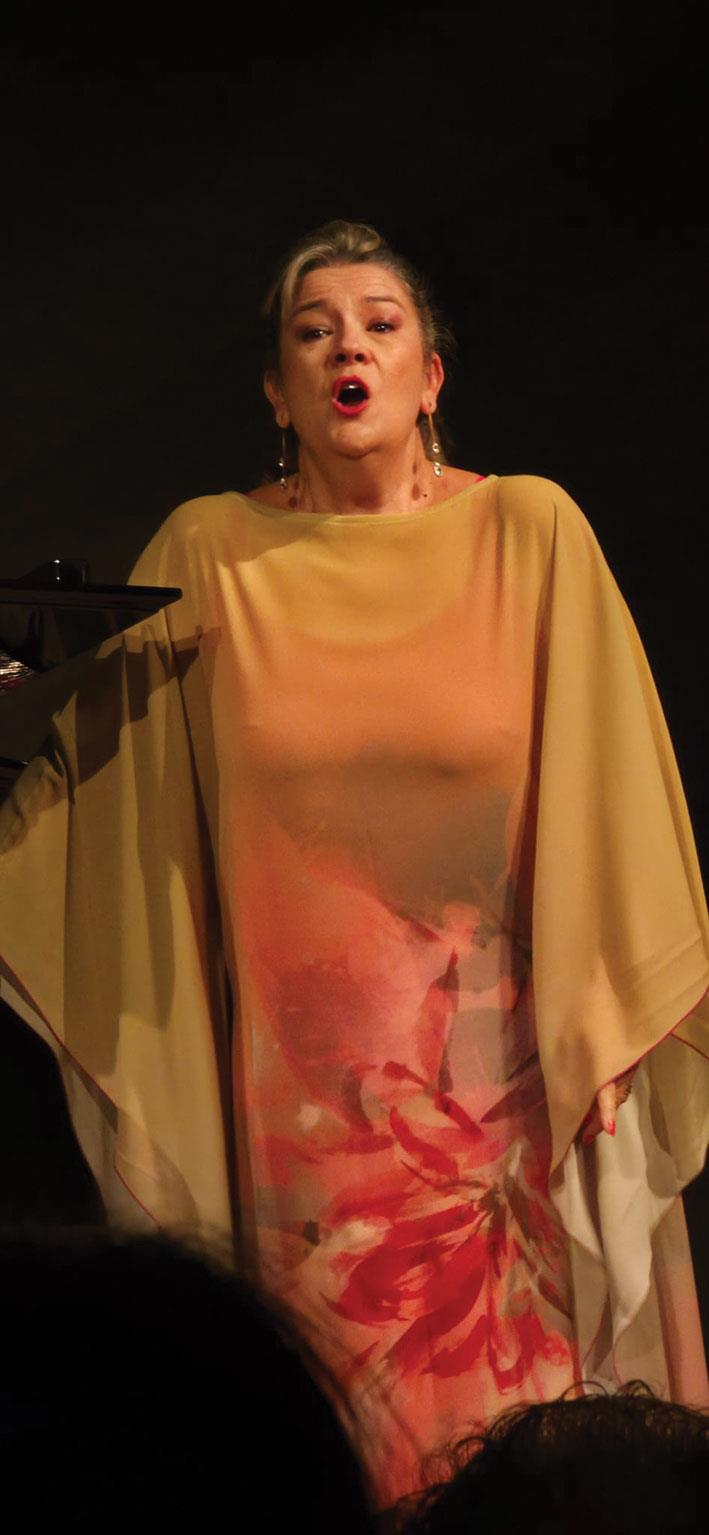
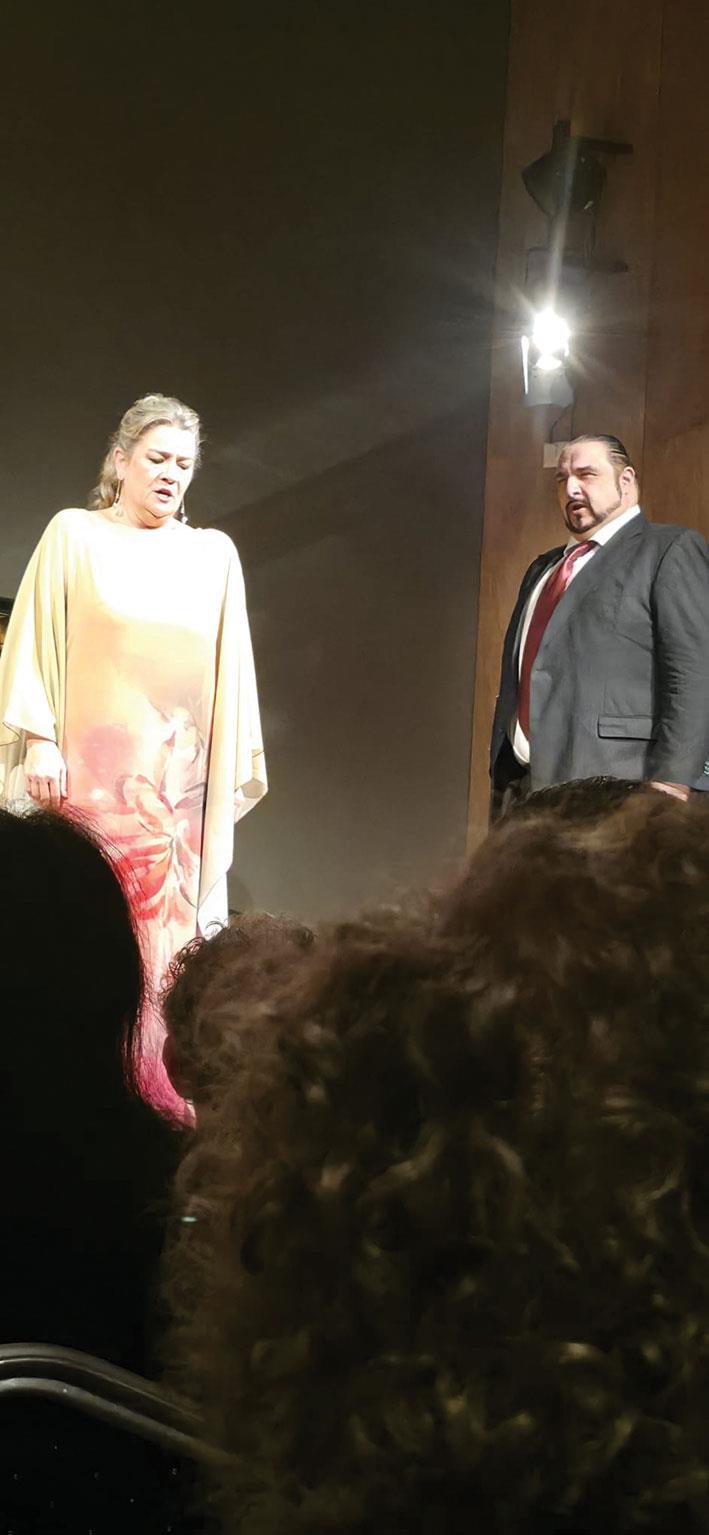
The programme promised an operatic feast, and it delivered. Three singers - soprano Andriana Yordanova, tenor Alan Sciberras, and baritone Kiril Manolov - took the stage sometimes alone, in twos or all three with an ease that immediately reassured the audience that we were in good hands. Their rapport was evident from the start, each one stepping forward with confidence and stepping back with generosity, allowing the others their moment in the light.
The evening opened with the soaring lines of Ponchielli, the aria of Enzo from La Gioconda, sung by Andriana at her very best, with a clarity that filled the hall. It set the tone: passionate, lyrical, and unapologetically operatic. From there we moved to Joseph Vella, whose aria of Theresa from Valeriana brought a Maltese voice into the programme - a reminder of how some of our own composers have shaped the operatic landscape even if only in small ways.
Verdi followed, as he so often does in evenings like this, with the duet of Amelia and Riccardo from Un Ballo in Maschera. The blend of voices, Adriana in an elegant, colourful caftan and the lovely Alan today in a blue velvet jacket and cummerband, was beautiful, the kind of duet where you feel the tension and tenderness intertwine. Then came a shift in colour: Angelina Zhekova's March 3rd, a piece rooted in Bulgarian sentiment, offered with sincerity and a touch of national pride. All the Bulgarian songs were new to me.
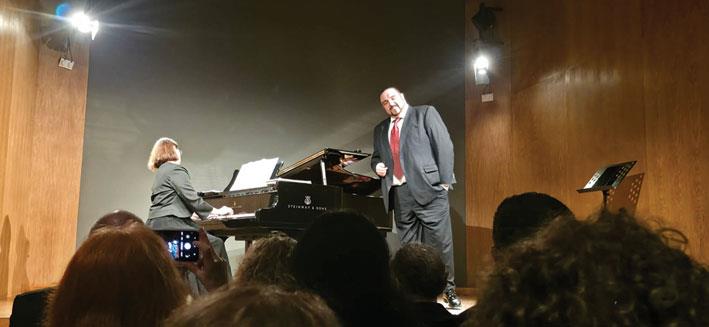
The Bulgarian repertoire continued with Veselin Stoyanov's aria of Crafty Peter from the opera of the same name - playful, characterful, and delivered with a twinkle. Parashkev Hadzhiev's aria from Zornitsa from The Mad Chap brought a different mood, more lyrical, more introspective. Pancho Vladigerov's Song of the Fool and Dafino vino added yet another layer, rich with folk inflections and emotional depth. Ivan Vazov's A Little Bulgarian I Am was offered with affection, a small musical nod to identity and heritage. Most of these were sung by the formidable baritone Kiril Manolov. A big man, with a big enchanting voice and huge presence. I had never heard him sing before as I missed Falstaff at the Manoel. I know one thing: I would like to hear him sing again and again. If I am ever caught in a trench war, highly unlikely in a world of drones and missiles, I would want him to be fighting beside me. He would lift me up effortlessly and take me to safety.
There was also a small detail that stayed with me, one that has nothing to do with vocal technique yet says so much about stage presence. Kiril Manolov, with his magnificent voice and commanding stature, was impeccably turned out - in particular, a gleaming pair of patent leather shoes. It may seem trivial, but it isn't. Shoes are always on show, especially for male singers, and too often they betray neglect. Old shoes should be kept for gardening. The theatre is a place of illusion and beauty; what we see should be as pleasing as what we hear. Manolov understood this, and the effect was quietly elegant. I suspect half the men in the audience, musicians or not, went home that night and eyed their footwear with suspicion. I hope some finished up at one of the charity shops and new ones bought.
Throughout the evening, the singers were supported by the sensitive and assured playing of pianist Boryana Lambreva, whose musicianship shaped the entire programme. She was the steady current throughout the concert - attentive, unshowy, and deeply musical. It is easy to overlook the pianist in evenings like this, but without her, the concert would not have had the same coherence or emotional depth.
Then we returned to familiar territory with Puccini - first the duet of Tosca and Cavaradossi from Act I of Tosca, sung with warmth and dramatic instinct, and then the great aria of Calaf from Turandot, which Alan Sciberras delivered with admirable control and power. Verdi returned once more with the duet of Leonora and Conte di Luna from Il Trovatore, a piece that always carries a certain emotional weight, and it did so again here.
Then, almost unexpectedly, the concert ended with Non ti scordar di me sung by all three singers. One of the best No ti scordar I have ever heard. The moment those familiar phrases began, the first notes, I was no longer only in that hall; I was also somewhere else entirely - in memory, in tenderness, in a kind of ache. I have heard that canzonetta before, a million times over, but I never really "hear" it in the ordinary way. It carries my husband with it and when this song is sung I always think of him, as if the melody remembers on my behalf, retrieving what time cannot. I was very moved, and I let myself be moved, because some feelings do not lessen with the years - they simply become part of the inner landscape.
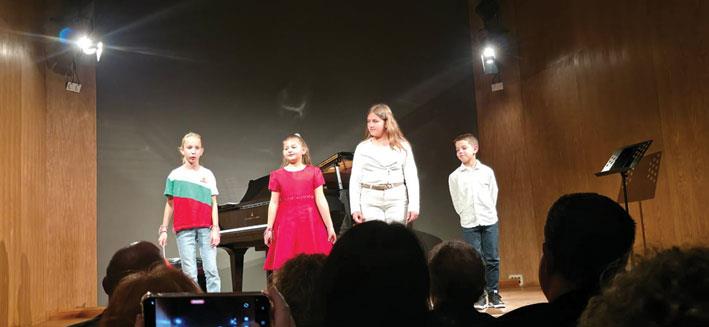
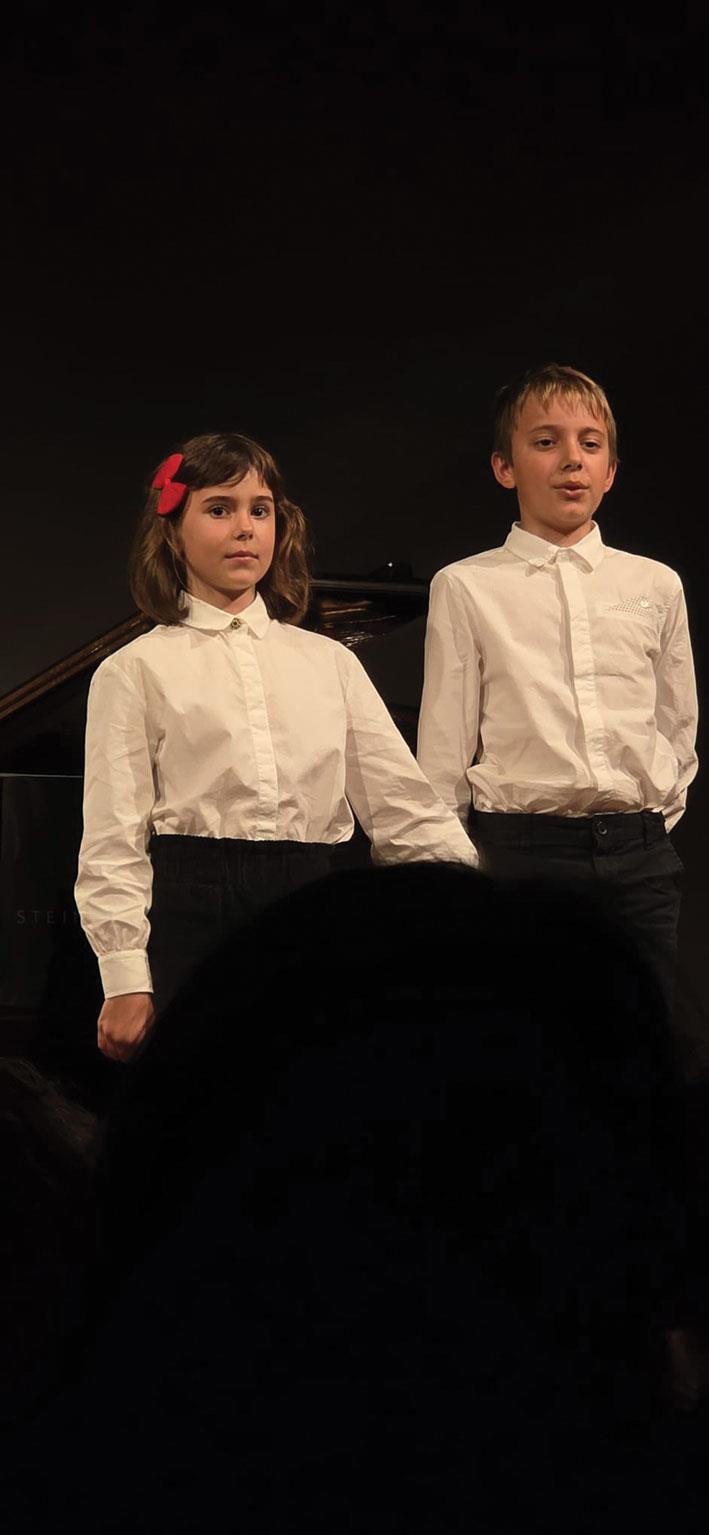
Four Bulgarian children too, played their part and at the end of the concert presented flowers to the three singers and the pianist.
Prof. Pirotta presented gifts to the singers and pianist.
When I walked out into the cold March night what stayed with me was not only the beauty of the singing, or the grace of the occasion, but the way the evening reminded me how closely art and love are tied: how a voice can carry a country's celebration, and at the same time carry one person's private grief. Only that which touches the heart really matters. I came home with gratitude - for the bridge between cultures that the concert offered, and for the bridge between past and present that one simple song reopened. I can hear several friends saying - Move on! Troppo tardi.