Last December, while visiting the Albertina Museum in Vienna, I was genuinely surprised to come face to face with The Reunion - Thomas and Christ (1926) by Ernst Barlach. I had gone to see the Gothic Modern temporary exhibition and had not anticipated encountering this particular work. It was a sculpture I had studied during my master's degree in history of art, one I had discussed in relation to the work of Maltese modern sculptor Joseph Mary Genuis (1934-1970). At the time, working only from printed reproductions, the comparison had seemed convincing. Standing before the sculpture itself, however, confirmed those earlier reflections.
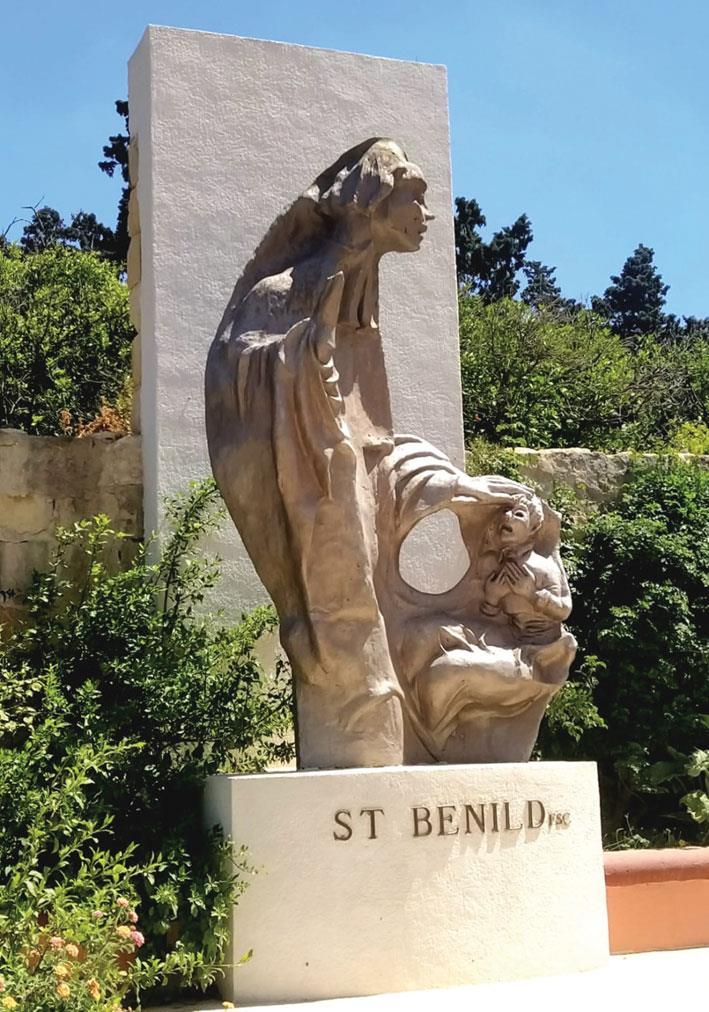
Barlach's sculpture is built on an economy of means. Detail is stripped away until only what is structurally and emotionally essential remains. Meaning is carried through gesture rather than narrative elaboration. The encounter between the disbelieving Thomas and the resurrected Christ thus unfolds as an existential moment, suspended between doubt, knowledge and certainity. The archaic formal language is the very means through which inner experience is allowed to surface. Before the work, it becomes evident that form itself bears inner truth.
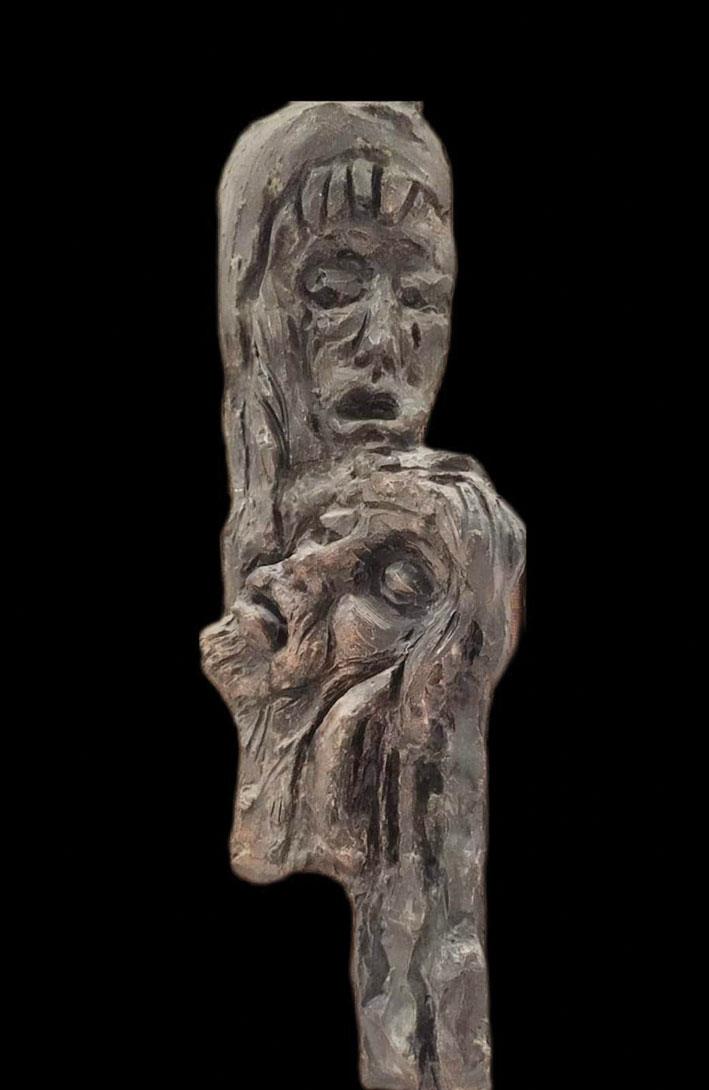
It is at this point, where form begins to function as a carrier of inner truth, that the broader logic of Expressionism comes into focus. Barlach's insistence on emotional truth over optical accuracy is not an isolated artistic position but part of a wider modernist impulse that resonated across artists and contexts. In mid-20th century Malta, a comparable sensibility can be traced in the work of Genuis. Trained within a system still deeply invested in anatomical correctness and mimetic fidelity, Genuis gradually allowed expressionist concerns to guide his practice, moving toward a sculptural language in which form could signify more than surface resemblance.
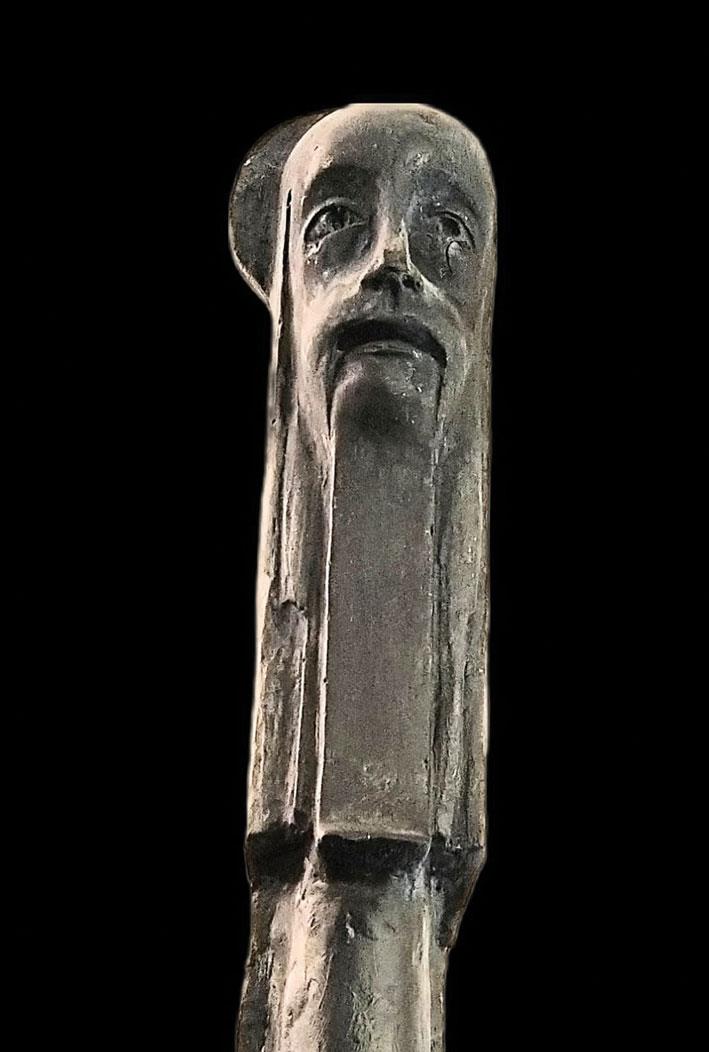
Like German Expressionist sculptors, Genuis treated the human body as an instrument of empathy. Figures elongate, proportions stretch, and hands assume emphatic scale. These distortions are deliberate, designed to render visible the psychological and emotional life of the figure rather than merely replicate exterior appearance. What some critics dismissed as awkwardness or technical inadequacy was, in fact, a conscious rejection of photographic accuracy in favour of expressive truth.
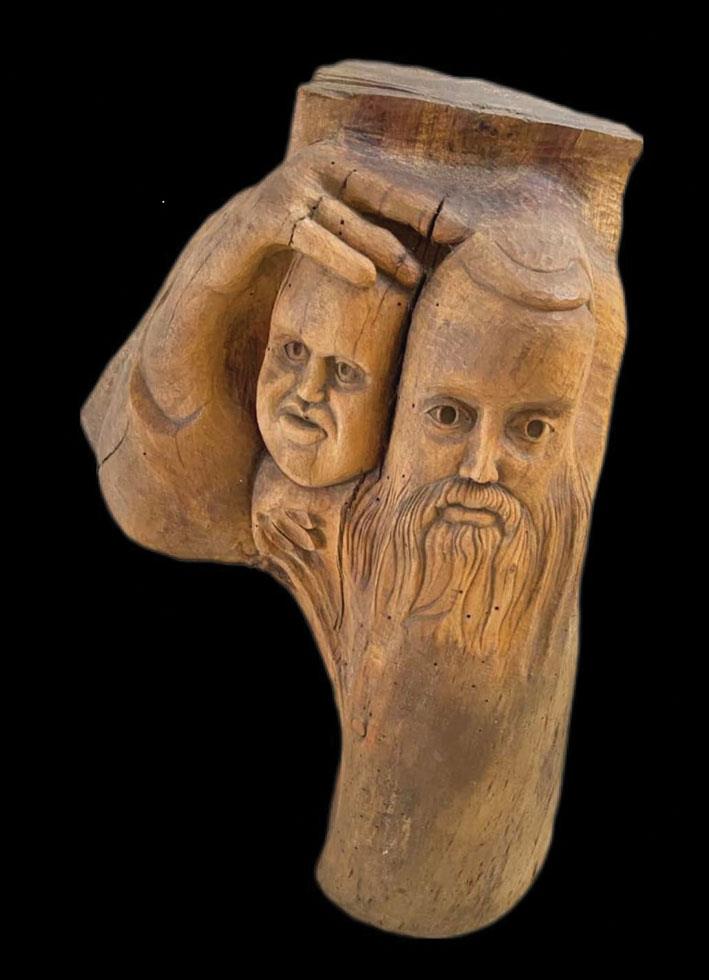
In this regard, Genuis' position aligns closely with the defence of exaggeration articulated by Vincent Van Gogh, who, responding to accusations of caricature directed at his use of colour, observed that "the public will see nothing but caricature in this exaggeration, but what does that matter to us?" Genuis similarly pursued emotional elongation and the abandonment of veristic proportion not as lapses in skill but as deliberate expressive choices. His exaggeration reflects an alternative path to classicism, privileging expressive truth over anatomical correctness and fulfilling Van Gogh's ambition to produce "lies" that are truer than the literal truth.
Genuis' contribution to Maltese sculpture is all the more striking given the context in which he worked. His career, tragically brief - he died at 36 - played a pioneering role in introducing a modern aesthetic into a sculptural culture still anchored in the comforts of Western naturalism. Alongside contemporaries such as Josef Kalleya and Toni Pace, he helped redefine what local sculpture could be at a moment when deviation from naturalism was still widely read as technical failure rather than artistic choice. His work was met with resistance and ridicule, not because it lacked discipline, but because it challenged a visual culture unprepared, both educationally and institutionally, for the demands of modern form.
To understand the significance of this shift, one must picture the Malta School of Art of the 1950s and 1960s: a studio environment steeped in classical proportion, anatomical correctness, and mimetic fidelity. Likeness mattered. Deviations were suspect. Genuis began within this academic framework - capturing appearances, balancing volumes, grounding his work in portraiture - and then pushed beyond it. Over time, necks lengthened, faces hollowed, and hands expanded into grotesque scale. These, however, were not accidents of craft, as some accused him of producing. They were anatomical lies designed to tell a deeper truth.
One of the most compelling aspects of Genuis' expressionistic impulse lies in its grounding in Maltese prehistory. While many European modernists looked outward for archaic models - African masks or Cycladic heads - Genuis turned inward, drawing on Malta's Neolithic heritage: the Sleeping Lady of Ħal Saflieni, fertility figures, and other prehistoric forms. Here he found the primordial essence to ground a new sculptural vocabulary. He did not copy these forms but appropriated them, translating their stylised power into a visual language naturally suited to expressionist aims.
All of this unfolded under difficult material conditions. As the primary breadwinner of a large family, Genuis worked within a precarious economy and with little institutional support. Yet he continued to experiment, exhibit, and engage critically with his peers. His premature death cut short a practice that was still evolving, but within that brief span he helped Maltese sculpture shed the dogma of photographic accuracy and embrace a language of form capable of holding the tensions of modern life.
Today, Genuis remains underrepresented in public collections and underexamined in scholarship. Muża and a handful of private collectors hold some of his works. Critical engagement remains limited to a small cluster of articles and one unpublished study. Yet his importance is undeniable for an understanding of Maltese modernism. Encountering Barlach in Vienna brought into sharp focus the shared expressionist logic that informed Genuis' practice, but it also underscored his originality: a sculptor who translated expressionist concerns into a distinctly local visual language, forged against resistance and sustained by conviction rather than approval.
Rowna Baldacchino is a Maltese art historian and cultural critic with postgraduate specialisation in art history, literature, and translation, focusing on modern and contemporary art in Malta