What inspired you to become an anthropologist. When you look back at your childhood or youth, were there moments or influences that nudged you toward anthropology without you realising it at the time?
I grew up in a linguistically and culturally diverse environment in south China, where dozens of dialects intersected in the rhythms of everyday life. Cultural difference was the fabric of social reality, manifesting the nuances of humour and social hierarchies to the subtle tensions that arise from misunderstanding. Cultural variation became a profound lived experience for me.
My academic trajectory was not linear. While majoring in Management in undergraduate school, I found myself increasingly questioning how universalist frameworks could account for the inherent complexity and variability of social life. I eventually encountered anthropology through my husband, Zhang Yuan. I was immediately struck by the discipline's orientation: it treats diversity not as deviation, but as constitutive of the human condition.
Entering graduate school began two parallel journeys: an intellectual immersion into anthropology and a personal path alongside my husband, also an anthropologist. To this day, these two journeys continue to evolve in dialogue with one another.
You have held visiting positions at Oxford, EHESS - École des Hautes Études en Sciences Sociales in Paris, and now the University of Malta. What have these experiences taught you about cross-cultural research?
Your CV shows a wide range of research interests - from ritual practices to identity politics after the Wenchuan earthquake. How do these threads connect to your current work? Tibetan Plateau. What first drew you to study pastoral lifeworlds in such a remote and challenging environment?
Anthropology rests on two methodological commitments: sustained ethnographic fieldwork and comparative perspective. My time at Oxford, EHESS, and now the University of Malta has reinforced the necessity of moving constantly between the intimate realities of lived experience and the broader theoretical reflections on humanity as a whole.
My early work on ritual practices was the genesis of this approach. In my fieldwork, I was struck by how rituals serve as a stage where the tension between social transformation and cultural continuity is played out; they are the mechanisms through which communities negotiate change.
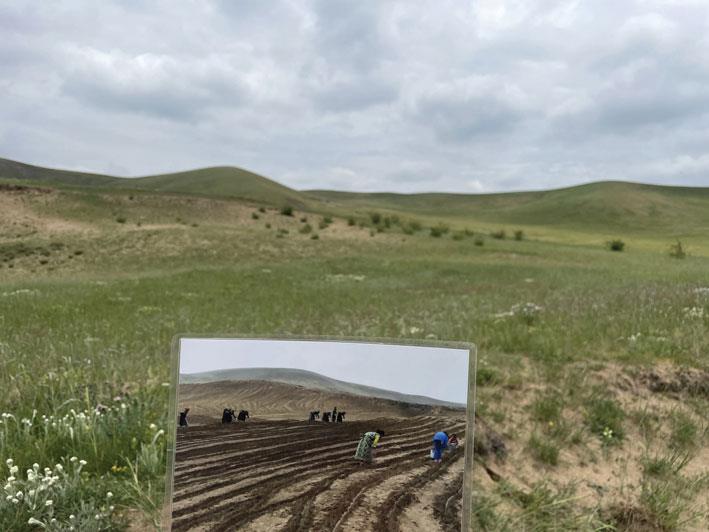
In 2008, the 5.12 Wenchuan earthquake devastated a vast region of Sichuan Province, claiming tens of thousands of lives. How could those communities, possessing long-standing knowledge of living in seismically active zones, become so vulnerable in a period of rapid technological development? This question led my husband and I into the anthropology of disaster. We came to understand that reducing vulnerability is not simply a technical fix; it requires nurturing resilience - a process guided by social-cultural compass, while supported by modern innovation. Years later, this concern drew us to a "slow-motion" disaster: the desertification in theTibetan Plateau.
Across these projects, the connecting thread has been an interest in how communities navigate structural change while sustaining forms of cultural continuity.
You are currently in Malta as an academic visitor and casual lecturer. Which programme brought you here, and what attracted you to the University of Malta?
My arrival in Malta is the result of a long-standing intellectual curiosity regarding the parallels between regions. In addition to holding visiting positions abroad, I have also secured funding in China to invite scholars from the UK, USA, France, Italy, Germany, and Japan who work on related themes but in different ethnographic contexts.
In 2023, I was trying to invite an anthropologist specialising in the Mediterranean. Through academic networks, I was introduced to Dr. Daniela DeBono. Unfortunately, the funding application was not successful that year.
After relocating to Malta in 2024, I was introduced to Dr. Dennis Mizzi in the Department of Middle Eastern and Asian Languages and Cultures, and later to Dr. Maurice Said in the Department of Anthropological Sciences. Eventually, I met Daniela in person after her return to Malta - a remarkable convergence of paths! Last month, invited by both departments, I presented a seminar titled 'The World in Sand: Desertification and Resilience in Pastoral Lifeworlds across Alpine Wetlands and Grasslands of the Tibetan Plateau' and gave an interview on TVM News for the celebration of 2026 World Anthropology Day. These activities are also connected to the International Year of Rangeland and Pastoralists, 2026, initiated by FAO. I am now teaching a study unit (more in the future) at the University of Malta and planning other activities to foster a deeper understanding of communal resilience in the turbulent transition into modernity.
What were your first impressions of Malta, and what has surprised you most since arriving? What have you discovered about Malta - culturally or academically - that resonates with your own research interests?
My first impressions were, of course, defined by the luminous Mediterranean landscape - the limestone cliffs, the sea, and the pervasive sunshine. But culturally, I was particularly impressed by the summer festa. They are deeply rooted in tradition,yet continuously renewed through contemporary elements and evolving meanings. Festa immediately reminded me of the annual Arrow-Planting Festival in the Tibetan rangelands. Although the historical and religious contexts differ significantly, both are powerful expressions of what the geographer Yi-Fu Tuan calls topophilia - the love and and sacralization of place. Through ritual processions, soundscapes, religious imagery, and ritualized competition dominated by males, communities symbolically transform space into a meaningful landscape.
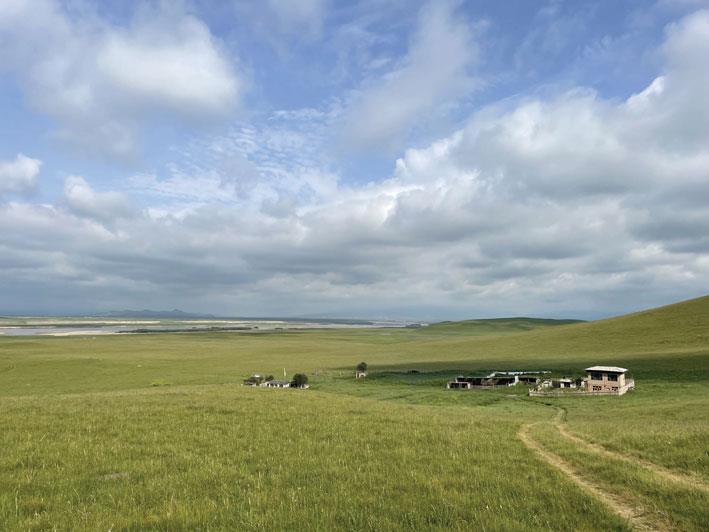
I have also observed a deeper, structural parallel. Pastoralists in the Zoige rangelands of the Tibetan Plateau confront ecological constraints in a harsh high-altitude environment. Malta, by contrast, faces geographic limits of scale and finite resource. Yet in both contexts, communities must continually negotiate how to sustain and reinterpret resilience within bounded environments, especially in the face of modern economic and social pressures.
What does desertification look like through the eyes of the herders who live with it every day? In your fieldwork, you observed the herders returning to the grasslands with modern tools. How are traditional knowledge and modern technology being combined?
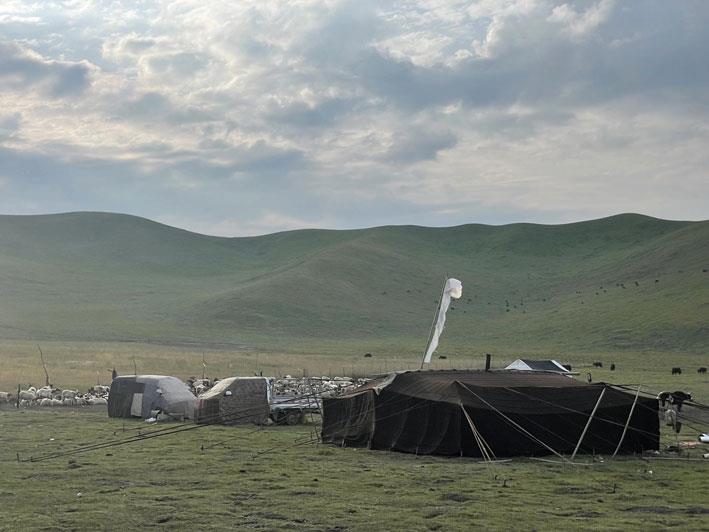
In the Zoige rangelands, within the local worldview, humans are sentient beings designated guardians of the inanimate environment, the 'container'. Desertification occurs in the container but is perceived as the karmic consequences of human behaviours.
There is a persistent stereotype that Tibetan pastoralists live in a premodern world detached from technological innovation. My fieldwork shows the opposite. They are remarkably open to the world, and enthusiastically embrace tools that fortify their lifeworld. I have seen herders who maintain deeply traditional social structures while simultaneously utilizing big data to monitor the health of their yaks and the quality of their meat. Their yak trade has evolved into a sophisticated operation, managed through digital systems and global market networks. In this context, cultural identity does not act as a barrier to change; rather, it acts as a shield and a filter, ensuring that modernization serves to "nurture" their resilience rather than increasing their vulnerability.
In the Zoige rangelands, what science formally classifies as 'desertification' was historically experienced by the community as a profound transformation of sacred and social space. Within the local worldview, humans are sentient beings designated guardians of the inanimate environment, the container. For them, the mitigation of disaster is never a purely technical endeavour - it inherently includes a vital ethical and moral perspective.
There is a persistent stereotype that Tibetan pastoralists live in a premodern world detached from technological innovation. My fieldwork shows the opposite. They are remarkably open to the world, yet they engage with modernity through a lens of selective ethics. They enthusiastically embrace tools that fortify their lifeworld.
The examples are striking. I have seen herders who maintain deeply traditional social structures while simultaneously utilizing big data to monitor the health of their yaks and the quality of their meat. Their yak trade has evolved into a sophisticated operation, managed through digital systems and global market networks. In this context, cultural identity does not act as a barrier to change; rather, it acts as a shield and a filter, ensuring that modernization serves to "nurture" their resilience rather than increasing their vulnerability.
What are the most urgent environmental challenges facing the communities you study? What surprised you most during your time living among the herders? What was the most challenging aspect of living in such remote environments, and what was the most beautiful?
Living in the Zoige rangelands requires a radical adjustment of one's internal rhythm. At such high altitudes, the air is thin and the landscape is sublimely vast. There is a strange paradox to the place: the immense scale of the horizon makes you want to run toward it, yet the lack of oxygen forces you to slow down. Life becomes wide, but slow. navigating this physical and temporal shift was perhaps the most beautiful challenge for me.
What surprised me most was the way pastoralists relate to wolves. For them, wolves are sentient counterparts and rivals coexisting in the same 'container'. While wolf attacks on livestock have increased in recent decades - causing resentment when animals are lost-the herders' interpretation of these events is framed in moral terms: pastoralists have become less vigilant or less responsible for the rangeland, and the wolf's attack is a warning."
How has your work changed you as a person, not just as a scholar?
Has witnessing resilience in other communities influenced how you face difficulties in your own life?
Do you have rituals or routines that help you stay centred when you are far from home?
Anthropological training requires reflexivity. Each research project pushes me to question and re-examine some common sense or even some dark facets of a society. Friends often ask if this deep dive into social upheaval and human struggle leaves me feeling despondent. On the contrary, I find that being able to perceive the underlying essence of a problem brings a sense of 'blissful clarity', which allows me to find peace within complexity rather than being overwhelmed by it.
When I am far from home, I try to maintain some important traditions, especially celebrating the Chinese New Year to bridge the distance from home. However, an even deeper sense of peace comes from active participation in local celebrations. Even though I may not belong fully to that community, joining local festivals allows me to build a meaningful connection with the place. This is a sense of belonging that is accessible only through the shared experience of the ritual instead of in daily life.
How has your international journey - China, France, the UK, and now Malta - shaped your academic perspective?
Do you find that moving between cultures gives you a sense of "home everywhere" - or "home nowhere"?
What do you hope this chapter in Malta will add to your life story?
I would say "home everywhere." Moving between cultures inevitably brings moments of cultural shock and even periods of struggle, but I have come to see those experiences as intellectually nourishing: they push me beyond fixed perspectives and allow me to build multiple angles of understanding.
This chapter in Malta is distinct from my previous academic visiting positions. My life has truly shifted to Malta; I see it as my second home and my new field site - a place of transformation. I am eager to experience a new shaping of my understanding of the world, just as the rangelands and the mountains have done before.
If you could speak to your younger self - the student just beginning this journey - what would you tell her?
I would say: life is full of uncertainty, but clarity is always worth seeking. Through the "anthropological lens", the world's complexity becomes a source of wisdom rather than confusion.
* * *
As Yun continues her work in Malta, she carries forward the same compass that guided her across the Tibetan Plateau: a belief that clarity, curiosity, and cultural connection can illuminate even the most complex transitions.