Malta must manage its tourism industry’s success through better alignment between growth, infrastructure, environmental sustainability, communities’ wellbeing and national priorities, according to a new strategy document launched by The Malta Chamber of Commerce in collaboration with EY Parthenon.
The document, titled “Rediscover to Align”, outlines a set of recommended actions for the future development of the tourism sector, and proposes over 150 measures, more than half of which are new.
Speaking at the launch of the document, Malta Chamber President William Spiteri Bailey said that tourism remains one of Malta’s most important economic pillars, but stressed that its importance goes beyond economic contribution.
“Tourism is the primary way Malta presents itself to the world, through our people, culture and landscapes,” he said.
Spiteri Bailey said the sector’s recovery following the Covid-19 pandemic has created a new reality, where the challenge is no longer recovery but managing success responsibly.
“Instead of waiting for the storm to pass during the pandemic, we asked a simple but vital question - what should Malta’s tourism look like in the future?” he said.
This process led to the first “Rediscover” document issued in 2021, while the latest report, “Rediscover to Align,” represents the next step in that journey.
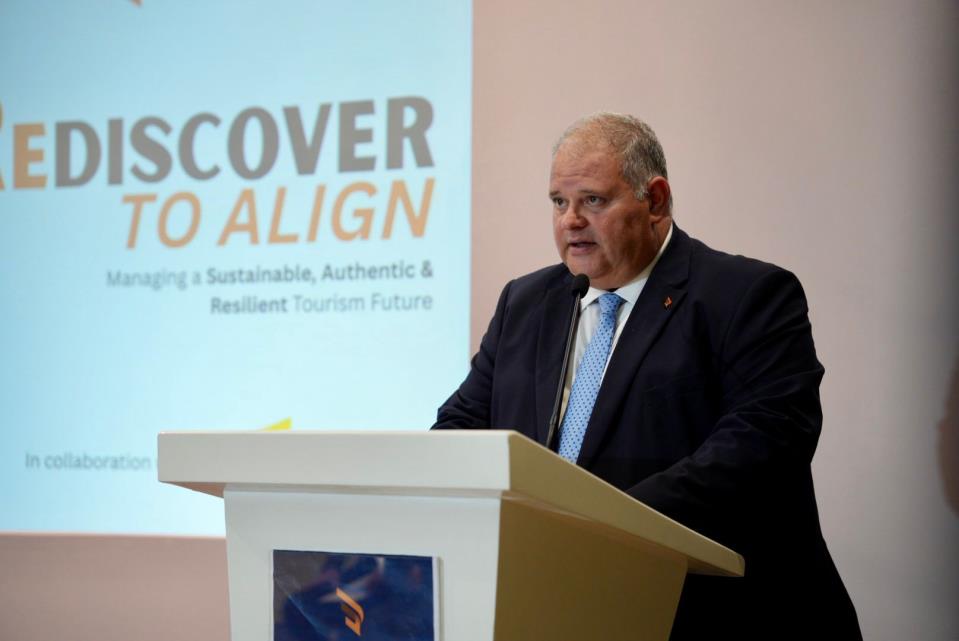
Spiteri Bailey (above) said that while the sector has rebounded strongly since the pandemic, with visitor numbers recovering and connectivity restored, this success now presents new challenges.
The discussion, he said, has now shifted from recovery to stewardship, with the need to ensure tourism growth does not come at the expense of communities, infrastructure or the environment.
Senior Manager of EY Malta Glenn Fenech said that tourist arrivals have continued to break records, reaching around four million visitors last year, more than double the 1.8 million arrivals recorded in 2015.
However, despite record visitor numbers and tourism expenditure reaching €3.9 billion, the average expenditure per tourist has declined, falling from €919 to €771, he said.
This trend is partly linked to shorter stays, with tourists staying an average of 6.3 nights in 2025, Fenech said.
Fenech said that accommodation patterns have also shifted significantly, as around 61% of tourists now stay in collective accommodation such as short-let properties, while 31% stay in traditional non-collective accommodation and 8% in non-rented accommodation.
Fenech said that seasonality is also becoming less pronounced, with October emerging as the second busiest month last year, alongside August, and instead of July.
He said that Malta has also diversified its source markets, becoming less reliant on the traditional “big four” markets of the United Kingdom, Germany, Italy and France.
Fenech said that the strategy is the result of an extensive consultation process involving more than 30 stakeholders from both the public and private sectors, as well as research and data analysis.
He said that the strategy proposes aligning tourism growth with infrastructure capacity, environmental sustainability and the wellbeing of communities.
“We need to manage success through alignment so that growth remains sustainable and resilient,” Fenech said.
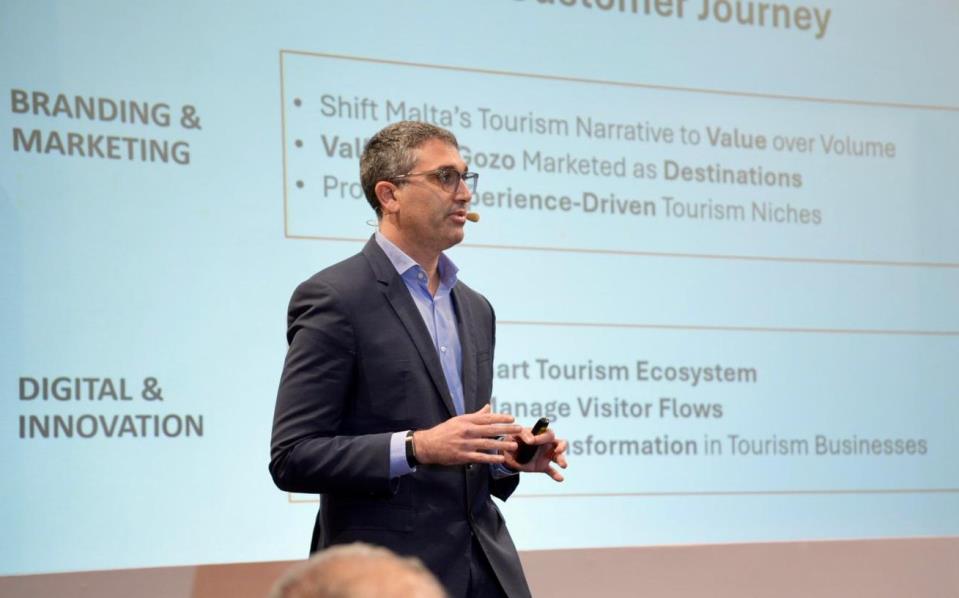
Member of the Malta Chamber’s Board of Management Alan Arrigo (above) presented the report, which is structured around three strategic pillars aimed at transforming the sector.
Arrigo said that the first pillar focuses on improving the visitor journey, including proposals for Malta Tourism Authority marketing strategies to focus more on value rather than volume, highlighting Malta’s heritage, gastronomy and cultural identity.
Other proposals include promoting experience-driven tourism niches, developing a smart tourism ecosystem using data to manage visitor flows, and modernising accommodation standards, he said.
Arrigo said that the document also recommends shifting from “more beds to better beds,” reviewing hotel planning incentives and ensuring tourism growth is aligned with infrastructure capacity.
The second pillar focuses on authenticity, calling for stronger protection of Malta’s landscapes, historic streetscapes and village identities, and protecting ODZ areas from harmful development.
Arrigo said that the document’s proposals include adopting a national aesthetics and landscape policy, limiting development that harms natural landscapes and strengthening links between tourism and culture.
The strategy also recommends expanding year-round tourism niches, including conferences, educational tourism, diving, maritime tourism and cultural events, to reduce seasonal fluctuations, Arrigo said.
The third pillar addresses governance and institutional coordination, proposing stronger collaboration across government ministries and the creation of a Tourism Resilience and Reinvestment Reserve.
Arrigo said that other proposals include developing industry-led skills frameworks, investing in innovation and digitalisation, and improving working conditions within the tourism sector.
Arrigo said that the document represents a collective effort by tourism stakeholders.
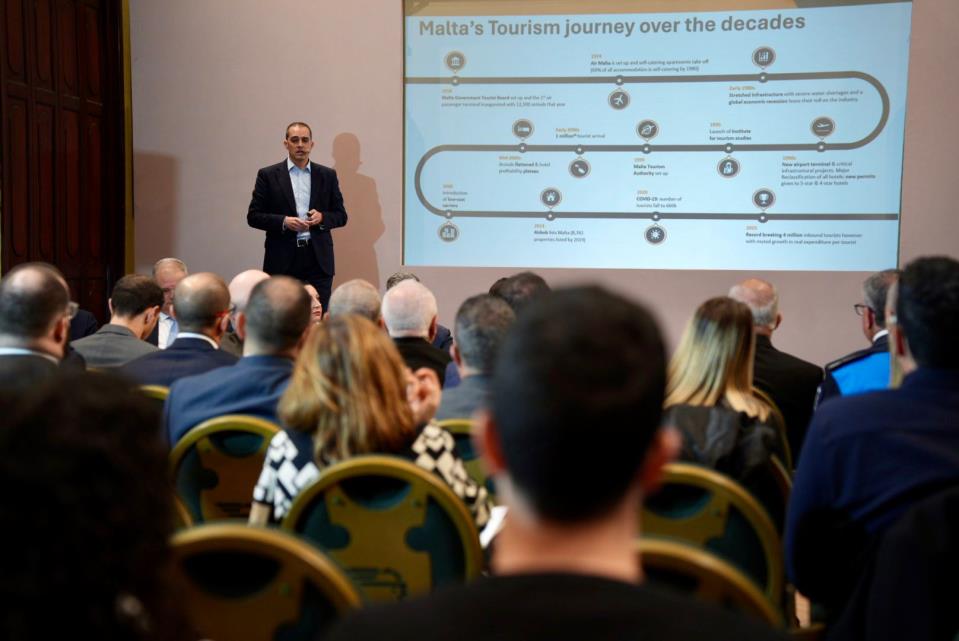
“What we have today are the first steps towards a long-term plan for the sector,” he said, noting that alignment between authorities, operators and policy is crucial.
Chairperson of the Malta Chamber Tourism Operators Business Section Joe Galea said that the tourism industry’s strong recovery following the pandemic had brought new responsibilities.
“If there is an industry that was successful after the pandemic, it is tourism, but that success brings responsibilities,” he said.
“However, that success brings responsibilities. The industry now needs to exceed visitors’ expectations so that they recommend our islands,” Galea said.
Galea said the document reflects extensive consultation across the sector and stressed that the recommendations must now be implemented.
Galea also warned that tourism growth must not negatively affect the quality of life of residents, saying that the local population must remain part of the tourism journey.
“Visitors want to experience the destination and part of the authentic experience is mingling with locals. For that to happen, locals must remain proud of their destination,” he said.
He said that residents must remain part of Malta’s tourism journey.
Galea added that the document will remain a living strategy, to be updated as the industry evolves, with the ultimate aim of ensuring that Malta’s tourism success is sustained responsibly and delivers long-term benefits for both visitors and residents.
The full document mey be found here