In the end, Galea's work is an act of devotion - toward a filmmaker who "felt deeply," toward a national memory still scattered in attics and forgotten boxes, and toward future generations who deserve to see Malta through Satariano's humanist lens. As she notes, Giuseppi once won more than twenty international awards while remaining unrecognised at home. Her hope now is simple: that new viewers will discover how a Maltese filmmaker in the 1970s was already breaking ground on issues that still resonate, and that Malta will finally build the structures needed to ensure no more of its cinematic past is lost to time.
What first inspired you to take on the restoration of Cecil Satariano's films, and how did the initiative Maltese Histories - one by one shape this journey?
It was by chance that I came to work on this project. Like everything with Maltese Histories - one by one, it began as a personal initiative, driven by a wish to preserve cultural heritage in film, photography and other media.
For this, it was clear that the National Archives of Malta (NAM) was the right institution to collaborate with. Long after we are gone, the NAM will still be there, safeguarding our national treasures and offering new generations of Maltese a deeper understanding of their past.
Continuity matters, because through this knowledge we learn to value, respect, and appreciate what came before us and what is intrinsically part of who we are. I believe this is the spirit behind Maltese Histories - one by one which began in 2004.
At the time, I had come across a British war veteran's photo and film collection. Stan Fraser, who was stationed in Malta from 1941 to 1943, agreed to donate his photo and film collection to the National Archives. I then raised funds to cover the cost of their digitisation.
You spent fifteen years searching for the original film materials. What kept you going?
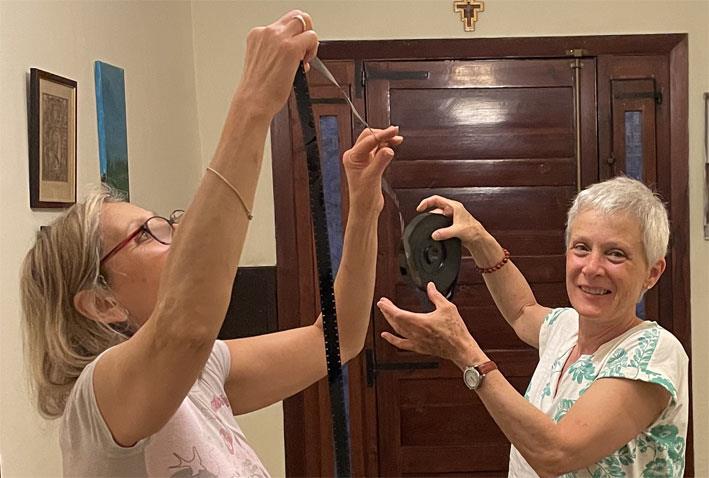
I didn't work full time on the Cecil Satariano film digitisation project. Often, there would be one or two on-going projects in between my regular work. Acquiring the material is often not a straightforward process. It takes time to build up a relationship with people. You move forward at their pace; you cannot force things. It was the same with the film reels. At times there was cooperation, at others, less so. And so, I would step back and try again later.
Can you describe the moment in 2022 when the original reels were finally discovered
It was in June 2022 when I was invited to Madeleine Vella Satariano's home. I had only recently come to know her and her husband Joe, thanks to a helpful introduction by film student Jean Pierre Borg. Till that point, I had gathered various copies of Cecil Satariano's films from the family, as well as from Ronnie Demajo, who produced four of Satariano's films.
Madeleine, one of three siblings, had not been subjected to my repeated calls and emails over the years. She agreed to look for the film reels once more. It was a moment of great elation and relief to find the original reels of Giuseppi, Ilona, The Beach and I'm furious - red! and a film reel copy with the complete film of Katarin.
Unfortunately, the elation did not last long. Once the films were digitised, both the film restoration team and I would learn a hard lesson. The films had deteriorated much more than expected after the initial inspection before digitisation. At that point, I was thankful for all the film copies gathered over the years.
What were the greatest technical challenges posed by the poor storage conditions of the Super 8 and 16mm films?
The everyday challenges of cine film restoration primarily involve the digital removal of dirt, dust, and scratches, as well as the repair of visible or poorly aligned splices made during the editing process. Over time, film colour fades also.
The issues with the Satariano films were often more complex and would prove more expensive to restore. These included fungus growth and loss of film sound through deterioration of the magnetic tape.
In production, once the soundtrack is completed, it is physically laid onto the film print and bonded to the picture. Over time, this adhesive can deteriorate, causing the soundtrack to separate from the film or become damaged as was the case with Giuseppi.
How did you decide which films to restore first?
We began the restoration work with Giuseppi. It was an instinctive decision possibly because I had been so unhappy with all three other copies I had gathered previously.
The original soundtrack had deteriorated to such an extent that it was unusable. Among the film reels that were digitised was an unlabeled audio reel. After it was digitised, I quickly recognised it as an alternative soundtrack for Giuseppi.
The "new" soundtrack was in good condition. A decision had to be made: Should we attempt to repair the original soundtrack, or rely on the "new" one instead? There were not enough funds to do both so I decided on the "new" soundtrack.
The "new" soundtrack, produced by Cecil Satariano in collaboration with the composer Charles Camilleri, was laid to the film picture effectively creating an alternate version of Giuseppi.
Was there a particular film whose restoration proved especially difficult or especially rewarding?
Working on I'm Furious - Red! was nerve-wracking. The original film reel contained around forty dropouts with entire chunks of film material missing. Fortunately, we were able to draw on a duplicate film reel that had been digitised in 2009 to help fill the gaps.
One of the most rewarding moments was working on Katarin. For some reason, the opening scene, which shows Katarin singing as she goes about her chores, had been abruptly shortened. It is possible that the opening scene had been damaged during projection and that the affected section of film had simply been cut out.
Fortunately, on a separate reel containing unused footage, I discovered another copy of the opening scene from Katarin where the opening song is heard in full, revealing the lament of a young woman longing for something better in life. I decided to include the rediscovered sequence in the film's restoration. The short scene adds a deeper layer of meaning to Katarin - we gain a clearer sense of who Katarin is, what drives her, and what ultimately leads her toward tragedy.
Five films are now part of the National Archives. What do these films reveal about Satariano's artistic voice?
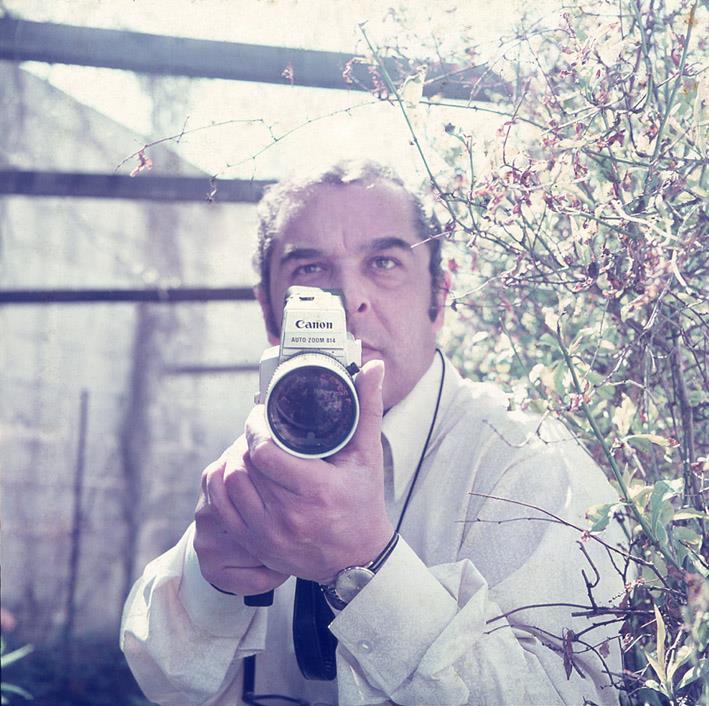
Satariano's films are the voice of someone who felt deeply. I never had the opportunity to meet Cecil Satariano personally, but through his work I get a sense of someone driven and deeply engaged with the human condition. That, I believe, is the core of his cinema.
Two travelogues, Let Them Be and A Touch of Dutch, have been digitised but not restored. What is needed to complete their restoration?
Quite simply, funding.
What would their restoration add to the understanding of Satariano's oeuvre?
All of Satariano's films reveal a filmmaker with a keen eye for everyday life. In the two travelogues, people are shown going about their daily routines in London and Amsterdam. Satariano captures a rich tapestry of scenes, juxtaposing the young and the old, the hip and the quirky, the strange and the humorous.
How would you describe the role of the National Archives of Malta in this project?
The National Archives initially acted as a facilitator. In 2009, four of Satariano's films on videotape loaned out to me by Ronnie Demajo were copied and subsequently deposited in the university's A/V library. Some eleven years later, film student Jean Pierre Borg contacted me to ask if new copies were available of the films as the DVDs were damaged.
The archives have jurisdiction over mostnuniversity collections, so I informed the national archivist, Prof. Charles Farrugia. With the permission of the Satariano family, fresh copies were made available. Less than a year later, the original film reels were discovered.
In 2023, I approached the NAM for financial support for the restoration project. The Friends of the National Archives, together with the Farsons Foundation were able to support the restoration of Giuseppi.
Do you feel this collaboration has set a new precedent for safeguarding Maltese film heritage?
Yes, for sure. For over twenty years, I have sought to collaborate with the National Archives, Malta's highest institution for the preservation of our heritage. The archives safeguard the written record, including legal documents and materials relating to the Knights of Malta and the Maltese government-an immense responsibility. More recently, the archives have also established dedicated storage facilities for film preservation. With its legal mandate to safeguard Malta's heritage, the NAM remains the most reliable institution with which to collaborate.
You mention that "there is still a long way to go" in gathering and digitising Maltese films. What are the most urgent priorities today?
A serious effort needs to be made to search for what remains of our film heritage. Over a hundred years ago, in 1909, Salvatore Lorenzo Cassar a photographer and filmmaker received a distinguished prize for a film he had made about the Imnarja. Today, only his photographs survive.
In the 1950s, Alfred Vella Gera produced remarkable film work which I came across in the form of inexpensive VHS videotapes. This is tragic, as the original footage had been shot on 35mm film. The original reels were lost through negligence: the authorities of the time did not understand how to store nitrate film safely. Because of its flammable nature when improperly stored, the reels were eventually destroyed.
There are surely more films out there waiting to be found. After some brief research I came across fifteen non-commercial filmmakers who were active in the 1970s and early 1980s. Where are these films and can they still be saved?
What message would you give to families or individuals who may still have film reels stored away?
To my knowledge, there are two possibilities. They could contact the National Archives or Magna Zmien.
What kind of support structures do you believe Malta needs to safeguard its film heritage?
An annual fund could be set up whereby people can come forward to apply for sponsorship for their digitisation/restoration projects and on the promise that a copy of the finished product is passed on to the NAM holdings. In this way, a one-stop access to annual ministerial funding would surely encourage more people to come forward.
In June 2025, as part of the Council of Europe Malta presidency, Frames of Malta was presented in Strasbourg, including five films by Cecil Satariano and five recent films by Maltese filmmakers.
After the screenings, I approached two filmmakers and asked what plans they had for their films once they were no longer around. Neither had given the matter much thought. This needs to change.
How can cultural institutions and the public advocate for this?
Over three years ago, I approached leading local cultural institutions for funding but was told that film digitisation and restoration fell outside their sponsorship priorities. While living artists do deserve support, who protects the work of deceased filmmakers?
But things are slowly changing. A new book by Charlie Cauchi, Titles to Talkies, was recently published. It examines and celebrates Malta's history in film and will surely contribute to the growing discussion around cultural film heritage.
After nearly two decades of work, what has this project meant to you personally?
The last four years of the project have been challenging due both to the condition of the films and to funding constraints. My role has been to safeguard the films of a great filmmaker and in doing so, to honour an artist who, for the most part, was not fully appreciated in his own time.
What do you hope future generations will feel when they watch these restored films?
I do hope they get a sense of the humanist approach to filmmaking which is at the heart of Cecil Satariano's work. As his wife Eileen once told me, he was not only a film critic, he wrote about social issues also. And so, Giuseppi, as one example, is a natural evolution of that, a neorealist film which Vittorio de Sicca would have surely admired had he been given the chance to watch it back in 1971 when he was invited to attend the Golden Knight Malta Film Festival.
Giuseppi received no award locally but went on to win more than twenty top prizes at international film festivals, from London to Tokyo. So yes, I hope new generations of filmgoers will discover that a Maltese filmmaker in the 1970s was breaking new ground on issues that mattered then and still resonate today.
For nearly two decades, cultural archivist Veronica Galea pursued a fragile trail of lost reels, family memories, and deteriorating film stock to safeguard the legacy of Cecil Satariano. In this conversation, she reflects on the chance encounter that sparked the project, the painstaking search for original materials, and the urgent need to protect Malta's endangered film heritage.
In the end, Galea's work is an act of devotion - toward a filmmaker who "felt deeply," toward a national memory still scattered in attics and forgotten boxes, and toward future generations who deserve to see Malta through Satariano's humanist lens. As she notes, Giuseppi once won more than twenty international awards while remaining unrecognised at home. Her hope now is simple: that new viewers will discover how a Maltese filmmaker in the 1970s was already breaking ground on issues that still resonate, and that Malta will finally build the structures needed to ensure no more of its cinematic past is lost to time.