Opening on 28 March at the Sacred Heart Major Seminary in Victoria, Gozo, the exhibition A Sacred Dialogue brings together the work of Maltese artists Christopher Saliba and Mario Sammut in a reflective encounter between painting and sculpture. Curated by Joseph Calleja, the exhibition unfolds during the liturgical period of Holy Week and remains open until 12 April, inviting viewers to contemplate themes of suffering, doubt, redemption, and spiritual hope.
Although the two artists work in different mediums and distinct stylistic languages, their works converge around a shared exploration of the sacred, not in the traditional sense of devotional imagery, but as a space of existential reflection.
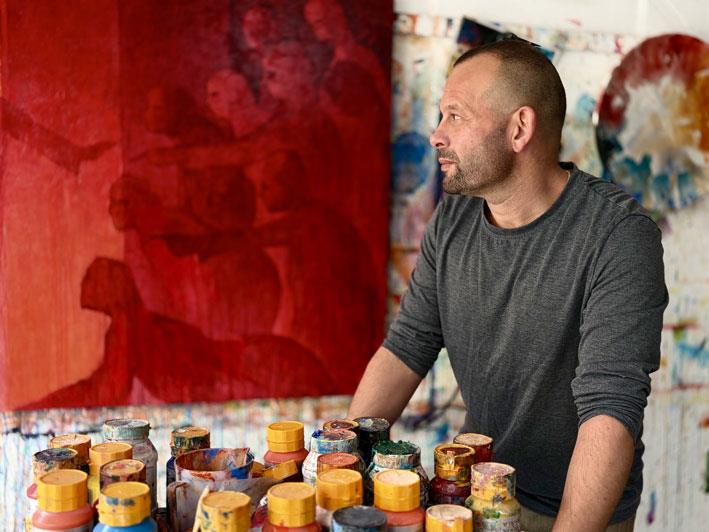
Christopher Saliba, primarily known as a painter but also active in ceramic art and sculpture, presents a series of works that revisit key moments in the life and passion of Christ. Yet these paintings do not attempt to reproduce familiar iconographic models. Instead, Saliba approaches biblical narratives through a contemporary visual language that privileges atmosphere, psychological tension, and symbolic colour. As the artist himself explains, after many years exploring different artistic genres, he never imagined that his work would move toward sacred art. In this exhibition, however, sacred themes emerge through a contemporary sensibility that moves beyond conventional religious representation. Visitors should therefore not expect traditional portrayals of saints or clearly defined biblical scenes. Rather, the works reflect states of vulnerability, doubt, and human fragility while simultaneously suggesting faith, divine love, and the hope of transcendence.
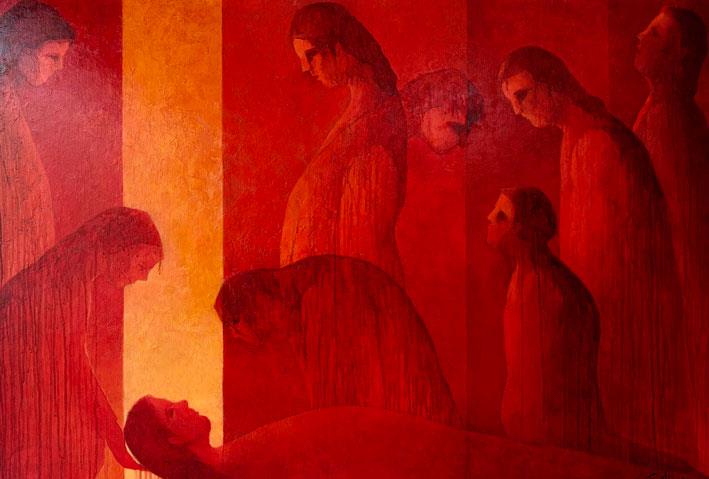
One of the most striking paintings depicts The Deposition of Christ. The composition is immersed in a powerful field of red tonalities, within which the figures surrounding the lifeless body of Christ appear almost absorbed into the chromatic atmosphere. Grief and contemplation are conveyed through gesture and spatial rhythm rather than through narrative clarity. The emotional weight of the scene emerges gradually, drawing the viewer into a silent moment of mourning.
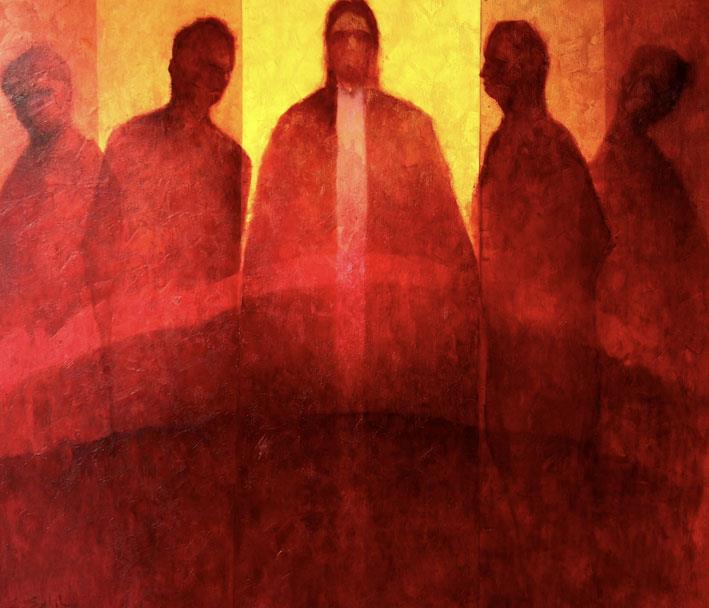
The Supper at Emmaus is another painting placing Christ at the centre of the composition, flanked by apostles whose shadowed presence reinforces the sense of spiritual tension within the work. The figures appear suspended between presence and dissolution, their forms softened by the surrounding colour field. Alongside these figurative works, Saliba also introduces several abstract paintings that expand the exhibition's spiritual dimension beyond explicit biblical storytelling. Such works recall the reflections of the painter and theorist Wassily Kandinsky, who understood abstraction as a means of expressing an inner spiritual necessity through colour and form.
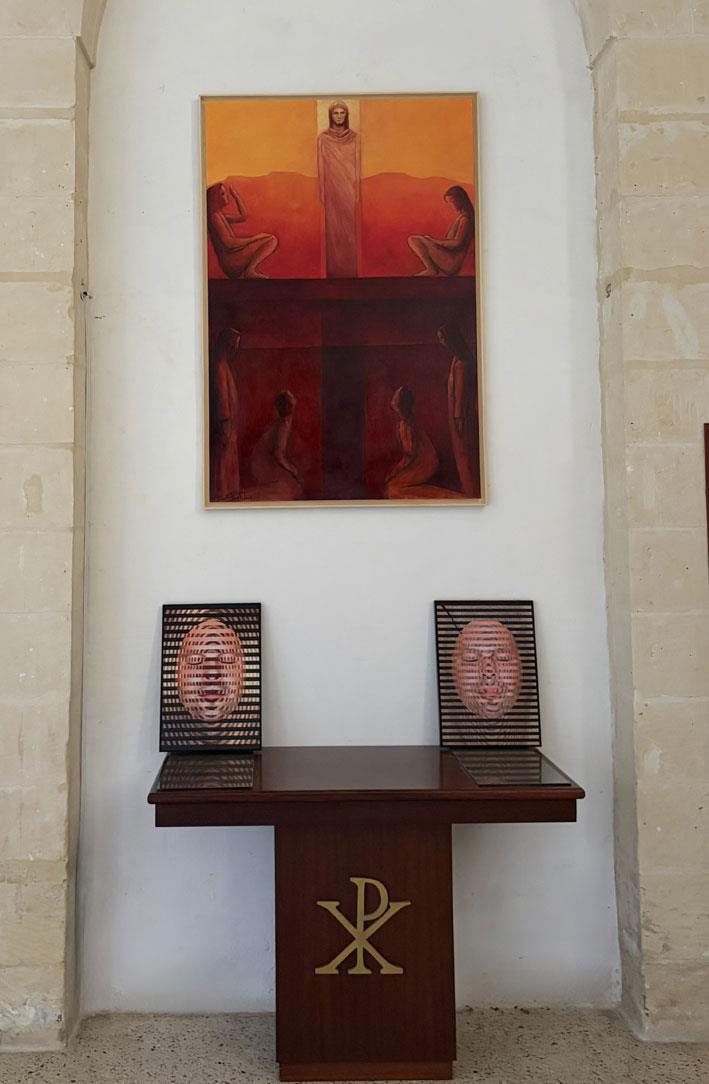
A particularly compelling element within the exhibition is an installation centred on a large painting of the Resurrection. This work is accompanied by two self-portraits by Saliba, creating a subtle dialogue between the image of the resurrected Christ and the artist's own presence. The installation suggests a deeply personal reflection on faith, mortality, and artistic identity, situating the act of painting itself within a broader spiritual inquiry. This painterly exploration finds a powerful counterpart in the sculptural works of Sammut. Working primarily in ceramic and stoneware, Sammut has developed a distinctive figurative language characterised by simplified forms and expressive groupings. His sculptures often present solitary figures or small gatherings whose gestures convey psychological and spiritual states.
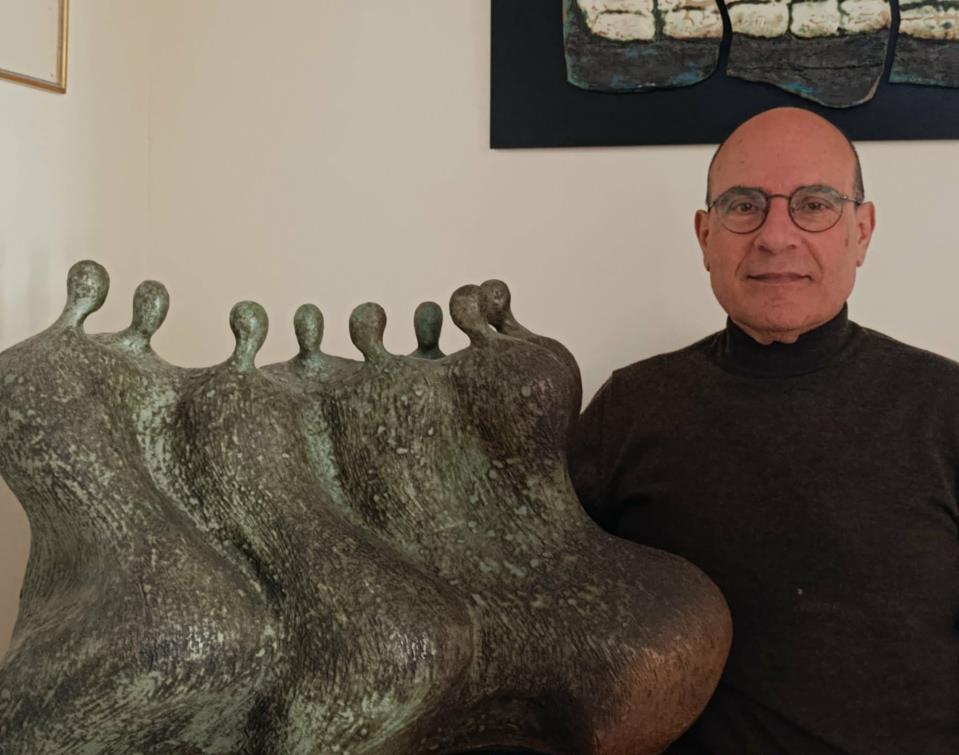
Sammut approaches similar themes through a distinctly different artistic language. Working primarily in ceramic and stoneware, his sculptures are predominantly monochromatic, allowing form rather than colour to become the principal vehicle of expression. The figures are deliberately reduced to minimal forms and are generally devoid of facial features, a decision that encourages viewers to engage directly with the emotional dimension of the work and to project their own experiences onto the sculptural presence. Many of Sammut's compositions are structured so that the figures appear joined together at the lower part of the form before gradually separating as they rise upward. This structural relationship symbolically suggests shared foundations and communal values while simultaneously allowing for the independence and free will of each individual presence. Through these simplified yet expressive forms, Sammut seeks to convey fundamental human emotions: love, anxiety, doubt, fear, solidarity, and communication, qualities that shape human relationships and social interaction. His sculptures therefore evoke not only biblical narratives but also broader reflections on the human condition, presenting the figure as a contemporary presence capable of conveying a deeply personal and spiritual interpretation.
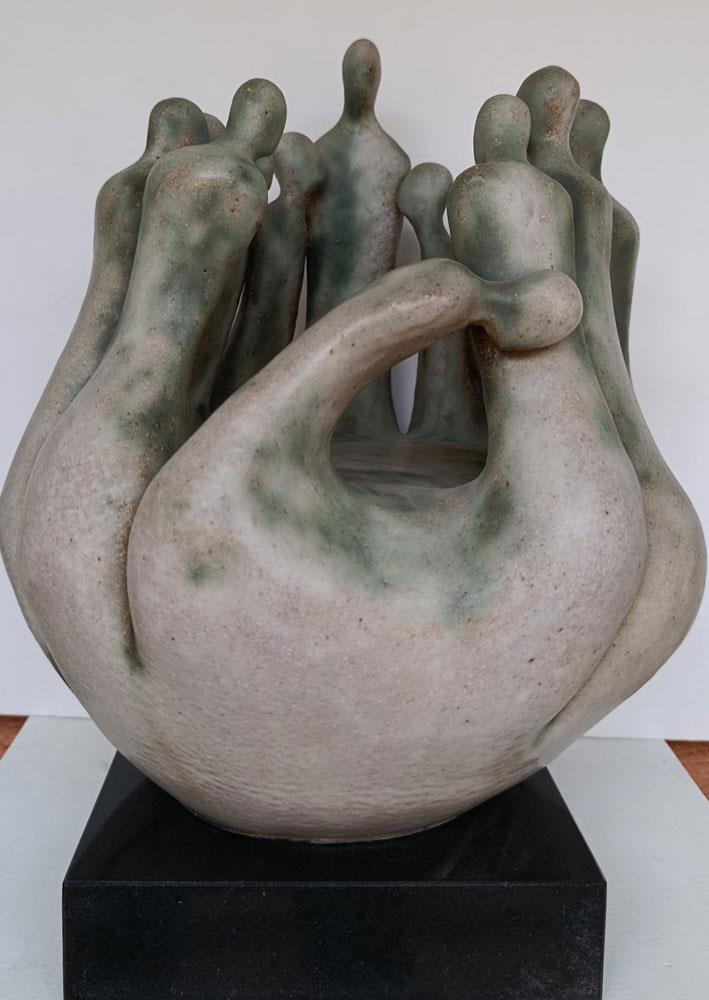
In this exhibition, Sammut contributes works that resonate closely with the Passion narrative. One sculpture represents The Betrayal, when Judas betrayed Jesus. Within the grouping, a figure leans forward, almost withdrawing into itself, suggesting the inner conflict and concealment associated with betrayal.
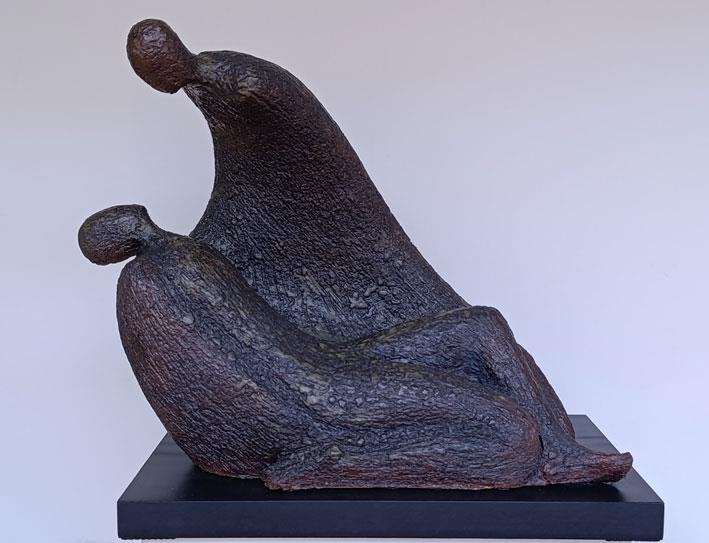
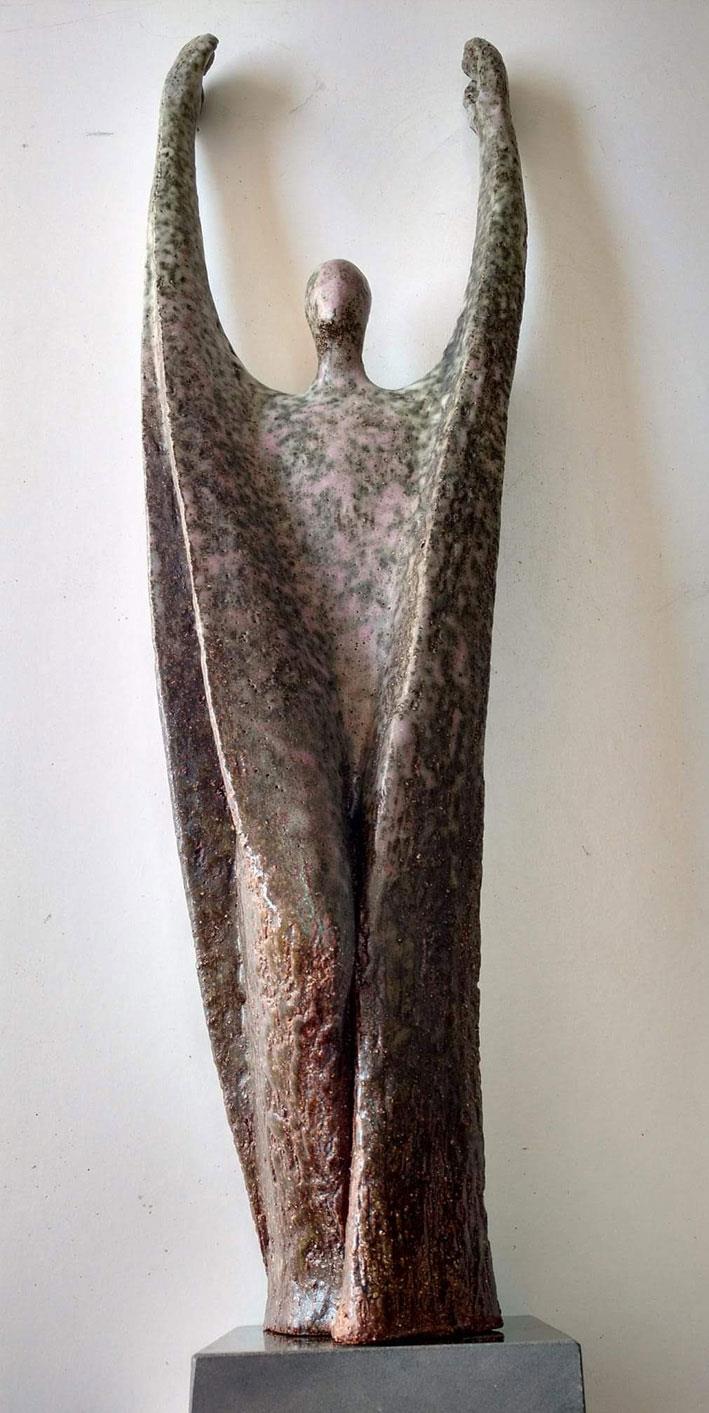
Other sculptural works include representations of The Risen Christ and Mater Dolorosa, the sorrowful mother contemplating the body of her son. In these pieces, Sammut's restrained modelling and quiet presence evoke the contemplative silence that often accompanies grief and spiritual reflection. The figures do not dramatise the narrative; rather, they embody it through stillness and presence.
The dialogue between Saliba's paintings and Sammut's sculptures develops through a subtle interplay of material and meaning. Colour and painterly atmosphere encounter the tactile solidity of ceramic form. Narrative and abstraction coexist with figuration and sculptural gesture.
Ultimately, A Sacred Dialogue is less concerned with illustrating biblical events than with exploring the emotional and spiritual terrain that these narratives continue to evoke. The exhibition invites viewers to reflect on vulnerability, doubt, and hope and the conditions that remain central to the human experience.
The German-American Christian existentialist philosopher, religious socialist and theologian, Paul Tillich, once suggested that art has the capacity to reveal humanity's "ultimate concerns". In the works of Saliba and Sammut, such concerns emerge quietly but persistently, opening a contemplative space where faith, uncertainty, and artistic expression meet.
Presented within the reflective atmosphere of the Sacred Heart Major Seminary in Victoria, Gozo, A Sacred Dialogue offers visitors an opportunity to encounter sacred themes through contemporary artistic sensibilities, reminding us that the search for meaning and transcendence continues to find powerful expression in art.
Prof. Louis Laganà PhD (Lough) is an academic, curator and practising artist