With his second solo exhibition, Dave Calleja turns his attention to remnants, the traces that linger between presence and absence. Having curated his debut show at il-Kamra ta' Fuq in 2024, I am once again invited to join him as curator, witnessing and participating in the evolution of his practice.
A bit of background: I met Dave around four years ago through mutual artist friends. We immediately connected, and over time began working on his debut exhibition, PARADOXUM. It was a show that left a lasting impression. Visitors found themselves relating to one or more works in deeply personal and empathetic ways. Over the years, we have continued to collaborate on various exhibitions, including projects at Boco Boutique Hotel, the Grandmaster's Palace, the President's Palace, and, on several occasions, il-Kamra ta' Fuq.
Dave's practice centres on metal, a medium he has explored extensively over time. His approach merges the traditional hammering techniques of blacksmithing with more contemporary methods in metal art, resulting in works that feel both grounded and experimental.
Remnants emerges as a natural continuation of Paradoxum, with Calleja delving deeper into the nature of empathy. Here, he explores the relationship between remnants and emotional energy, both of which, he suggests, can linger long after a person's passing. Remnants are often fragments of a larger whole: pieces of material history, artifacts, or ruins that have withstood time. They exist as tangible traces of past civilizations, cultural traditions, and ways of life that continue to resonate in the present.
Many artists across different periods have engaged with the idea of remnants, using fragments, traces, and residual materials to explore memory, loss, time, and transformation. It is a recurring strategy, yet one approached in profoundly different ways.
To mention just a few, Doris Salcedo creates works that evoke the absent body rather than depicting violence directly, employing restraint and meticulous craft to generate a quiet yet insistent sense of mourning. Anselm Kiefer, on the other hand, incorporates materials such as ash, lead, straw, and charred surfaces, literal residues of destruction. An example that I experienced is his exhibition Questi scritti, quando verranno bruciati, daranno finalmente un po' di luce, presented in 2022 within the monumental setting of Palazzo Ducale.
Across these practices, remnants are never neutral. They carry histories, emotions, and transformations, operating simultaneously as material evidence and as poetic residues of what once existed.
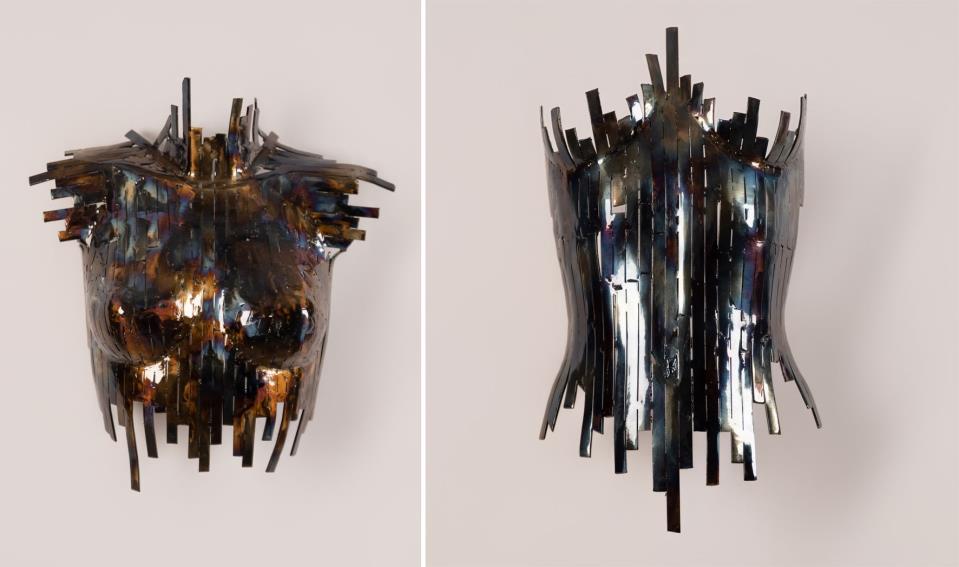
This notion of remnants led Calleja to further explore the connection between physical traces and emotional energy, distinguishing between what is tangible and what is intangible. In his fragmented sculptures, the physical remnant represents what can be perceived through our five senses. Emotional energy, however, exists on a different plane. It can be felt and understood, yet is often perceptible only through a "sixth sense", our intuitive and spiritual capacity to perceive beyond the immediately visible.
Calleja also considers how remnant and emotional energy might shift roles across these realms. In the physical world, the remnant becomes a form of emotional energy made tangible, while in the spiritual realm, emotional energy itself becomes the remnant, a lingering trace of what once was. Through this lens, his work invites viewers to attune themselves not only to material fragments, but also to the emotional echoes they carry.
In a cultural and emotional sense, remnants operate in much the same way. Traditions, gestures, habits, and even spaces, can act as remnants of lived experience. They persist, often subtly, long after their original context has shifted or disappeared. A room can hold a presence; an object can feel charged. It is here that remnants begin to overlap with memory and emotional residue.
This naturally leads to the choice of venue. The Splendid was specifically selected for this exhibition, not simply as a setting, but as an active participant within the narrative. The space carries a long and layered history, particularly during WWII, when it served as a hostel, its walls bearing witness to countless transient lives and untold stories. It fits seamlessly within the context of remnants and traces of lived experience.
In response, we also chose to incorporate some pieces of old furniture that had been left behind at The Splendid over the years. These objects function as remnants in their own right, holding within them the traces of the many individuals who once used them. In this way, the exhibition extends beyond Calleja's works, allowing the space and its forgotten objects to become part of the same dialogue between material presence and emotional residue.
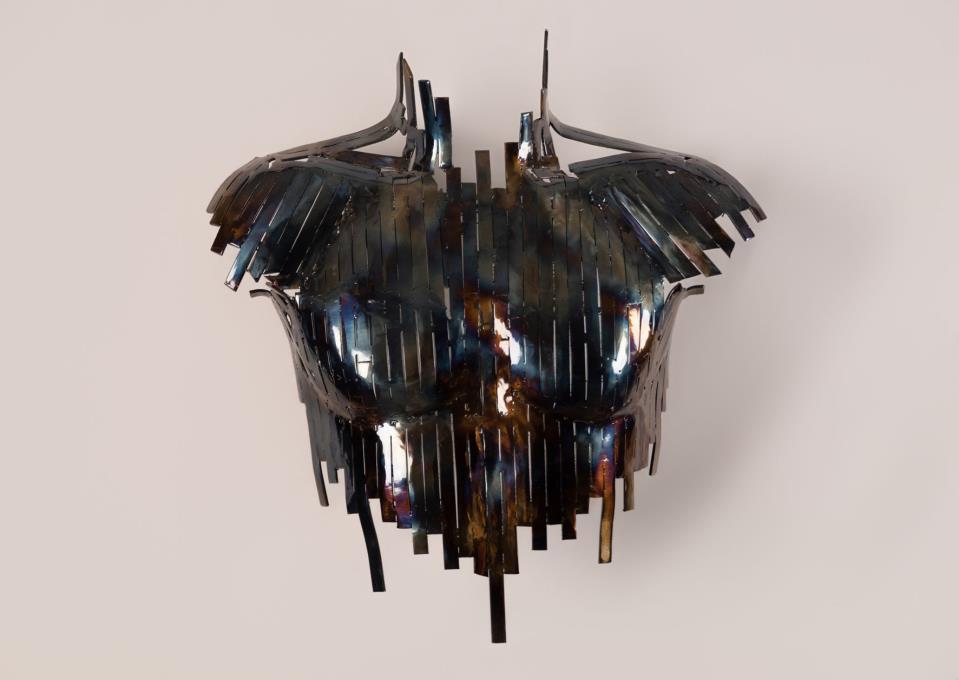
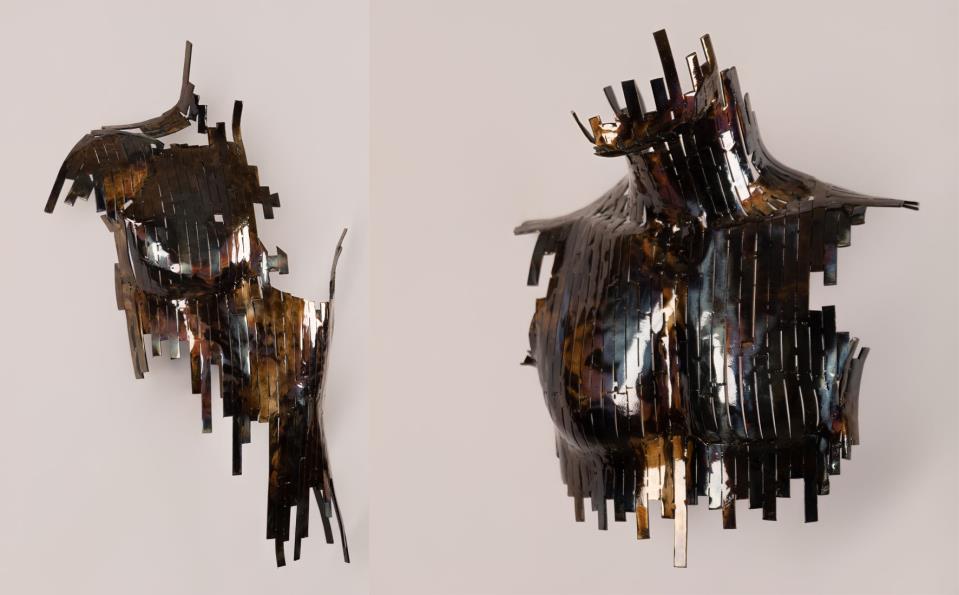
The thirteen works in this exhibition remain untitled, with Calleja choosing to give them only the exhibition title. This deliberate anonymity allows viewers to project their own interpretations, fostering a deeper sense of empathy with the pieces. Calleja's sculptures, executed in a manner akin to those in Paradoxum, are constructed from sliced sections of metal. Here, however, the earlier, more defined "characterial portraits" give way to fragmented figures, body parts rather than complete forms. Faces are absent; instead, we encounter traces, hints of who these figures might have been, what they may have experienced, and the memories they carry, leaving interpretation entirely to the viewer.
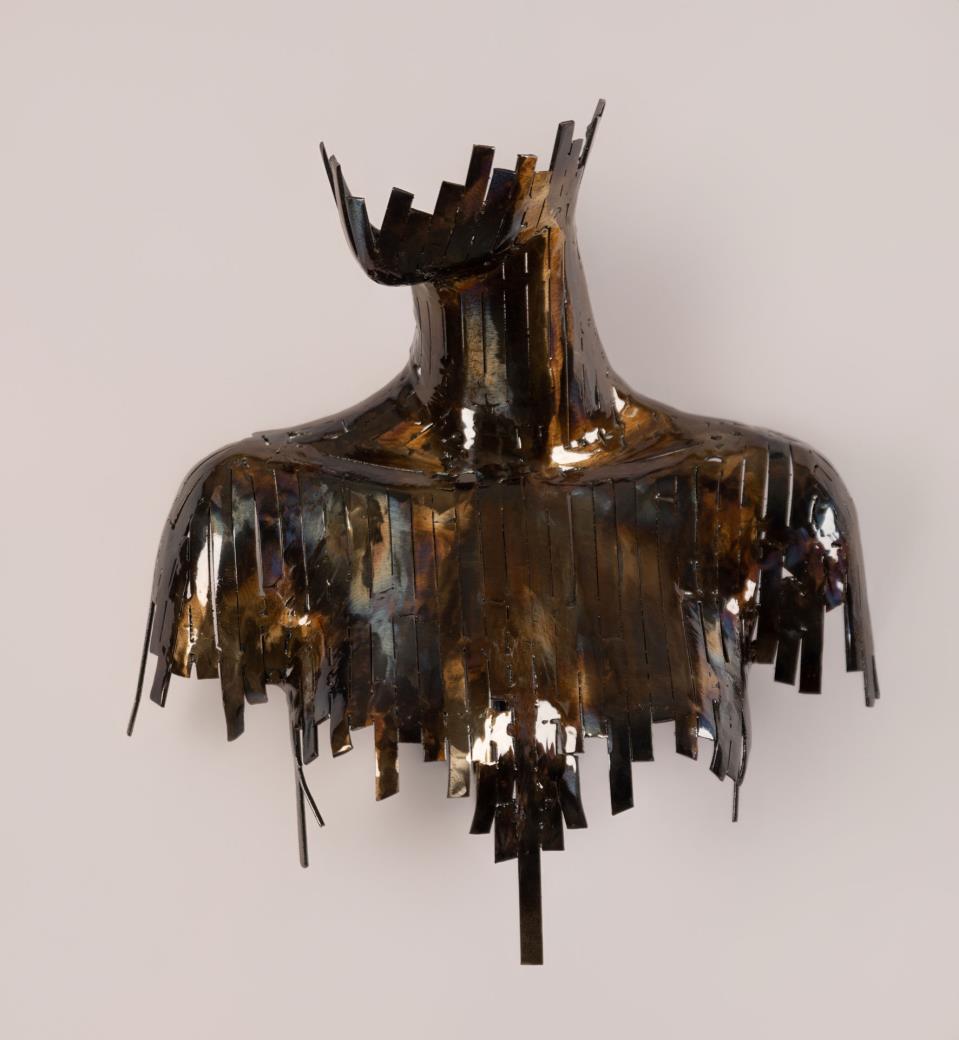
A key aspect of these works is the lustrous glaze applied to each surface. Through his ongoing experimentation with metal, Calleja achieves remarkably rich, shifting colours. As viewers move around the pieces, these hues seem to change, almost as if in flux, echoing the layered and evolving stories these anonymous figures might carry.
Calleja was equally meticulous in the exhibition's setup. It is not merely about hanging the works; he sought to provide a full experience of contemplation, spirituality, and respect. In the darkened rooms, each piece is illuminated by carefully directed lighting, enveloping the works in a personal aura. The largest work in the collection comprises two busts interconnected by a "divisor," executed differently from the rest. Could this be a teaser of a new style yet to be revealed? Only time will tell.
Complementing the sculptures, or perhaps acting as a prelude to them, visitors encounter various texts attached to the walls, along the staircase, and the ground floor. These phrases served as inspiration for Calleja, or perhaps even as instigators for this body of work.
To conclude, what makes remnants especially powerful is their dual nature: they are both evidence and mystery. They anchor us in the physical world, yet point beyond themselves, to histories, emotions, and presences that cannot be fully grasped, and yet remain endlessly captivating.
Remnants is on view until 12 April at The Splendid, Strait Street, Valletta. Follow the exhibition on social media for updates and more information.