Dickin Medal In the darkest moments of war, a soldier's most loyal companion was sometimes not another man, but a dog.
For centuries, animals have marched alongside human armies into war. From ancient battlefields to the jungles of the Pacific and the deserts of the Middle East, they have served as messengers, guards, scouts, and rescuers. Among them, dogs have stood out for their intelligence, courage, and extraordinary loyalty.
War dogs have saved countless lives warning soldiers of approaching enemies, locating the wounded, and carrying vital messages through gunfire. Their bravery and devotion made them more than military assets; they became trusted companions to the men who depended on them. In the harsh reality of war, a dog could offer something soldiers desperately needed: comfort, friendship, and a powerful boost of morale far from home.
This article explores the history of animals in warfare and tells the remarkable story of one extraordinary dog who, like the soldiers he served besides, became a prisoner of war yet remained a loyal friend and a symbol of hope in captivity
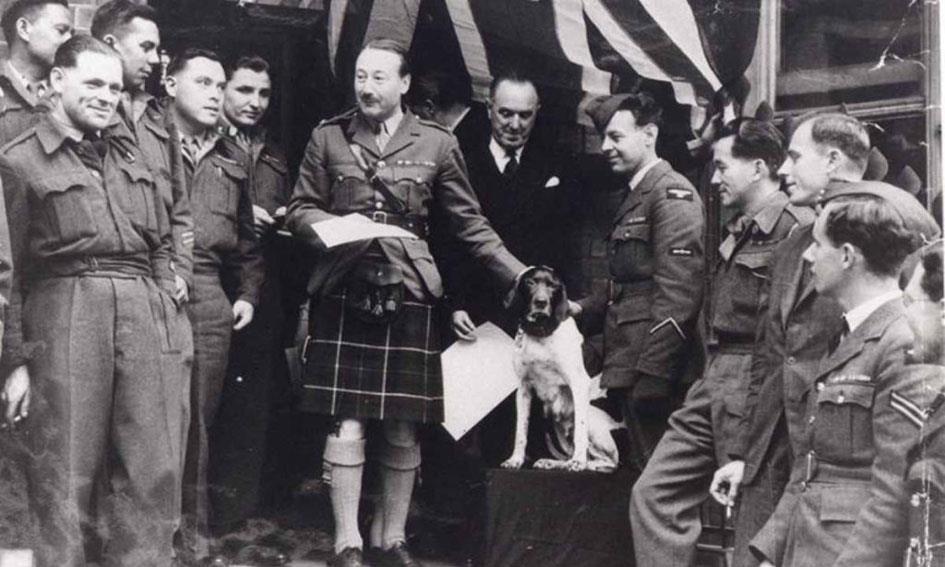 Judy awarded the Dickin Medal in May 1946
Early life and adoption at sea
Judy was born in February 1936 in Shanghai, a bustling international port caught between global trade, colonial interests, and rising regional tensions. She was a liver-and-white Pointer, a breed prized for its intelligence, keen senses, and loyalty traits that would make her an exceptional companion in wartime.
Shortly after her birth, Judy was adopted by sailors aboard a British naval vessel. At the time, the British Navy maintained a presence in Shanghai to protect British commercial interests, citizens, and treaty port holdings, as Japanese expansion and internal Chinese unrest made the city increasingly volatile.
Judy first served aboard the river gunboat HMS Gnat, where she quickly adapted to life at sea. When her crew transferred to the HMS Grasshopper, she came along, continuing her role as a shipboard companion. Life on these small vessels was cramped and dangerous, yet Judy thrived. She learned the routines of the sailors, became attuned to approaching threats, and offered both comfort and vigilance. Her sharp hearing often detected aircraft or enemy movements before the crew could, and her calm presence helped maintain morale during tense operations in southeast Asia.
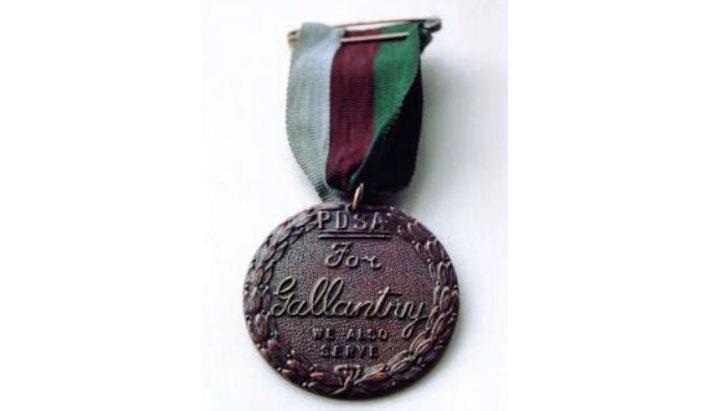
Dickin Medal
Sinking of 'HMS Grasshopper'
In January 1942, as Japanese forces rapidly expanded across the Pacific and southeast Asia, HMS Grasshopper was involved in attempts to evacuate personnel from Singapore. The ship came under attack from Japanese aircraft and was severely damaged. It eventually sank near the islands off the coast of Sumatra.
Judy survived the sinking, but the crew found themselves stranded on a small, desolate island with little food and no fresh water. The situation was dire; dehydration and starvation posed immediate threats to survival.
It was here that Judy's instincts and loyalty first took on life‑saving importance. While the men searched fruitlessly for water, Judy began to dig persistently in the sand among scrub and vegetation. Eventually she uncovered a freshwater spring, a discovery that enabled the sailors to drink and survive long enough to plan their next move. Overcoming exhaustion, hunger, and exposure, the men and Judy built a crude raft and began a desperate journey toward safety.
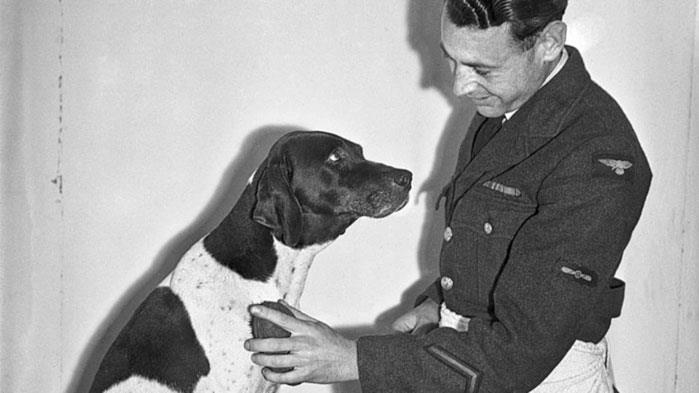
Frank Williams grooms Judy, the English pointer with whom he spent three-and-a-half years in Japanese POW camps
Capture and prison camp life
Their escape attempt ultimately failed. Japanese patrols captured the surviving crew members, and they, along with Judy, were transported to the Gloegoer prisoner‑of‑war camp in Medan, Sumatra. Conditioned by decades of colonial tensions and wartime brutality, Japanese POW camps were notoriously harsh. Prisoners faced forced labour, disease, inadequate food, and brutal treatment by guards. Most prisoners struggled simply to survive.
Initially, the Japanese guards intended to kill Judy on sight - animals were typically not allowed in camps and were seen as nuisances. But one sailor, Leading Aircraftsman Frank Williams, refused to abandon her despite the obvious risk. Williams shared his scant rations with Judy, and she quickly became beloved by the men.
Recognising the bond between Judy and the crew, the camp commandant eventually agreed to register her formally as a prisoner of war, assigning her a POW number: "81A Gloegoer Medan". This extraordinary act made Judy the only dog in World War II ever officially recorded as a POW.
Life inside the camp
Life in the camp tested the endurance of every prisoner human and canine. Food was rationed and insufficient, disease was rampant, and the work assigned by camp overseers was gruelling. For many men, despair was as dangerous as starvation. Judy's presence became a psychological anchor. She offered warmth, companionship, and a form of emotional resilience that helped sustain men through endless hardship. But her contribution was not only emotional, she also served practical, survival‑enhancing functions.
Judy became alert to approaching guards, enabling prisoners to hide contraband or prepare for punishment roll calls. She was known to bark loudly when snakes or scorpions approached barracks at night, illnesses that could have inflicted further suffering. According to camp accounts, Judy would even distract guards during punishments, barking and nudging at the soldiers' feet, a behaviour interpreted as protective, resolved, and frightfully bold given the circumstances.
Her actions strengthened the bond between her and the prisoners, transforming her from a ship's dog into a guardian and symbol of loyalty under fire.
Another ordeal: Japanese 'hell ships'
In mid‑1944, the Japanese decided to move POWs out of the area. Judy and the surviving prisoners were forced aboard a transport ship bound for a new destination. Dogs were officially forbidden aboard these vessels, so Judy was hidden in a rice sack for much of the journey.
The overcrowded transport was a typical Japanese "hell ship", where prisoners were confined in unsanitary conditions. To make matters worse, the ship was torpedoed by Allied Forces, unaware that prisoners were aboard. The sinking was chaotic, but in the aftermath, Judy remained beside the men. As debris and wreckage floated in the water, she helped them stay afloat and guided them to pieces of wreckage that offered refuge, an astonishing deed of canine perseverance amid catastrophes.
Liberation and return
After the war ended in August 1945, Japanese surrender brought the liberation of POW camps. Judy, weakened but still loyal, returned to Britain with Frank Williams and other sailors. After a required period in quarantine, she was welcomed by a public amazed at her story of survival, companionship, and unbroken loyalty.
In May 1946, Judy was awarded the Dickin Medal, instituted by the British charity PDSA and regarded as the animal equivalent of the Victoria Cross. The medal's citation commended her "magnificent courage and endurance in Japanese prison camps" and acknowledged her vital role in boosting morale and loyalty and hope.
Honouring animals reflects our humanity
Dogs have fought, served, and often died alongside humans, performing tasks no soldier could: scouting, guarding, detecting explosives, and sustaining morale. Yet their contributions are frequently forgotten, despite the risks they face and the lives they save.
The British Army recognised this early, founding the Royal Army Veterinary Corps (RAVC) in 1796 to care for horses, dogs, and other service animals long before civilian protections existed. Victorian society also began valuing animals, with the RSPCA campaigning against cruelty and dog shows and breed clubs reflecting a moral shift toward empathy.
Ironically, Nazi Germany under Adolf Hitler, who loved German Shepherds, was one of the first regimes to codify animal-protection laws. The Reichstierschutzgesetz of 1933 criminalised cruelty, restricted experimentation, and imposed fines or imprisonment for violations. Yet this concern for animals coexisted with human atrocities, proving that legal protection or affection for animals does not guarantee moral consistency.
Into this world stepped Judy, a liver-and-white Pointer born in 1936. Serving aboard the HMS Grasshopper, she warned her crew of danger, survived a shipwreck, and endured Japanese POW camps, becoming the only dog officially registered as a POW. She later accompanied her handler, Frank Williams, to Tanzania, where she died. He erected a memorial at her grave to honour her life and extraordinary service
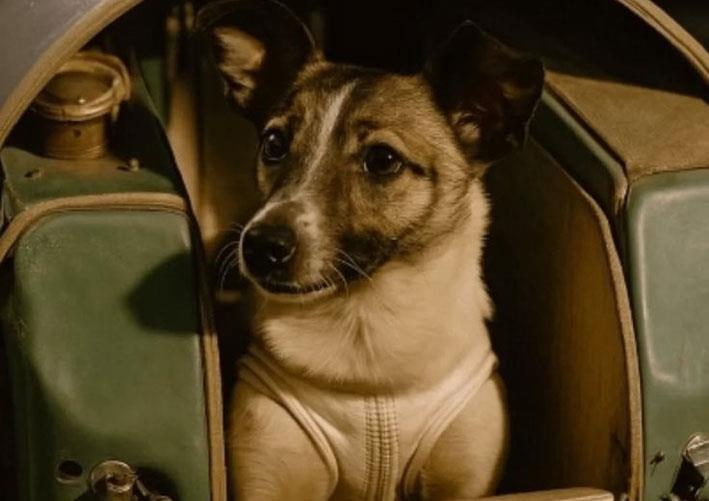
Laika, the first animal to orbit Earth, a stray dog launched aboard 'Sputnik 2' on 3 November 1957
Dogs continue to shape warfare and science today. Cairo, the Belgian Malinois in the Bin Laden raid, exemplifies highly trained, versatile breeds. Beyond combat, Laika, the first dog in orbit, advanced human exploration, sacrificing her life for knowledge.
From Judy to Cairo to Laika, these dogs prove that courage, loyalty, and service are not exclusively human. Their stories demand recognition, protection, and respect reminding us that "how we honour animals reflects the measure of our own humanity".