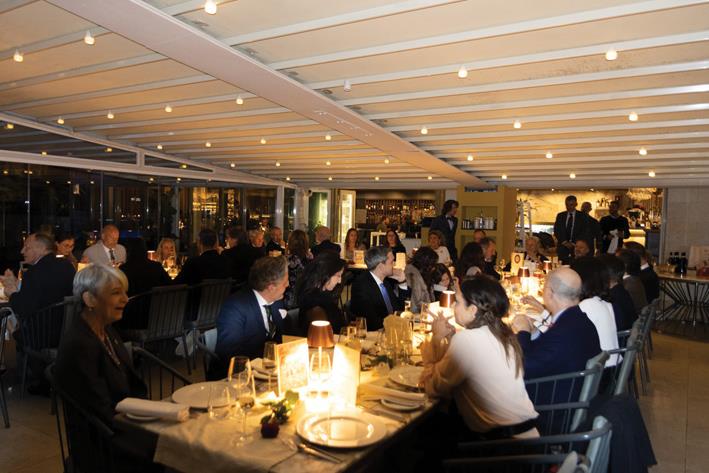
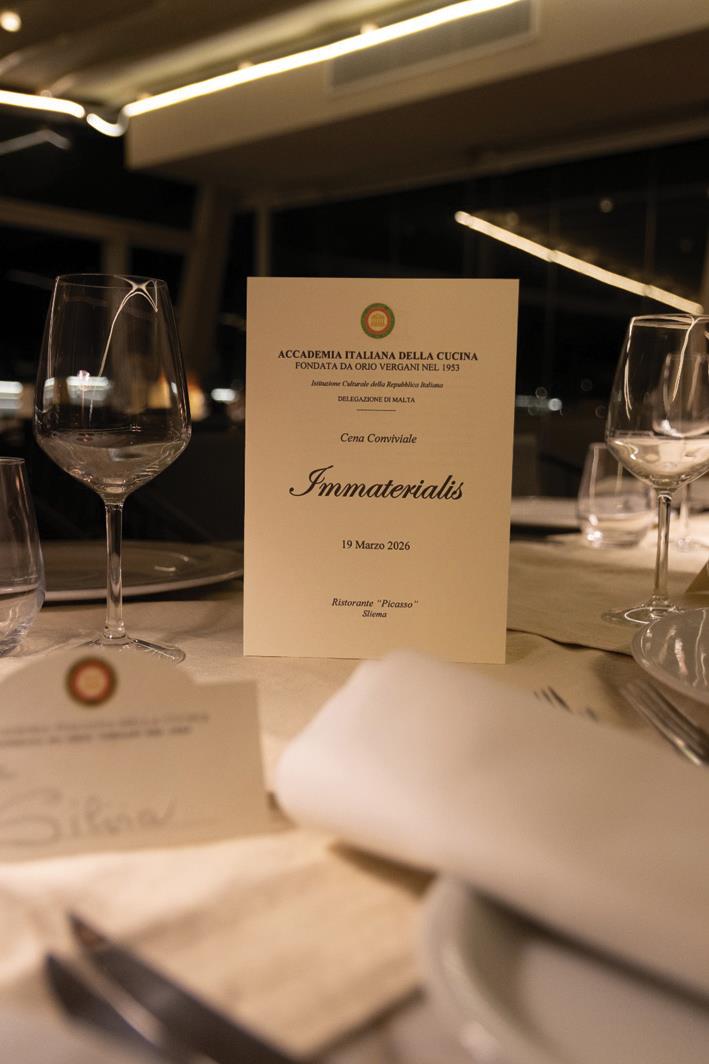
There are evenings that feel like a collective embrace - moments when culture, memory, and conviviality gather around a single table. Such was the atmosphere at the Picasso restaurant, where a dinner of rare warmth and refinement was held to celebrate the recognition of Italian Cuisine as an Intangible Cultural Heritage of Humanity by UNESCO.
The dining room, framed by its sweeping windows over the ancient stones of Valletta, became the perfect setting for an event that honoured not only a culinary tradition, but an entire way of living - that Italian art of being together, of sharing, of transforming food into a language of affection and identity.
The evening opened with the tender, uplifting notes of Vai Italia, sung by Albano with the Piccolo Coro dell'Antoniano - the very song that accompanied the candidacy of Italian cuisine on its journey to UNESCO. It offered the ideal cue for the delegate to recount the long path of dedication, study, and perseverance that led to this milestone, and to reflect on the profound reasons behind the recognition.
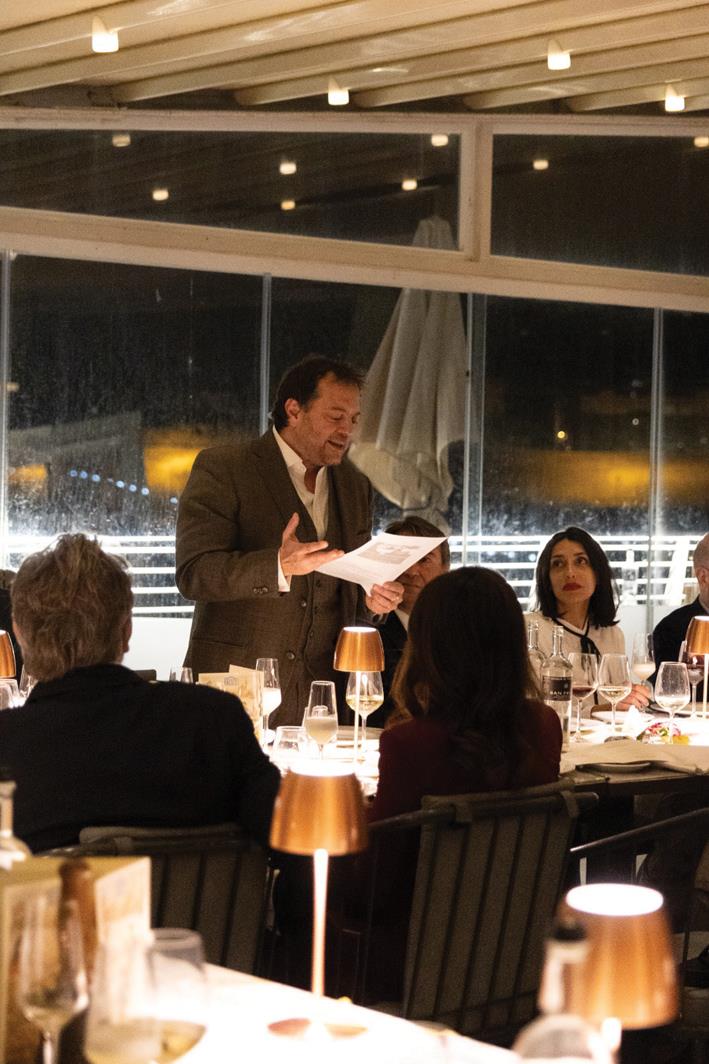
At the heart of the speech was the essence of the UNESCO declaration:
"UNESCO has recognized Italian cuisine as a body of knowledge that is not only culinary, but also convivial and social, passed down from generation to generation throughout the national territory. Italian cuisine therefore develops both at the domestic level - being transmitted informally within families through traditional recipes that are continually transformed by the affectionate interaction between different generations - and in more structured ways, thanks to personalities such as chefs and gastronomists."
A Menu as a Journey Through Italy
The true protagonist of the evening was the menu curated by chef Claudio Schiavone, supported by chef Emanuele Valerio and by the restaurant's owner, Maurizio Coco. Dish after dish, the table became a map of Italy - a journey through regions, memories, and flavours that, while deeply rooted in their territories, merge into a single national identity.
From the Ligurian cappon magro to the Venetian alici in saor, from the Tuscan pappa al pomodoro to the Lazio arancino all'amatriciana, from the golden risotto alla Milanese to the Sardinian culurgiones, the menu unfolded like a culinary fresco. It concluded with the tenderness of Emilian braised beef and the refined sweetness of Sicilian pastry - a finale worthy of the most demanding palates.
Each dish was introduced by the academicians, who shared anecdotes, origins, and curiosities, turning the convivium into a living lesson in culture and taste. Midway through the evening, with an '80s sgroppino in hand, Giovanni Costantino offered one of his irresistible interludes - half serious, half playful - reminding everyone how Italian cuisine is the splendid result of history, art, science, and imagination intertwined.
A Moment of Solemnity: The Honorary Appointment
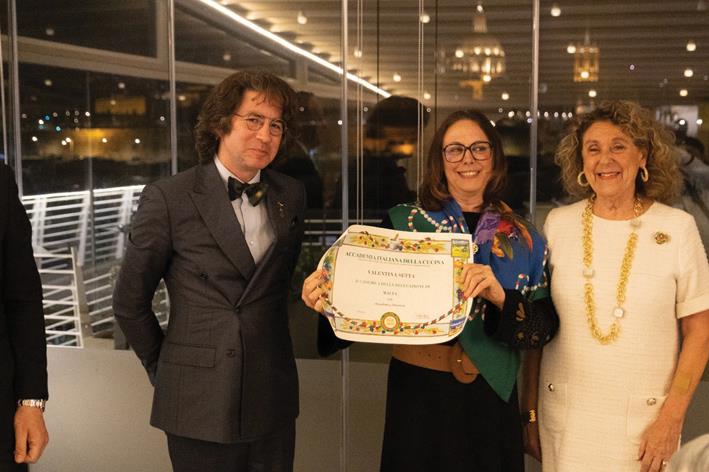
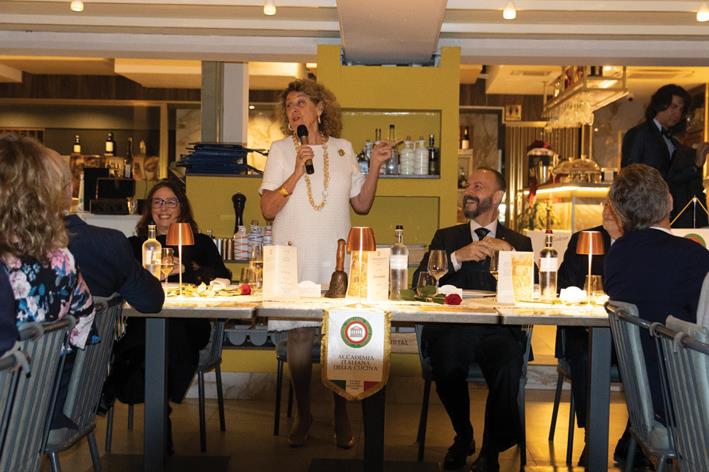
The evening reached its most solemn moment with the appointment of new academicians, including - for the first time in the history of the delegation - the conferment of the title of Honorary Academician on the Italian ambassador to Malta H.E. Valentina Setta by the President and Malta Delegate of the Accademia Della Cucina Italiana, Massimiliana Tomaselli.
The words spoken by Signora Tomaselli about H.E. Valentina Setta were received with heartfelt warmth:
"This evening I also have a truly special honour: to confer an appointment as Honorary Academician. And it is an even more meaningful moment because it is the first time this has happened in the history of our delegation. This title may be granted to those who hold an important institutional role in the territory where we operate. However, although I have great respect for institutions, as you all know, that alone has never been enough for me. In a person I always look for something more. And I found that 'something more' in our ambassador: a person who combines institutional authority, open mindedness, extraordinary operational skills and, above all, great human qualities. For this reason, tonight I feel deeply honoured and grateful to be able to confer this title on someone who, with natural elegance, manages to bring together all these wonderful qualities."
The other three Academicians appointed were: Daniela Primiani, Nerio Buzio and Gianni Stefanelli.
As a gesture of gratitude, the owner of the restaurant received the precious volume The History of Italian Cuisine in Comics, published by the Accademia Italiana della Cucina.
A Few Notes on the Dishes - A Cultural Tapestry
- Pappa al pomodoro, born from the Tuscan genius for transforming leftovers into poetry, rooted in ancient tradition yet immortalised in Il Giornalino di Gian Burrasca.
- Parmigiana di melanzane, the pride of Campania, a Sunday ritual of fried aubergines, tomato, basil, and melting cheese.
- Alici in saor, a 14th‑century Venetian invention, a sweet‑and‑sour memory of sailors and feasts.
Here is the full menu served that evening: Pappa al pomodoro; Arancino all'amatriciana; Cappon magro; parmigiana di melanzane/Alici in saor//Risotto alla Milanese//culurgiones//Brasato di guancia di vitello// Biancomangiare// pralina di tiramisù, cassatella, cannolo.
A most enjoyable evening, largely organised by the ever energetic Massimiliana who leaves no stone unturned to make sure everything is done to perfection.