In contemporary society, the face has become a site of increasing intervention. Lips are augmented, cheeks sculpted, eyelids lifted, and skin smoothed through injectables such as Botox and dermal fillers. While once associated predominantly with women, aesthetic procedures are now also sought by men, signalling a broader cultural shift in how the body is perceived, managed, and displayed.
Yet this phenomenon is not without precedent. The desire to enhance physical appearance stretches back to antiquity. In ancient Egypt, cosmetic practices were embedded within both ritual and daily life, where beauty signified not only attractiveness but also health and spiritual alignment. Classical Greek culture further formalised aesthetic ideals through proportion, symmetry, and harmony, the principles immortalised in sculpture and still deeply embedded in Western visual culture. During the Renaissance and after, the human body became the locus of artistic and scientific inquiry, reinforcing the notion that beauty could be perfected, idealised, and, crucially, constructed.
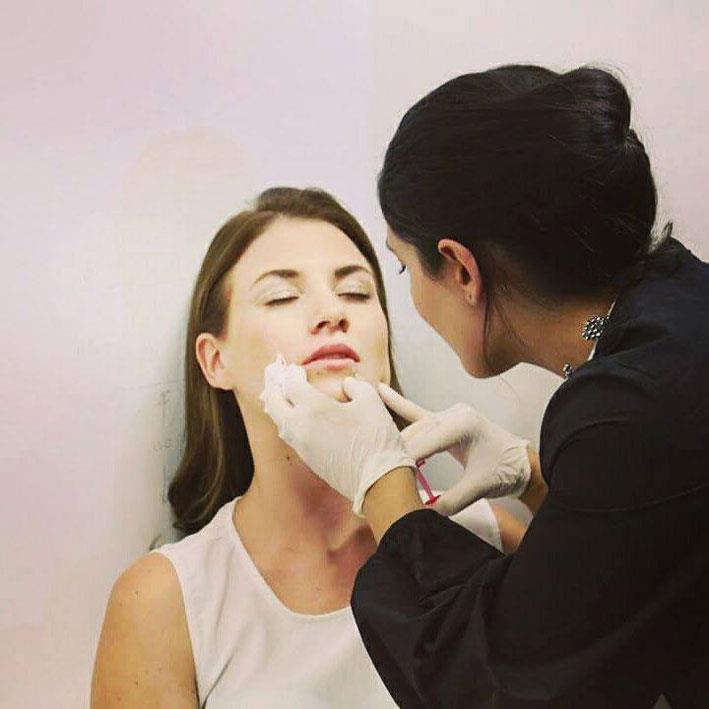
What distinguishes the present, however, is the medicalisation and commodification of beauty. Aesthetic intervention has evolved into a global industry, supported by technological advancement, aggressive marketing, and the pervasive influence of social media. Faces are no longer merely represented; they are edited, filtered, and increasingly reconfigured in reality to match their digital counterparts. The body itself becomes a project, open to revision, optimisation, and correction.
From a psychoanalytic perspective, this shift invites deeper reflection. Sigmund Freud's conception of the ego as shaped through external perception remains particularly relevant. The self is not autonomous but formed in relation to how one is seen (Freud, 1923). This idea was later expanded by Jacques Lacan through the concept of the mirror stage, in which identity is constructed through an image, an idealised reflection that is never fully attainable (Lacan, 1949/2006). In today's context, the "mirror" is no longer a literal surface but a digital one: the curated, filtered image that circulates on social media platforms.
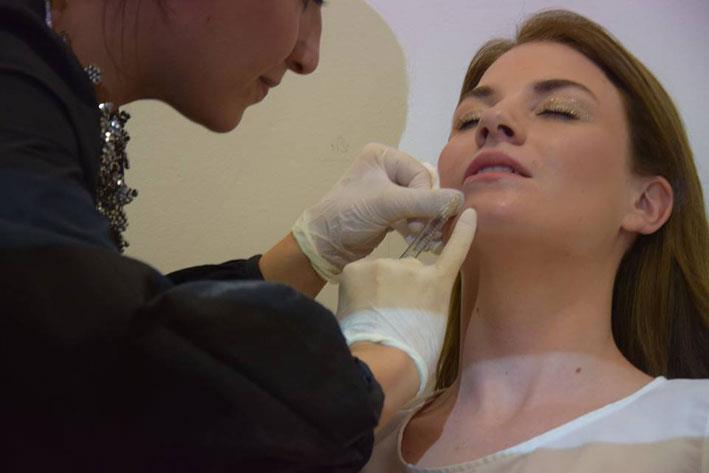
The pursuit of aesthetic procedures can thus be understood as an attempt to reconcile the gap between the real self and the idealised image. However, this gap is inherently unstable. Each intervention may bring temporary satisfaction, yet it can also intensify the desire for further modification. The result is a cycle of perpetual adjustment, what might be described as a contemporary form of narcissistic tension, where the individual oscillates between self-recognition and self-alienation.
A further dimension that deserves attention is the relationship between aesthetic intervention and ageing. In many ways, cosmetic procedures are not only about beauty but about resisting time itself. Wrinkles, lines, and sagging skin are not merely physical changes; they are visible markers of temporality and mortality. To erase them is, symbolically, to deny ageing. Psychoanalytically, this may be understood as an attempt to negotiate the anxiety provoked by the body's inevitable transformation. The youthful face becomes an ideal not simply because it is aesthetically valued, but because it represents vitality and continuity, while the ageing face confronts the individual with finitude.
At the same time, it would be reductive to frame all aesthetic intervention as pathological. For many individuals, such procedures enhance confidence, alleviate distress associated with perceived imperfections, and contribute to a broader sense of wellbeing. As local medical doctor specialising in aesthetic medicine, Dr Joanna Delia observes, "as much as we applaud science that restores the optimal function of vital organs such as the kidney, heart, or liver when they malfunction, we may also recognise the value of scientific interventions that restore the skin and our external appearance when these fall into disrepair, both in function and form."
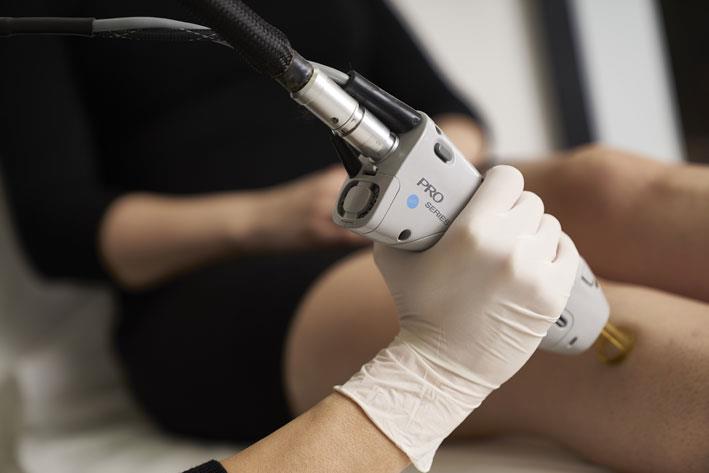
Photo: Alexandra Pace
She further notes the transformative yet often subtle impact of such treatments: "it is extraordinary to observe individuals ageing from, say, 43 to 63 while being maintained in a way that is not overtly noticeable, remaining confident, with healthy skin, and benefiting from advances that counteract processes such as bone demineralisation, which can lead to atrophy of the mandible and other facial structures, often resulting in changes such as the inversion of the lips in women."
Studies in body image suggest that appearance-related dissatisfaction is often shaped by sociocultural pressures and media exposure (Tiggemann & Slater, 2014). Within the framework of health and wellbeing, the question is not simply whether one should or should not engage in aesthetic modification, but rather under what conditions such interventions support or undermine psychological integrity.
Nevertheless, significant concerns remain. The rapid expansion of the industry has led to uneven standards of practice. Reports of substandard or expired materials, as well as procedures performed by inadequately trained practitioners, highlight the risks involved. Ethical responsibility must therefore rest not only with the individual but also with regulatory bodies and medical professionals, ensuring that patient wellbeing is prioritised over profit. In a culture increasingly driven by visibility and appearance, the line between care and commerce becomes ever more fragile.
Within the Maltese context, as elsewhere, the visibility of aesthetic procedures has increased, though often without sustained public discourse on their psychological and cultural implications. This relative silence risks normalising intervention without critical reflection, allowing globalised aesthetic standards to take root without question.
Ultimately, the paradox of contemporary aesthetic culture lies in its promise of individuality through conformity. While procedures are marketed as tools for self-expression, they frequently produce standardised features shaped by global trends. The face, once a marker of uniqueness, risks becoming a template. The challenge, then, is not to reject aesthetic intervention outright, but to situate it within a broader understanding of the human condition, one that acknowledges the historical persistence of beauty ideals, the psychological complexity of self-image, and the ethical responsibility of care. The arts, in particular, have a vital role to play in this regard: reminding us that beauty has never been singular, fixed, or purely external, but always entangled with meaning, perception, and the inner life.
Prof. Louis Laganà, PhD (Loughborough), lectures in Arts for Health and Wellbeing at the University of Malta.