It was one of those Valletta evenings that feel suspended between centuries. The newly restored apse at St Augustine’s Priory - that quiet jewel tucked into Old Bakery Street - glowed softly under the lights, its white walls and arches holding the hush of an old church made young again. The Barocco Foundation and Din l-Art Ħelwa had joined forces to create a small but radiant concert, and as we took our seats, it felt like stepping into a pocket of history, gently reopened. Miriam Agius, Founder and Administrator of Barocco Foundation and Simone Clark were behind this concert in the Sip and Listen series and have been working for both organisations for years. They handed us flutes of prosecco as we walked in. It was full house.
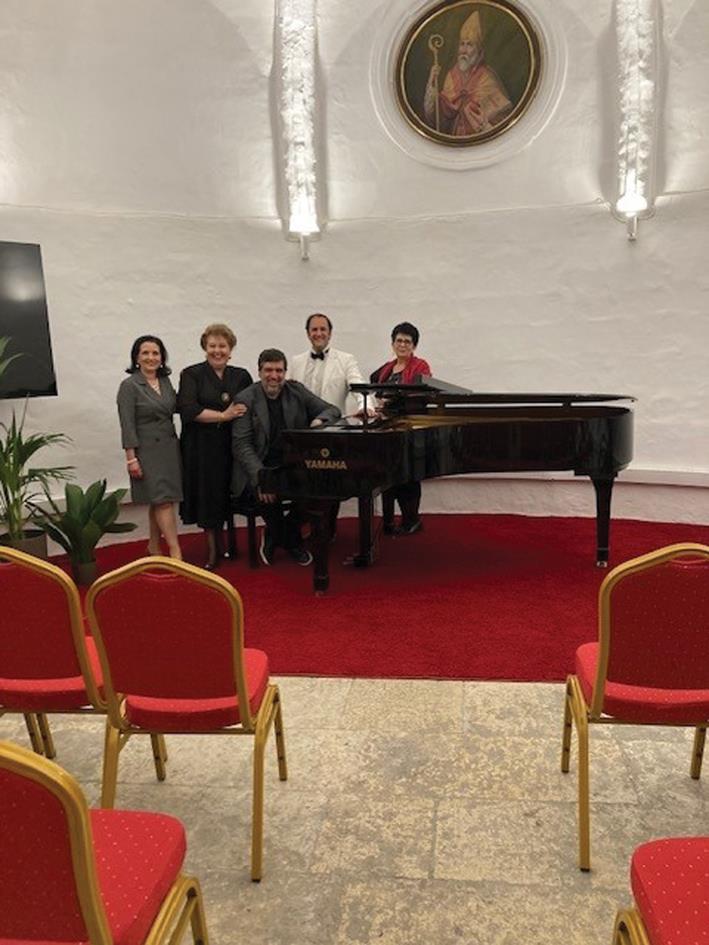
Soprano Marita Bezzina and baritone Ken Scicluna sang through the programme, a tapestry of songs that once travelled across continents on crackling radios and gramophones: Vera Lynn's wartime favourites, the lilting optimism of We'll Meet Again, the cheeky resilience of Roll Out the Barrels, the tender ache of As Time Goes By. But woven among them were the Continental songs we Maltese hold close - Parlami d'amore Mariù, La mia canzone al vento, Besame Mucho, J'Attendrai - melodies that floated through Mediterranean kitchens and courtyards long before and long after the war.
And then there was Bruno.
The Brazilian pianist - tall, unassuming, and utterly dazzling on the piano - anchored the entire evening with a kind of effortless brilliance. He accompanied the singers with sensitivity and sparkle. But when he took the piano alone, the room shifted. His Libertango in particular was a revelation: sharp, seductive, breathless. The apse itself seemed to pulse with rhythm. You could feel the audience leaning forward, caught between admiration and disbelief. It was one of those performances that leaves you smiling without realising it. I even enjoyed Piaf's La Vie en Rose on the piano. Under normal circumstances although I have heard it sung and sung well by other singers, to me Piaf's version is sacred and the best interpretation. But because Bruno played it so beautifully I accepted his daring to play it and clapped hard. Illogical I know but to Piaf fans that's the way it goes.
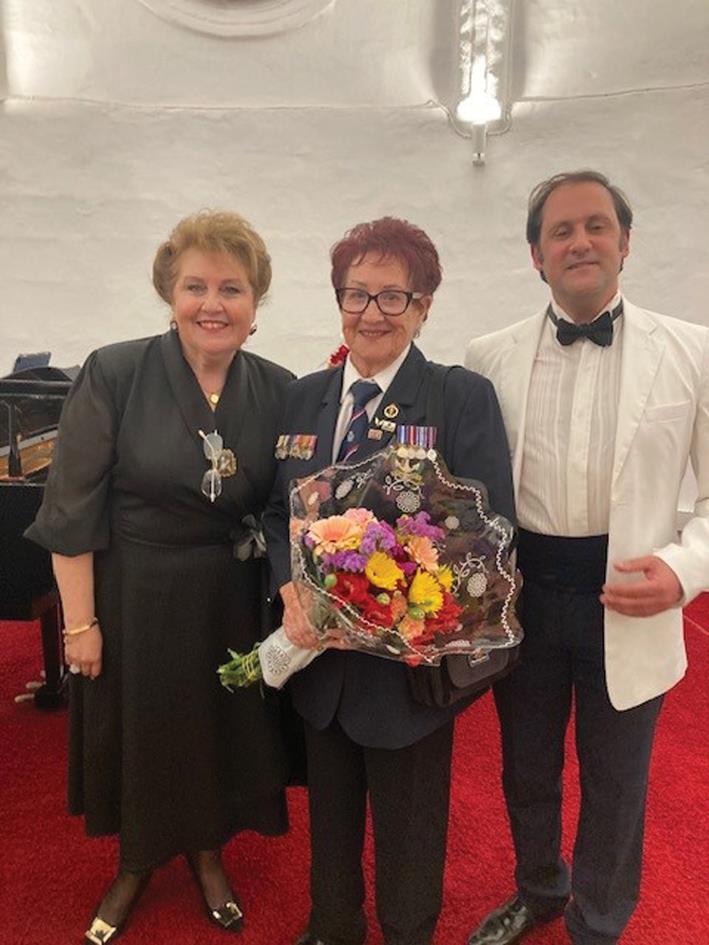
The evening had its moments of pure human joy too. Elaine Zerafa - medals gleaming, spirit as bright as ever - rose from her seat in the front row and went up to sing. A former WREN who made Malta her home after marrying a Maltese, she carried the songs not as nostalgia but as lived experience. The audience adored her. She brought humour, warmth, and that unmistakable spark that makes her such a beloved presence. Seeing her there, framed by the restored apse, felt like a small act of continuity, a reminder that history is not only preserved in stone but also in people.
Song followed song - Moonlight Serenade, White Cliffs of Dover, You Are My Sunshine, Somewhere Over the Rainbow, Tipperary, Bless 'Em All - each one a thread in the long fabric of wartime memory, yet somehow lightened by the intimacy of the setting. Even the piano-only moments - La Vie en Rose, Libertango - felt like whispered confidences.
By the end, the room was glowing with that gentle, collective warmth that only music can create. A small concert, yes, but one that held an entire era in its hands.
And as we stepped back into Old Bakery Street, the night air felt softer, as though the songs were still following us out into Valletta.
What struck me, looking around the apse that evening, was how many of us were born in or just after the war years - too young to remember the songs as lived experience, yet somehow carrying them as if they were stitched into our earliest memories. My sister and I included. We grew up with these melodies drifting through kitchens, radios, festas, family gatherings; they were the soundtrack of the generation just above us, and so they became part of our own inner landscape.
And perhaps that is why, even for someone who loves classical music, it felt like such a welcome change to sit inside this lighter, more familiar repertoire - songs that were never "ours" and yet somehow always were. It is still a mystery to me how such old songs continue to have a following, how they still find their way into our hearts with such ease. Maybe it's because they were born in hardship but carry tenderness, humour, and hope - the emotional vocabulary our parents and grandparents used to steady themselves. Even if we didn't live the war, we inherited the feelings.
Hearing them now, in a restored apse glowing with new life, felt like a gentle bridge between what we never lived and what we somehow still remember and love.