This month marks the 91st anniversary of Colonel Thomas Edward Lawrence "Lawrence of Arabia", who died in 1935, officially from a motorcycle accident yet long shrouded in mystery. From Oxford scholar to desert warrior, Lawrence became the master of guerrilla warfare alongside his Arab allies, igniting the desert, undermining Ottoman power, and shaping General Allenby's march to Jerusalem in 1917 forever blurring the line between history, legend, and myth.
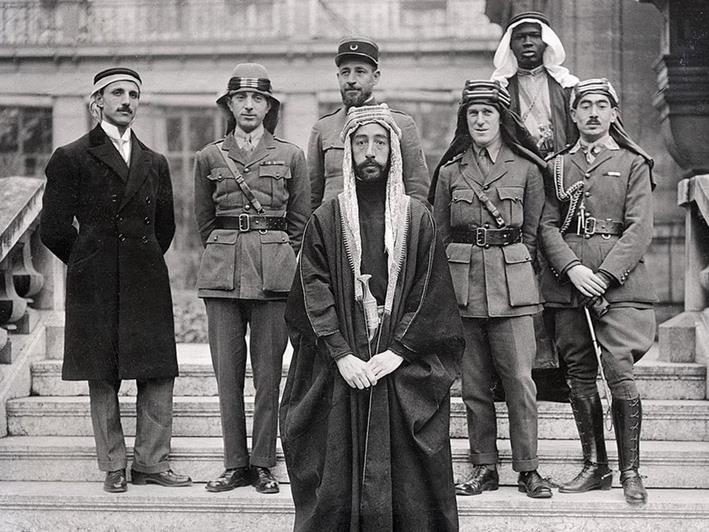
Born in Tremadog, Caernarvonshire, North Wales, in 1888, Lawrence's early life was shaped by family complexity. His father, an Anglo-Irish landowner, lived with his mother, Sarah Junner, a governess, outside marriage, leaving the family socially isolated. Junner's strict, authoritarian hand left deep marks on Lawrence's character. The second of five sons, intelligent but physically fragile, he carried a lifelong drive to restore his family's name to prestige, a drive that would push him from the halls of Oxford to the deserts of Arabia.
After leaving school, Lawrence studied modern history at Jesus College, Oxford, where he became fascinated with medieval military architecture. In 1909, he surveyed Crusader castles in Syria and Palestine for his thesis, graduating in 1910 with First Class Honours for The Influence of the Crusades on European Military Architecture, later published as Crusader Castles. He admired the Crusader soldiers, their austere lives, discipline, and military ingenuity shaped his understanding of warfare and leadership.
Between 1911 and 1914, Lawrence worked on archaeological excavations at Carchemish in Syria, gaining practical field experience and learning Arabic from local workers. He also joined a Palestine Exploration Fund expedition, combining archaeological surveying with strategic mapping skills that would later prove invaluable in his intelligence work during the First World War. This period, both before 1914 and after 1920, was considered a golden age of Biblical archaeology and the study of ancient Egyptian civilisation, and Lawrence found himself at the heart of these scholarly and exploratory endeavours along the upper Euphrates.
As the First World War erupted in 1914, Britain mobilised its forces across Europe, from the trenches of France and Belgium to the disastrous campaign at Gallipoli. Lawrence joined the British Army that same year and was commissioned as a Second Lieutenant in October 1914. Rather than serving in the trenches, he was assigned to the Geographical Section of the General Staff, where his training as an archaeologist and surveyor made him a valuable cartographer and intelligence officer. While he worked behind maps and dispatches, two of his brothers were killed fighting in the trenches of France, a personal loss that brought the war's brutality close to home.
In 1915, he was posted to Cairo, where British strategic ambitions in the Middle East particularly concerning Palestine and Jerusalem were intensifying. Lawrence's prior fieldwork in Syria and the Levant, his detailed knowledge of the terrain, and his fluency in Arabic made him uniquely suited for intelligence work. British command, later under General Edmund Allenby, needed someone who could move among the Arab tribes as a trusted ally; someone who understood their customs, culture, and rivalries.
Hesitant at first to undertake the mission assigned by British high command, Lawrence, no ordinary soldier, crossed the Suez into the Hejaz, entering a world of endless sand, hidden oases, and tribal rivalries as old as the desert itself. There, he encountered Arab Bedouin tribes, fragmented by ancient feuds and bound only by their own codes, often engaging in ritualised skirmishes that made unity nearly impossible. On one of his first meetings, accompanied by Lieutenant Colonel Gilbert Clayton, Lawrence was introduced to Prince Faisal ibn Hussein, a visionary leader whose ambition to rally the Arab Revolt would soon align with Lawrence's daring mind.
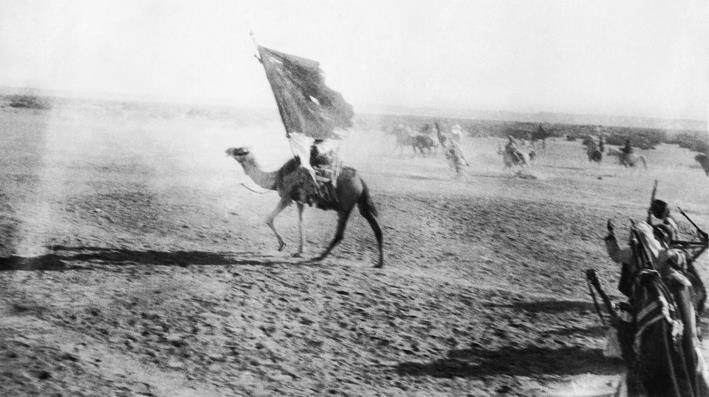
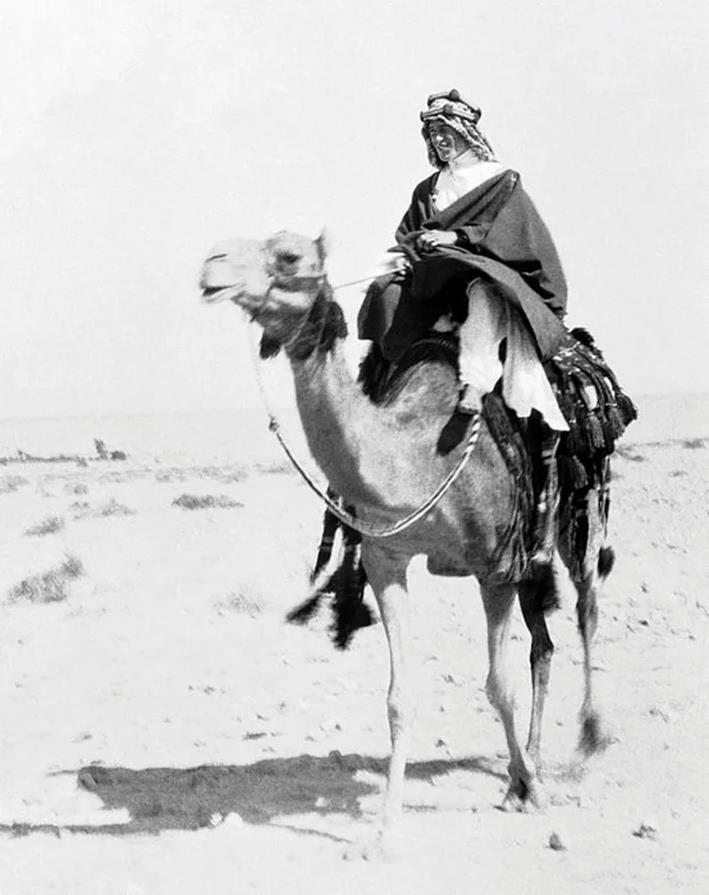
Lawrence's audacity reached its zenith in July 1917, when he joined Auda abu Tayi and a small force of Arab fighters in a daring march across the punishing expanses of the Nefud Desert to strike Aqaba. The Ottoman guns at the port were trained toward the Red Sea, prepared for naval assault and unable to effectively defend against an attack from the unguarded landward side. The crossing was brutal, blistering heat, scarce wells, and long stretches of sand and stone that tested both men and camels. During the march, when a tribesman, named Gasim, was left behind to die in the desert, Lawrence turned back alone to rescue him. The act elevated him in the eyes of his Arab comrades, transforming him from foreign officer into a leader bound by courage and shared honour.
Yet the desert demanded discipline. Lawrence enforced order during raids and the aftermath of looting, rebuking what he called "barbaric behaviour", on one harrowing occasion, to prevent a tribal feud from destroying the fragile cohesion of his force, he shot a tribesman he had once saved, a grim choice that haunted him but ensured the success of the Aqaba campaign.
After Aqaba, the Arab fighters honoured him with traditional robes and the khanjar dagger, formally welcoming him as one of their own. While the British command initially viewed his adoption of Arab dress with unease, General Allenby recognised the results: Lawrence had transformed an untrained, irregular force into a swift and deadly weapon against the Ottomans, his legend rising with every daring strike across the desert sands.
"He turned the vast silence of the desert into a theatre of shock and awe."
In 1918, Lawrence and his Arab warriors swept toward Damascus, the Ottoman stronghold of Syria. Small, agile units struck with precision, speed, and strategy, outmanoeuvring far larger Ottoman contingents. When the city fell, it was more than a military victory - it marked the fulfilment of Lawrence's vision: a united Arab force, forged in the desert, capable of challenging empires through strategy, daring, and unyielding will. Lawrence entered Damascus as the celebrated victor, a hero whose exploits had reshaped the Middle Eastern theatre.
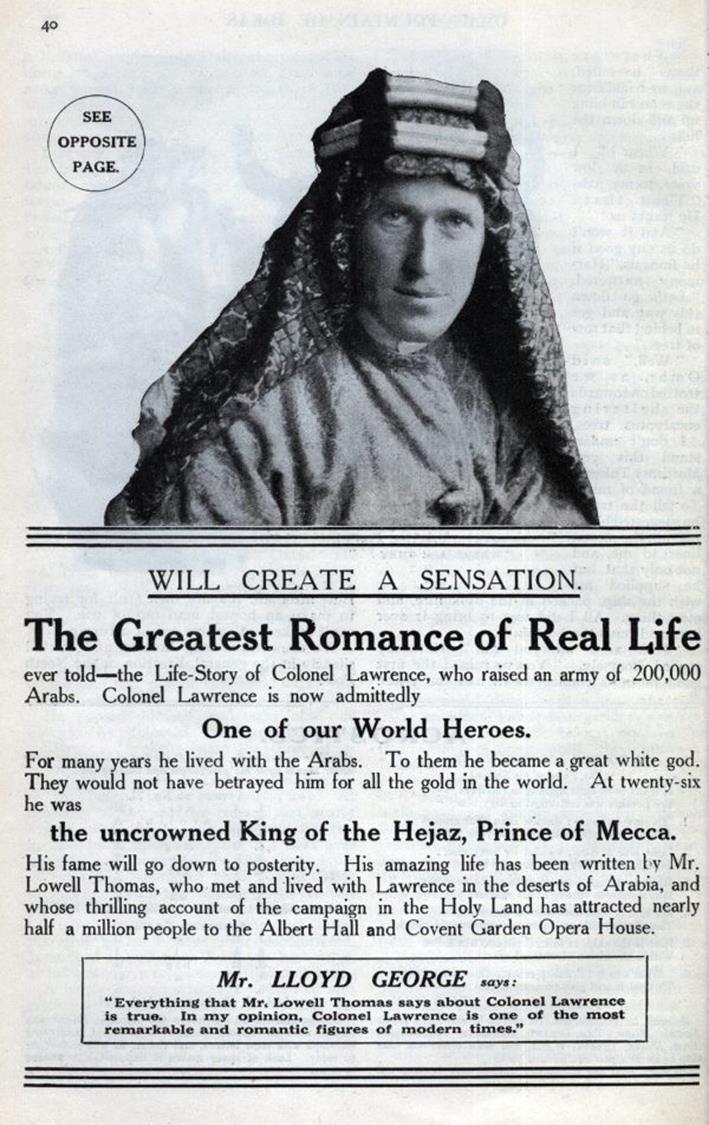
Lawrence's legend was forged not only in battle, but in performance. Lowell Thomas, encouraged by British authorities to document the Middle Eastern campaign, transformed it into a transatlantic spectacle. He elevated the desert war's importance, reinforced Anglo-American unity, and framed Jerusalem's capture as near-biblical redemption, presenting Britain as liberator rather than imperial power. Photographs of Lawrence striking the Hejaz Railway cemented the heroic image yet without Thomas and his cameraman Harry Chase, Lawrence might have remained a capable but largely unknown officer within Arab councils and British intelligence circles.
After the war and the partition of Arab lands under the Sykes-Picot Agreement, Lawrence grew deeply disillusioned. He felt betrayed and estranged from the Arabs and from Hussein's son, Faisal, with whom he had once fought side by side. Haunted by this loss, he withdrew from public life, joining the Royal Air Force and later the Armoured Corps under assumed names, including T. E. Shaw, to avoid recognition. Despite official duties, he travelled occasionally to India and the Middle East on intelligence missions. Ultimately, he retreated to Clouds Hill, a small Devon cottage with no running water or toilet, living under an alias, far from the fame and myth that had grown around him
Lawrence's life was marked not only by legendary exploits but also by profound personal tragedy. He appears to have suffered psychological trauma comparable to what we would today recognise as post-traumatic stress disorder, carrying the weight of the war's horrors long after the fighting ended. Among the darkest episodes of his early experiences was his arrest by Ottoman forces, during which he was subjected to physical abuse and humiliation. Some accounts suggest that, mistaken for another prisoner, a Circassian soldier, he endured assault by a Turkish officer. These traumatic events were internalised, shaping his psyche even as he performed extraordinary feats on the battlefield and later reflected on them in his writing with detachment, introspection, and disciplined self-control.
At Clouds Hill, Lawrence assumed the dual role of participant and chronicler. Seven Pillars of Wisdom, composed quietly after his return to England, intertwines accounts of desert raids, tribal diplomacy, and Hejaz Railway sabotage with reflective analysis of leadership, loyalty, and honour. Historians argue that Lawrence deliberately framed the narrative: Arabs appear as autonomous actors, British strategy as facilitative rather than coercive, and his own role as both observer and agent. The work thus transforms lived experience into a structured historical and ethnographic account, blending empirical observation with literary craft.
Even in death, Lawrence remained enshrouded in myth. On 13 May 1935, while riding his powerful Brough Superior motorcycle near Clouds Hill, he swerved to avoid two boys on bicycles and was thrown from the machine. He died six days later, on 19 May, from his injuries. Though occasional theories have suggested darker possibilities ranging from espionage motives to resentment over his criticism of Middle Eastern partition and wartime promises to the Arabs, no credible evidence supports such claims. An experienced and avid rider who loved speed, Lawrence met a sudden and premature end on a quiet English road, a starkly ordinary conclusion to a life otherwise extraordinary.
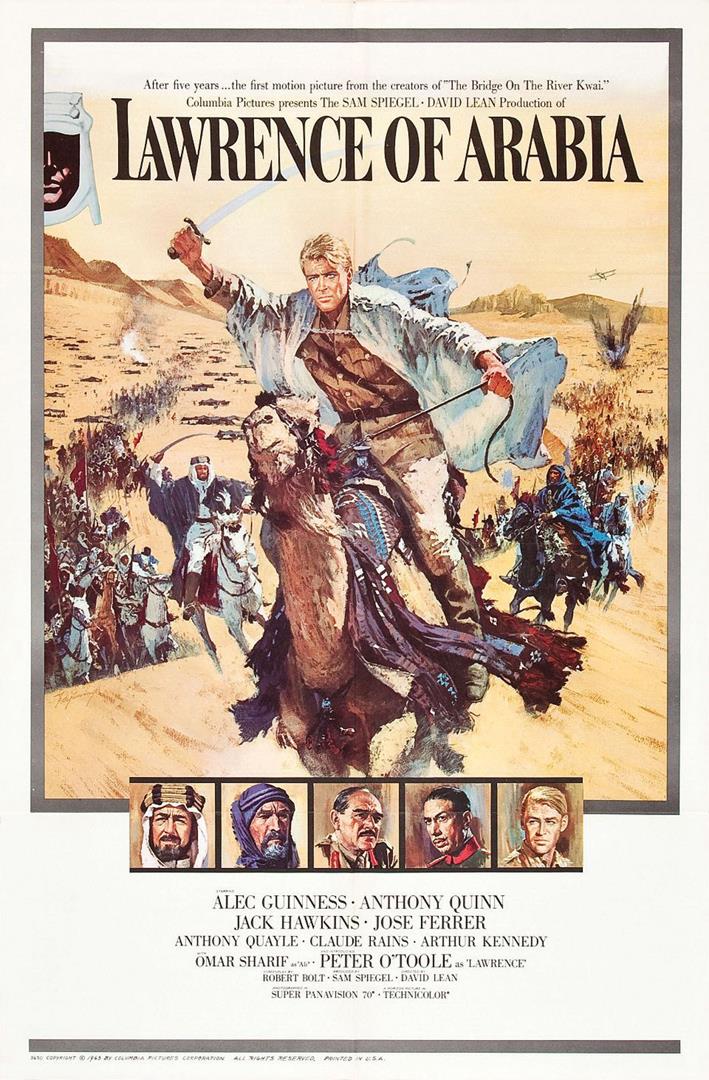
In 1962, David Lean's Lawrence of Arabia transformed the deserts of the Arab Revolt into legend on the silver screen. Shot across Jordan's Wadi Rum, Morocco, and Spain, the film captured the austere beauty and vast, unforgiving grandeur of the landscapes Lawrence had cherished. Peter O'Toole became the embodiment of Lawrence frail in body, yet towering in intellect, courage, and will, while Omar Sharif brought King Faisal vividly to life. Drawing heavily on Seven Pillars of Wisdom, the epic tells how a solitary scholar could command revolt, turning history into myth and the desert itself into a stage for heroism, strategy, and enduring legend.
He was a rogue operative in style, operating deep behind enemy lines alone, with no support, often frustrating conventional British officers still adhering to traditional forms of warfare. His maverick actions were always aimed at advancing British Arab strategic goals, not undermining Britain. Yet, unfortunately, many scholars and publishers have focused on his celibate, private life and the aura of mystery surrounding him, rather than on his cloak-and-dagger exploits as the architect of desert special operations warfare.
Lawrence's remains lie in a small cemetery in Dorset, near Clouds Hill. A modest memorial at St Nicholas' Church depicts him in traditional Arab attire, dagger in hand - a symbol of the intersection between his childhood fascination with crusaders and his real-life exploits. Tributes from around the world recognised his rare fusion of scholarship, courage, and legend.
In death as in life, Lawrence straddles the line between reality and myth, a soldier, a scholar, a desert ghost that refuses to fade.