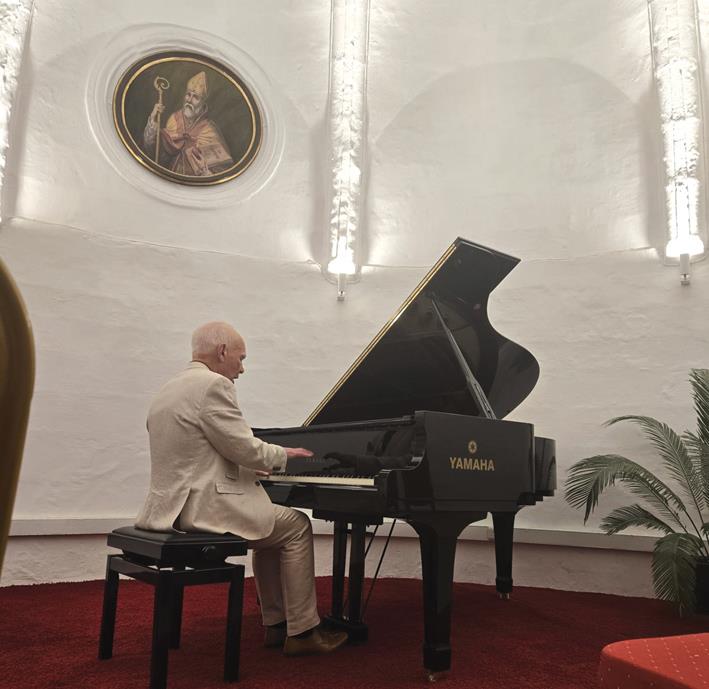
The newly restored apse of St Augustine church and priory is small, intimate, almost monastic in its simplicity, with its single painting of St Augustine watching over us and the beautiful old pulpit stored quietly to one side. I always feel a pang when I see these pulpits no longer used. In my youth, the fire‑and‑brimstone sermons delivered from such heights convinced me I was surely bound for hell. Strange how one can miss even that.
On the way in, my sister and I were greeted by a handsome monk. We knew it was a monk although he was not wearing the flowing robes usually worn by monks. It turned out to be Fr Leslie Gatt, Maltese Prior Provincial of the Augustinian Order. He told us he would be coming to the concert. The Augustinians are very generous and have opened their premises for these concerts. Moreover, for those who have the energy, there are tours of parts of this very old convent, its tunnels and garden, after the concerts.
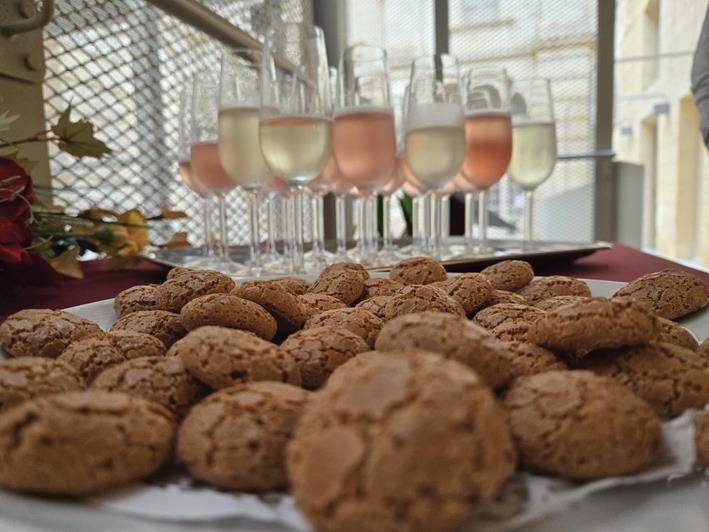
Before the music began, the Barocco Foundation's ritual unfolded: glasses of prosecco pressed into our hands, almond bites circulating, and the gentle understanding that second helpings were perfectly acceptable. I love that the glasses can be taken straight into the apse - as though the music itself had given permission.
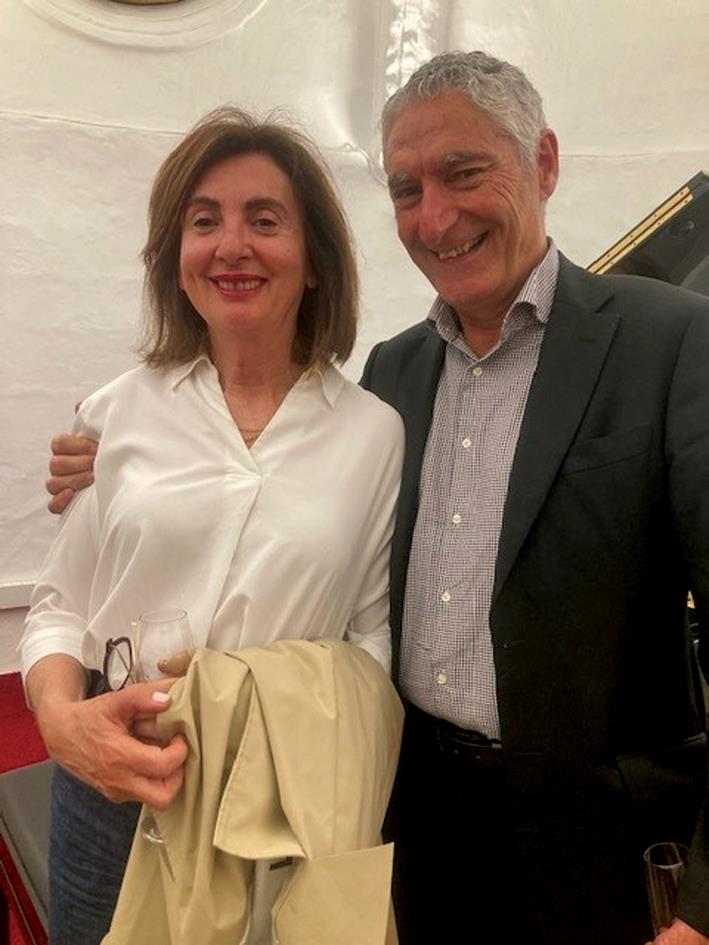
The audience was a familiar tapestry of people who care deeply about Malta's heritage or simply love music. Present were the very active chairman of Din L'Art Ħelwa, Perit Patrick Calleja and his wife Catherine, who heads Atlas Insurance. Other friends there included Cettina Caruana Curran, who continues to help out Din L'Art Ħelwa as Event Co-Ordinator and Hon. Life Council Member, and Anne Gingell Littlejohn, another dedicated and steady member and music lover. It felt like a gathering of guardians - people who understand the value of restored spaces and the stories they hold.
Then Phillip Dyson appeared. Not quite the youthful figure smiling from the poster, with a rose on his lapel but something far more interesting: a seasoned pianist with humour in his eyes and the ease of someone who has lived long with his instrument. We are no spring chickens ourselves, so there was a certain camaraderie in that - a shared acceptance that age brings its own glow, never mind the aches and pains.
And then he played. A hugely popular programme starting with Scott Joplin's The Entertainer, going on to Satie, Lecuona's Malagueña. Just when you thought the programme could not get more popular, out he comes with one of Liszt's most beloved pieces, Liebestraum No. 3. And so he went on from one great composer to another - Rachmaninov, Chopin, on a lesser scale George Gershwin, and a couple of others I had never heard of. We were enjoying it so much we really did not want it to end, and finally Phillip played for us an intriguing piece - Dizzy - still without a score in front of him.
Ninety minutes without stopping, without even a sip of water. The music poured out of him in one continuous ribbon, each piece folding into the next as though he were following a private thread only he could see. The apse, with its restored stone and gentle echo, held the sound tenderly and gave it back to us softened, warmed.
At one point he mentioned - almost casually - that it has been fifty years since Queen released Bohemian Rhapsody. Fifty years. The number hung in the air like a small shock. Then he launched into an arrangement by Radnich. One can say that this was a reimagining, playful and affectionate. You could feel the audience leaning in, recognising fragments, smiling at the familiar harmonies reshaped by Radnich.
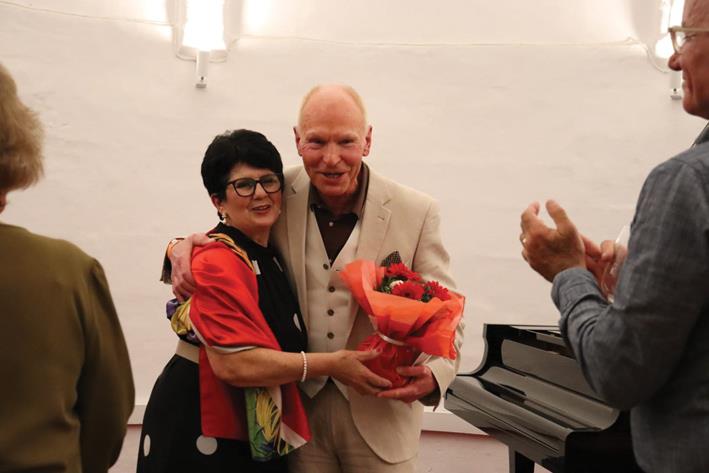
When the final notes faded, there was that lovely hush - the kind that only happens when people have truly listened. Then applause, warm and grateful, rising like a wave. Phillip looked a little tired, but glowing with the satisfaction of someone who has given everything.
Miriam Agius, Founder of Barocco, manages to blend elegance and informality, heritage and conviviality, restored beauty and easy warmth.
I stepped out into the spring night feeling lighter than when I arrived. This had been an evening wrapped in music, prosecco, and the company of people who care about beauty. And that is its own kind of warmth.
Everlastingly grateful for nights like these. We have to wait until October before Miriam returns from the summer break. And until then, the memory of this evening will keep its gentle glow, like a candle left burning in a quiet chapel.
Some nights stay with us not because they are grand, but because they remind us how lovely it is simply to be alive and how lucky to have so many events to which we don't have to travel for long.
Photos by Kelly