Anton Agius (1933-2008) occupies a deeply divided position within Maltese modern sculpture, negotiating throughout his career between avant-garde abstraction and the demand for socially legible representation. Best known for his public monuments commemorating Malta's social and political transformations, as well as for his expressive olive wood works, Agius' career is marked by a sustained struggle between abstraction and figuration. His tormented artistic evolution - shaped by early academic training in Malta and Rome, a radical turn towards avant-garde experiences in the United Kingdom, and a subsequent return to a socially understandable sculptural language - reveals a continuous negotiation between two diametrically opposed artistic positions.
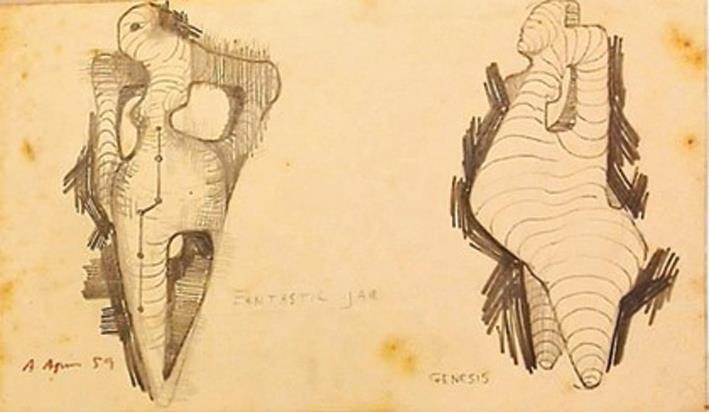
Agius' formative years at the Malta School of Art under sculptors George Borg and Vincent Apap grounded him in a disciplined academic tradition. Borg's anatomical precision, in particular, left a lasting imprint, anchoring Agius in the conventions of figurative representation. His later studies in Rome expanded his technical repertoire without fundamentally disrupting his academic orientation. It was only during his time in London, at St Martin's School of Art in the late 1950s and early 1960s, that Agius experienced a pivotal turning point. Under the influence of constructivist and avant-garde artists such as Edoardo Paolozzi and Anthony Caro, he was introduced to a radically different conception of sculpture, one that privileged structure, space, and material experimentation over imitation.
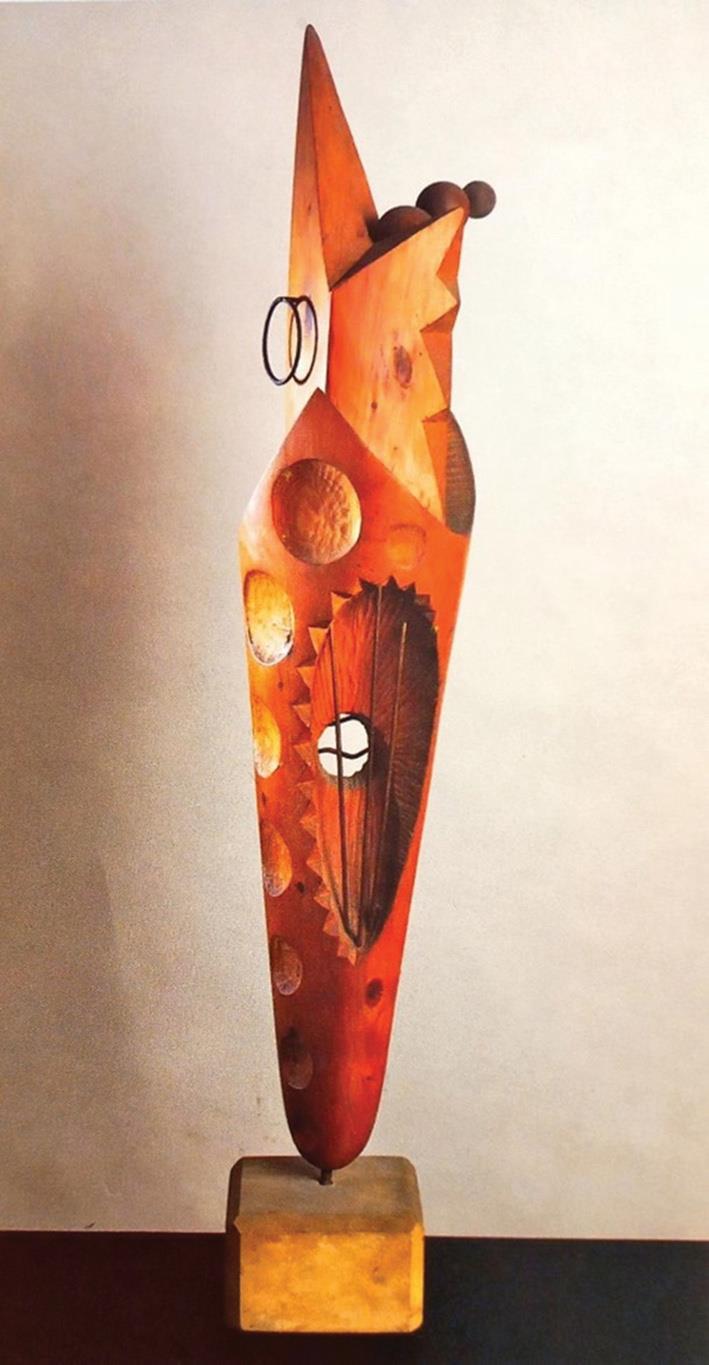
In a revealing statement from this period, Agius reflected on how classical traditions based on imitation had been challenged and modified, indicating his awareness of a modern aesthetic shift. He significantly embraced the constructivist idea of space as negative volume, a principle that redefined sculpture not as mass alone, but as the orchestration of spatial relationships. This constructivist shift aligned him with a broader post-war British sculptural avant-garde path, where such innovations were understood as an evolution of sculptural language.
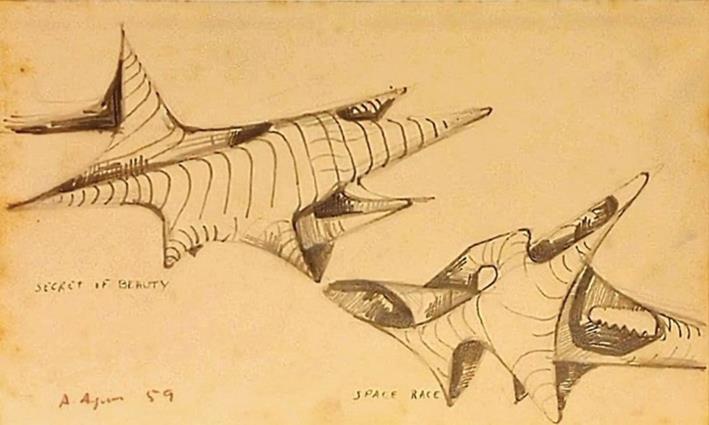
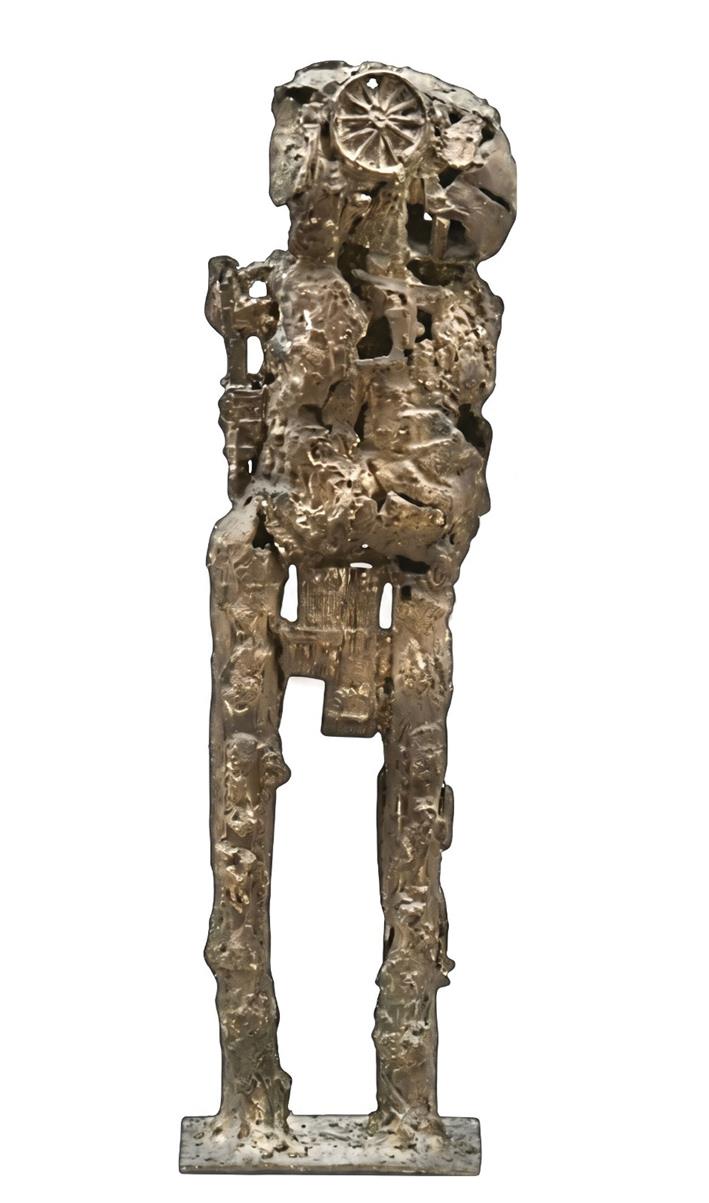
However, Agius' engagement with constructivism was never purely geometric. His sketches from this period reveal a persistent oscillation between geometric abstraction and organic form. While some of his works approach the non-representational spatial experiments of Naum Gabo, others retain an organic sensibility reminiscent of Henry Moore. This duality is crucial in understanding Agius' divided position: never fully absorbed into geometric purity, nor entirely abandoning the organic tendency drawing him towards figuration. Instead, his work became a site of tension between two opposing impulses.
Upon returning to Malta in the early 1960s, Agius initially reaffirmed his commitment to abstraction. By the late 1960s, his work had developed a confident abstract language, praised for its interplay between sharp geometric articulation and organic suggestion. Critics at the time noted this duality, describing his forms as simultaneously drawn toward structural clarity and natural growth. Yet abstraction, while intellectually compelling, remained a language difficult for the general public to comprehend.
This problem of communication became decisive for Agius in the early 1970s. In a television programme, he openly acknowledged that pure abstraction failed to convey his intended message to the public. He concluded that if sculpture was to endure socially and culturally, it needed to be understood. This conviction led to a decisive aesthetic shift: a movement away from avant-garde abstraction toward a figurative, socially accessible idiom largely associated with Socialist Realism.
Yet, the history of 20th century art demonstrates that avant-garde and experimental visual languages can achieve lasting political and cultural significance while remaining formally radical. Responding to the Spanish civil war, artists such as Pablo Picasso, Joan Miró and Julio González demonstrated that experimental, even abstract languages, could make bold and enduring statements that functioned as instruments of struggle. Works such as Guernica, The Reaper and Montserrat denounced the atrocities of the war to the rest of the world by utilising an avant-garde modern idiom as a powerful instrument of political expression. Rather than retreating into recognisable figuration for immediate comprehensibility, these artists utilised distortion, fragmentation, and abstraction to confront viewers with the violence and trauma of war, transforming the artwork into an active site of resistance and historical consciousness.
A comparable position within the Maltese context can today be identified in the work of contemporary artist Austin Camilleri. In sculptural monuments such as Żieme and Wieħed, Camilleri amputates and distorts the equestrian figure - one of the most enduring symbols of state power and national commemoration - employing fragmentation and formal disruption as potent instruments of political engagement. In doing so, he destabilises monumentality itself.
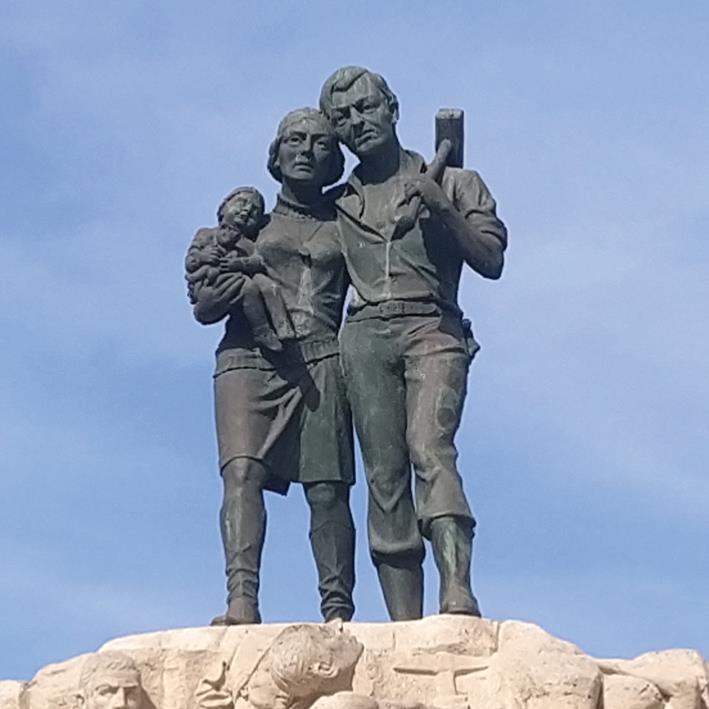
Thus, while these artists engaged in the struggle in a profound and radical manner, employing all available means, including abstract and non-figurative art, articulating their statements by exploiting the relationship between art language and power, Agius, in his monuments, responded to the need for immediate and unproblematic recognisability by all. In his major public monuments - such as Freedom Monument, Monument to the Worker, Dun Mikiel Xerri u Shabu, Sette Giugno 1919 and Mikiel Anton Vassalli - Agius adopted a representational language intended for direct communicability. These monuments function primarily as commemorations of the nation's struggle against foreign occupation, translating collective history into accessible visual narratives. As a result, the monuments function primarily as commemorative objects rather than as critical instruments of political confrontation.
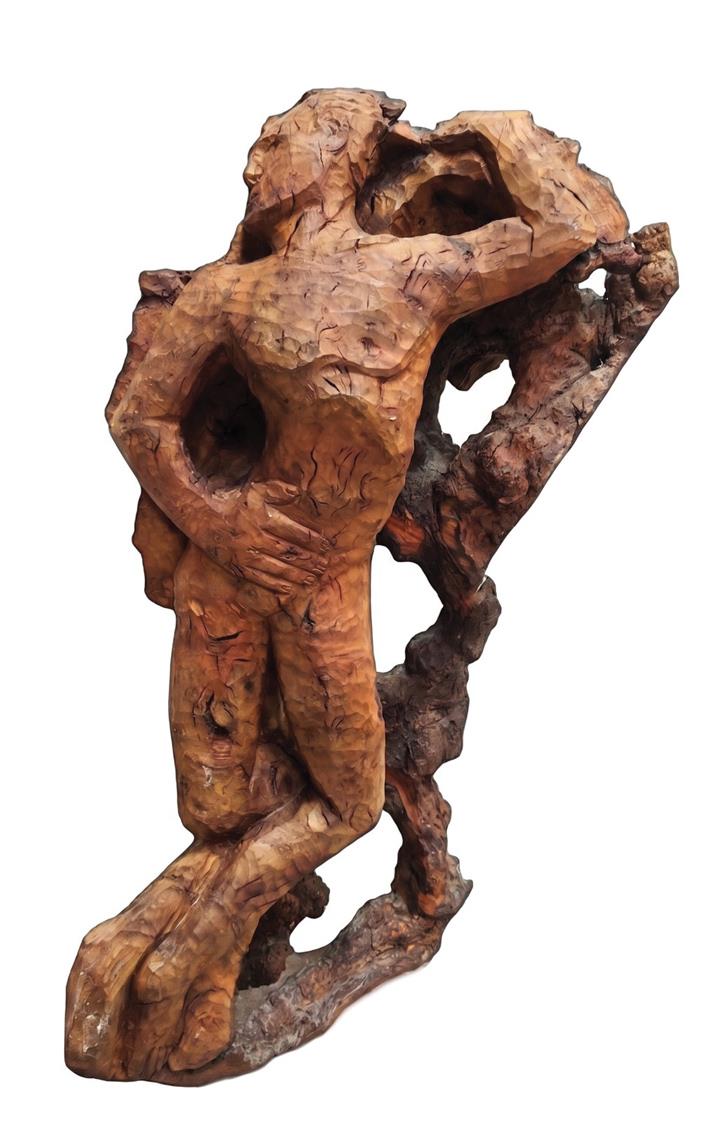 Despite his public embrace of a figurative Socialist Realist idiom, Agius never fully abandoned his attachment to abstraction, which remained central to his artistic identity, particularly in his olive wood sculptures. Rather than resolving the tension between abstraction and communicability through outright rejection, these olive wood sculptures reveal his attempt to negotiate a synthesis between the two. Influenced by Moore's organic abstraction yet striving to develop a language rooted in a distinctly Mediterranean sensibility, Agius pursued what he termed a "collaboration with nature", working with olive tree roots and branches whose twisted forms suggested latent figurative possibilities.
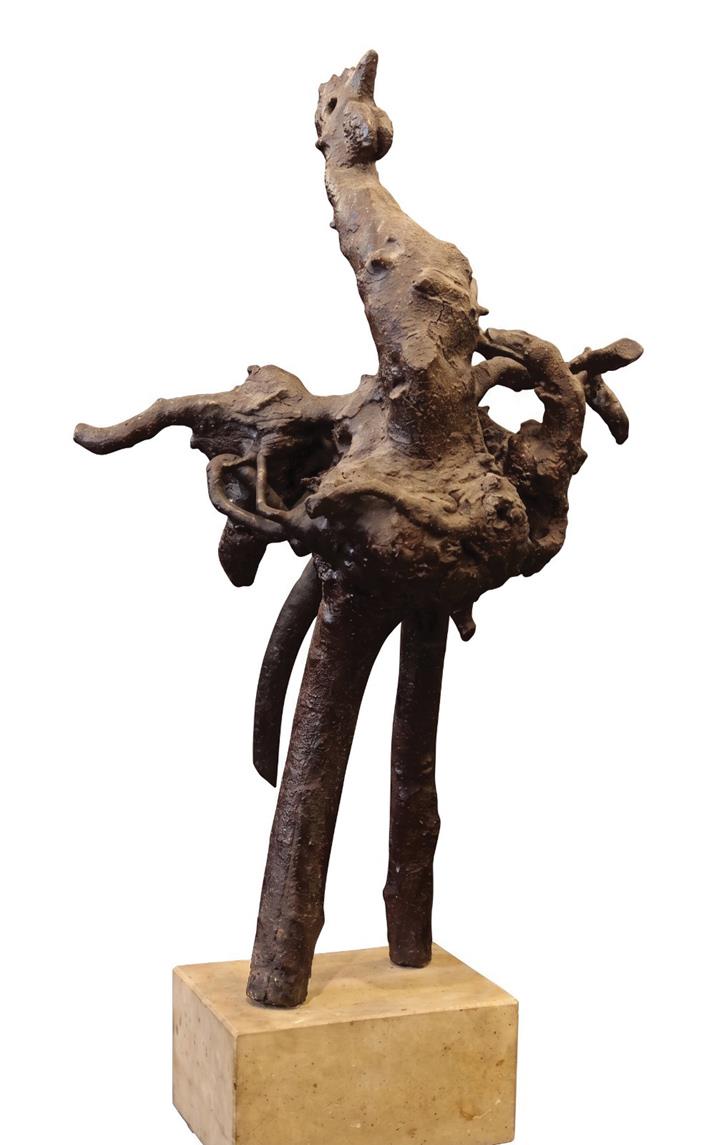
The transition to contorted olive tree roots initially led Agius to adopt an objet trouvé approach, utilising the "ready-made" abstract organic forms suggested by the roots themselves while adding fibreglass to guide them towards figurative legibility. This constructivist method brings his practice close to Paolozzi, particularly works such as Cyclops. Yet whereas Paolozzi's constructions emerged from industrial modernity, Agius grounded his assemblages in the organic materiality of the Mediterranean landscape. Although Paolozzi employed industrial rather than organic found objects, in both artists' practices the objet trouvé functions as the essential point of departure and determining sculptural element. In works such as Rooster, the weathered olive root already suggested the figure prior to any intervention by the artist, enabling Agius to preserve the abstract organic qualities while steering them toward figuration through the addition of fibreglass.
Over time, however, Agius gradually moved away from the more radical implications of the objet trouvé approach. What had begun as a process that preserved the autonomy of the natural found object evolved into a more traditional subtractive sculptural practice in which the intrinsic shape of the log, branch, bough or root merely guided the sculptor organically towards specific thematic explorations but was no longer utilised as a found object in its own right. Proportions were stretched and contorted, blending human figures with elements of nature in a visual grammar reminiscent of Romanesque iconography.
Agius' career therefore remains marked by an unresolved contradiction: while abstraction opened the possibility for a radically modern sculptural language, the imperative of public comprehensibility repeatedly drew him back toward representation, thereby sacrificing the radical possibilities that abstraction had opened.
Rowna Baldacchino is a Maltese art historian and cultural critic with postgraduate specialisation in art history, literature, and translation, focusing on modern and contemporary art in Malta