Malta's national theatre plays host to a production that is, in a word, spectacular. Revamp.mt's Amélie - The Musical is a triumphant, joyful piece of theatre - polished, heartfelt, and brimming with the sort of warmth that reminds you why live performance matters. This is, without question, one of the finest musical theatre productions this island has ever seen.
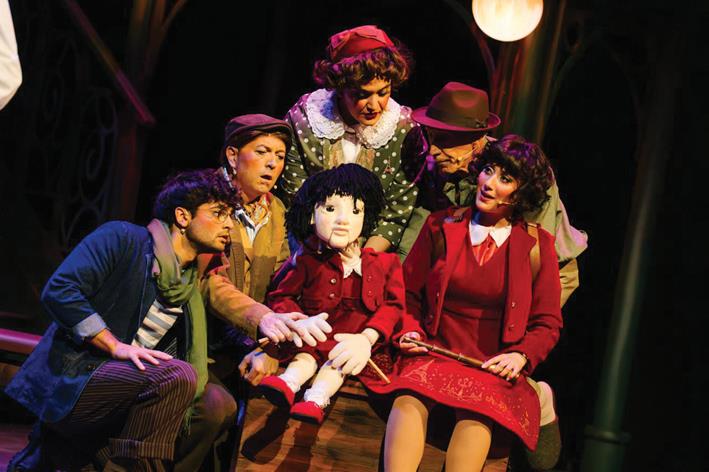
Based on Jean-Pierre Jeunet and Guillaume Laurant's beloved 2001 film, Amélie - The Musical tells the story of a dreamy, self-contained young woman who resolves to bring quiet, anonymous joy to those around her - until love, at last, finds its way to her too. The book, by Craig Lucas, preserves the film's signature whimsy intact, and in the hands of director Dorothy Bezzina and co-producer Revamp.mt, it has been elevated into something genuinely extraordinary.
Bezzina's direction is, simply put, a masterclass. The production is layered with moving parts - puppetry by Theatre Anon, a kinetic two-level set, a trapdoor entrance, a travelling piano, actor-musicians performing live throughout - and yet not a single seam shows. Café tables vanish mid-scene without a beat missed. Narrators switch on a breath. The whole thing flows with the effortless confidence of a production that knows exactly what it is and exactly how to be it. What is perhaps most impressive is that, despite the sheer complexity of what is being staged, the audience never feels the machinery. You are not watching a show being assembled; you are in Montmartre, full stop. Bezzina has surpassed even her acclaimed work on School of Rock, and that is no small feat.
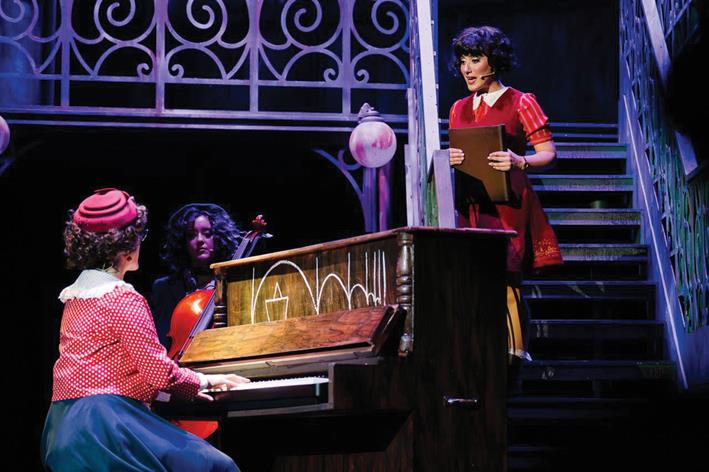
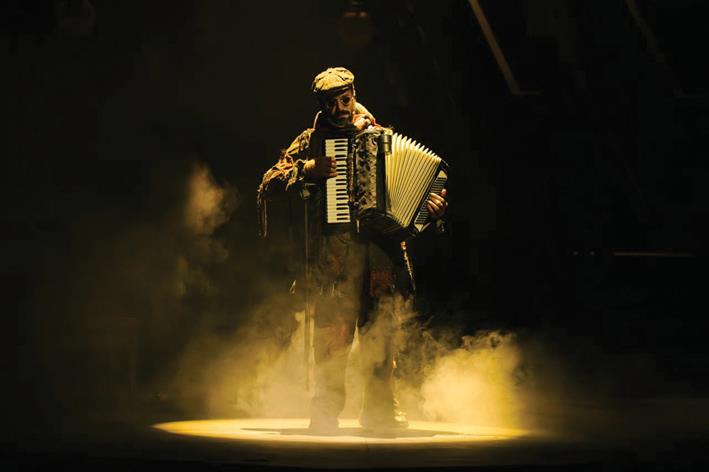
Central to the production's emotional power is the work of musical director Edward Mifsud. The score of Amélie - The Musical has sometimes been cited as its weakest element in other productions - pleasant and atmospheric, certainly, but short on the kind of showstopping numbers that lodge themselves in memory for years. Here, however, Mifsud does something quietly remarkable: he transforms that very quality into a strength. Under his direction, the music becomes the emotional connective tissue of the entire evening, wrapping around each character and colouring their inner world so vividly that audiences find themselves connecting deeply and intimately with every figure on stage. Each number feels not merely heard but felt, achieving an emotional closeness that purely dialogue-driven theatre rarely manages. The actor-musician format, in which performers move fluidly between their roles and their instruments, is central to this effect, and the piano - played at various points by a rotating cast of performers - is a recurring highlight throughout: lyrical, playful, and emotionally precise in equal measure.
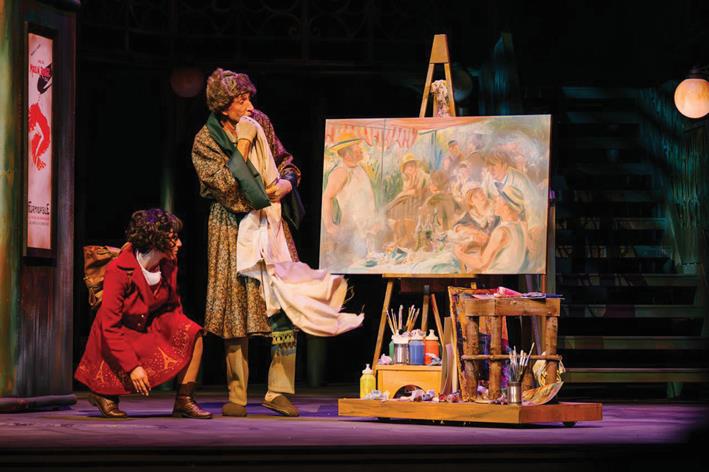
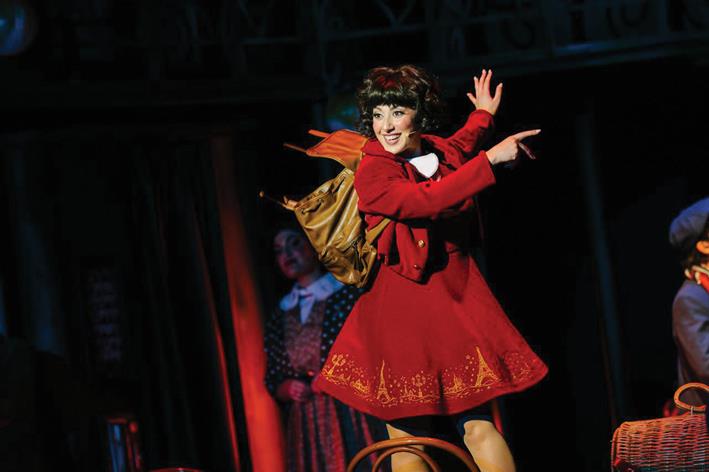
That sense of precision extends to every corner of the design. Matthew Cassar's set and costume work deserves its own standing ovation. His train station framework, anchored by art nouveau Metropolitain signage that instantly signals Paris, transforms seamlessly throughout the evening into a café, a church, a photo booth, and more, without disrupting the rhythm of the story for a single moment. For Amélie herself, Cassar maintains the character's iconic visual identity with a deep, saturated red that fans of the film will recognise immediately, and the detail work is a delight - embroidered Eiffel Tower motifs, Breton stripes, berets and polka dots all contributing to a Paris that feels genuinely inhabited rather than merely suggested. Mohamad Ali 'Dali' Aguerbi's lighting design adds further texture, with a particularly memorable sequence - a hilariously timed orgasm scene - landing its punchline with perfect comic precision. Raphael Pace's choreography rounds things off with a playful, well-calibrated physicality that suits the production's offbeat sensibility beautifully.
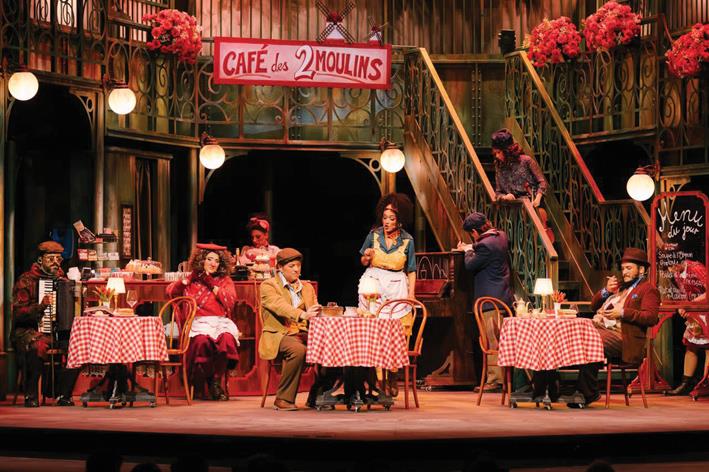
If the production has a beatingheart, it is Chrissy Despott in the title role. Where lesser performances might lean too heavily on Amélie's eccentricities, Despott delivers something altogether more natural - a woman of genuine innocence, genuine depth, and genuine comedy, all held in perfect balance. Her French accent, maintained consistently across both speech and song, grounds a role that could so easily tip into caricature. She is, in short, a revelation. Luigi Buhagiar brings considerable charm to Nino, Amélie's eventual love interest - and, doubling as percussionist and guitarist, he is equally compelling on both fronts. The on-stage chemistry between the two leads is easy and warm, their eventual union feeling genuinely earned.
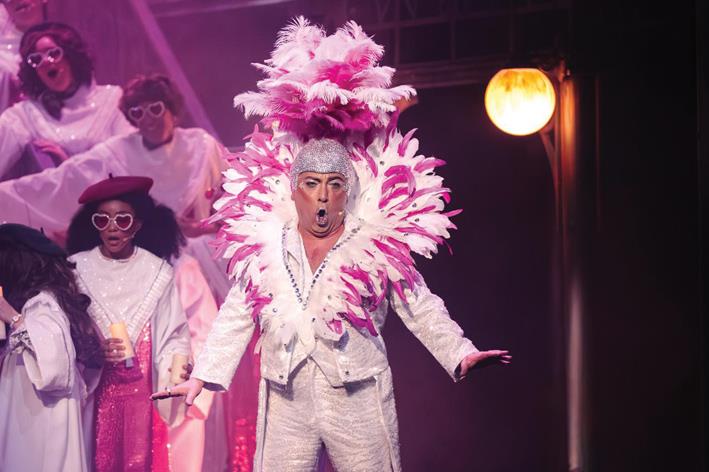
The production benefits from a cast that blends familiar faces with fresh talent, and the balance is just right - everyone flowing together with a seamlessness that speaks to both the quality of the individual performers and the strength of Bezzina's vision for the ensemble as a whole. Paul Portelli and Stephen Oliver are memorably eccentric in their supporting roles, while Natassja Chapman brings understated comic precision to her brief appearances and impresses further at the piano. A special mention must go to Lawrence Gray, who emerges from a trapdoor in full rhinestone regalia to deliver a gloriously absurd cameo that brings the house down. French accents were not uniformly maintained across the full company, and this is a minor note worth making - though it is a challenge common to productions with this kind of national setting, and it rarely disrupted the emotional momentum of the evening.
Amélie - The Musical is that rare thing: a feel-good show with genuine substance. It is warm without being saccharine, whimsical without being shallow, and technically accomplished without ever feeling cold. Revamp.mt continues to grow in ambition and delivery, and this production is their crowning achievement to date.