Now that the votes have been cast and the country awaits the result, it has become possible to step back from the noise, slogans and daily political choreography to examine what the election campaign has actually revealed about Malta and its political class.
At one level, the campaign has been remarkably calm by Maltese standards. No major scandal erupted to derail either side. No single revelation transformed the political landscape. The turbulence and sense of permanent crisis that had defined previous elections were largely absent. Compared to 2017 and 2022, the campaign unfolded in a more controlled and predictable environment, with both major parties attempting to project discipline, confidence and competence.
Yet beneath that calmer surface, the campaign still revealed deep anxieties about the country's direction. Questions about quality of life, infrastructure, overdevelopment, transport, sustainability and institutional trust repeatedly emerged, even when parties attempted to bury them beneath a flood of tax cuts, benefits and financial incentives.
The campaign also confirmed something that had been developing gradually over recent years: Maltese politics had become increasingly presidential. The contest often appeared less like a confrontation between two parties and more like a direct comparison between Robert Abela and Alex Borg.
The former, six years into his tenure as Prime Minister, projected his experience as the safe pair of hands that the country needs. The latter, still finding his feet as the new Opposition Leader, banked on his fresh approach and idea that the country needs a change of direction.
Both leaders spent much of the campaign cultivating accessibility and familiarity. They were repeatedly filmed embracing supporters, greeting families, kissing babies, taking selfies and moving through cheering crowds before entering political events. The imagery mattered. It reflected a campaign in which personality, relatability and emotional connection often carried greater weight than ideology itself.

Where's the ideology?
Indeed, ideology barely featured at all.
For perhaps the first time in modern Maltese electoral politics, the distinction between the major parties appeared narrower than ever in economic terms. Both parties accepted the broad framework of economic growth, State intervention, business support and social benefits. Neither side campaigned on austerity. Neither proposed significant structural economic change. Both promised assistance for families, workers, pensioners and businesses. Both accepted the importance of continued economic expansion.
The real battle was not ideological but psychological. It became a campaign about trust.
Labour argued that voters should trust it to preserve stability, economic momentum and social protection during uncertain international times. The Nationalist Party argued that voters should trust it to improve quality of life, modernise infrastructure and manage the country more responsibly after years of accumulated strain.
The differences therefore centred less on destination and more on credibility. Which leader appeared more believable? Which party appeared more capable of implementation? Which side seemed more in touch with the electorate's frustrations?
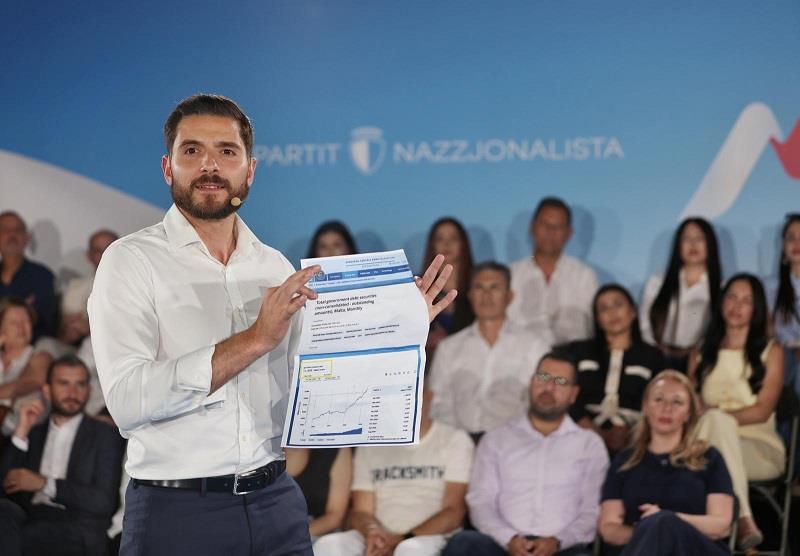
Between continuity and change
In that sense, the election became a contest between continuity and change.
Abela consistently presented himself as the safer option. His campaign relied heavily on the argument that Malta had prospered economically under Labour and that changing course carried unnecessary risk. Stability became one of Labour's strongest themes. Even when confronted with concerns about debt, overdevelopment or population pressures, Labour repeatedly returned to the argument that the economy remained strong, employment high and international instability too dangerous to experiment with political change.
Yet Labour's campaign also exposed a certain contradiction at its core.
The Prime Minister justified the early election largely through references to international uncertainty and economic instability abroad. Labour argued that Malta needed political certainty in difficult times. But the campaign itself often undermined that justification. Rather than preparing the public for restraint, Labour unveiled a long series of financial incentives, benefits and spending commitments that projected confidence rather than caution.
The contradiction became increasingly difficult to ignore. If the country truly faced major international dangers requiring urgent electoral renewal, Labour's campaign rarely reflected that sense of alarm. Instead, it resembled a government confident enough to distribute additional benefits across multiple sectors.
This strengthened the widespread perception that the early election had less to do with international crises and more to do with political timing. Labour appeared to believe that the Nationalist Party, having recently changed leadership, could be caught unprepared before consolidating itself under Borg.
That calculation proved less straightforward than Labour may have expected.
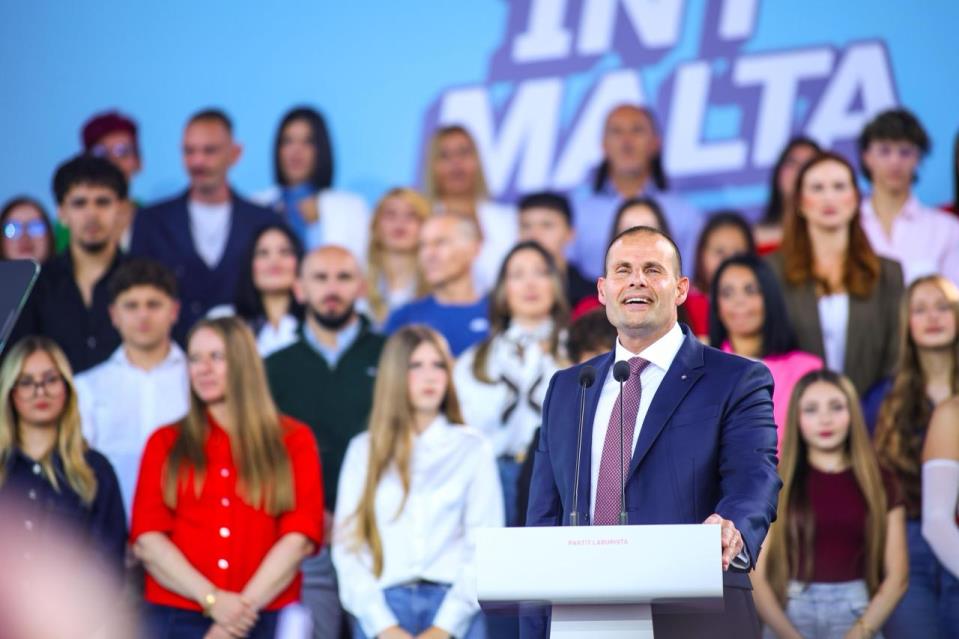
A different strategy
The Nationalist Party entered the campaign more organised, more disciplined and significantly more energetic than in recent elections. The opposition appeared to have learned from previous failures. Rather than concentrating heavily on corruption, governance scandals or institutional breakdown - themes that dominated previous campaigns - the PN shifted focus towards practical quality-of-life concerns.
This represented one of the campaign's most important strategic changes.
For years, the opposition had centred much of its electoral messaging around corruption and governance. During this campaign, however, those themes were almost entirely absent from the PN's central messaging. Instead, Borg concentrated on health, transport, infrastructure, urban planning and everyday frustrations experienced by ordinary families.
It was a deliberate repositioning. The PN appeared to conclude that while governance issues remained important, many voters had become more immediately concerned with daily living standards: traffic congestion, overcrowding, healthcare waiting times, construction pressures and declining public spaces.
In doing so, the opposition also took greater political risks than in previous elections.
The clearest example came through Borg's aggressive transport proposals, particularly the metro pledge and his promise to resign if the project was not completed within five years. It was a strikingly bold commitment in a political culture where leaders usually avoid measurable personal accountability.
Critics described the pledge as reckless or unrealistic. Supporters viewed it as evidence that the opposition leader was willing to place his own credibility on the line. Either way, the proposal succeeded in changing the campaign dynamic because it forced Labour onto defensive ground regarding infrastructure and long-term planning.
That mattered because transport and overdevelopment had become among the clearest symbols of Malta's broader quality-of-life debate.

Quality of life
For years, economic growth statistics had dominated political discussion. During this campaign, however, GDP alone no longer appeared sufficient as a political argument. Voters increasingly measured success through different standards: commuting times, open spaces, healthcare efficiency, housing affordability, construction quality and general liveability.
This may ultimately have been the campaign's most important shift.
For the first time, quality of life seriously challenged economic growth as Malta's central political metric.
Labour still relied heavily on the "feel-good economy" narrative. The government repeatedly highlighted employment levels, wage growth, investment and economic resilience. But the opposition managed to inject a more uncomfortable question into the national conversation: what was the value of economic growth if daily life felt increasingly stressful, congested and exhausting?
That argument resonated precisely because it did not require rejecting economic success altogether. Many voters accepted that Malta's economy had performed strongly. The issue was whether the social and infrastructural consequences of that growth had been managed sustainably.
Yet despite these substantive themes, much of the campaign gradually descended into a contest of incentives.
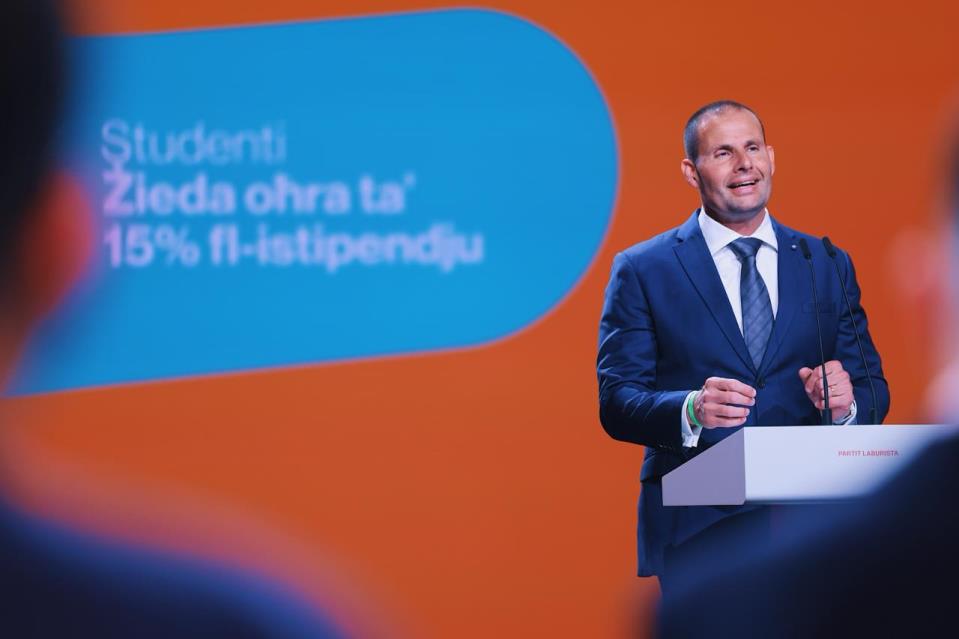
An auction of benefits
As the days progressed, the two parties increasingly attempted to outbid one another with benefits, tax reductions and financial support schemes. One party announced assistance for first-time buyers; the other widened eligibility. One introduced incentives for parents or pensioners; the other promised a larger or supposedly better-designed version.
The result was a peculiar contradiction.
Publicly, both parties spoke as though Malta faced a dramatic ideological crossroads. Labour portrayed Nationalist proposals as reckless threats to economic stability. The PN accused Labour of irresponsible vote-buying and unsustainable spending. The rhetoric became harsher as polling day approached.
Yet beneath the confrontational language, the differences between many proposals were relatively narrow.
This exposed a growing problem within Maltese politics. When campaigns become dominated almost entirely by financial incentives, the national conversation contracts. Structural reform, institutional standards, education quality, environmental sustainability and long-term infrastructure planning receive less attention because immediate material benefits dominate the agenda.
Politics increasingly resembled competitive branding rather than a genuine contest of ideas.
Voters heard parties aggressively attacking proposals that differ only marginally from their own. Neither side appeared willing to concede that the other may occasionally possess a worthwhile idea. Over time, this risks generating public cynicism rather than engagement. Citizens begin to suspect that political hostility has become performative - a ritualised conflict masking broad underlying consensus.
That sense of repetition also produced visible campaign fatigue.

Political messaging
By the final stages, both parties had largely exhausted their major proposals. Speeches became increasingly repetitive. Familiar themes returned daily with minor variations. Leaders repeated talking points already heard for weeks. The campaign's closing phase therefore relied less on persuasion and more on emotional mobilisation.
Political events themselves reflected this transition.
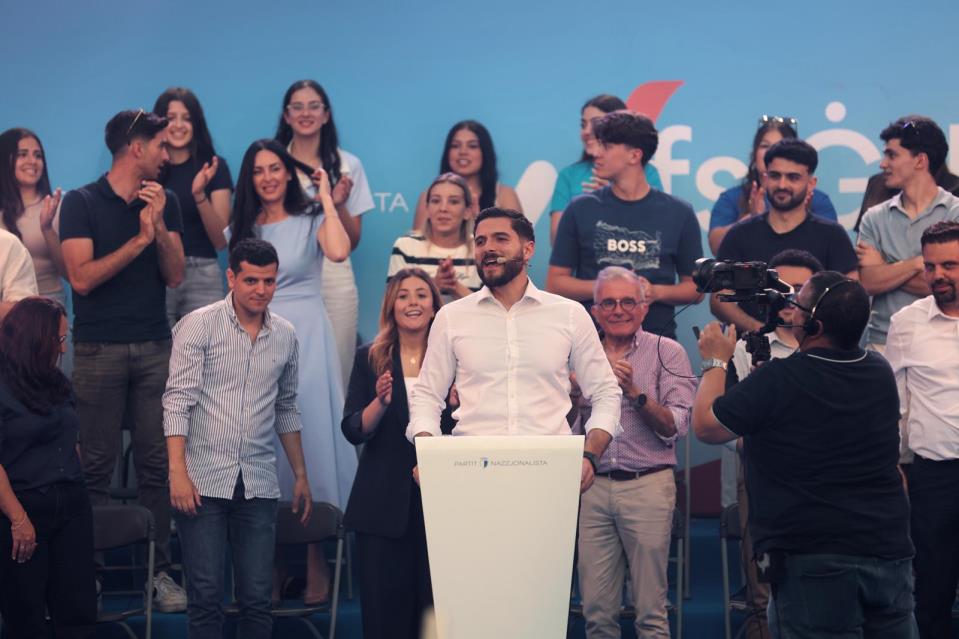
Towards the end, mass meetings increasingly resembled entertainment spectacles rather than policy-driven gatherings. Music, visual production, crowd shots and celebratory atmospheres became central components of the campaign strategy. Once most policy announcements had already been unveiled, the focus shifted towards enthusiasm, energy and turnout.
Here too, however, an important political observation emerged.
Compared to recent elections, the Nationalist Party appeared considerably more mobilised than it had for years. Its crowds were visibly larger than those seen during much of the past decade. Whether that translated into votes remained uncertain, but the symbolism mattered. After years in which Labour often appeared organisationally dominant and psychologically superior, the opposition succeeded in projecting renewed confidence.
Labour still retained the advantages of incumbency, government visibility and organisational strength. It used its power to finalise collective agreements, distribute government grants earlier than scheduled and launch or complete projects in a bid to earn public trust.
The two leaders also revealed contrasting political temperaments throughout the campaign.
Abela generally adopted a more cautious and controlled approach. His rhetoric focused heavily on stability, continuity and protecting economic gains. Even when attacking opposition proposals, he rarely departed from the central message that Labour represented safety and predictability during uncertain times.
Borg, by contrast, embraced greater political risk. His campaign attempted to project ambition, urgency and the need for the country to change direction. He positioned himself as a younger, more energetic figure willing to challenge political habits and place personal credibility behind major promises.
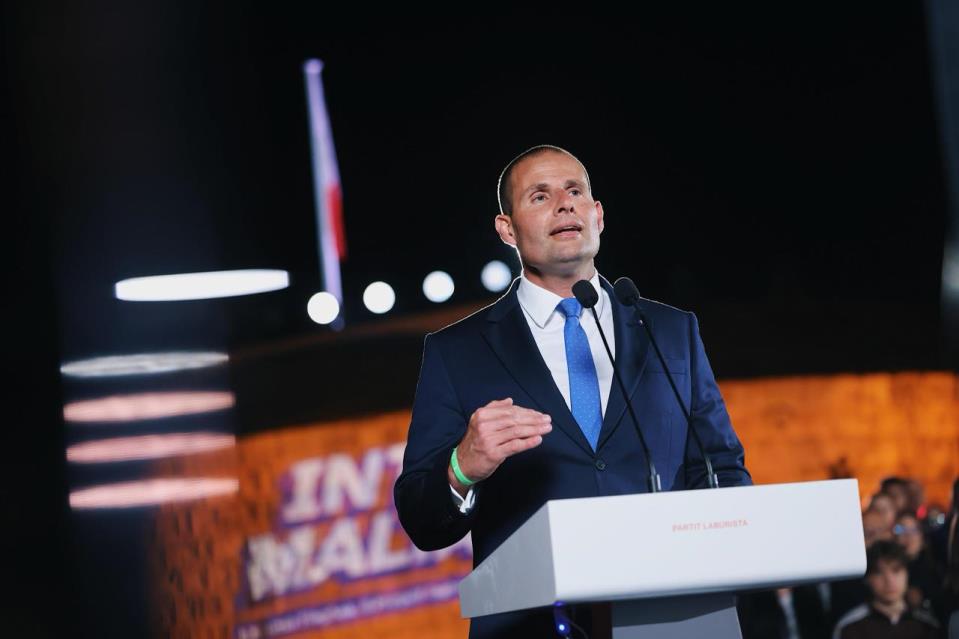
A defining contrast
This difference in tone became one of the campaign's defining contrasts.
Abela campaigned as a leader attempting to reassure. Borg campaigned as a leader attempting to convince voters that change itself need not be frightening.
The effectiveness of either strategy ultimately depended on what kind of election voters believed they were facing. If the electorate prioritised economic continuity and stability, Labour's message likely retained strong appeal. If voters prioritised frustration with infrastructure, quality of life and national direction, the PN's approach may have gained greater traction.
Still, neither side fully escaped deeper unanswered questions.
Labour struggled to convincingly explain how Malta's rapid growth model could continue indefinitely without worsening infrastructural and environmental pressures. The PN, meanwhile, still faced lingering doubts regarding implementation, financial sustainability and governing readiness after years in opposition.
That perhaps explained why trust became more important than ideology.
The election was not fundamentally fought over radically different economic systems or opposing philosophical visions. It became a referendum on credibility, competence and emotional confidence. Which side did voters believe understood Malta's problems more clearly? Which leader seemed more capable of managing the next chapter?
A country in transition
The campaign also reflected a country in transition.
Malta no longer appeared politically divided along the older rigid ideological lines that once defined its electoral culture. The electorate seemed increasingly pragmatic, transactional and focused on practical outcomes. Voters wanted prosperity, but also liveability. They wanted economic opportunity, but also less congestion and overdevelopment. They expected government support, but also long-term planning.
The challenge for both parties was that these expectations increasingly collided with one another.
Sustaining rapid economic growth while simultaneously reducing population pressures, traffic congestion and construction intensity would require difficult trade-offs that neither side appeared fully prepared to articulate during a campaign. It was easier politically to promise additional benefits than to openly discuss limits, sacrifices or structural reforms.
That avoidance may ultimately have been one of the campaign's defining weaknesses.
For all the speeches, rallies and promises, many of Malta's most difficult long-term questions remained only partially addressed. The country heard much about incentives and assistance, but far less about how Malta intended to balance growth with sustainability, development with liveability and prosperity with social cohesion over the coming decade.
And yet, despite those limitations, the campaign still mattered because it revealed where Maltese politics was heading.
It showed an electorate increasingly concerned with quality of life. It showed an opposition more willing to take risks and move beyond governance-based criticism alone. It showed a governing party still strongly anchored in economic credibility but increasingly challenged on sustainability and infrastructure. It showed politics becoming more personalised, more presidential and more image-driven.
Most of all, it showed that even in a campaign where ideological differences appeared narrower than ever, the struggle for public trust remained as intense as always.