When we return to a memory, are we remembering what happened, or selecting what best supports what we now believe? Does memory remain fixed, or does it quietly shift each time it is recalled? Rarely returning intact, it is filtered and adjusted as it is called up, shaped by the present that retrieves it, and revealing as much about now as it does about then.
Matthew Joseph Casha is a multidisciplinary artist and architect whose training spans Engineering and Architecture in Malta, Project Management in Aberdeen, and Fine Arts (Digital Arts) at the University of Malta. Casha has represented Malta internationally as architect of the Malta Pavilion at the Venice Art Biennale (2019) and as Creative Lead for the Maltese Pavilion at the London Design Biennale (2023), marking the country's first participation. In the same year, he was awarded the
Premju għall-Arti for Best International Achievement by Arts Council Malta as part of Open Square Collective, while also being named a finalist for both Artist of the Year and Best International Achievement in a solo capacity.
Before the Coffee Gets Cold is his latest exhibition at Rudy Buhler's art gallery, bringing together older and recent works that examine how human connection to memory and landscape is shaped through impermanence and time. The title is drawn from Toshikazu Kawaguchi's book series of the same name, set in a Tokyo café where visitors can travel through time, provided they follow strict rules, including remaining seated and returning before their coffee cools. Central to Casha's engagement with the text is the idea that memory alters perception rather than reality, framing memory as vague and abstract rather than linear and finite. As he notes, "Returning to the past changes how I see the present, but not the present itself."
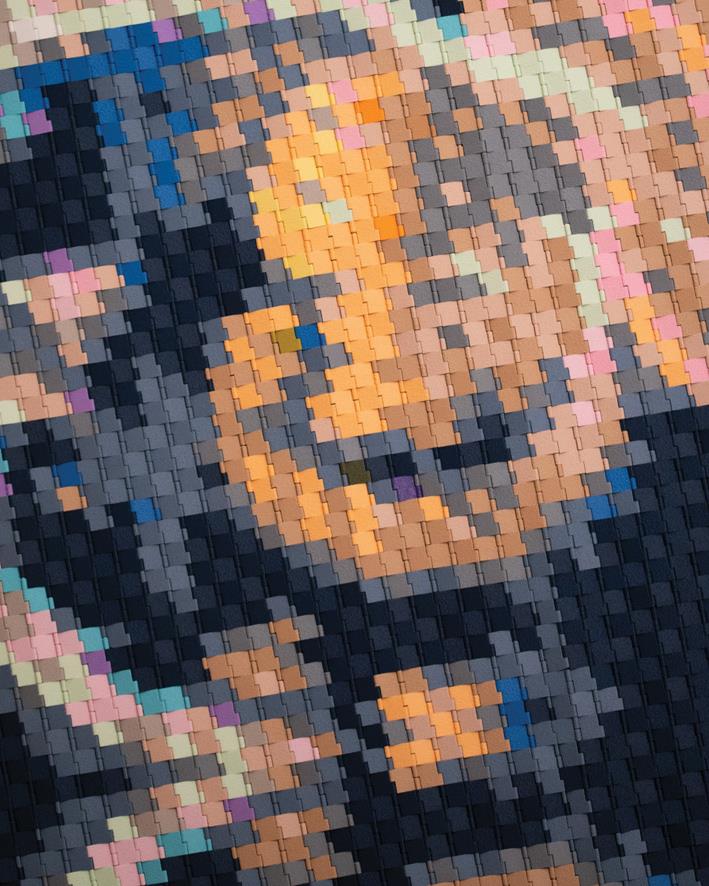
ReTapestry No.3 explores the intersection of craft, technology, and memory through weaving, translated into 3D-printed form. It treats textile structure as something that can be broken apart and reassembled, where pattern and surface shift through process rather than remain fixed. It references domestic woven fabrics, translating their patterns and palettes into a contemporary language shaped by digital production. In this manner, it situates textile practice within a contemporary condition of making that moves between material reference and contemporary construction.
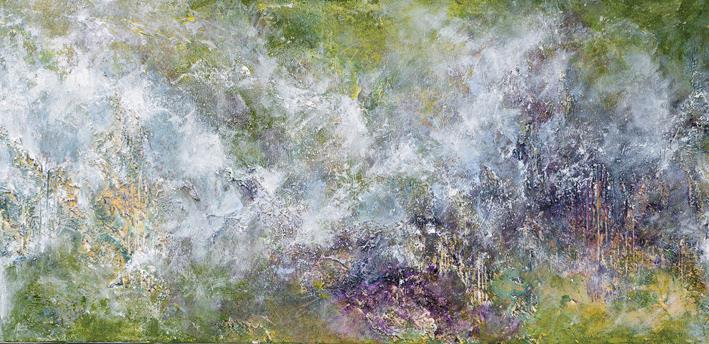
The series previously exhibited in Beyond Departure and Return still engages with painterly tradition even while attempting to move away from it, retaining elements such as technique, layered paint application, and linear depth, suggesting a negotiation rather than a break. The works are shaped by a narrative framework drawn from the prodigal son, which both structures and contains them. In contrast, a newer work such as Veronika marks a shift in approach, where reality is treated as a record of memory rather than a fixed narrative. Based on a single recollected event, it sits in tension with the surrounding works: where those maintain a dreamlike reading of familiar landscapes, Veronika disrupts this by reworking the act of wiping Christ's face into something materially immediate, where a removed spiritual reading leaves only a cloth marked by blood. As Casha elaborates, "There is what really happened, the traditional and the fable. How we remember events and what actually occurred become separate acts, shaped by what we choose to retain or alter."
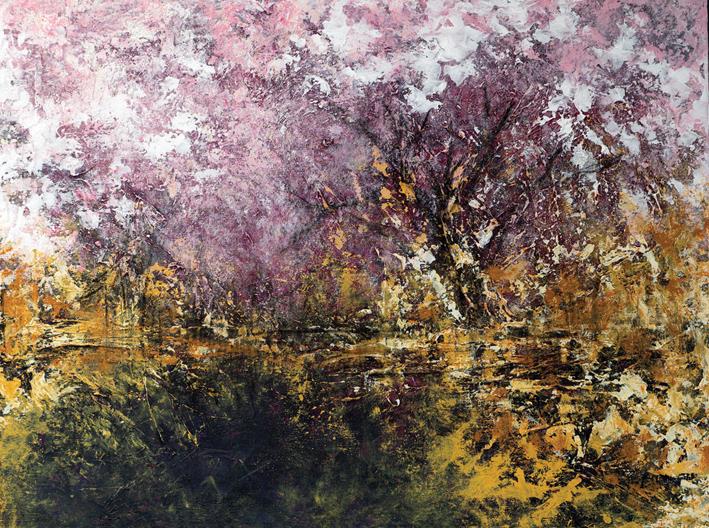
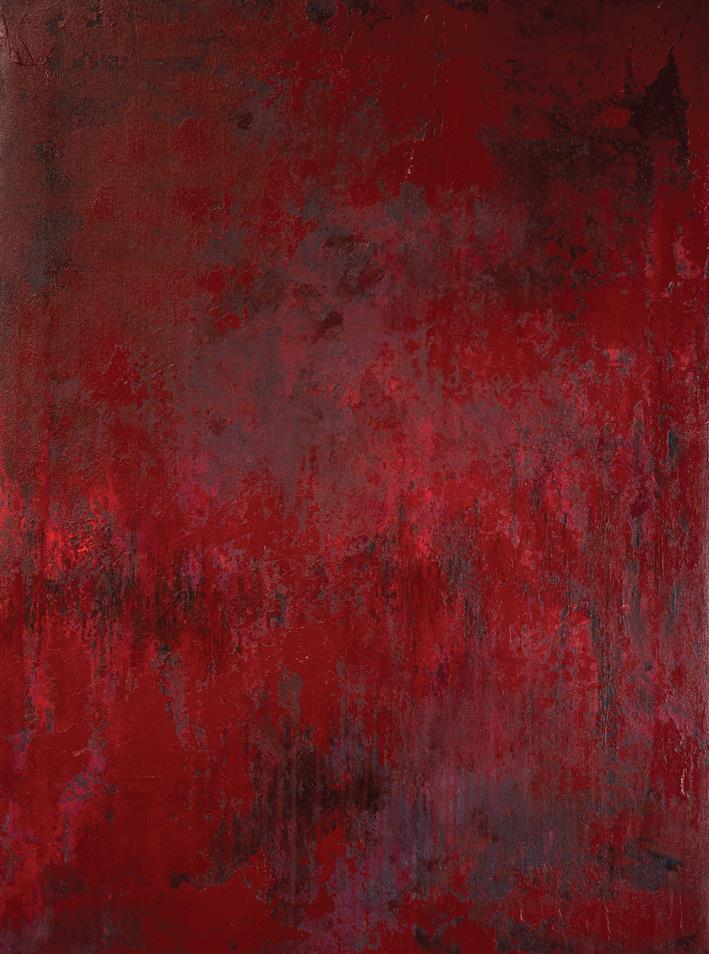
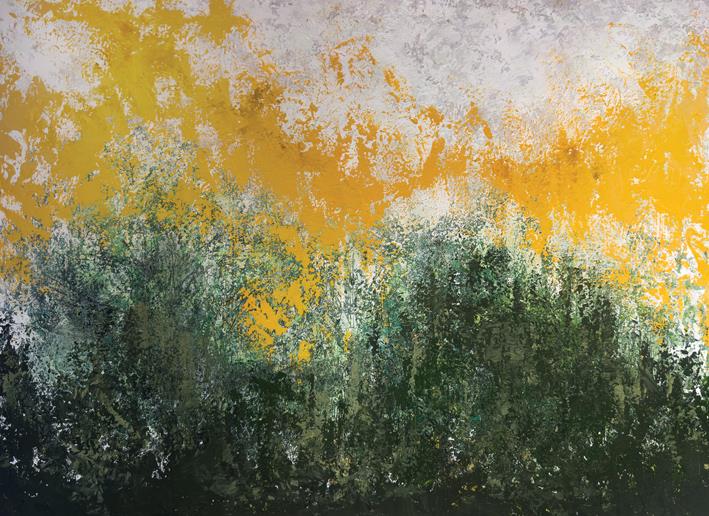
Comparatively, the other landscapes created for this exhibition try to break the order imbedded in the previous series. Abstraction and ambiguity present themselves in the technique and method behind the mental framework. While the format and sizing are still rooted in traditional landscape dimensions, anchoring them in their formalities, there is playfulness to the recollection of memory and rebellion towards tradition in their visuals.
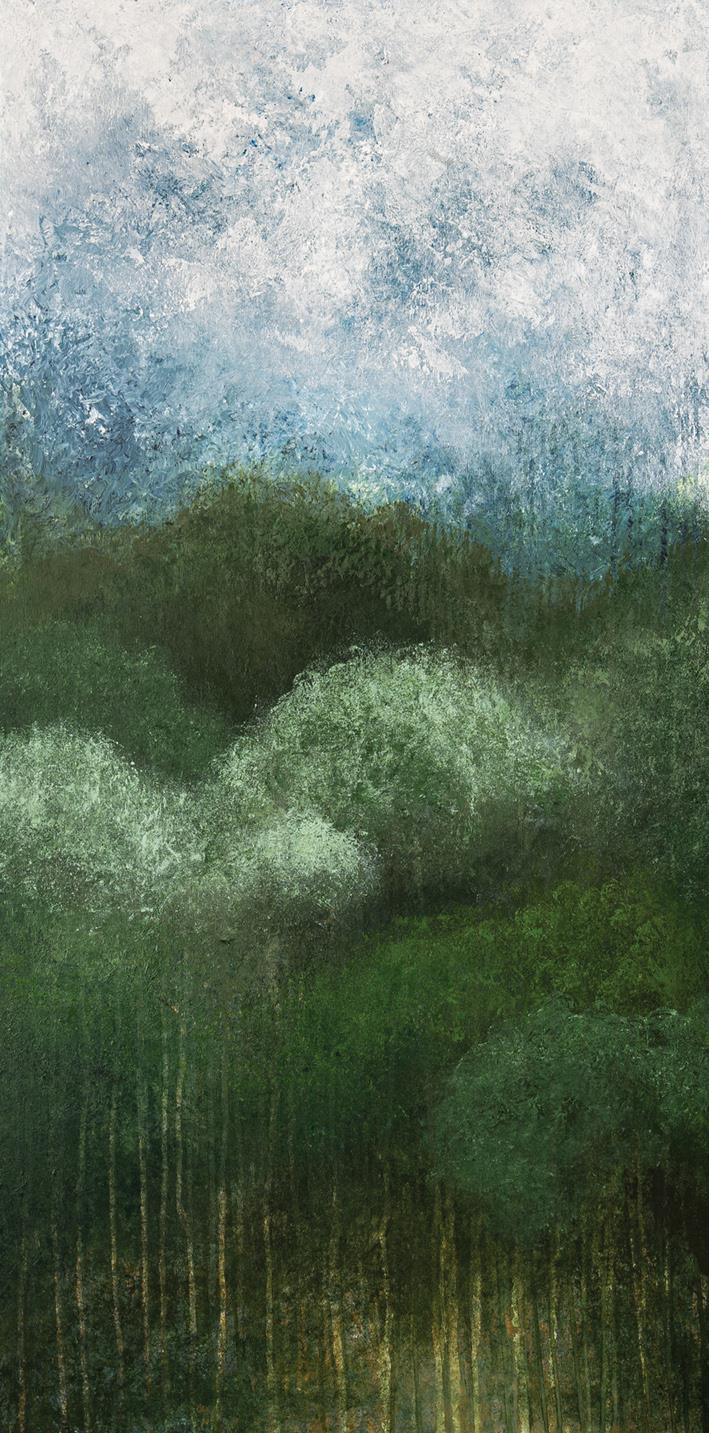
The palette is more saturated and contrasting, introducing a heightened sense of recollected reality, where memory is not stable but briefly formed before fading, often blurring distinctions between what is seen and what is recalled, as Casha notes. These colour combinations, most vividly contrasted in Summer, were researched from A Dictionary of Colour Combinations by Sanzo Wada, linking the works to the broader literary and Japanese references that inform the exhibition. Alongside this is the material approach itself, particularly the introduction of charcoal with acrylic. Although unconventional to apply a dry medium onto wet paint, this method produces a layered surface where the materials interfere with and alter one another. "The charcoal is not only parting the paint but affecting it. There is a consequence to it." This interaction mirrors the instability of recollection, where attempting to retrieve a memory inevitably alters its original form. In this way, process and subject matter converge, positioning material intervention as a parallel to acts of remembering.
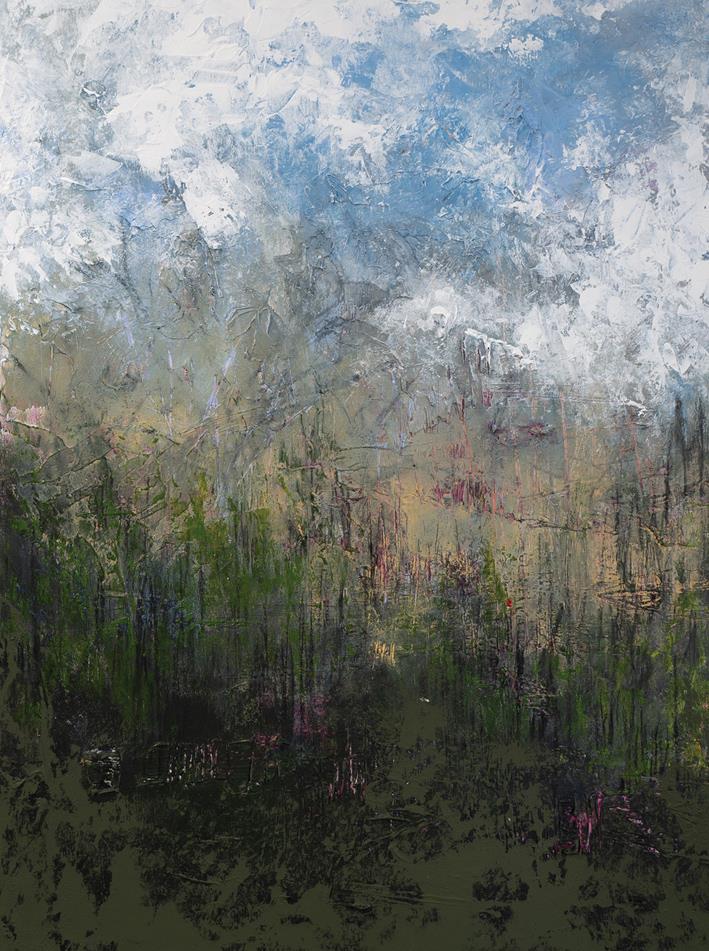
The evolution of the works invites a rereading of their internal chronology, where the sequence of making is embedded in surface decisions, material shifts, and varying degrees of clarity. From a 3D-printed structure, to a series shaped by narrative containment, and finally towards greater freedom in representation, the works trace memory as a process rather than a record. Across the exhibition, recollection is revised through colour, texture, and intervention, allowing time to be suggested rather than fixed, and meaning to remain deliberately open. What persists is not the stability of what is remembered, but the act of remembering itself which is unstable, incomplete, and always arriving slightly after it has already begun to change.
Before the Coffee Gets Cold is open to the public until 14 June, at Rudy Buhler Art - The Colour Project. Contemporary Modern Art Gallery.