Atlas Insurance, in collaboration with The Malta Chamber of Commerce, Enterprise and Industry, hosted a special event on 18-19 May celebrating a remarkable rediscovery within the Chamber's own archives: hundreds of original 19th century maritime insurance policies that shed new light on Malta's commercial past.
The initiative grew out of the Chamber's Centennial Chronicles exhibition in 2024, which marked 100 years of Malta's modern commercial history. Following that exhibition, the Chamber commissioned historian Nikolai Debono to catalogue its extensive archival holdings. Among the most striking finds were the maritime insurance records stored just above the Chamber's main rooms - documents revealing a vibrant, largely forgotten insurance marketplace operating in Valletta long before the rise of modern regulation.
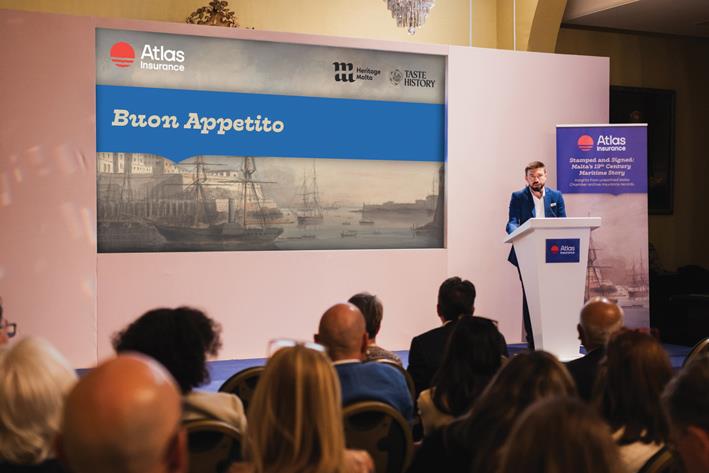
In her opening remarks, Catherine Calleja, executive director of Atlas Insurance and current president of the Malta Insurance Association, introduced historian Debono, whose research into the Chamber's archives uncovered hundreds of original 19th century maritime insurance policies. Debono, who delivered the evening's main presentation, traced the evolution of Malta's early insurance market and the colourful world of merchants, shipowners, and agents who once operated within the Chamber's walls.
The presentation traced the origins of the Chamber itself, founded in 1848 under Governor Richard More O'Ferrall, and highlighted the early prominence of the Insurance Section alongside the Captains and Brokers Sections. Minutes from the period reveal concerns that feel surprisingly contemporary: fire risks on newly-built iron steamships, a lack of regulatory oversight, and even disputes over price fixing among local insurers. These tensions eventually led to the creation of the Alleanza d'Assicuratori, one of several short‑lived Maltese marine insurance companies whose policies survive in the archives.
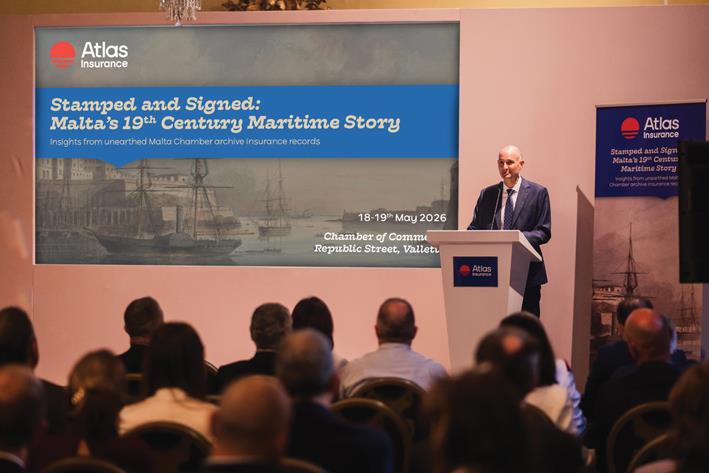
Debono's research also illuminated the wider maritime ecosystem of the time - shipwrights, ropemakers, caulkers, banks, notaries, courts, brokers, captains, and insurers - all operating around the harbour. The Chamber's own Vedetta, rented by Lloyd's of London, provided maritime intelligence long before telegraphy.
The event explored colourful case studies from the period, including claims, fraud investigations, and litigation heard before the Consolato del Mare and later the Commercial Court. These stories, ranging from suspicious sinkings to contested surveys, reveal the challenges of underwriting in an era of wooden hulls, unpredictable seas, and minimal oversight.
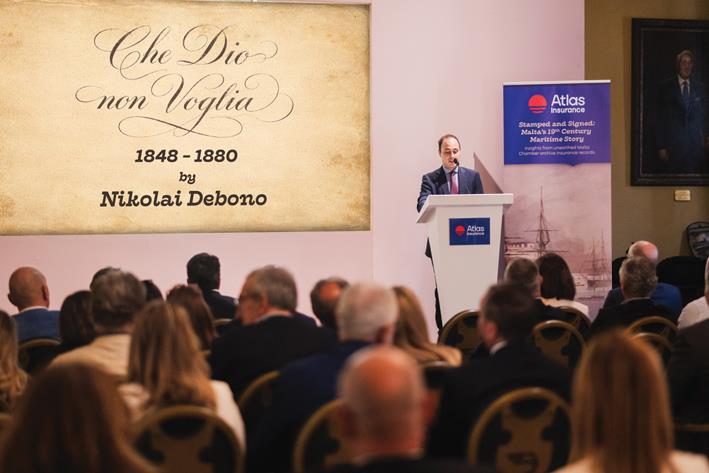
The decline of Maltese insurers in the late 19th century - brought about by the transition to steam, the loss of the local merchant fleet, and the rise of foreign agencies - was contrasted with the enduring value of the records themselves. Calleja emphasised the importance of preserving Malta's commercial memory and encouraged businesses and families to safeguard any documents, ledgers, or correspondence that may still lie forgotten in drawers and attics.
The evening concluded with a call to support Malta's archival institutions, including the National Archives, the Biblioteca, and the Banca Giuratale, whose collections continue to illuminate the island's economic and maritime heritage.
To complement this journey through history, guests were treated to a culinary experience curated and prepared by Heritage Malta's Taste History inspired by the food of that era. This taste experience was presented by historian Liam Gauci.