The programme for 12 June moves from Mozart's early symphonic writing to Bach's C‑minor Concerto and Kreisler's affectionate tribute to Vivaldi. How do you experience this journey as both soloist and leader? Does it feel like moving through different rooms of the same musical house, or like stepping into entirely different worlds?
For this concert the styles are not so far apart from each other as even the Kreisler is not overly romantic. Apart from the Kreisler which I will allow myself to let go and embrace the romantic era, for the rest of the programme we will probably aim at performing in a style which is leaner and with less emphasis on vibrato as string players and focusing more on the use of the bow and finding the right expressions with what the right hand can do instead. This all depends on how kind the acoustics will be on the day, to which we will naturally adjust.
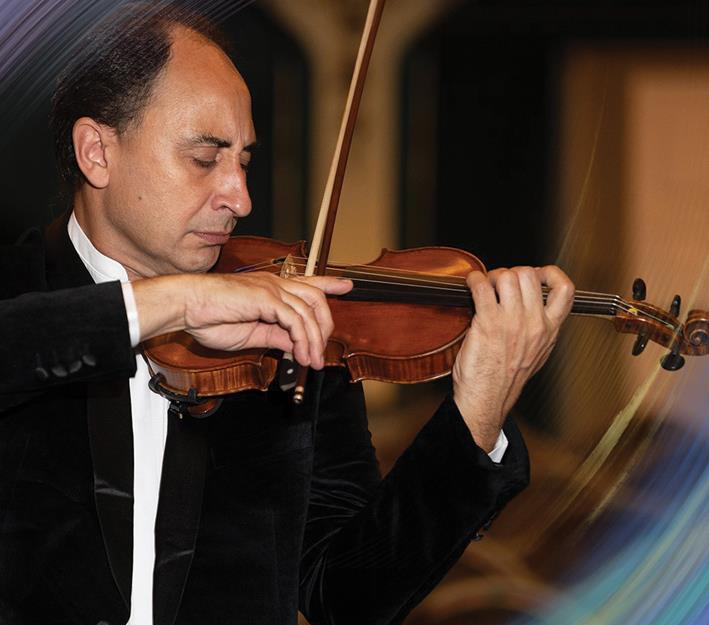
The Bach Concerto for Violin and Oboe is such an intimate dialogue. What are you most looking forward to in performing it with principal oboist of the Berlin Philharmonic, Hansjörg Schellenberger, one of the greats of his generation, whose sound and phrasing are so deeply rooted in the Berlin tradition?
I am looking forward to teaming up with Hansjörg for this wonderful interplay and although we have been immersed in our careers in different traditions perhaps, at the end we will have one aim in mind, and that it to pay homage to the composer. From my part I will not allow him to get used to me so I have the freedom to keep it fresh and I trust the same will happen vice versa... a different dialogue every time we perform the piece during our three day encounters.
Kreisler's Concerto "in the style of Vivaldi" is playful, nostalgic, and yet technically demanding. What draws you to this piece, and what do you enjoy revealing in it that audiences might not expect?
I think the audience will be surprised to find out that Kreisler wrote this charming concerto as he's best known for his shorter salon pieces that every violinist loves playing as encores. The concerto is an invitation to charm the audiences, written in C major which is such a home-feeling key signature for the outer movements and with an Andante doloroso slow movement that takes the listener by surprise for its beauty in transitional modulations which are the basis of its nostalgia.
Mozart's early Symphony in E‑flat, K.16, is astonishing for a child of eight, the age Mozart was when he composed it. When you lead it, do you approach it with the lightness of youth or with the hindsight of a mature musician looking back at genius in its first spark?
Mozart's earliest symphony is a work of child prodigy genius, clearly showing such maturity for an eight year old wünderkind! One can't compare this work with say the later symphonies which we all know so well although there's already evidence by just hearing it of what came later in his compositions. Harmonically and thematically there is influence of both his father's style of writing and also of Haydn, especially in the finale which is not surprising. I would approach the work with maturity combined with youthfulness as far as style is concerned, keeping in mind that this was written by a child. It needs to have that lightness, innocence, sparkle and tonal balance and interplay between the strings and wind players to make this work shine. It's relatively short, in three movements and is simply full of joy.
Symphony No.29 is often described as Mozart's first truly great symphony. What do you love most about shaping its character from the leader's chair?
In A Major! Sunshine, hope, nobility! Every key signature has its own meaning and A Major has that joyful nature and compared to say his G minor symphony No.25, a more sombre and serious symphony in character due to its tonality, the A major one has great interplay, positive energy, upwards lift to it which we look forward to sharing on stage between us musicians and our audiences. It surely keeps me on the edge of my seat and if I dare to try and play the whole symphony from memory just to keep eye contact with my colleagues I will simply fail to share the interplay and capture their energies back and shape the music according to what each and every one of us is living at that very moment during the concert. It's after all what's it's all about...nothing to do with what we would have rehearsed. What happens in the concert... not even I know it and don't wish to prepare for it either... it's spontaneous and definitely the A major symphony is a temptation to test our spontaneity to the full on the 12th June.
After decades at the helm of the LSO and performing with major orchestras worldwide, does leading the De Valette Chamber Orchestra feel like a homecoming of a different kind?
For me, I don't distinguish between leading one orchestra to the other. The LSO is amazing, lead it for 24 years and played with them for 31. I also lead regularly, about twice a month, the Oxford Philharmonic for the past 16 years now and wherever I lead, it's for me a journey that music takes me both emotionally and physically, trying to use all my imaginations and energies to inspire those around me performing or listening. With the DVCO, which on most occasions I'm at the helm as director, in other words without a conductor, I simply pass the baton to every musician. No one is a leader and everyone at the same time is a voice, a leader ...it's never enough what I am searching for so I demand from every musician their utmost. If anyone settles in their seat and takes a passive role, then they are in the wrong place. Homecoming for me is the ability to be free and to free up musicians that come to us to have that opportunity to let go and be themselves musically and contribute what they have to the group and together we can make the miracle happen.
You've collaborated with extraordinary conductors and soloists throughout your career. Are there particular musical encounters that continue to guide you when you stand in front of an orchestra today?
If I have to mention so many wonderful musicians I worked with and that inspired me I would never finish this interview. Every musician has something to offer no matter how grand they are. For me, a great musician that I was so influenced by was Mstislav Rostropovich. I worked with him performing all of Shostakovich Symphonies, and also Prokofiev Romeo & Juliet. To have performed works by his friends earlier in life is just history and unique. A giant musician and one of the most important few words I shall never forget from him were: Music starts from silence. He wasn't the greatest technician as a conductor... but that was not important for us... his presence and his musicianship were enough to dominate the hall and every note mattered. Of course other great musicians such as Maazel, Gergiev, Rattle, Davis, MTT, Pappano, Noseda just to name a few have left their mark on my musical nourishment together with so many soloists that are nowadays my colleagues. They all in their own way have something in common... every note matters. There is not one note in music that doesn't mean something. That's what I keep in mind when I put my violin under my chin and bow on the strings... the soul takes over.
Your devotion to the "old school" of violin playing - Heifetz, Milstein, Gitlis - is well known. How do you keep that tradition alive in a modern musical landscape that often prizes speed over soul?
I simply shut the door! Nothing in this modern world we live in will ever take my roots, traditions and passions that formed who I am today. I encourage so many young people that come to play to me for a consultation wherever in the world this happens to go and listen to these old masters and appreciate what they left us behind for us to realise how great they were.
You've performed on many Stradivari instruments. Does each one change the way you play, or do you find that your own voice remains constant regardless of the instrument in your hands?
Each one of these great treasures gives me that sensation of overwhelming beauty, the sky is the limit in what these violins can offer. The violins don't play by themselves and it takes some more time than others for a violinist to bond with the instrument. Some are greater than others. I have played by now around 25-30 Strads and some Guarnieri del Gesu as well. However, whether I play on a Strad or a violin I pick up from any local dealer aimed for beginners, the result will always be the sound of Carmine Lauri. It's the soul that speaks out of me.
For young Maltese musicians who look up to you, what is the one piece of advice you wish someone had whispered to you at the beginning of your journey?
Never give up. What music can give to you and to those listening to you is simply unparalleled. I wish so much that other people around me wherever I go in this modern society gives it a go and finds out the beauty of what classical music can do to their life. If everyone discovered it we would be living in a much more serene and relaxed society, rather than the outrageous noise we have to put up with daily. It seems to be a way of escape to so many. If only people knew what they're missing out on.
You've spoken before about the things that first sparked your imagination as a child. Outside the violin, is there a passion or fascination that has stayed with you throughout your life, something that still brings you joy today?
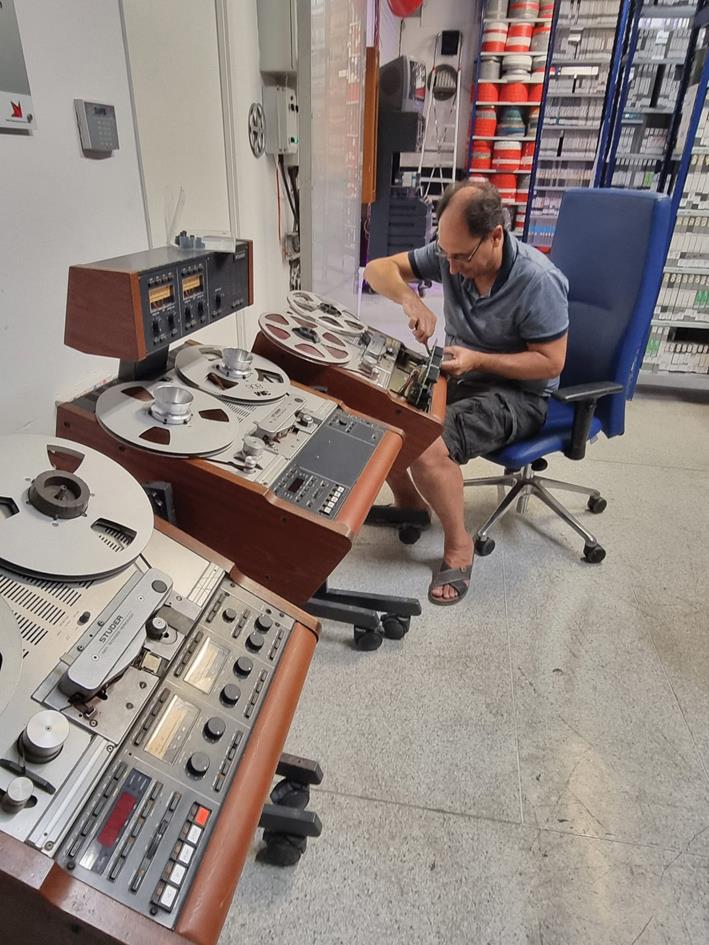
I have had a huge fascination since I was a child for reel to reel tape recorders and I enjoy repairing them, collecting them, in fact I have quite a sizeable collection ranging from vintage domestic machines to the top professional ones by Studer and Revox. I was mesmerised as a toddler seeing two reels of tapes turning round and now the fascination has grown out of proportion and I now have more than 2000 tapes at home of all sizes and brands, over 30 machines and as I always wanted to work in a radio station to be surrounded by tape recorders during the analogue days in the 1980s, before I realised I was becoming a world class violinist, that dream never happened so I brought the dream at home in my own listening room.