Must a photograph do anything other than make us look? In Still Time, Lisa Gwen Chetcuti's retrospective of Joseph P. Smith's work returns to this question across 50 years of practice. In this context, photography oscillates between evidence and encounter, and time is not represented so much as suspended in unfolding relations between image, artist, and viewer.
Smith's practice spans photography, painting, and graphic media, grounded in early academic training and developed further through studies in graphic design in Florence and a Master's in Fine Arts (Digital Arts) at the University of Malta, completed in 2015. His work has been shown widely in both local and international contexts, including exhibitions in Moscow, the United Kingdom, Brussels, and China, and has received a number of national and international awards. In 2025, he opened the Garage Gallery in Dingli, an independent exhibition space connected to his studio.
Still Time brought together 50 years of Smith's photographic work in a retrospective curated by Chetcuti at Valletta Contemporary. Positioning photography as a way of suspending time in place, Smith captures fleeting, often overlooked moments not merely as records, but as encounters in which the act of seeing is reconfigured as a reciprocal exchange between image and viewer.
Always one to centre on capturing the depths of human experience, this sensitivity to time and perception gains particular resonance in the context of his later career. After retiring from public service in 2014, Smith returned to photography with renewed vigour. This period reflects both a desire to make up for lost time and a heightened awareness of its passing. In this manner, the retrospective also functions as a moment of reflection for Smith, looking back across decades of practice while opening up possibilities for what comes next.
Moreover, the manner in which the exhibition was portrayed and structured not only paced his career but effectively highlighted the curatorial role. Chetcuti, also reaching a milestone of 20 years as curator, had a substantial oeuvre to choose from, yet she maintained a balance between content and spatial rhythm. She reflected on the often misunderstood nature of the curator-artist relationship and the vital ongoing exchanges between both creators, made even stronger between two kindred spirits like herself and Smith.
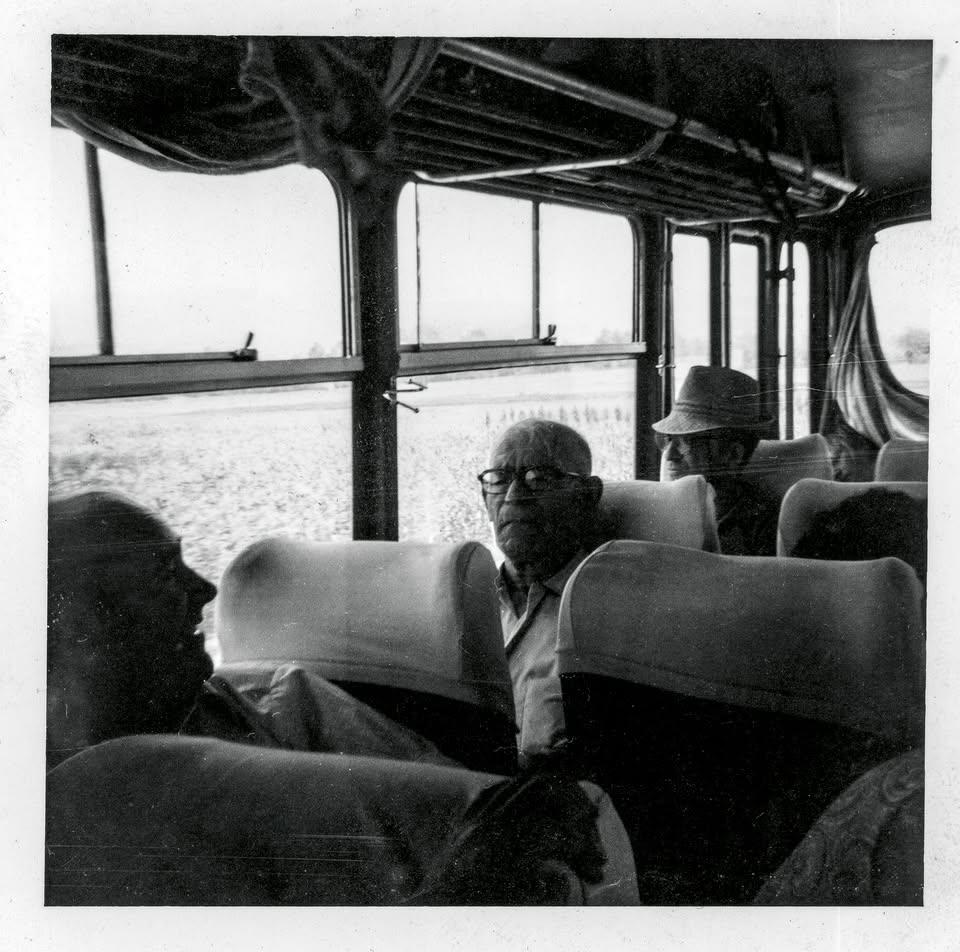
The initial room was the only one where there was an inkling of time, as it brought together the earliest photographs Smith ever took. These included his first monochrome film and portrait of his grandfather Angelo, made at the age of 13 in 1972 during a tour of Italy, alongside his most recent works, such as Eden. The rest of the exhibition was split into four thematic categories, where time becomes indistinct. This effect, strengthened by the absence of captions, shifted attention toward the technical quality of the works and their sensitivity to both the material and psychological dimensions captured.
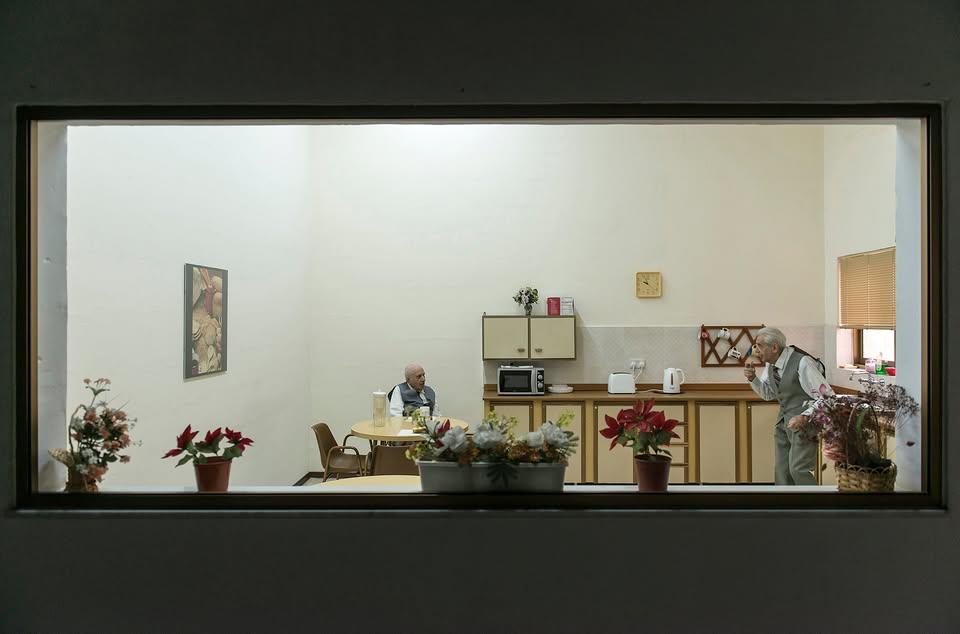
The first theme focused on the ordinary and the mundane, the unstaged and instinct-driven, shaped through intuitive ways of seeing and composing. Everyday environments and modes of transport shifted from functional use to visual subject matter, while overlooked exteriors became backdrops to lived experience, insisting on the recording of a quiet, often unacknowledged commonality of everyday life.
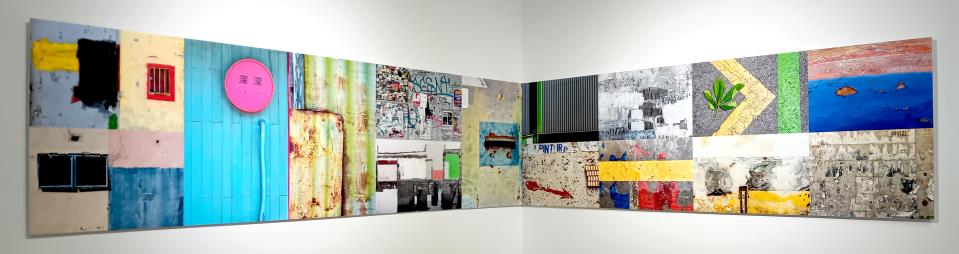
Continuing on the unnoticed, he hones in on environmental details through sustained engagement with the materials, emphasising line, texture and colour. In the form and matter section, detail stands on its own through Smith's discipline and precision. His background in fine art underpins this approach, reinforcing a heightened attention to form.
The same disciplined attention is extended to his photography of people, the subject through which his work has gained its greatest visibility. Curatorially, this is articulated through a careful balance of old and recent works, large and small formats, varying display heights - ranging from high wall-mounted works to those resting directly on the floor - as well as a dialogue between colour and black-and-white photographs. This arrangement emphasises the tension between staged composition and immediacy of the photographic moment. It is most clearly represented in the Beck Brothers series, where a formally composed, centrally posed image is placed against a more cinematic view of the subjects within their environment, absorbed into space and rendered secondary to it.
This entanglement of people and their spaces leads seamlessly into the final theme of spaces and places, where absence becomes as significant as presence. In sites where one expects bustling human activity, the omission of figures, or their very restricted presence, alters the reading of the everyday through an unfamiliar stillness. This approach is particularly evident in the Coney Island photographs, where Smith returned to analogue methods, working with a single camera and a limited number of film rolls, challenging himself to go back to his roots. This constraint fostered a slower, more deliberate practice, producing a heightened sense of intimacy and atmosphere that resists digital immediacy.
Overall, the work is grounded in raw truths that resonate beyond the frame, with the camera acting as an extension of the eye, heart and soul. Aligning these together, this act of capturing engages mind, body, and instinct simultaneously, and it is through this insistence of embodiment where meaning is generated. As Smith states: "My concern has always been to invoke thought and emotion, to push boundaries, and to challenge perceptions." Rather than closing this position, the retrospective extends it, as Smith continues "it serves not only as a ceremony of my artistic milestone but also as a testament to the evolving dialogue between the observer and the observed."