What happens when something as ordinary as a flower becomes worthy of sustained attention? Painting does not always seek to transform the world, but can instead reveal new significance within what is already there, allowing overlooked subjects to become sites of memory, connection, and encounter.
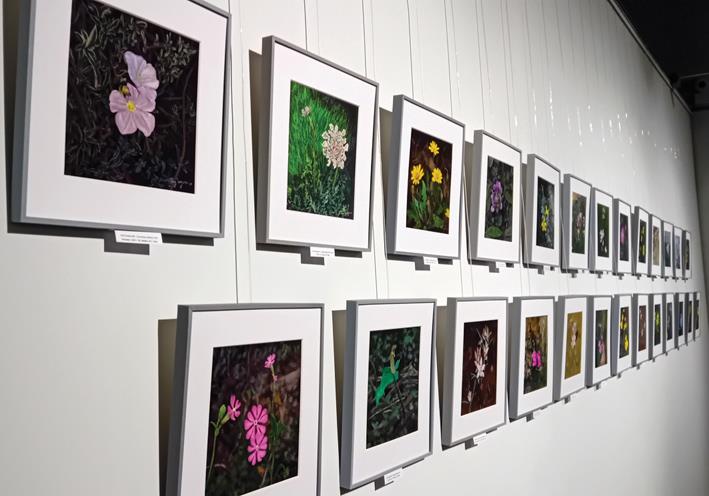
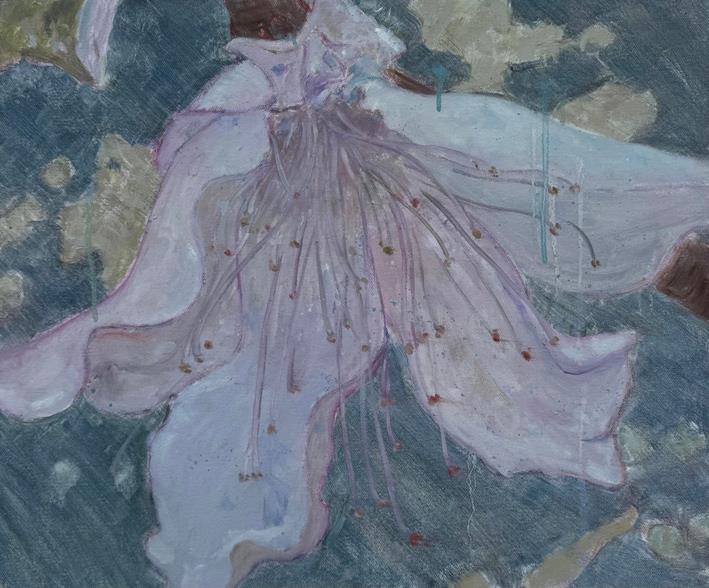
Two Springs is the latest exhibition by Chinese artist Yang Tang at the Malta Society of Arts. Developed with the support of her family, it unfolds as both a personal and artistic journey. Working across painting, printmaking, and photography, Tang brings together different mediums to trace connections between place, memory, and making. Bridging geography and time, her work draws on both traditional practices and contemporary techniques to construct a visual language that moves between continuity and change. Two primary bodies of work anchor the exhibition: eleven oil paintings of peach blossoms, produced in ten days five years ago in an old mountain village in Zhejiang, China, and sixty digital paintings of wild flowers created over a ten-month period in Malta.
Having lived here for just over a year, Tang became immediately drawn to the island's greenery, a quieter aspect of Malta often overshadowed by its reputation for sun and sea. Unlike in China, where seeing such flowers would have required her to travel beyond her surrounding urban environment, in Malta they are part of the everyday landscape, growing freely and, in most cases, unnoticed. The contrast prompted Tang to spend extended periods walking, observing, and documenting the small details of her surroundings. Her process went beyond simply recording the appearance of the flowers; she kept detailed notes on their characteristics, her technical approach, and her own responses to each encounter. Through this practice, observation became inseparable from painting, transforming the act of looking into a deeper engagement with place and experience.
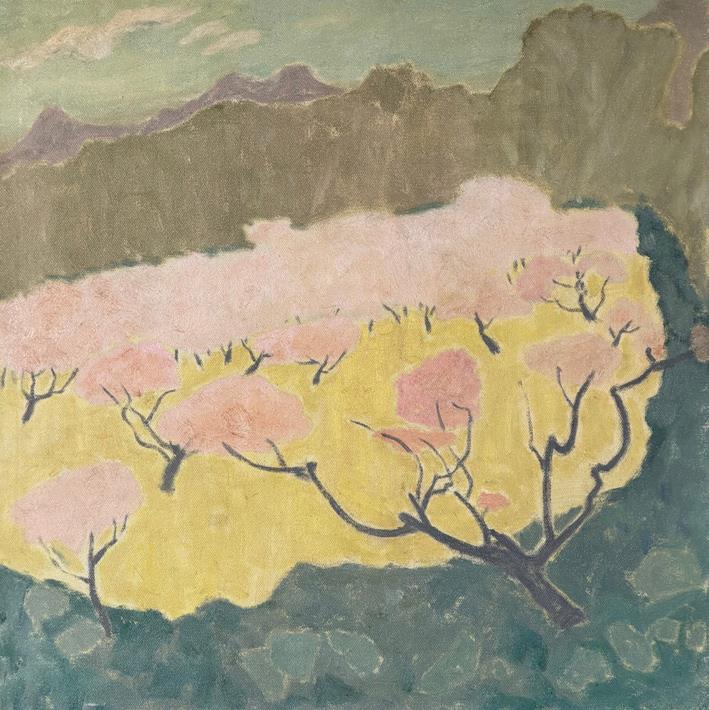
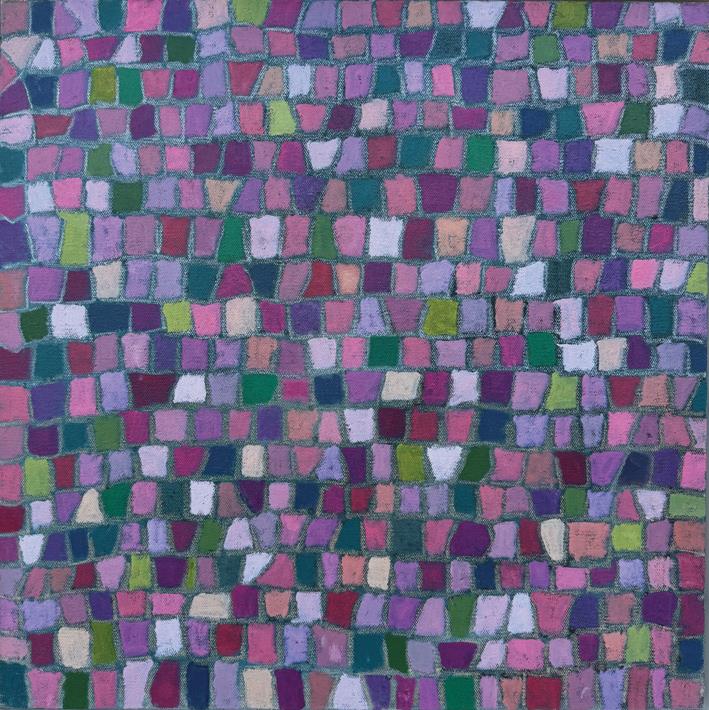
The oil painting series occupies the first two rooms of the exhibition, immediately establishing the visual and emotional foundation. Painted outdoors for the first time since the pandemic, the paintings carry a sense of freedom and renewed engagement with the landscape. However, this freedom is accompanied by a repetitive familiarity and security that occasionally limits their potential. Tang appears deeply absorbed within the subject itself, with the peach blossoms becoming both the focus and the boundary of the series. Moments such as Peach Blossom No. 05, and especially the more abstract Peach Blossom No. 16, suggest possibilities beyond observation yet overall, the series reads more as an expression of what the moment provides rather than what it represents.
The digital series, while similarly rooted in direct observation, develops a very different energy from the oil paintings. The vast variety of species, the contrast between individual flowers, and the technical superiority, by contrast, of the paintings create a more expansive engagement with the subject. Here, Tang moves back and forth between simplification and close looking. The more she studies the flowers, the more details emerge, creating a striking juxtaposition. Despite their seemingly ordinary subject matter, the emotional presence of the artist behind these works is palpable. Through careful observation and documentation, the flowers are elevated beyond simple representations of
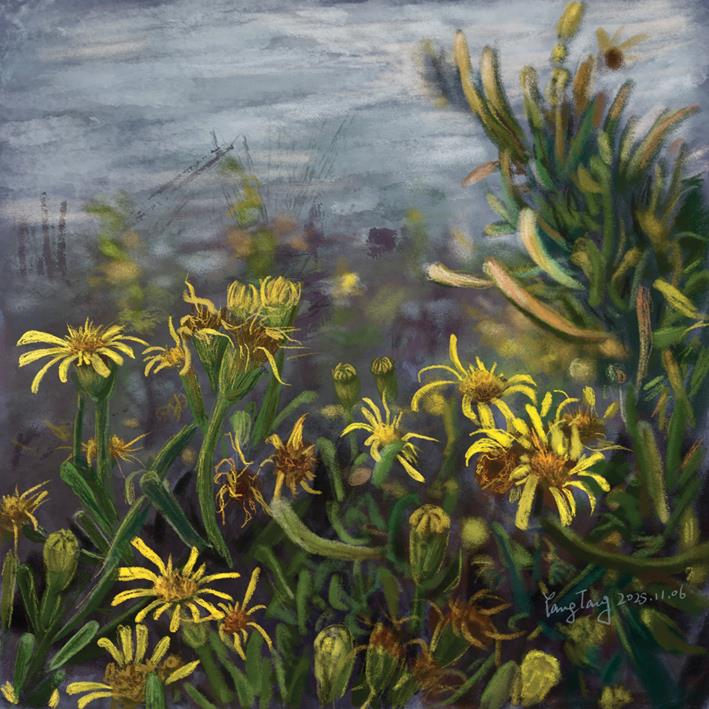
nature and become records of individual encounters. Each includes details such as the flower's name, location, and date of observation, creating an almost archival approach that exists both visually and textually. What might normally be passed by unnoticed is brought forward, allowing each flower's individuality to become undeniable.
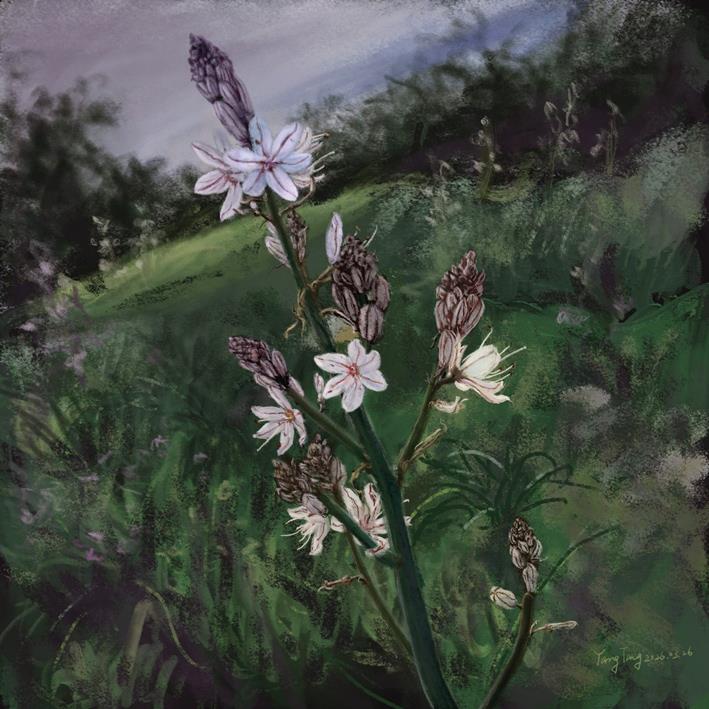
The use of digital methods also introduces another layer to the series. Unlike a singular original painting, the possibility of producing multiple prints reflects the very nature of the subject itself: flowers that do not belong to a single owner or fixed place, but exist freely and repeatedly across environments. Through this process, Tang extends their visibility, transforming overlooked elements of the landscape into shared experiences.
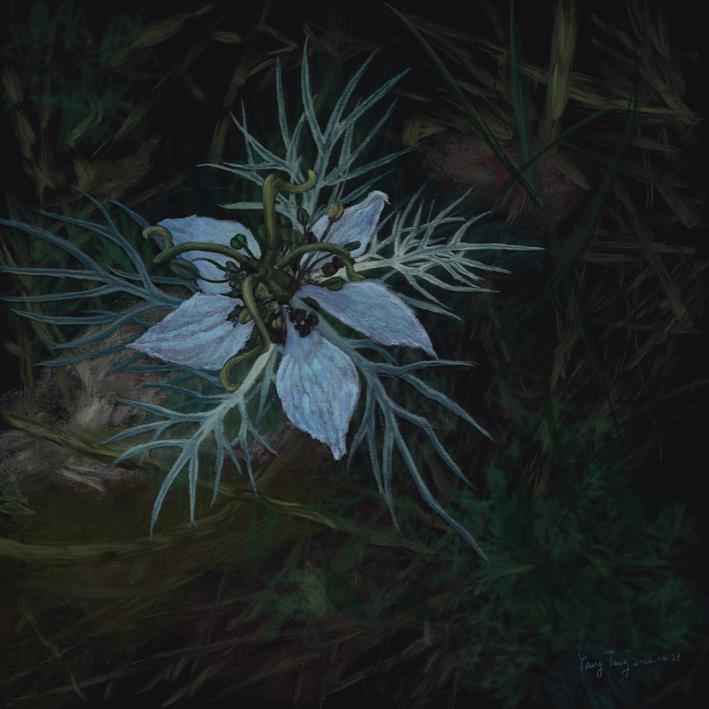
It is precisely this focus on creating an experience that elevates the exhibition. Moving from traditional to contemporary techniques, from China to Malta, and from collective impressions of nature towards individual encounters, the exhibition unfolds as a gradual journey. The linear placement of the works encourages the viewer to move through the spaces almost as they would through a landscape, shifting from the grandeur of the peach blossoms to the overlooked details of the wild flowers. This sense of movement is extended through the concluding video, which brings together short bursts of footage recorded across the months. Rather than functioning as a separate addition, it reinforces the passage of time and shifting seasons that runs throughout, allowing the viewer to experience the physical accumulation of observations and encounters of the artist.
The significance of Two Springs lies in its refusal to treat nature as a passive subject, instead presenting artistic practice as a means of creating new relationships with familiar environments. By focusing on flowers that are abundant yet frequently unnoticed, Tang challenges traditional hierarchies between significant and insignificant subjects, demonstrating how sustained observation can transform the ordinary into a site of meaning. As Tang reflects, "painting is not always about turning the world into something I want it to be. Sometimes, it simply teaches a person to crouch
quietly in front of a small flower, and to recognise another kind of truth in the world." This approach transforms the flowers into markers of encounters between artist, environment, and viewer, while the meeting of Chinese and Maltese contexts reflects broader questions of cultural exchange and belonging.
Two Springs is open to the public till 30 July, at the Malta Society of Arts.