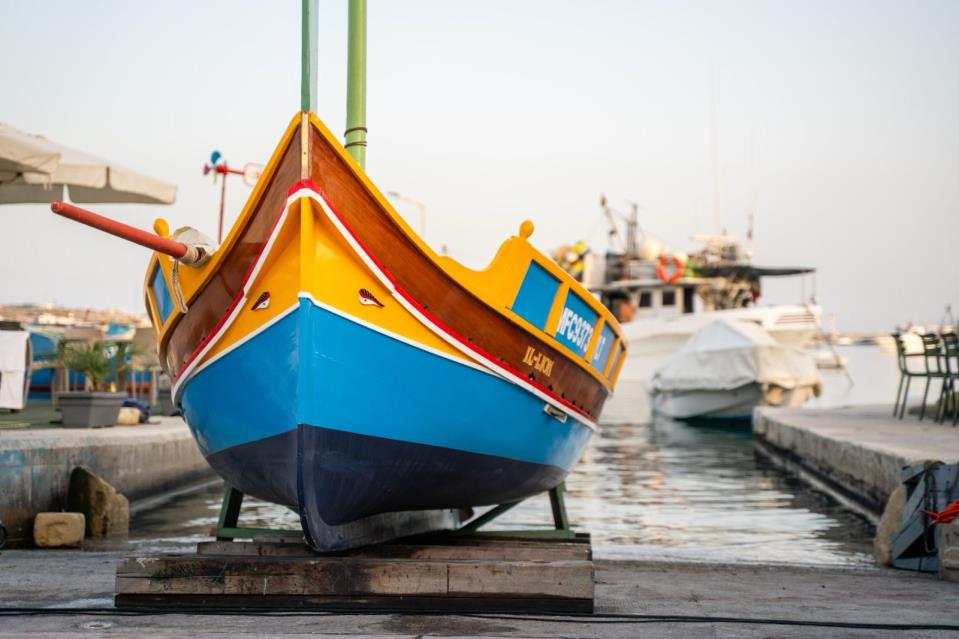
After more than two years of dedicated work, Marsaxlokk Heritage, Heritage Malta and the Malta Tourism Authority (MTA) have successfully restored one of the last surviving 'firilli' in Malta.
The traditional boat, which is over a century old and named Lion, will now serve educational, tourism and research purposes, a statement said.
The project began in 2021 as an initiative by Marsaxlokk Heritage to save the traditional vessel. It later evolved into a national initiative with the participation of the MTA and Heritage Malta to safeguard Malta's maritime heritage.
The restoration works were carried out at the Kalkara Boatyard using traditional techniques and materials.
The boat's traditional "tarkija" rig, or sprit sail, was also reconstructed, reviving a distinctive feature that had all but disappeared from Maltese waters.
During the winter months, the Lion will be exhibited along the Marsaxlokk waterfront. The project also included public workshops and aims to preserve the traditional craft of boatbuilding while encouraging the return of these historic vessels to Maltese harbours.
Minister for Tourism Jo Etienne Abela said that the restoration of this 'firilla' is a clear example of how tourism can be a positive force in protecting our identity and cultural heritage.
"By investing in Malta's maritime legacy, we are creating authentic experiences that strengthen our tourism offering while safeguarding what makes Malta truly unique. Marsaxlokk is one of our country's most iconic villages, and projects such as this reinforce its distinctive character," Abela said.
He added that this collaboration demonstrates that by working together, the country's heritage can be preserved, while continuing to develop a high-quality tourism sector built on sustainability and the wellbeing of local communities.
Minister for the Arts, Culture and National Heritage Malcolm Paul Agius Galea said that Malta's maritime heritage is an essential part of national identity and history.
"Every traditional boat we save is not merely a relic of our past, but a living testament to the craftsmanship, skill and way of life that shaped the Maltese people over the centuries. This restoration is a clear example of what can be achieved when public entities, voluntary organisations and experts work together towards a common goal," he said.
Agius Galea said that the project has not only given new life to one of the last remaining 'firilli' in Malta but is also ensuring that present and future generations will have the opportunity to appreciate and cherish the maritime heritage that makes Malta unique.
MTA Chief Executive Officer Carlo Micallef said that the Malta Tourism Authority is proud to support projects that protect and showcase the Maltese Islands' key cultural assets.
"Through our investment in the restoration of this 'firilla', we are helping to preserve an important part of Malta's maritime history while creating a unique attraction that enhances the visitor experience in Marsaxlokk," he said.
Micallef said that sustainable tourism is not only about attracting visitors, but also about investing in the traditions, craftsmanship and communities that give Malta its authentic identity.
"Supporting initiatives such as this ensures that these invaluable elements of our heritage continue to thrive for the benefit of both residents and visitors alike," he said.
While thanking everyone involved in bringing this project to life, Heritage Malta Chief Executive Officer Noel Zammit reflected on the central role that the sea has played in shaping the Maltese identity.
"The sea has made us who we are today because our forefathers understood how to use it as a bridge rather than a barrier. It is precisely because we recognise its importance that Heritage Malta continues to invest time and resources in it, through the extensive restoration currently underway at the Malta Maritime Museum in Birgu, as well as through the establishment, several years ago, of the Underwater Cultural Heritage Unit, among other initiatives," Zammit said.