The parliamentary motion declaring a climate emergency passed nearly seven years ago by the Maltese Parliament featured 15 points of action to demonstrate Malta's commitment to safeguard the environment. After almost seven years, five minor pledges have been fully accomplished, one point looks to have been forgotten, while other long-term and more challenging proposals are still in the works and deserve an in-depth view to gauge whether we should be content with how things are going.
Six of these targets came with stipulated deadlines. Only one of these deadlines hasn't yet passed and it looks to be in the works. Additionally, three points were accomplished late, another looks to have been neglected, and one point's status could not be confirmed. In fairness, the Covid-19 pandemic reached the Maltese islands less than six months after this motion passed unanimously, so perhaps one could forgive national authorities for foregoing certain environmental targets to address the elephant in the room at the time. With Covid now in the past, one would have expected matters to resume.
Many of the grandest ambitions made in this climate emergency are still in the pipeline, albeit at varying stages, almost seven years later. Some of these are gradually being implemented (for example, for all government vehicles to be non-polluting vehicles) while others remain to be areas of contention in the long-term, possibly until major projects are completed (for example, government commitment "to directly incentivise the use of alternative and public transport, while continuing to work towards an infrastructure that incentivises this type of transport").
When Malta declared a national climate emergency in 2019, the original private members' bill put forward by ex-PN MP Jason Azzopardi was amended to incorporate amendments submitted by the Environment Minister of the time, José Herrera. The motion then passed unanimously.
Here is how Malta has progressed on these points, so far, after almost seven years, starting with what has been ticked off the checklist, followed by those still pending.

5/15 points accomplished so far, one deadline still four years away
Almost 80 months later, a third of the pledges - five from 15 - made in Parliament's climate emergency have been fulfilled. Three of these points were accomplished at least one year after their stipulated deadlines; two were enacted immediately.
This section pertains to Points 1, 3, 4, 5, 13, and 14 of the motion.
Significantly, Malta announced by which date it will stop importing ICE vehicles, that is, vehicles that run on polluting fuels, into the country, thus accomplishing Point 4 from this motion. In March 2025, Environment Minister Miriam Dalli announced that the Maltese government aims to ban the sale of ICE vehicles by 2034 - a year ahead of the EU's 2035 deadline, which has been facing turbulence itself in Brussels. This motion called for this announcement to be made by mid-2020, though by then, the Covid-19 pandemic had already struck the Maltese islands.
The first fulfilled goal, Point 1, was for Parliament to collectively issue this climate crisis.
Another goal, Point 3, simply altered the name of the Parliament's standing committee for the environment and development planning to add "climate change" into its name and as a competence, though climate change matters were already being discussed within it since they are, by nature, environmentally related.
Another achieved goal (Point 5) was organising a national conference on climate change alongside social partners; this was done on 26 October 2021, instead of in 2020.
The fifth completed goal, Point 14, was the publication of Malta's Low Carbon Development Strategy in October 2021, which was also aimed to be published in 2020. This document outlines Malta's decarbonisation journey till 2050 with the aim of reaching carbon neutrality across all sectors by then, and includes measures to make Malta more resilient against climate change.
The only remaining action point with a stipulated deadline is Point 13, which states that the government "evaluates the possibility of converting schools and government buildings to carbon-neutral by 2030".
While the wording of "evaluating the possibility" does not necessarily mean taking such concrete action, Prime Minister Abela's latest elected government is mandated, through electoral pledge 16 of its Int Malta manifesto, to ensure that "all new public buildings will be climate neutral".
This shows a commitment to have more sustainable buildings across Malta and Gozo, especially with the electoral promise aiming for new buildings to be climate neutral and not just carbon-neutral. While the terms "carbon-neutral" and "climate neutral" are often used interchangeably, there is a subtle difference between them. The former refers to having a net-zero carbon footprint and the latter expands on this by referring to the emission and mitigation of all greenhouse gases, not just carbon gases.
Unfortunately, such an idea isn't new. In February 2012, the PN government issued a National Environmental Policy featuring timeframes for the implementation of some 200 measures for public consultation. This policy states that "By 2018 all new public buildings (of specific dimensions and uses) will be near zero-energy use, a criterion that will apply to all buildings by 2020".
Point 13 implies that this part of the 2012 National Environmental Policy did not come to fruition after the Labour Party was elected to power in 2013.
Questions were sent to the Ministry for Education asking whether the government has evaluated the possibility of converting all schools and government buildings to be carbon-neutral by 2030.
No reply was given.
Largest commitments progressing slowly or not meeting 2022's electoral promises
Many of the largest commitments within this climate emergency are being undertaken by the government. At first glance, one could be content to see that all major commitments in this climate emergency are in the works, though, looking further in-depth, one couldn't be blamed for criticising that this progress is moving too slowly for a so-called "emergency".
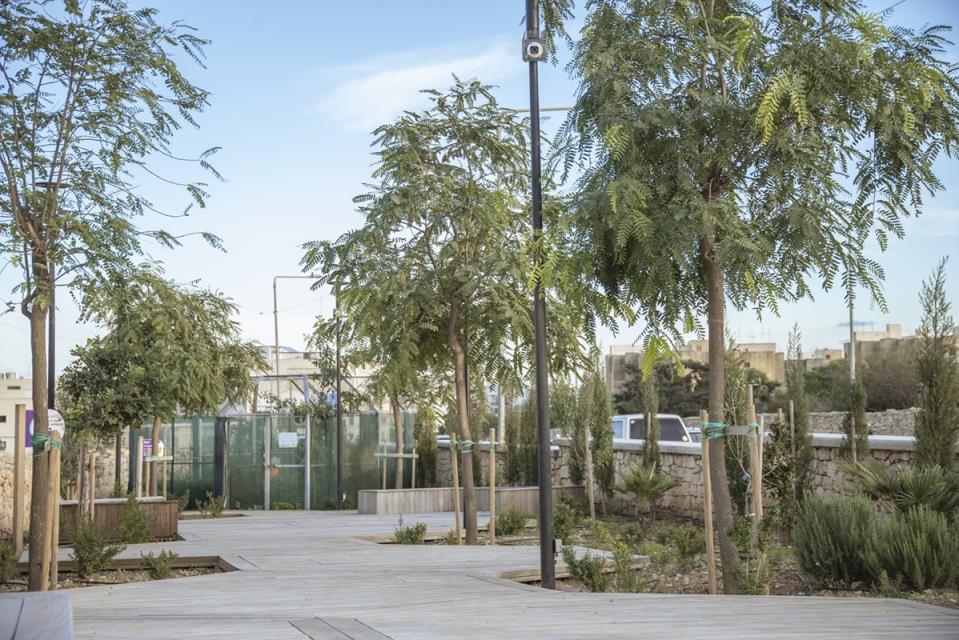
Point 7: "Government commits to continue carrying out more afforestation projects" - underway but missing own set targets.
But how ambitious are the government's afforestation projects, and is it meeting its own targets?
Pledge 305 of the PL's 2022 manifesto stated that the Labour government would launch an action plan on tree-planting and afforestation efforts and commit itself to planting 100,000 trees "over the next five years".
During the 2026 election campaign, the Labour Party said that it would continue with its afforestation projects, stating that around 60,000 trees were planted over the last legislature.
On this, the Ministry for Education said that 60,000 trees and 110,000 shrubs were planted and that to date, Project Green has issued for vouchers for the planting of over 37,000 trees.
Additionally, while trees and greenery have made headlines over recent years, this occurred due to uproar that these natural elements were being taken away, for example, the 50-year-old Mosta Ficus trees and the gravelling of the Ta' Qali picnic area. While it's good for government to launch greening schemes worth €10 million, removing one of the country's only roosting sites for birds and gravelling over a popular, central green area in the face of public outcry - when Malta has significantly less forest land (1%) than any other European country - has opened the Labour administration to environmental criticism.
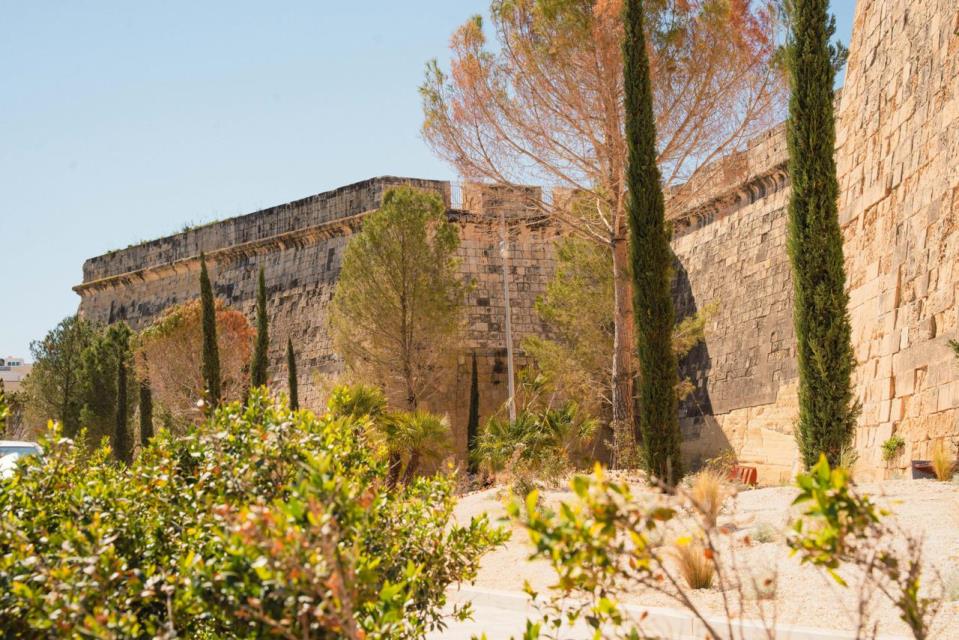
Point 8: For Government to continue investing in open spaces and semi-pedestrian spaces in urban areas to further incentivise the use of alternative transport
Project Green cannot go unmentioned here. It is the PL administration's first call wherever open/green spaces are concerned.
A spokesperson from the Ministry for Environment told this newsroom that it has completed 75 open space projects, amounting to over 316,000 square metres. They also said that "strategic decisions, such as designating Manoel Island and White Rocks as national parks rather than allowing development, are steps to protect the environment and ensure benefits for future generations".
They mentioned that "since climate action is a collective effort, other public bodies have initiated additional projects, such as developing open and semi-pedestrian spaces in urban areas".
The Malta Independent on Sunday is informed that the government's approach "involves identifying and implementing projects that enhance accessibility, promote safer mobility, and support sustainable transport modes", and more.
However, for all the good listed above, let's look at the other hand.
The Labour Party's five major urban park conversion projects from its 2022 election campaign have still not yet been implemented; some are, very slowly, in the works, while others have been shelved entirely.
For instance, Project Green told this newsroom last December that the long-awaited Santa Venera regional road roofing project cannot begin until the Msida Creek project is finished, "to ensure effective traffic management" and to avoid major roadworks from obstructing two arterial roads in adjacent areas.
Meanwhile, the Floriana underpass through St Anne's Street was deemed unfeasible following geotechnical and archaeological studies. The idea to convert Vjal ir-Rihan into a green area with a similar tunnel passing below it has also been shelved. The government is still looking to pedestrianise these areas, though only time will tell if these envisioned public gardens will come to life.
Additionally, whether or not such parks and open spaces are incentivising alternative transport, which includes walking and cycling, is another story altogether.

Point 9: For vehicles used by the government, including those leased, to be non-polluting vehicles - under implementation
The Office of the Prime Minister informed this newsroom that, as of April, around 47% (or circa 521 vehicles) being used by the government, including those leased, were non-polluting vehicles. Non-polluting vehicles refers to either fully electric vehicles or plug-in hybrids.
The OPM stated that there are definite plans for the entire government fleet of vehicles to cut away from internal combustion engines (ICE) that burn fuel to generate power. Demonstrating this progress in recent years, an OPM spokesperson told The Malta Independent on Sunday that two years ago, 170 ICE vehicles were scrapped to make way for 250 new electric vehicles.
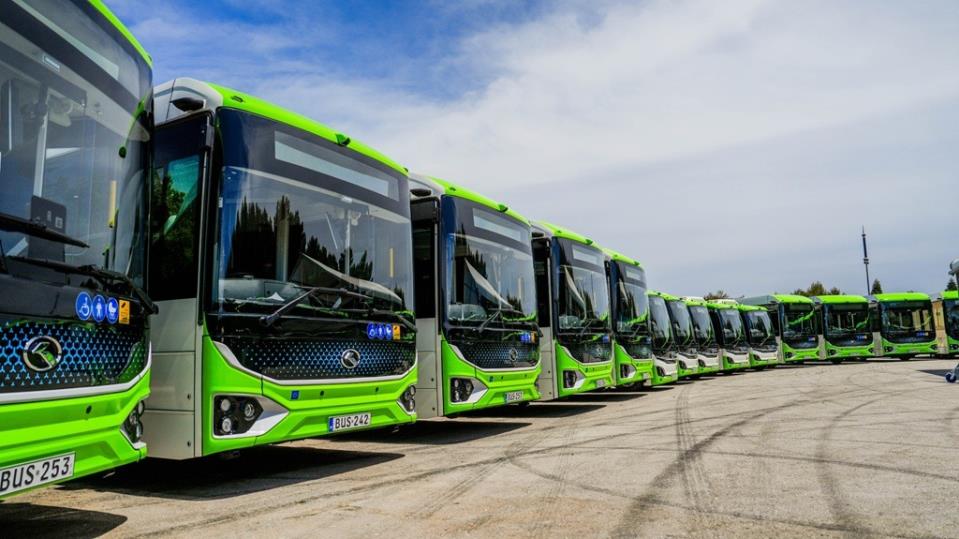
Point 10: Government undertakes programme so that vehicles used for public transport are non-polluting vehicles
A case of whether the glass is half-empty or half-full.
While this goal has experienced significant traction, the government, in December 2024, curiously cancelled a large investment that would have served as a major stride forward.
Earlier this May, Gozo became the first European island to have a fully electric public transport fleet, following an €11 million investment. Passenger usage rose by 11% over this fleet's first month in operation, this June, recording over 332,000 passenger journeys across more than 16,220 trips.
In December 2024, the Nationalist Party criticised the government for scrapping plans to replace 100 diesel buses with electric ones, despite over €90 million already being earmarked towards this project. It condemned that €34 million was lost in EU funds, a €50 million private investment by Malta Public Transport was abandoned, and an additional, unrecoverable €7 million was lost. These funds were going to supply 100 electric buses and their required charging infrastructure. The Prime Minister later defended this manoeuvre, stating that these funds were redirected to subsidise the purchasing of private electric vehicles, for example, the €8,000 EV subsidy grant.
Seven months later, Malta Public Transport unveiled 100 new buses through a €28 million upgrade, though these were not electric vehicles.
As of Q1 2026, electric and plug-in hybrid engines made up 5.1% of all registered vehicles in Malta, according to NSO statistics. This share has grown by 1.1%, from 4%, in the last five quarters, that is, since Q4 2024, and all signs point towards their uptake continuing to increase. The National Transport Master Plan for 2030 states that the uptake of hybrid and electric cars are "well behind the European averages, and more efforts are needed to incentivise" them.
The now-called Ministry for Sustainable Mobility did not answer this newsroom's questions on how many buses in the Maltese islands are non-polluting vehicles and whether any other public transport vehicles aside from the bus fleet, that is, Gozo Channel ships and fast ferries, also fall into this category. It also didn't mention how many public transport vehicles today are non-polluting, as a proportion from the total fleet.
Furthermore, with it still being at early developmental stages, questions still remain as to what will power the long-awaited metro and whether this too will have non-polluting carriages.
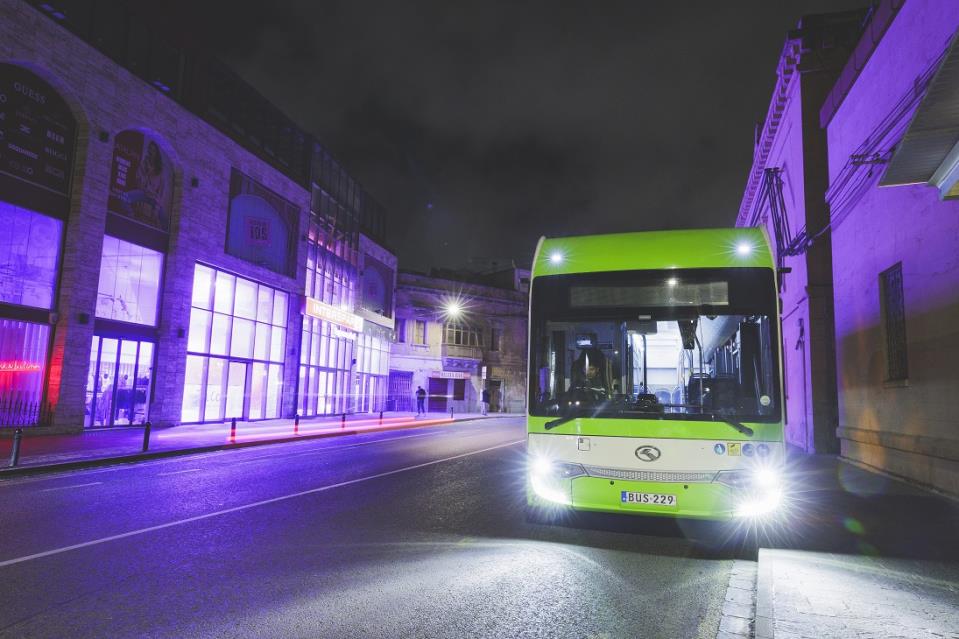
Point 11: Government commits itself to continuing to directly incentivise the use of alternative and public transport while continuing to work towards an infrastructure that incentivises this type of transport
Point 11 refers to promoting transport methods other than by driving a private car. There are many positives and negatives to unpack here.
Positively, since 2019, catching a bus was effectively made free as long as one remembers to bring their Tallinja card; the C-SAM cycling network, which is set to cost €27.4 million, is in development and is set for completion in 2028; and schemes to promote bicycle and private e-scooter use have been sustained each year. Moreover, an electoral pledge will soon see Prime Minister Abela's re-elected government make the Gozo Channel free for those crossing over on foot.
On the flip side, one cannot ignore how rental e-kick scooters were banned in Malta from March 2024 onwards. While their popularity showed signs of the culture change required to reduce car dependency, these rental vehicles were deemed too great of a headache to retain. Rental e-kick scooters in Malta were a common source of complaints from residents, particularly in tourist areas, as many of them were left on pavements haphazardly rather than parked appropriately. They contributed to 10,943 fines from LESA and policemen in 2023 alone.
More worryingly, despite being free of charge, bus services have not earned the level of public trust that authorities had hoped for. In 2024, 58% of Maltese did not use public transport, according to Eurostat - the eighth highest frequency for people in any EU country to never use public transport, despite the service being made free in October 2022.
In comparison, Luxembourg - the only other EU member state with free public transport - garnered the lowest share of its people to state that they never used public transport in 2024 (15.7%). Furthermore, only 9.1% of Maltese claimed to use public transport every week (sixth-lowest proportion EU-wide), while an EU-high 23.1% of Luxembourg's citizens use these services weekly at least.
Capping this all off, traffic remains a top issue in Malta. With more registered cars on our roads each passing quarter and ever-increasing population, the public perception is that the traffic issue is only getting worse. Cyclists' safety on the roads, generally, remains a concern.
The government's metro is slowly in the works through the Malta in Motion plan, though the permit process won't commence for another estimated two years, the La Vallette line is not set to begin construction for another 5-10 years, and the line isn't expected to be completed for another 10-15 years from now. Only afterwards will more metro lines be developed, though this is all assuming that the government doesn't rehash this second metro plan as it did when it scrapped the initial, fully underground project that would have cost the country €6 billion instead of the €2.8 billion projected on the updated designs. The original 2021 plans were adjusted after Finance Minister Clyde Caruana publicly expressed his concern on its €6 billion financing.
Point 15: Government draws up a programme, in 2020, featuring timeframes for implementation of climate change measures - status unknown
The one point within this motion that this newsroom could not outline progress over for this analysis was its final point.
Point 15 called for the government to draw up a programme during 2020, "so that in the following months and years, schemes and initiatives in favour of measures that address climate change are launched".
Questions regarding the existence of such a programme were sent to the Environment Ministry and the Climate Action Authority, though no copy of such a programme was provided.
The Environment Ministry told The Malta Independent on Sunday that, in this regard, the establishment of the Climate Action Authority in 2024 "goes beyond what was envisaged in the 2019 motion and formalises Malta's climate action responsibilities and governance within a legal framework".
Since Parliament declared a climate emergency, the government set up the Climate Action Authority (CAA) to coordinate and oversee measures and regulations related to climate change in the Maltese islands. The CAA was launched in October 2024 as the first authority of its kind in Europe.
"Since the motion's approval, Malta's climate framework has evolved from a parliamentary commitment into a comprehensive legal, policy, and institutional structure," the Ministry said.
"This includes the establishment of the Climate Action Authority, the ongoing implementation of the National Energy and Climate Plan, renewable energy projects, energy sector reforms, various investment schemes, incentives for the general public to invest in sustainable options, waste management changes and projects, net-zero buildings, projects where the government leads by example, such as the installation of solar panels on its buildings and the change of its fleet, green finance measures such as green bonds, and afforestation efforts, as well as the development of more open and accessible public spaces, as mentioned earlier," it added.
One point looks to have been forgotten
One out of the 15 points looks to have been entirely neglected, unless this went unrecorded on paper.
Point 12 of this climate emergency called for the Minister for the Environment to submit the Climate Action Board's annual report for discussion within the Parliament's Standing Committee on the Environment. After going through this committee's meeting agendas, it doesn't seem that this ever transpired.
Despite being given three months to do this, none of the Standing Committee's published agendas, to date, over 29 meetings in the past nearly seven years since Parliament declared a climate emergency, ever mentioned the need to discuss this or any other Climate Action Board annual report.
No meeting within this Standing Committee was therefore ever organised with the intent of discussing this or any other such report.
Two points to state the obvious
By declaring a climate emergency, Malta has signalled its formal commitment to addressing the effects of climate change through the promotion of sustainable practices and the implementation of environmentally responsible policies. Fortunately, current initiatives suggest that this commitment is being translated into action.
Two of the 15 points within the climate emergency, in layman's terms, say that the Maltese government will keep introducing measures to mitigate and fight against the consequences of climate change.
Point 2 of the motion commits the Maltese government to "remain committed to continue implementing appropriate measures and actions against the impact and effects of climate change".
Point 6, rather than just implementing measures against climate change, states that "Government, through the concerned Ministries, continues with the preparation and implementation of various measures intended to mitigate the effects of climate change."
Conclusion
So, what does this analysis show of Malta's progress towards these points of action since its Parliament declared a national climate emergency, almost seven years later?
For the most parts, these points are on track to being enacted in the long run; whether or not this progress is sluggish for a "crisis" is for the people to decide.
It's also important to acknowledge that the points within this approved motion do not form an exhaustive list of all measures that Malta can undertake to be more environmentally friendly. For instance, increasing the country's share of generated energy from renewable sources, for example, solar or wind energy, is not even listed within this motion, yet Malta has the second-lowest share of renewables supplying its generated electricity in the entire EU as of Q1 2026, at just 13% and only ahead of Czechia (12.7%); for the average EU country, renewables contribute to nearly half (46%) of all electricity generated.
Real emergencies are addressed immediately. Anything less implies that they aren't as serious as titles may describe. It's vital that measures combatting climate change are sped up to affirm this sector's importance on the government agenda; continuous delays here and there only make collective efforts more challenging for everyone.
In the end, Malta may have declared a climate crisis nearly seven years ago, but with a pandemic and several wars near Europe's borders emerging since then with their own distinct challenges, whether climate commitments are actually atop the government's agenda is up for public scrutiny.