Last week I attended an event organised by Fondazzjoni Peter Serracino Inglott In Search of Sacred Spaces held at the Meditation Garden, Dar il-Hanin Samaritan, in Santa Venera which was designed by Malta's most distinguished architect Professor Richard England.
Dr Louis Galea, President of the Foundation, introduced the evening, informing the audience about the Fondazzjoni and its activities and objectives.
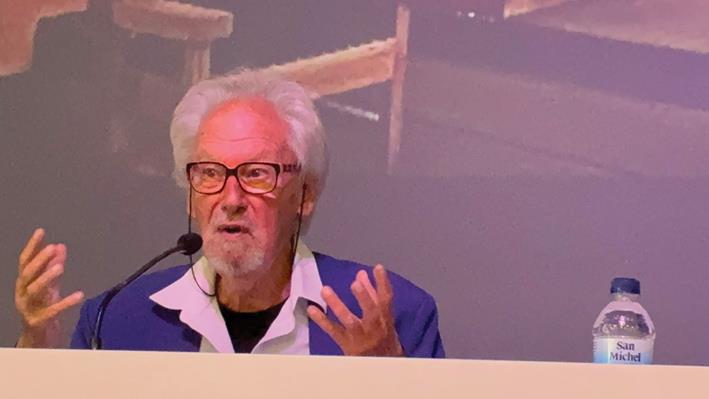
The evening brought together two distinguished figures in Maltese architecture, Prof. Richard England and architectural historian Prof. Conrad Thake. Richard England hardly needs an introduction. His churches, chapels and other buildings have helped shape Malta's architectural landscape for decades, while Conrad Thake, the author of several books and articles, guided the evening through a series of thoughtful and wide-ranging questions.
The subject was sacred architecture and the search for meaning through space, light and form. Conrad's questions spanned centuries, beginning with Malta's prehistoric temples and moving through the Baroque period, the revolutionary work of Le Corbusier at Ronchamp, the influence of Luis Barragán and Gio Ponti, and eventually arriving at the challenges posed by artificial intelligence and modern secular society.
The Power Point presentation was excellent and helped the audience understand better the dialogue that was going on between the two architects.
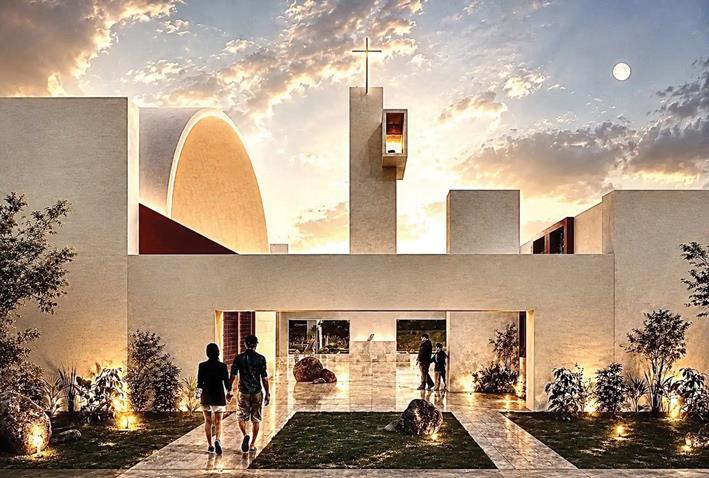
It is impossible for me to report with any exactitude the interesting dialogue. Let me assure you it was full of wit, humour and anecdotes.
Richard started off by apologising for his voice which "had decided to have a power cut". The same had happened when on another occasion he was presenting tenor Joseph Calleja "a no voice presenting a voice." He praised PSI whom he had known for some 60 years saying he had learned so much from him. He was an inspiration and Richard "cherished him."
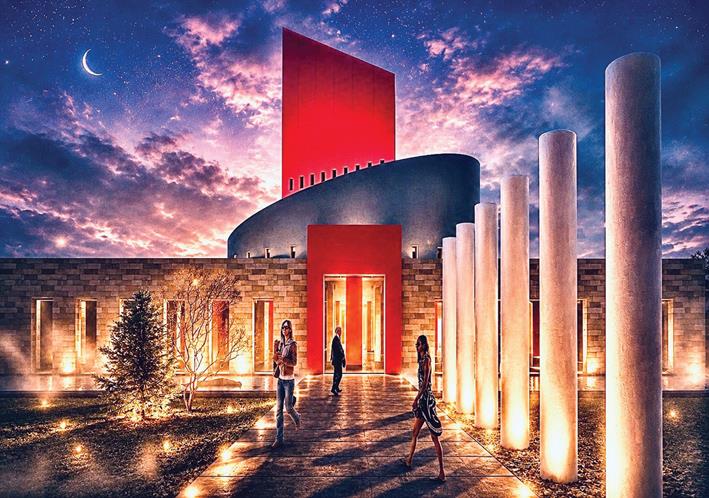
Richard believes that the soul needs more space than the body. "Since the beginning of time man has built to worship and placate his gods."
He then mentioned some favourite sacred spaces which he has visited starting with the mortuary temple of Hatshepsut, located opposite the city of Luxor and considered a masterpiece of ancient architecture; the Cistercian abbey in Umbria; San Paolo alle Quattro Fontane or was it San Carlo? There were others mentioned...
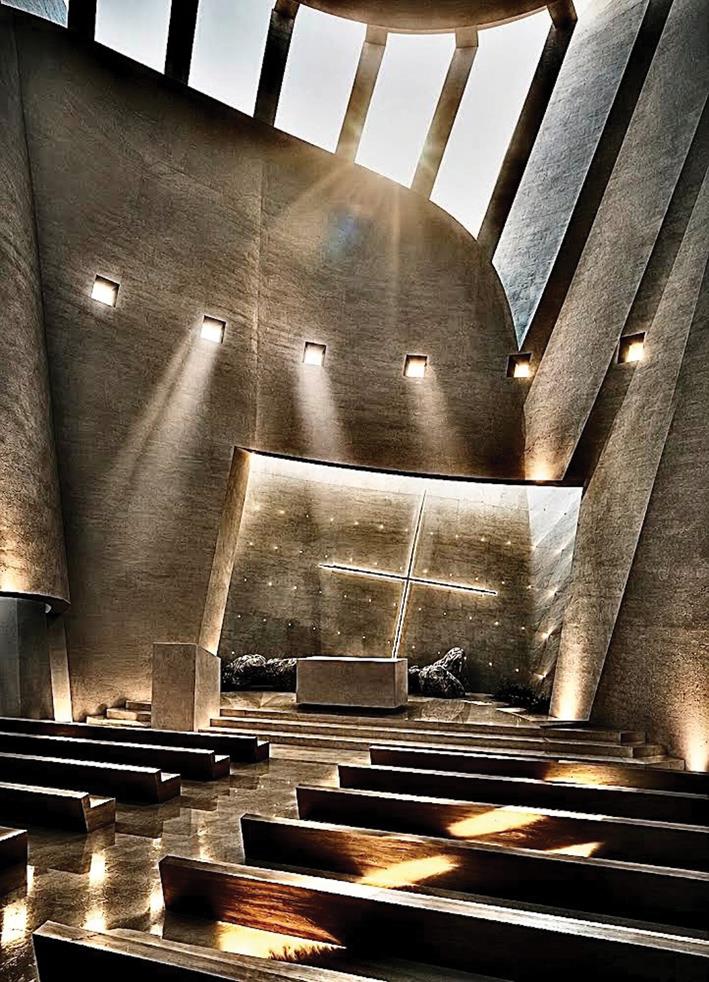
The dialogue then went on to architecture without architects quoting Gio Ponti who wrote that architecture is easy and spontaneous and that architects are the ones who make it complicated.
The exchange between these gifted architects went on as we sat glued to our chairs. Then the Chapel of the Holy Cross in Sedona, Arizona was mentioned. Local rancher and sculptor Marguerite Brunswig Staude was inspired by the Empire State Building and finally built the chapel. Stunning.
We were listening to someone whose life's work has been dedicated to exploring the relationship between architecture and spirituality.
Richard's buildings speak eloquently on their own behalf. The discussion touched on projects familiar to many Maltese, including the church Richard designed at Manikata all those years ago, a first commission passed on to him by his father, also an architect. Richard has many tales to tell about this iconic church. I remember him mentioning on another occasion the struggles with the parishioners who in fact built it, stone by stone, and were somewhat disappointed that it did not have a dome, let alone one which was bigger than their neighbours'.
Archbishop Gonzi, was as conservative as he could possibly be. The idea of a ħajt tas-sejjieħ or rubble wall in a church was abhorrent and suggested that Richard should plaster it; then onto the Millennium Chapel and Dar il Ħanin Samaritan, as well as visionary projects that have remained on paper. Through them all runs a common theme: the creation of spaces that encourage reflection, contemplation and a sense of something beyond the everyday.
Conrad produced AI-generated pictures of PSI, Richard and others. I marvel at this new technology.
What remained with me after the evening was not a particular quotation but a question: do sacred spaces still matter in an age dominated by technology, speed and constant distraction? Judging by the audience's attention and engagement, the answer would seem to be yes. Whether one approaches these spaces through faith, history, architecture or simple curiosity, they continue to offer something that modern life often neglects: silence, pause and the opportunity to reflect.
Rainer Fsadi, nephew of PSI and member of the board, said a few significant words, and, after that off we went to the gardens. I have attended events here a few times but never visited the gardens which are lush with attractive corners for meditation.
Guests were enjoying themselves eating, drinking and discussing the dialogue and no doubt the power cuts and the heat.
Not every event leaves one with pages of notes. Sometimes one leaves instead with a collection of impressions and questions. This was one of those evenings.